
Kallistos Ware (1934–2022)
Author of The Orthodox Church
About the Author
Kallistos Ware is an English bishop within the Eastern Orthodox Church under the Ecumenical Patriarchate of Constantinople and one of the best-known contemporary Eastern Orthodox theologians. From 1982 he has held the Titular Bishopric of Diokleia.
Image credit: Metropolitan Kallistos (Ware), 2005. Photograph © Jim Forest / Flickr.
Works by Kallistos Ware
The Philokalia: The Complete Text (Vol. 1); Compiled by St. Nikodimos of the Holy Mountain and St. Markarios of Corinth (1979) 759 copies, 4 reviews
Anglican-Orthodox dialogue : the Moscow Statement agreed by the Anglican-Orthodox Joint Doctrinal Commission, 1976 (1977) 20 copies
Orthodox Theology in the Twenty-First Century (Doxa & Praxis: Exploring Orthodox Theology) (2012) 8 copies
When You Fast 4 copies
Religion, Science & Technology: An Eastern Orthodox Perspective (Technology and Society Studies) (Volume 1) (2016) 3 copies
The Lenten Triodion 2 copies
The Seed of the Church 1 copy
Fresh Hope and New Challenges: The Church in the Traditional Orthodox Countries | Streaming Audio 1 copy
The Humanity of Christ 1 copy
Women and the Priesthood 1 copy
Από τον σταυρό στην ανάσταση 1 copy
Οικολογική Κρίση και Ελπίδα 1 copy
The True Aim of Education 1 copy
Associated Works
The Philokalia: The Complete Text (Vol. 2): Compiled by St. Nikodimos of the Holy Mountain and St. Makarios of Corinth (1981) — Translator, some editions — 511 copies, 1 review
The Philokalia, Volume 4: The Complete Text; Compiled by St. Nikodimos of the Holy Mountain & St. Markarios of Corinth (1995) — Translator, some editions — 442 copies, 2 reviews
The Philokalia: The Complete Text (Vol. 3): Compiled by St. Nikodimos of the Holy Mountain and St. Makarios of Corinth (1984) — Translator, some editions — 442 copies, 2 reviews
In the Heart of the Desert: The Spirituality of the Desert Fathers and Mothers (2003) — Foreword, some editions — 198 copies, 3 reviews
Philokalia―The Eastern Christian Spiritual Texts: Selections Annotated & Explained (SkyLight Illuminations) (2006) — Translator, some editions — 153 copies
The Deification of Man: St. Gregory Palamas and the Orthodox Tradition (Contemporary Greek Theologians Series , No 2) (1984) — Foreword, some editions — 113 copies, 2 reviews
The Spiritual World Of Isaac The Syrian (Cistercian Studies) (2000) — Foreword, some editions; Foreword, some editions — 83 copies, 1 review
Prayer of the heart : writings from the Philokalia : from the complete text (1993) — Translator — 42 copies
Great Spirits 1000-2000: The Fifty-Two Christians Who Most Influenced Their Millennium (2002) — Contributor — 30 copies, 1 review
Meditations of the heart : the Psalms in Christian thought and practice : essays in honour of Andrew Louth (2011) — Contributor — 4 copies
Tagged
Common Knowledge
- Other names
- Metropolitan Kallistos
Ware, Timothy - Birthdate
- 1934-09-11
- Date of death
- 2022-08-24
- Gender
- male
- Education
- Westminster School, London
University of Oxford (Magdalen College) - Occupations
- bishop
monk
university professor - Organizations
- Eastern Orthodox Church
- Cause of death
- long illness
- Nationality
- UK
- Birthplace
- Bath, Somerset, England, UK
- Places of residence
- Oxford, Oxfordshire, England, UK
- Associated Place (for map)
- England, UK
Members
Reviews
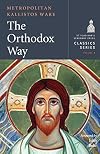
As a Protestant Christian, I share much theology in common with Eastern Orthodoxy; however, Protestantism's emphasis lies more with justification than with Trinitarianism and Christology. Eastern Orthodox theology and spirituality tend to ground themselves in the nature of God. In this book, Kallistos Ware shows how the Orthodox maintained the emphasis of the early church's creeds all the way to the present day.
This book is simultaneously faithful to the Eastern Orthodox tradition and open show more to dialogue with the West and Western culture. It, thankfully, does not fall into the trap of being militant towards other Christian groups while still maintaining its clear integrity and center. Ware's scholarship of the church fathers and of Western Christians taught me a few thoughts and references that I hadn't thought through before.
It's hard to evaluate religious books in a way that's deeper than just, "I agree with it" or "I don't." Ware presents the tradition well - so well that even thoughtful Protestants can gain from his presentation. He is clear in the doctrine but open to critique. He's not condemning but thoroughly positive. For anyone interested in Eastern Orthodoxy or just for religious practices built upon Trinitarianism and Christology, just like the early church did, I'd recommend this book wholeheartedly. It can deepen your own faith; it certainly did mine. show less
This book is simultaneously faithful to the Eastern Orthodox tradition and open show more to dialogue with the West and Western culture. It, thankfully, does not fall into the trap of being militant towards other Christian groups while still maintaining its clear integrity and center. Ware's scholarship of the church fathers and of Western Christians taught me a few thoughts and references that I hadn't thought through before.
It's hard to evaluate religious books in a way that's deeper than just, "I agree with it" or "I don't." Ware presents the tradition well - so well that even thoughtful Protestants can gain from his presentation. He is clear in the doctrine but open to critique. He's not condemning but thoroughly positive. For anyone interested in Eastern Orthodoxy or just for religious practices built upon Trinitarianism and Christology, just like the early church did, I'd recommend this book wholeheartedly. It can deepen your own faith; it certainly did mine. show less
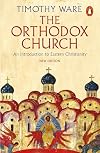
Like many Protestants, I have not experienced an in-depth introduction to Eastern Orthodoxy in my life. I’ve driven by its churches, sure, I’ve met its churchgoers, and in religion classes, I’ve read about its history. However, I never have taken a deep-dive into its culture on my own, mediated only be an advocate for its faith expression. Therefore, I read Timothy Ware’s classic work, now in a third edition, on the Eastern Orthodox Christian faith with the hope of better show more appreciating this church.
Historically, the western and eastern churches began to drift apart in the later half of the first millennium because of language and cultural differences. The frosty relationship was cemented in 1054 when the patriarchs of Rome and Constantinople excommunicated each other. As such, they’ve developed two very different histories, with the Protestant Reformation in the West and a pronounced interaction with Islam in the East. Even the theological terminologies, methodologies, and questions tend to be starkly different among the two groups.
I appreciated much of what this book taught me about Eastern Orthodoxy. I find its theological tradition mostly appealing, but I struggle with its understanding of the church (ecclesiology). Eastern Orthodoxy, like almost every other religious movement, suffers from the idea that its tradition must be exclusively right instead of just another voice in a healthy dialogue. This book’s final chapter on ecumenism illustrates this pitfall well. The church’s only proposal for reconciliation is for other groups to see the “error” in their ways. It’s hard to erase 1500 years of isolation without respecting the other side’s isolation first.
This book offers a solid introduction to Eastern Orthodoxy and represents a good exposition of the religious differences of the church with other Christian faiths. It should continue to help seminary and divinity students understand the rich theological world they inhabit. It’s written more for that ilk and not for the wider reading public. Nonetheless, it helps elucidate the historical forces in one of the most ancient of faiths. show less
Historically, the western and eastern churches began to drift apart in the later half of the first millennium because of language and cultural differences. The frosty relationship was cemented in 1054 when the patriarchs of Rome and Constantinople excommunicated each other. As such, they’ve developed two very different histories, with the Protestant Reformation in the West and a pronounced interaction with Islam in the East. Even the theological terminologies, methodologies, and questions tend to be starkly different among the two groups.
I appreciated much of what this book taught me about Eastern Orthodoxy. I find its theological tradition mostly appealing, but I struggle with its understanding of the church (ecclesiology). Eastern Orthodoxy, like almost every other religious movement, suffers from the idea that its tradition must be exclusively right instead of just another voice in a healthy dialogue. This book’s final chapter on ecumenism illustrates this pitfall well. The church’s only proposal for reconciliation is for other groups to see the “error” in their ways. It’s hard to erase 1500 years of isolation without respecting the other side’s isolation first.
This book offers a solid introduction to Eastern Orthodoxy and represents a good exposition of the religious differences of the church with other Christian faiths. It should continue to help seminary and divinity students understand the rich theological world they inhabit. It’s written more for that ilk and not for the wider reading public. Nonetheless, it helps elucidate the historical forces in one of the most ancient of faiths. show less
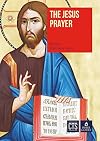
Despite this being little more than a pamphlet it is full to the brim with wisdom and guidance. Like other works by Kallistos Ware every word it put to work.
The book describes the history, practice and purpose of The Jesus Prayer. This short but profound prayer has been a cornerstone if Orthodox contemplative prayer for centuries.
The book describes the history, practice and purpose of The Jesus Prayer. This short but profound prayer has been a cornerstone if Orthodox contemplative prayer for centuries.
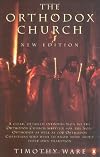
Great overview of the Orthodox churches; there's not much to complain about. I would've liked a bit more theology, but you can't have everything. To my surprise, the twentieth century history bits were my favorites- what could easily have devolved into an 'oh how we were oppressed by evil communists' rant was very balanced and insightful. It's odd that someone with such a firm grasp on history can still claim that the Orthodox church practices Christianity as is was practiced during the age show more of the great councils, but no doubt there's a way to finesse the somewhat obvious differences between the national (dare I say nationalist?) churches of the present and the ideas of primitive Christianity. show less
Lists
Awards

You May Also Like


Associated Authors
Statistics
- Works
- 77
- Also by
- 16
- Members
- 4,909
- Popularity
- #5,117
- Rating
- 4.2
- Reviews
- 32
- ISBNs
- 85
- Languages
- 13
- Favorited
- 3