

Samuel G. Freedman
Author of Jew vs. Jew: The Struggle for the Soul of American Jewry
About the Author
Samuel G. Freedman is a columnist for The New York Times and a professor at the Columbia University Graduate School of Journalism. He is the author of six acclaimed books and has written for USA Today, New York, Rolling Stone, The Jerusalem Post, The Tablet, The Jewish Daily Forward, and Salon.
Works by Samuel G. Freedman
Small Victories: The Real World of a Teacher, Her Students, and Their High School (1990) 137 copies, 1 review
The Inheritance: How Three Families and the American Political Majority Moved from Left to Right (1996) 89 copies
Into the Bright Sunshine: Young Hubert Humphrey and the Fight for Civil Rights (2023) 71 copies, 2 reviews
Breaking the Line: The Season in Black College Football That Transformed the Sport and Changed the Course of Civil Rights (2013) 36 copies, 1 review
Dying Words: The AIDS Reporting of Jeff Schmalz and How It Transformed The New York Times (2015) 2 copies
Associated Works
The ASJA Guide to Freelance Writing: A Professional Guide to the Business, for Nonfiction Writers of All Experience Levels (2003) — Foreword — 69 copies, 1 review
The Good Book: Writers Reflect on Favorite Bible Passages (2015) — Contributor — 46 copies, 3 reviews
Tagged
Common Knowledge
- Canonical name
- Freedman, Samuel G.
- Birthdate
- 1955-10-03
- Gender
- male
- Education
- University of Wisconsin-Madison (BA - Journalism and History)
- Occupations
- journalist
columnist
non-fiction author
professor (Journalism) - Organizations
- Columbia University (Graduate School of Journalism)
- Awards and honors
- National Jewish Book Award for Non-Fiction (2000)
- Nationality
- USA
- Birthplace
- New York, New York, USA
- Places of residence
- Highland Park, New Jersey, USA
- Associated Place (for map)
- USA
Members
Reviews
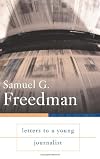
Letters to a Young Journalist
Samuel G. Freedman
Letters to a Young Journalist
New York: Basic Books, 2006
ISBN: 978-0-465-02455-1. 183+viii pp. $22.95 (US)
Toward the end of Letters to a Young Journalist, Samuel G. Freedman discusses a dark time in the spring of 1997 when his hopes for literary success based on the book The Inheritance – one of two runners-up to the Pulitzer Prize in General Nonfiction – seemed dashed. Despite excellent reviews and high honors, the book had only sold a few show more thousand copies.
Sam was teaching a book writing seminar at Columbia University’s Graduate School of Journalism that semester, and while sitting before his students in that seminar, he thought “Why the hell are they listening to me? Don’t they know I’m a failure?”
The day I read that passage, I sent Sam an e-mail saying that we – yes, I was one of the students in that seminar that semester – listened to him because he was not then and is not now a failure.
I stand by my statement, and submit Letters to a Young Journalist to support it.
At a time when journalism is in upheaval, when journalism schools are being upbraided for not emphasizing the technological fad of the last five minutes, when newspapers and magazines are dying, and many professional journalists wonder whether the profession will still allow them to make a living in this age of citizen (in other words, unpaid) journalists, this book offers a very personal meditation on what it takes to be a good journalist – what it took yesterday, what it takes today, what it will continue to take in the future.
For those of us who witnessed Sam in his Old Testament, maybe-not-fear-of-God-but-damn-sure-fear-of-Sam glory, the book is relatively mild. But Sam does not indulge in insincerity. He tells you what he believes in clear, spare language. The fire that makes him one of the most inspiring teachers I have had is evident throughout.
In Sam’s world, there is no substitute for hard work. In his journalism, there is no substitute for the basics: diligent reporting, thoughtful writing, and cold-blooded editing. Flourish is no substitute for substance. Brilliant lines are no substitute for strong narrative. If a passage you love – maybe it’s the best passage ever written – if it does not advance your story, it has got to go. The most important lesson he offers young journalists, though is that if you claim the mantle of nonfiction, your work better not be fiction.
Sam makes these points and many others, using examples from his own career as well as that of others. In doing so, he displays mastery of one of the other hallowed elements of journalism – the telling detail or anecdote. While Letters to a Young Journalist is not a textbook, Sam’s mastery of narrative, even in a book of advice like this one, makes it a pleasure to read. As a result, any young journalist who reads it is much more likely to remember the lessons therein.
In the past, journalists were segregated by medium or skill set: print versus broadcast, newspaper versus magazine, still photography versus film, reporters versus writers versus photographers versus editors. Those days are over: Journalists are now advised to learn dozens of new skills unimaginable to journalists of my father’s generation. The journalists’ vocabulary has evolved: from typewriter to Word to WordPress; from engraving to photo to Photoshop; from lead blocks to waxed paper to Quark to Dreamweaver; from broadsheet to Web to Blog and, now, Twitter.
With all the advice being offered to journalists concerned about surviving in their profession today, it seems easy to forget the fundamentals of good journalism are independent of platform. No matter what medium a journalist feels most comfortable in – old media, new media, or social media – there is no substitute for the essence distilled in Sam Freedman’s Letters to a Young Journalist.
–30– show less
Samuel G. Freedman
Letters to a Young Journalist
New York: Basic Books, 2006
ISBN: 978-0-465-02455-1. 183+viii pp. $22.95 (US)
Toward the end of Letters to a Young Journalist, Samuel G. Freedman discusses a dark time in the spring of 1997 when his hopes for literary success based on the book The Inheritance – one of two runners-up to the Pulitzer Prize in General Nonfiction – seemed dashed. Despite excellent reviews and high honors, the book had only sold a few show more thousand copies.
Sam was teaching a book writing seminar at Columbia University’s Graduate School of Journalism that semester, and while sitting before his students in that seminar, he thought “Why the hell are they listening to me? Don’t they know I’m a failure?”
The day I read that passage, I sent Sam an e-mail saying that we – yes, I was one of the students in that seminar that semester – listened to him because he was not then and is not now a failure.
I stand by my statement, and submit Letters to a Young Journalist to support it.
At a time when journalism is in upheaval, when journalism schools are being upbraided for not emphasizing the technological fad of the last five minutes, when newspapers and magazines are dying, and many professional journalists wonder whether the profession will still allow them to make a living in this age of citizen (in other words, unpaid) journalists, this book offers a very personal meditation on what it takes to be a good journalist – what it took yesterday, what it takes today, what it will continue to take in the future.
For those of us who witnessed Sam in his Old Testament, maybe-not-fear-of-God-but-damn-sure-fear-of-Sam glory, the book is relatively mild. But Sam does not indulge in insincerity. He tells you what he believes in clear, spare language. The fire that makes him one of the most inspiring teachers I have had is evident throughout.
In Sam’s world, there is no substitute for hard work. In his journalism, there is no substitute for the basics: diligent reporting, thoughtful writing, and cold-blooded editing. Flourish is no substitute for substance. Brilliant lines are no substitute for strong narrative. If a passage you love – maybe it’s the best passage ever written – if it does not advance your story, it has got to go. The most important lesson he offers young journalists, though is that if you claim the mantle of nonfiction, your work better not be fiction.
Sam makes these points and many others, using examples from his own career as well as that of others. In doing so, he displays mastery of one of the other hallowed elements of journalism – the telling detail or anecdote. While Letters to a Young Journalist is not a textbook, Sam’s mastery of narrative, even in a book of advice like this one, makes it a pleasure to read. As a result, any young journalist who reads it is much more likely to remember the lessons therein.
In the past, journalists were segregated by medium or skill set: print versus broadcast, newspaper versus magazine, still photography versus film, reporters versus writers versus photographers versus editors. Those days are over: Journalists are now advised to learn dozens of new skills unimaginable to journalists of my father’s generation. The journalists’ vocabulary has evolved: from typewriter to Word to WordPress; from engraving to photo to Photoshop; from lead blocks to waxed paper to Quark to Dreamweaver; from broadsheet to Web to Blog and, now, Twitter.
With all the advice being offered to journalists concerned about surviving in their profession today, it seems easy to forget the fundamentals of good journalism are independent of platform. No matter what medium a journalist feels most comfortable in – old media, new media, or social media – there is no substitute for the essence distilled in Sam Freedman’s Letters to a Young Journalist.
–30– show less
Into the Bright Sunshine: Young Hubert Humphrey and the Fight for Civil Rights by Samuel G. Freedman
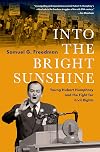
The content of this book was so interesting and important for me to read. However, the writing made the process so tedious! There was so much extraneous information and such an uneven timeline! The history of antisemitism in Minnesota and racism was worse than I had been aware of, and unfortunately, I'm not sure how much has changed. Minneapolis is still an extremely segragated city, and unfortunately Humphrey and his colleagues have very little to show for their efforts. Freedman hardly show more mentioned the racism inherent in the Minneapolis police department 70-80 years after Humphrey claimed to deal successfully with it. show less
Breaking the Line: The Season in Black College Football That Transformed the Sport and Changed the Course of Civil Rights by Samuel G. Freedman
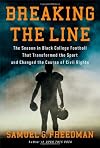
I've giving this three stars for general "good book"-ishness, and one additional star for taking a really thoughtful and thorough look at a specific, little known, aspect of cultural history.
Overall, it's about the football programs at Grambling and FAMU, two historically black colleges and universities, and particularly the year that these two teams met in the Orange Blossom Classic, in the middle of the era of the struggle for civil rights. The author does a great job of showing how show more segregated higher education and athletics relate to larger, more macro issues related to this time in history.
I will note that this is a book about football. There are some sports history books that I will recommend to people who aren't particular fans -- sometimes, the book is more about the social and cultural history, and the sport is a backdrop. Not so here. Unlike something like Friday Night Lights, where you don't need to have any special football knowledge or (as Wendy Burton tells me) even any football interest, this book assumes the reader has a pretty strong foundation of familiarity with the game, and can (willingly) follow a play recap without any background information. Which is totally cool, as a football fan, I appreciate a book that goes into the game on a deeper level instead of glossing over the more subtle parts.
I would especially recommend it to sports fans who get very interested in "sport and society" topics (I always think of it with that term, because that's the name of the class at my college). show less
Overall, it's about the football programs at Grambling and FAMU, two historically black colleges and universities, and particularly the year that these two teams met in the Orange Blossom Classic, in the middle of the era of the struggle for civil rights. The author does a great job of showing how show more segregated higher education and athletics relate to larger, more macro issues related to this time in history.
I will note that this is a book about football. There are some sports history books that I will recommend to people who aren't particular fans -- sometimes, the book is more about the social and cultural history, and the sport is a backdrop. Not so here. Unlike something like Friday Night Lights, where you don't need to have any special football knowledge or (as Wendy Burton tells me) even any football interest, this book assumes the reader has a pretty strong foundation of familiarity with the game, and can (willingly) follow a play recap without any background information. Which is totally cool, as a football fan, I appreciate a book that goes into the game on a deeper level instead of glossing over the more subtle parts.
I would especially recommend it to sports fans who get very interested in "sport and society" topics (I always think of it with that term, because that's the name of the class at my college). show less
Small Victories: The Real World of a Teacher, Her Students and Their High School by Samuel G. Freedman

[SPOILERS BELOW]
I can't think of much to say about this one. Parts of it were very interesting and other parts were boring. The teacher quits in the end, so it's not exactly encouraging, but that's not the author's fault.
I can't think of much to say about this one. Parts of it were very interesting and other parts were boring. The teacher quits in the end, so it's not exactly encouraging, but that's not the author's fault.
Lists
Awards


You May Also Like


Associated Authors
Statistics
- Works
- 12
- Also by
- 4
- Members
- 910
- Popularity
- #28,189
- Rating
- 3.7
- Reviews
- 8
- ISBNs
- 28
- Languages
- 1
- Favorited
- 1