
Freya Littledale (1929–1992)
Author of The Magic Fish
About the Author
Works by Freya Littledale
Tagged
Common Knowledge
- Birthdate
- 1929
- Date of death
- 1992
- Gender
- female
- Occupations
- freelance writer
editor of children's books
Members
Reviews

Nice classic fable; good to find something from a non-Euro culture. This edition rather lackluster compared to most modern picture-books, but I would have loved it when I was 7 or 8.
The story does end abruptly, leaving the reader to figure out the 'lesson' - assuming there is one.... I do have a current interest in Jataka stories so maybe I'll learn whether or not that's typical... as opposed to Aesop's fables in which the moral is usually explicitly stated at the end.
The text is show more interesting: it's slightly simplified and patterned, as intended for a developing early reader, but not at such a low level that it doesn't appeal to fluent readers... in fact, the effect of the style adds to the folklore vibe.
There is a note referencing [b:The Jataka or Stories of the Buddha's Former Births|444191|The Jataka or Stories of the Buddha's Former Births|E.B. Cowell|https://s.gr-assets.com/assets/nophoto/book/50x75-a91bf249278a81aabab721ef782c4a74.png|432950]. show less
The story does end abruptly, leaving the reader to figure out the 'lesson' - assuming there is one.... I do have a current interest in Jataka stories so maybe I'll learn whether or not that's typical... as opposed to Aesop's fables in which the moral is usually explicitly stated at the end.
The text is show more interesting: it's slightly simplified and patterned, as intended for a developing early reader, but not at such a low level that it doesn't appeal to fluent readers... in fact, the effect of the style adds to the folklore vibe.
There is a note referencing [b:The Jataka or Stories of the Buddha's Former Births|444191|The Jataka or Stories of the Buddha's Former Births|E.B. Cowell|https://s.gr-assets.com/assets/nophoto/book/50x75-a91bf249278a81aabab721ef782c4a74.png|432950]. show less

This is my favorite retelling of the story "The Fisherman and His Wife" from Grimm'sTales.
The artwork is simple but effective, and the rhyming repetition of the fisherman's requests give a wave-like rocking motion to the recitation.
The artwork is simple but effective, and the rhyming repetition of the fisherman's requests give a wave-like rocking motion to the recitation.
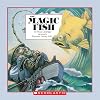
I love this book for so many reasons. The language used is simple, but Winsley Pinney Pels’ illustrations are really what draw the reader in. They are bright, whimsical, and also funny. For example, when the fish greets the fisherman, the look drawn on both characters faces are that of surprise. Also, the reader can vividly see that the fisherman’s wife is in charge. The fish claims to be magic, and grants them several wishes to fulfill their lives. After wishes for a new house and money show more are granted, the fisherman’s wife keeps pressing her luck with the fish, and the magic fish gets frustrated with the gluttony. The big idea of the story is to not be greedy. show less
THE ELVES AND THE SHOEMAKER retold by Freya Littledale, pictures by Brinton Turkle. (1975 Softcover 7 1/4 x 9 inches, 32 pages. Scholastic Blue Ribbon Book.) by Freya Littledale

Picked up for Turkle's art, which is the highlight of the book. Such cute elves, like real little boys! Littledale's telling is straightforward.
You May Also Like


Associated Authors
Statistics
- Works
- 32
- Members
- 5,627
- Popularity
- #4,404
- Rating
- 3.9
- Reviews
- 64
- ISBNs
- 90
- Languages
- 3
- Favorited
- 1