
Eugene Trivizas
Author of The Three Little Wolves and the Big Bad Pig
About the Author
Works by Eugene Trivizas
He zographia tes Christinas: To vivlio pou den to diavaze kaneis (Pankosmia neanike vivliotheke) (Greek Edition) (1993) 9 copies, 1 review
Hoi peirates tes Kaminadas (Pankosmia neanike vivliotheke) (Greek Edition) (1993) 8 copies, 1 review
Ho krokodeilos pou pēge ston odontogiatro (Histories apo to nēsi tōn pyrotechnēmatōn) (Greek Edition) (1984) 7 copies
Φρουτοπία: Ο συναχωμένος τενόρος 2 copies
Δωράκια από μένα για σένα 2 copies
Φρουτοπία: Η τελική αναμέτρηση 2 copies
Ο ταξιδιώτης και η μαργαρίτα 2 copies
Φρουτοπία: Τα σκληρά καρύδια 2 copies
Φρουτοπία: Οι τρεις συνωμότες 2 copies
Φρουτοπία: Το τρομερό φρουτοκτήνος 2 copies
Φρουτοπία: Το μυστικό μονοπάτι 2 copies
Ο ναυαγός κοκκινοτρίχης 1 copy
Η ζωγραφιά της Χριστίνας 1 copy
Οι χελώνες του Βαρώνου 1 copy
Η Χαρά και το Γκουντούν 1 copy
Η Πουπού και η Καρλότα 1 copy
Αλφαβητάρι με γλωσσοδέτες 1 copy
Η χαρά και το γκουντούν 1 copy
Το χωριό της χαράς 1 copy
Μαζί 1 copy
Ο λούκουλος τρώει βότσαλα 1 copy
Ο συναχωμένος κόκορας 1 copy
Η Μυρτώ και το κουνουπάκι 1 copy
Ο λαίμαργος τουνελόδρακος 1 copy
Τα τρία μικρά λυκάκια 1 copy
Έξι στολίδια ταξιδεύουν 1 copy
Ένα ελατάκι για τον Τάκη 1 copy
Ιστορίες του Παραμυθόκοσμου 1 copy
Ο Άρης ο τσαγκάρης 1 copy
Ένα ελατάκι για τον Τάκη 1 copy
Όταν είναι να φύγει το τρένο 1 copy
Ένα φτυάρι στον Άρη 1 copy
Τα 33 Ροζ Ρουμπίνια 1 copy
Οι πειρατές της καμινάδας 1 copy
Τα μαγικά μαξιλάρια 1 copy
Τα δικά μας Χριστούγεννα 1 copy
Οι δώδεκα ομπρέλες 1 copy
Διακοπές με τον Ευγένιο Τριβιζά στο νησί των πυροτεχνημάτων. Οι τρεις μυρμηγκοφάγοι: Β΄ δημοτικού (1995) 1 copy
Ο Χαμένος Μανάβης 1 copy
Τα 88 Ντολμαδάκια 1 copy
Φρουτοπία: Οι δύο μασκοφόροι 1 copy
Διακοπές με τον Ευγένιο Τριβιζά στο νησί των πυροτεχνημάτων. Το κλεμμένο ηφαίστειο: ΣΤ΄ δημοτικού 1 copy
Διακοπές με τον Ευγένιο Τριβιζά στο νησί των πυροτεχνημάτων. Ο δεκανέας Παραδέκας: Ε΄ δημοτικού 1 copy
Διακοπές με τον Ευγένιο Τριβιζά στο νησί των πυροτεχνημάτων. Οι βαλίτσες του γίγαντα: Γ΄… (1999) 1 copy
Ο Λούκουλος τρώει μπαλόνια 1 copy
Η λαίμαργη φάλαινα 1 copy
Η λαίμαργη φάλαινα 1 copy
Associated Works
Tagged
Common Knowledge
- Legal name
- Τριβιζάς, Ευγένιος
- Birthdate
- 1946
- Gender
- male
- Education
- Athens School of Law and Political Sciences
University College London (MA|Law)
London School of Economics and Political Science (PhD|Law) - Occupations
- criminologist
sociologist - Organizations
- University of Reading
- Short biography
- Eugene (Eugenios) Trivizas, (born 1946) is a Greek sociologist and writer of children's books. For his lasting contribution as a children's writer, Trivizas was a finalist for the biennial, international Hans Christian Andersen Award in 2006.
Born in Athens, he received his LL.B. degree from the University of Athens in 1969. In 1972 he passed the Athens Bar examinations and in the same year he was called as a barrister to the Athens Bar. In 1973 he received a B.Sc. degree in Politics and Economics from the University of Athens and the following year he received an LL.M. degree in Comparative Criminal Law and Procedure from the University of London (University College) and a diploma in Shipping Law from the City of London Polytechnic. In 1977 he was made a Fellow of the Salzburg seminar in American studies and in 1979 he was awarded his Ph.D. degree in Criminology from the University of London (London School of Economics and Political Science, Law Department). - Nationality
- Greece
- Birthplace
- Athens, Greece
- Associated Place (for map)
- Athens, Greece
Members
Reviews

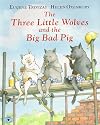
The traditional English fairy-tale about the three little pigs and their various confrontations with a big bad wolf is inverted here, as three little wolves go out into the world and attempt to make a home for themselves. Warned by their mother about the dangers posed by the big bad pig, the wolves build themselves a secure brick house, only to watch their dastardly porcine enemy bring it down with a sledgehammer. Their concrete house fairs no better, being destroyed by a pneumatic drill, show more and the reinforced fortress they next construct is brought down by dynamite. How will the little wolves live, when the pig keeps destroying their home? Could a house of flowers, however unlikely, provide the answer...?
Greek author Eugene Trivizas and British illustrator Helen Oxenbury collaborated on this entertaining fractured fairy-tale, published in Greek as Τα τρία μικρά λυκάκια. I found the reversed roles here, in which the wolves are the much-put-upon victims and the pig is the bad guy, immensely refreshing, given the ways that wolves are almost always vilified in traditional tales. I thought the happy ending, in which the pig is reformed, after taking pleasure from sniffing the wolves flower-house , was a nice touch. Oxenbury's artwork, as was to be expected, was also very appealing, capturing both the humor of the lupine-porcine conflict, and the poignancy of the wolves' continual eviction from their various homes. Recommended to all young fairy-tales lovers, particularly if they enjoy role reversals and imaginative reinterpretations of traditional stories. show less
Greek author Eugene Trivizas and British illustrator Helen Oxenbury collaborated on this entertaining fractured fairy-tale, published in Greek as Τα τρία μικρά λυκάκια. I found the reversed roles here, in which the wolves are the much-put-upon victims and the pig is the bad guy, immensely refreshing, given the ways that wolves are almost always vilified in traditional tales. I thought the happy ending, in which

ATTENTION! BAD THINGS HAPPEN TO CATS IN THIS BOOK!
If reading about any of the following: the widespread persecution and mistreatment of cats; the creation of a Pursuit and Annihilation Squad to eliminate them; the cynical complicity of the political establishment, and the manipulation of the media, in a campaign to whip up the general populace into a violent anti-feline frenzy; the horrific (and graphically described) torture and death mercilessly visited upon numerous cute and cuddly cats - show more is likely to make you feel physically unwell, or give you nightmares (as it did me), then be warned!
Clubbed to death by frenzied mobs, shot and stabbed by armed squads of leering goons, stoned and then stabbed with knitting needles by grandmotherly old ladies, drowned in barrels of hot tar, lured into excruciatingly painful deaths in a pit of quicklime, soaked in petrol and set alight, burned to death while desperately trying to hide, flayed alive in dank basements for their fur - the cats in this story don't fare well. In one particularly heart-breaking scene, an affectionate and cuddly cat named Purrcy - so known because of his tendency to approach any likely human, and purr for all he was worth, in hopes of some petting - is beaten to death as the narrator watches:
"Then I saw a black cat come out of a sidestreet and approach the coachman. I recognized him immediately. It was Purrcy. He went up to the coachman and rubbed himself against his boots, purring like a steam engine. The coachman gave him a hard kick in the ribs and a stunned Purrcy ended up lying on his back on the pavement five feet away. The horses snorted restlessly. Purrcy turned over, got up and was about to leave, puzzled over the unexpected kick, when the coachman, white with rage, approached the cat, raised his horse-whip furiously and brought it down on him with force, without pity, again and again, ignoring Purrcy's desperate cries. I saw the poor animal writhe in pain and turn his bloody muzzle imploringly towards his attacker, as if begging for mercy, but the man went on flogging him savagely until Purrcy moved no more. He had paid dearly for his trusting nature and his yearning for some petting."
This is, I am afraid, just one of many such scenes in Eugene Trivizas' The Last Black Cat (originally published in Greek as Η Τελευταία Μαύρη Γάτα), an allegorical children's novel (!!) that explores the subject of racially motivated persecution, substituting black cats (and eventually, all cats) for a human group. It is immensely effective, in demonstrating how easily manipulated people can be, how ready to seize on any irrational explanation for misfortune, provided it gives them an outlet for their anger, and how terribly cruel they can become, in their behavior to their fellow creatures. Trivizas - whose only other work to be translated into English is the picture-book The Three Little Wolves and the Big Bad Pig - uses the age-old superstition about black cats bringing bad luck (which has done enough harm in real life), to explore how destructive and futile such scapegoating can be.
But oh! How traumatic this lesson is, in his hands! I felt physically ill throughout much of the book, and while I don't suppose one should feel indifferent, when considering such issues, I'm not sure that this is a book I would hand to a young reader, or to any reader who was especially sensitive about animal suffering. It just seemed so intensely graphic, for a book aimed at children! (To give a point of comparison, I've read novels about the Holocaust that were less graphic). So, while I appreciate both Trivizas' message, and his skill as a writer - his ability to evoke a strong emotional response in me, as a reader - I can't say that I enjoyed The Last Black Cat, and remain uncertain as to whom I would recommend it. show less
If reading about any of the following: the widespread persecution and mistreatment of cats; the creation of a Pursuit and Annihilation Squad to eliminate them; the cynical complicity of the political establishment, and the manipulation of the media, in a campaign to whip up the general populace into a violent anti-feline frenzy; the horrific (and graphically described) torture and death mercilessly visited upon numerous cute and cuddly cats - show more is likely to make you feel physically unwell, or give you nightmares (as it did me), then be warned!
Clubbed to death by frenzied mobs, shot and stabbed by armed squads of leering goons, stoned and then stabbed with knitting needles by grandmotherly old ladies, drowned in barrels of hot tar, lured into excruciatingly painful deaths in a pit of quicklime, soaked in petrol and set alight, burned to death while desperately trying to hide, flayed alive in dank basements for their fur - the cats in this story don't fare well. In one particularly heart-breaking scene, an affectionate and cuddly cat named Purrcy - so known because of his tendency to approach any likely human, and purr for all he was worth, in hopes of some petting - is beaten to death as the narrator watches:
"Then I saw a black cat come out of a sidestreet and approach the coachman. I recognized him immediately. It was Purrcy. He went up to the coachman and rubbed himself against his boots, purring like a steam engine. The coachman gave him a hard kick in the ribs and a stunned Purrcy ended up lying on his back on the pavement five feet away. The horses snorted restlessly. Purrcy turned over, got up and was about to leave, puzzled over the unexpected kick, when the coachman, white with rage, approached the cat, raised his horse-whip furiously and brought it down on him with force, without pity, again and again, ignoring Purrcy's desperate cries. I saw the poor animal writhe in pain and turn his bloody muzzle imploringly towards his attacker, as if begging for mercy, but the man went on flogging him savagely until Purrcy moved no more. He had paid dearly for his trusting nature and his yearning for some petting."
This is, I am afraid, just one of many such scenes in Eugene Trivizas' The Last Black Cat (originally published in Greek as Η Τελευταία Μαύρη Γάτα), an allegorical children's novel (!!) that explores the subject of racially motivated persecution, substituting black cats (and eventually, all cats) for a human group. It is immensely effective, in demonstrating how easily manipulated people can be, how ready to seize on any irrational explanation for misfortune, provided it gives them an outlet for their anger, and how terribly cruel they can become, in their behavior to their fellow creatures. Trivizas - whose only other work to be translated into English is the picture-book The Three Little Wolves and the Big Bad Pig - uses the age-old superstition about black cats bringing bad luck (which has done enough harm in real life), to explore how destructive and futile such scapegoating can be.
But oh! How traumatic this lesson is, in his hands! I felt physically ill throughout much of the book, and while I don't suppose one should feel indifferent, when considering such issues, I'm not sure that this is a book I would hand to a young reader, or to any reader who was especially sensitive about animal suffering. It just seemed so intensely graphic, for a book aimed at children! (To give a point of comparison, I've read novels about the Holocaust that were less graphic). So, while I appreciate both Trivizas' message, and his skill as a writer - his ability to evoke a strong emotional response in me, as a reader - I can't say that I enjoyed The Last Black Cat, and remain uncertain as to whom I would recommend it. show less
"Ρούνι, Ρούνι, Ρούνι, το ύπουλο κακό γουρούνι"
Έχοντας διαβάσει αυτό το βιβλίο, αυτή η φράση δεν έλεγε να μου ξεκολλήσει και επαναλάμβανε τον εαυτό της στο -τότε- τετράωρο ταξίδι Αθήνα-Σπάρτη, προς πλήρη δυστυχία της υπόλοιπης οικογένειας, που βρισκόταν σφηνωμένη μαζί μου show more στο αδιέξοδο ενός σαραβαλιασμένου alpha romeo που άκουγε στο όνομα Ιβανόης.
Και μόνο γι αυτό, αγαπάω παθιασμένα αυτό το βιβλίο του Τριβιζά, το οποίο παίζει και να είναι το μόνο που έχω καταφέρει να διαβάσω ολόκληρο (η Ζωγραφιά της Χριστίνας είχε την ίδια επίδραση πάνω μου που είχε και το Παραμύθι χωρίς Τέλος. Οξεία και ανίατη βαρεμάρα.)
Από όταν ήμουν 8 χρονών μέχρι και σήμερα, διασκεδάζω κάθε φορά που διαβάζω αυτό το βιβλίο. Είναι από αυτά τα περίεργα αναγνώσματα που ναι μεν σε διασκεδάζουν όταν είσαι μικρός, αλλά γίνονται όλο και πιο αστεία με την πάροδο του χρόνου. show less
Έχοντας διαβάσει αυτό το βιβλίο, αυτή η φράση δεν έλεγε να μου ξεκολλήσει και επαναλάμβανε τον εαυτό της στο -τότε- τετράωρο ταξίδι Αθήνα-Σπάρτη, προς πλήρη δυστυχία της υπόλοιπης οικογένειας, που βρισκόταν σφηνωμένη μαζί μου show more στο αδιέξοδο ενός σαραβαλιασμένου alpha romeo που άκουγε στο όνομα Ιβανόης.
Και μόνο γι αυτό, αγαπάω παθιασμένα αυτό το βιβλίο του Τριβιζά, το οποίο παίζει και να είναι το μόνο που έχω καταφέρει να διαβάσω ολόκληρο (η Ζωγραφιά της Χριστίνας είχε την ίδια επίδραση πάνω μου που είχε και το Παραμύθι χωρίς Τέλος. Οξεία και ανίατη βαρεμάρα.)
Από όταν ήμουν 8 χρονών μέχρι και σήμερα, διασκεδάζω κάθε φορά που διαβάζω αυτό το βιβλίο. Είναι από αυτά τα περίεργα αναγνώσματα που ναι μεν σε διασκεδάζουν όταν είσαι μικρός, αλλά γίνονται όλο και πιο αστεία με την πάροδο του χρόνου. show less
Silly story that reverses the well loved three little pigs. The wolves are creative in their home building, the pig is equally crafty in his destruction. Actually, the pig is relentless in his desire to destroy the wolves -- is he jealous? does he have a thorn in his toe? did his mom not hug him enough? or is he just a bully? And this is why I had to knock off a star.
I have to wonder if this story takes place a generation or two after the pig community grew a bit too confident and proud show more after their success in beating the wolf. A case of the oppressed becoming the oppressor? There doesn't seem to be any real motivation for the pig to be going after the wolves in such a dramatic way. In the original story it makes sense -- the wolf is hungry, the pigs look yummy.
I'll read this to the kiddos, we'll laugh and have fun with it. But deep inside I will be wondering what is up with the pig. Maybe I'll challenge the kids to explain why the pig acts the way he does. show less
I have to wonder if this story takes place a generation or two after the pig community grew a bit too confident and proud show more after their success in beating the wolf. A case of the oppressed becoming the oppressor? There doesn't seem to be any real motivation for the pig to be going after the wolves in such a dramatic way. In the original story it makes sense -- the wolf is hungry, the pigs look yummy.
I'll read this to the kiddos, we'll laugh and have fun with it. But deep inside I will be wondering what is up with the pig. Maybe I'll challenge the kids to explain why the pig acts the way he does. show less
Lists
Awards


You May Also Like


Associated Authors
Statistics
- Works
- 155
- Also by
- 1
- Members
- 4,740
- Popularity
- #5,309
- Rating
- 4.1
- Reviews
- 108
- ISBNs
- 160
- Languages
- 13
- Favorited
- 1
