
Alki Zei (1925–2020)
Author of The Wildcat Behind Glass
About the Author
Image credit: via Alchetron
Works by Alki Zei
Ο θείος Πλάτων 1 copy
Ο ψεύτης παππούς 1 copy
Tagged
Common Knowledge
- Canonical name
- Zei, Alki
- Legal name
- Ζέη, Άλκη
- Birthdate
- 1925-12-15
- Date of death
- 2020-02-27
- Gender
- female
- Education
- Athens University (philosophy)
Moscow Cinema Institute (screenwriting)
Conservatoire d'Athènes - Occupations
- Author
- Awards and honors
- Commandeur de l'Ordre des Arts et des Lettres (2015)
Mildred L. Batchelder Award (1970, 1974, 1980) - Relationships
- Σεβαστίκογλου, Γιώργος
- Short biography
- Alki Zei est l'un des auteurs les plus importants en matière de littérature de jeunesse grecque.
Alki Zei est née à Athènes, où elle fit ses études. Elle y vécut la guerre, puis étudia la littérature et commença à publier des nouvelles. En 1946, elle suit son mari Georges en URSS. Leurs deux enfants naissent à Moscou. Après quelques années passées à Tachkent, Alki et les siens rentrent en Grèce. Avec l'arrivée au pouvoir d'un gouvernement militaire, ce fut la prison et l'exil : en Italie et en France, avant de regagner son pays d'origine après la dictature. Elle vit aujourd'hui à Athènes avec son mari et ses enfants.
Alki Zei a obtenu de nombreux prix, entre autres, le Prix Mildred Batchelder aux Etats-Unis et le Prix national pour la littérature enfantine en Grèce.
Source : ricochet - Nationality
- Greece
- Birthplace
- Athens, Greece
- Places of residence
- Samos, Grèce
Athens, Greece
Tashkent, Soviet Union
Moscow, Russia, USSR
Paris, France - Place of death
- Athènes, Grèce
- Map Location
- Greece
- Associated Place (for map)
- Athens, Greece
Members
Reviews

In 1936 two young sisters, Melia and Myrto, are excited to spend the summer running around the small Greek island they live on and getting to see the older cousin they idolize, Nikos, who makes up great adventure stories about the taxidermied wildcat in their aunt’s living room. However, fascism is a looming threat and starting to put pressure on their family, particularly their academic grandfather and the revolutionary Nikos. Soon some of their friends prove they can’t be trusted, and show more others desperately need their help. The girls are divided as Myrto joins the youth nationalist club. Nikos is wanted by the new dictator’s police and must hide, but he leaves clues for Melia in the mouth of the wildcat, so she can help him with his fight.
A lovely classic middle-grade story. Melia starts out very free and trusting of everyone, but sees the fascism creeping in the same way that the reader does. She keeps the sense of justice that she had from the beginning, but fine-tunes it as she learns more about the world. The role of the stuffed wildcat is perfect, starting out as a metaphor and fantasy but evolving into a literal hideaway and facilitator of resistance.
I knew nothing of modern Greek history and was not aware that they had a fascist dictatorship in the 1930s along with all their neighbors, so I appreciate this for filling a gap in my knowledge in addition to just being a good book. show less
A lovely classic middle-grade story. Melia starts out very free and trusting of everyone, but sees the fascism creeping in the same way that the reader does. She keeps the sense of justice that she had from the beginning, but fine-tunes it as she learns more about the world. The role of the stuffed wildcat is perfect, starting out as a metaphor and fantasy but evolving into a literal hideaway and facilitator of resistance.
I knew nothing of modern Greek history and was not aware that they had a fascist dictatorship in the 1930s along with all their neighbors, so I appreciate this for filling a gap in my knowledge in addition to just being a good book. show less
 This review was written for LibraryThing Early Reviewers.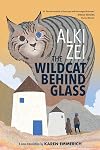
This is one of those rare reads, which masterfully weaves emotions and thoughts using imagination and harsh reality to deliver a tale that transcends age and time.
Melia can't wait until their cousin Nikos returns and continues his stories about the stuffed wildcat, which stands in a glass case in their living room. It was killed after swimming across the ocean from the mainland to their Greece island and has two, differently colored eyes, always showing only one according to its show more mood...according to the stories. This time, Myrto is exceptionally excited about Nikos arrival because life around them is getting a little strange. The adults whisper and gossip about the king, dictators, and possible unrest, and Myrto is told to watch what she says or her father might lose his job. When Niko arrives, he tells his stories and plays with Myrto and the rest like always...but something's changed. His tales no longer are fueled by fantasy but carry information about the world. When he speaks about a war in Spain and possibly leaving for good, Myrto knows something's not right, but that's nothing compared to the shift in the atmosphere of everyone around her. The king has declared dictatorship, and while life still continues, it's nothing like before.
Myrto is a very playful girl, who isn't sure what she thinks of school, enjoys spending time outside, gets impatient during 'adult' events, and looks forward to the annual return of her favorite cousin. Her relationship with her sister, relatives, neighbors, and those around her comes across naturally. She's easy to relate to, and the author does a wonderful job at keeping the entire read as if it truly is through her eyes, the eyes of a middle grader. While she does have an active imagination and loves to have fun, like every other kid that age, she also picks up on the adults' worries, concerns, and mumblings...but then, what kid doesn't? While she doesn't understand everything that is going on, she does see and feel the changes, which gives this read its true impact. It's innocent, holds humor and playfulness, and weaves in imagination to create a potent mix.
The messages and historical aspects head in a serious direction, and there are moments which hit with emotion and tug at the heart. There is more than a little food for thought, and plenty of aspects can be used for discussions and offer material for classroom settings. Not only does the book dive into the historical, political and cultural aspects, but even the literary side offers many gems. Especially the symbolism surrounding the wildcat is a treat.
Most importantly, this is a fun read. The humor and imagination keep a light playfulness humming along while the harsher side pokes in the background. I'm going to be tossing this read into my homeschooling line-up for next year because it's one that shouldn't be missed. I received a DRC and enjoyed this one quite a bit. show less
Melia can't wait until their cousin Nikos returns and continues his stories about the stuffed wildcat, which stands in a glass case in their living room. It was killed after swimming across the ocean from the mainland to their Greece island and has two, differently colored eyes, always showing only one according to its show more mood...according to the stories. This time, Myrto is exceptionally excited about Nikos arrival because life around them is getting a little strange. The adults whisper and gossip about the king, dictators, and possible unrest, and Myrto is told to watch what she says or her father might lose his job. When Niko arrives, he tells his stories and plays with Myrto and the rest like always...but something's changed. His tales no longer are fueled by fantasy but carry information about the world. When he speaks about a war in Spain and possibly leaving for good, Myrto knows something's not right, but that's nothing compared to the shift in the atmosphere of everyone around her. The king has declared dictatorship, and while life still continues, it's nothing like before.
Myrto is a very playful girl, who isn't sure what she thinks of school, enjoys spending time outside, gets impatient during 'adult' events, and looks forward to the annual return of her favorite cousin. Her relationship with her sister, relatives, neighbors, and those around her comes across naturally. She's easy to relate to, and the author does a wonderful job at keeping the entire read as if it truly is through her eyes, the eyes of a middle grader. While she does have an active imagination and loves to have fun, like every other kid that age, she also picks up on the adults' worries, concerns, and mumblings...but then, what kid doesn't? While she doesn't understand everything that is going on, she does see and feel the changes, which gives this read its true impact. It's innocent, holds humor and playfulness, and weaves in imagination to create a potent mix.
The messages and historical aspects head in a serious direction, and there are moments which hit with emotion and tug at the heart. There is more than a little food for thought, and plenty of aspects can be used for discussions and offer material for classroom settings. Not only does the book dive into the historical, political and cultural aspects, but even the literary side offers many gems. Especially the symbolism surrounding the wildcat is a treat.
Most importantly, this is a fun read. The humor and imagination keep a light playfulness humming along while the harsher side pokes in the background. I'm going to be tossing this read into my homeschooling line-up for next year because it's one that shouldn't be missed. I received a DRC and enjoyed this one quite a bit. show less
Originally written in 1963, this novel has received multiple honors and been published in dozens of international editions. It’s a classic for good reason with its fascinating, well-written, thought-provoking, and richly authentic story.
Melia, age 8, and her sister Myrto, age 10, call a Greek island home. It’s 1936, and they are pleased as punch to be heading to the small village at the seaside where they spend every summer cavorting with their friends. One of the best bits is when their show more college-age cousin, Nikos, comes and spins fabulous tales about the taxidermied wildcat that resides in the glass case at home.
This summer, however, turns out to be a strange one. Alongside the carefree, idyllic days by the sea, the unsupervised make-believe, banter, bickering, and adventuring of this ragtag crew of kids, there is an air of mysterious, foreboding gloom among the adults. The children often overhear worrisome, sharp exchanges, remarks about kings and dictators, democracy and fascism, Hitler and Spain, which they don’t understand but which seem full of dark significance. As tensions, secrets, and emotions continue to rise, Melia, Myrto, and the wildcat find themselves immersed in a serious, dangerous adventure.
I’ve encountered numerous middle-grade novels about WWII-era resistance movements among the Danes, Norwegians, French, Dutch…but never the Greeks. Alki Zei, who was herself involved in the Greek resistance, conveys brilliantly the tumult of anger and grief, fear of reprisal, brave resistance, and stomach-turning acquiescence, as the country falls from democracy into fascism. She juxtaposes this with the sunny innocence of childhood, the fierce love within family and community, and enlivens the entire story with rich sensory details of Greek life in this era – delicious stuffed tomatoes and cheese fritters, wine cellars and rocky caves, turquoise waters and old fishing boats. And she gives us a narrator in Melia whose voice is credible and captivating.
It’s a timeless story in content and in the telling. This translation flows beautifully, and an introductory note by the translator is of great help to modern readers. Highly recommended as a read-aloud with ages 8 and up, or an independent read for ages 10 and older. show less
Melia, age 8, and her sister Myrto, age 10, call a Greek island home. It’s 1936, and they are pleased as punch to be heading to the small village at the seaside where they spend every summer cavorting with their friends. One of the best bits is when their show more college-age cousin, Nikos, comes and spins fabulous tales about the taxidermied wildcat that resides in the glass case at home.
This summer, however, turns out to be a strange one. Alongside the carefree, idyllic days by the sea, the unsupervised make-believe, banter, bickering, and adventuring of this ragtag crew of kids, there is an air of mysterious, foreboding gloom among the adults. The children often overhear worrisome, sharp exchanges, remarks about kings and dictators, democracy and fascism, Hitler and Spain, which they don’t understand but which seem full of dark significance. As tensions, secrets, and emotions continue to rise, Melia, Myrto, and the wildcat find themselves immersed in a serious, dangerous adventure.
I’ve encountered numerous middle-grade novels about WWII-era resistance movements among the Danes, Norwegians, French, Dutch…but never the Greeks. Alki Zei, who was herself involved in the Greek resistance, conveys brilliantly the tumult of anger and grief, fear of reprisal, brave resistance, and stomach-turning acquiescence, as the country falls from democracy into fascism. She juxtaposes this with the sunny innocence of childhood, the fierce love within family and community, and enlivens the entire story with rich sensory details of Greek life in this era – delicious stuffed tomatoes and cheese fritters, wine cellars and rocky caves, turquoise waters and old fishing boats. And she gives us a narrator in Melia whose voice is credible and captivating.
It’s a timeless story in content and in the telling. This translation flows beautifully, and an introductory note by the translator is of great help to modern readers. Highly recommended as a read-aloud with ages 8 and up, or an independent read for ages 10 and older. show less
This review was written for LibraryThing Early Reviewers.Excellent! Such an impressive balance of lightness and heaviness that illustrates an experience of growing up in turbulent political times. Loved how the 8-year-old narrator sometimes saw her adventures as fun games and sometimes as upsetting challenges, as a child would.
This review was written for LibraryThing Early Reviewers.Lists
Cats in Fiction (1)
Favourite Books (1)
Awards


You May Also Like


Associated Authors
Statistics
- Works
- 21
- Members
- 330
- Popularity
- #71,936
- Rating
- 4.2
- Reviews
- 17
- ISBNs
- 85
- Languages
- 9
- Favorited
- 2
