
Li Bai (0699–0762)
Author of Li Po and Tu Fu: Poems Selected and Translated with an Introduction and Notes
About the Author
For a poet whose name is usually paired with Tu Fu's, and whose poetry ranks among the best ever written in China, surprisingly little can be definitively stated about Li Po. Early in life he was dubbed the "Banished Immortal" by admirers who argued that his genius was so far above the common herd show more that surely he was a being from another world exiled for a time on earth. Li Po did everything he could to foster this larger-than-life image, making it hard to separate fact from fiction. He was probably born in 701 in Central Asia, along the border of what is now Afghanistan and the former Soviet Union, though he spent his boyhood in southwest China. His family seem to have been traders, claiming descent from the Li's of Kansu province, which, if true, would make them distant relations of the T'ang royal family. The T'ang ruling house was of mixed Turkish and Chinese blood, and it is possible that Li Po was not Chinese. Two contemporaries claimed that he could compose in a foreign language, and there are hints in his verse that he was familiar with elements of Turkish culture, although that would not have been surprising for someone born in Central Asia regardless of ethnicity. His was a cosmopolitan age, with much activity along the trade routes between China and Persia. Whatever his origins, Li Po was schooled in Chinese language and culture. Although he became famous for his excessive drinking and un-Confucian behavior, his debauchery did not particularly distinguish him from many of his bona fide Chinese companions, who looked upon drunkenness as a state of sublime receptivity to poetic inspiration. It may be possible, as Elling Eide has suggested, that a double stigma ("barbarian" and "merchant class") may account for his failure to take the civil service examinations. Later, Chinese scholars claimed that he was too impulsive or lacking in self-discipline to endure the necessary examination preparation, but that contradicts the evidence in his works that he was well read and fond of study. More important, it fails to account for Li Po's own words; he reveals, for example, intense disappointment in an allegorical poem entitled "Song of the Heavenly Horse," which seems in many details suspiciously autobiographical. It may be that what Li Po lacked was not the appetite for power, but the personality necessary for politics. He was presented to Emperor Hsuan-tsung, who was sufficiently impressed to give him a position in the Hanlin Academy, but he lost it to court intrigues after only a year or two. Then in 755, when the An Lushan rebellion rocked the dynasty, he sided with Prince Yung, who was eventually found guilty of treason. Whatever his personal anguish, Li Po seems to have been completely convincing in the pose of the romantic poet and to have dazzled his contemporaries, who describe his flashing eyes, piercing voice, and poems, dashed off at electrifying speed. Tu Fu, for one, held him in considerable awe. Yet there is undoubtedly a complex character behind the flashy facade. Though first struck by the soaring spirit and unbridled imagination of his poems, one eventually discovers that they are actually very intricately patterned, with painstaking attention to rhythm and internal rhyme, and studded with allusions yielding multiple levels of meaning. A very high level of artistry masquerades as effortlessness. Traditionally, scholars have believed that Li died in late 762, since his kinsman wrote in a preface at that time that he was ailing, and there are no notices dated after that. Legend, however, has it that he actually died from drowning, falling drunk from a boat in a futile effort to embrace a reflection of the moon. Li Po would no doubt prefer the latter story, and it seems an apt metaphor for the life of a man whose reach always seemed to exceed his grasp. (Bowker Author Biography) show less
Image credit: from Wikipedia
Series
Works by Li Bai
Li Po and Tu Fu: Poems Selected and Translated with an Introduction and Notes (1973) — Contributor — 418 copies, 4 reviews
Wave hands like clouds: Kuang ping tai chi : a Chinese yoga of meditation in motion (1975) 12 copies
Měsíc nad průsmykem 2 copies
Simulation and capacity calculation in real German and European interconnected gas transport systems (2012) 2 copies
Ebri de lluna 1 copy
PRACTICAL ORTHOPEDICS 1 copy
Zero-Step Thinking 1 copy
Din cântecele lui Li-Tai-Pe 1 copy
Li Tai Bai Wen Ji 1 copy
Sur notre terre exilé 1 copy
Gedichte : eine Auswahl 1 copy
The Tale of Matou Qin 1 copy
Li Tai-peh 1 copy
Tienkuo the Heavenly Kingdom 1 copy
Ventana al Oriente 1 copy
Coppe di Giada 1 copy
Poetry 1 copy
Reviving Traditions in Research on International Market Entry, Volume 14 (Advances in International Marketing) (2003) 1 copy
"The River Merchant's Wife" 1 copy
The Poems of Li Po 1 copy
Sans traces 1 copy
Eres tan bella como una flor 1 copy
The Poet Li Po: A.D. 701-762 1 copy
Poesiealbum 138 – Li Tai-bo 1 copy
Associated Works
A Book of Luminous Things: An International Anthology of Poetry (1996) — Contributor — 941 copies, 12 reviews
World Poetry: An Anthology of Verse from Antiquity to Our Time (1998) — Contributor — 496 copies, 2 reviews
The Graphic Canon, Vol. 1: From the Epic of Gilgamesh to Shakespeare to Dangerous Liaisons (2012) — Contributor — 300 copies, 7 reviews
Oogst Der Tijden. keur uit de werken van schrijvers en dichters aller volken en eeuwen (1940) — Contributor — 12 copies
MHQ: The Quarterly Journal of Military History — Summer 2017 (2017) — Author "Poetry: Of Soldiers and Generals" — 1 copy
Tagged
Common Knowledge
- Canonical name
- Li Bai
- Legal name
- 李白
- Other names
- Li Po
Li Taipo
Li Bo
Li Pai - Birthdate
- 0701
- Date of death
- 0762
- Gender
- male
- Occupations
- poet
secretary - Cause of death
- drowning
- Nationality
- China
- Birthplace
- Suiye, Tang Empire (present-day Suyab, Kyrgyzstan)
- Places of residence
- Jiangyou, Sichuan Province, China
Dangtu, Anhui Province, China (death)
Chang'an, China
Shandong, China - Place of death
- Dangtu, China
- Associated Place (for map)
- China
Members
Reviews
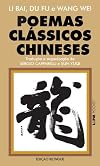
É bem difícil você julgar uma tradução poética de uma escrita que você desconhece que por si só tem uma especifidade na própria grafia comparada à pintura, julgando os poemas através do meu conhecimento do taoísmo e budismo, eles são vastos em sua simplicidade, mas dos três poetas presentes na coletânea o que mais me instigou foi Du Fu, pelo seu tom não tão passivo perante a contemplação do mundo.
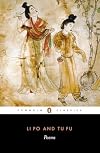
“Great men have a curious way of appearing in complementary pairs” – Kenneth Clark.
Li Po, perhaps better known as Li Bai, and Tu Fu, whose name is better Romanized as Du Fu, were two great poets of the Tang Dynasty in 8th century China.
Li Po was a rebel against conformity, a wanderer fond of wine and of spontaneous revelry in the moonlight. There is both an imagination and a loneliness to his work. Tu Fu was a traditionalist but also an innovator; his poetry has both the honesty and show more the subtlety often found in great art.
Tu Fu was clearly the “yang” to Li Po’s “yin”; Tu Fu the Confucian and Li Po theTaoist. The two met and respected one another, and in fact Tu Fu idolized the older poet.
One has to read the poems slowly and without distraction to be rewarded. Chinese is not a flowery language to begin with and I believe there is a bit lost in translation. Furthermore the translations in this edition are a bit dated and I’ve seen better in a collection from Whincup, which I’ll review later.
However, the overall ‘feel’ of this book is very nice – informative introduction, nice notes on the poems, and occasionally poems printed in both English and Chinese. It’s a great introduction to two great poets.
I extract three poems that resonated with me when I first read them long ago, and which still do as I read them today.
Quiet Night Thoughts (Li Po)
-------------------------------------
Before my bed
there is bright moonlight
So that is seems
like frost on the ground:
Lifting my head
I watch the bright moon,
Lowering my head,
I dream that I’m home.
Longing (Li Po)
-------------------
Sunlight begins to fade,
mist fills the flowers,
The moon as white as silk
weeps and cannot sleep,
Chao zither’s Phoenix frets
no more shall I touch,
Shu lute’s Mandarin Duck strings
I’ll sound instead:
This song has a meaning
that no one can tell,
It follows the Spring wind
as far as Yen-jan
To you far, far away
beyond the blue sky –
Whom once I gave
A sideways glance
With eyes that now
Are wells of tears –
If you do not believe
that my heart breaks,
Come back and look with me
into this glass!
Nine Thoughts Afloat (Tu Fu)
--------------------------------------
By bent grasses
in a gentle wind
Under straight mast
I’m alone tonight,
And the stars hang
above the broad plain
But moon’s afloat
in this Great River:
Oh, where’s my name
among the poet’s?
Official rank?
‘Retired for ill-health.’
Drifting, drifting,
what am I more than
A single gull
Between sky and earth? show less
Li Po, perhaps better known as Li Bai, and Tu Fu, whose name is better Romanized as Du Fu, were two great poets of the Tang Dynasty in 8th century China.
Li Po was a rebel against conformity, a wanderer fond of wine and of spontaneous revelry in the moonlight. There is both an imagination and a loneliness to his work. Tu Fu was a traditionalist but also an innovator; his poetry has both the honesty and show more the subtlety often found in great art.
Tu Fu was clearly the “yang” to Li Po’s “yin”; Tu Fu the Confucian and Li Po theTaoist. The two met and respected one another, and in fact Tu Fu idolized the older poet.
One has to read the poems slowly and without distraction to be rewarded. Chinese is not a flowery language to begin with and I believe there is a bit lost in translation. Furthermore the translations in this edition are a bit dated and I’ve seen better in a collection from Whincup, which I’ll review later.
However, the overall ‘feel’ of this book is very nice – informative introduction, nice notes on the poems, and occasionally poems printed in both English and Chinese. It’s a great introduction to two great poets.
I extract three poems that resonated with me when I first read them long ago, and which still do as I read them today.
Quiet Night Thoughts (Li Po)
-------------------------------------
Before my bed
there is bright moonlight
So that is seems
like frost on the ground:
Lifting my head
I watch the bright moon,
Lowering my head,
I dream that I’m home.
Longing (Li Po)
-------------------
Sunlight begins to fade,
mist fills the flowers,
The moon as white as silk
weeps and cannot sleep,
Chao zither’s Phoenix frets
no more shall I touch,
Shu lute’s Mandarin Duck strings
I’ll sound instead:
This song has a meaning
that no one can tell,
It follows the Spring wind
as far as Yen-jan
To you far, far away
beyond the blue sky –
Whom once I gave
A sideways glance
With eyes that now
Are wells of tears –
If you do not believe
that my heart breaks,
Come back and look with me
into this glass!
Nine Thoughts Afloat (Tu Fu)
--------------------------------------
By bent grasses
in a gentle wind
Under straight mast
I’m alone tonight,
And the stars hang
above the broad plain
But moon’s afloat
in this Great River:
Oh, where’s my name
among the poet’s?
Official rank?
‘Retired for ill-health.’
Drifting, drifting,
what am I more than
A single gull
Between sky and earth? show less

The flocks rise and dissolve until the last is flown away.
The clouds drift and swirl until the last fades away.
The mountain and I remain to regard each other, until only the mountain remains.
... is the translation I'm waiting for, but Obata is pretty good here. With this and one or two others in hand, somewhere towards the centre is a glimpse of the truth.
The clouds drift and swirl until the last fades away.
The mountain and I remain to regard each other, until only the mountain remains.
... is the translation I'm waiting for, but Obata is pretty good here. With this and one or two others in hand, somewhere towards the centre is a glimpse of the truth.
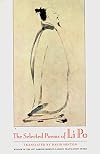
Some good stuff in here. My favorite:
Lines Three, Five, Seven Words Long
Autumn wind clear,
Autumn moon bright,
Fallen leaves gather in piles, then scatter,
And crows settling-in, cold, startle away.
Will we ever see, ever even think about each other again?
This night, this moment: impossible to feel it all.
Lines Three, Five, Seven Words Long
Autumn wind clear,
Autumn moon bright,
Fallen leaves gather in piles, then scatter,
And crows settling-in, cold, startle away.
Will we ever see, ever even think about each other again?
This night, this moment: impossible to feel it all.
Lists
Awards


You May Also Like


Associated Authors
Statistics
- Works
- 91
- Also by
- 15
- Members
- 1,390
- Popularity
- #18,497
- Rating
- 4.0
- Reviews
- 19
- ISBNs
- 97
- Languages
- 11
- Favorited
- 9
