
Greg Herren
Author of Bourbon Street Blues
About the Author
Greg Herren lives in New Orleans
Disambiguation Notice:
Greg Herren also writes under the pseudonyms Todd Gregory and Cage Thunder.
Image credit: American Library Association at Flickr.com
Series
Works by Greg Herren
Florida Happens: Tales of Mystery, Mayhem, and Suspense from the Sunshine State (2018) 17 copies, 1 review
The Trouble with Cupid: 10 Trouble Cat Short Mysteries Spiced with Romance (Trouble Cat Mysteries) (2018) 7 copies
The Only one in the World — Contributor — 1 copy
I Climbed Clothes Mountain 1 copy
Quiet Desperation 1 copy
Associated Works
The Faking of the President: Nineteen Stories of White House Noir (2000) — Contributor — 29 copies, 8 reviews
Murder-a-Go-Go's: Crime Fiction Inspired by the Music of The Go-Go's (2019) — Contributor — 13 copies, 2 reviews
Crime Ink: Iconic: An Anthology of Crime Fiction Inspired by Queer Icons (2025) — Contributor — 3 copies
Tagged
Common Knowledge
- Other names
- Gregory, Todd
Thunder, Cage
Herren, T. G. - Birthdate
- 20th Century
- Gender
- male
- Occupations
- writer
editor - Relationships
- Willis, Paul J. (partner)
- Nationality
- USA
- Places of residence
- New Orleans, Louisiana, USA
- Disambiguation notice
- Greg Herren also writes under the pseudonyms Todd Gregory and Cage Thunder.
- Associated Place (for map)
- Louisiana, USA
Members
Reviews
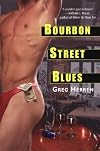
What a wild ride! Picture a personal trainer and exotic dancer involuntarily turned detective because a client of his is murdered, an old friend asks for help, and there are suddenly weird goings-on all around him. Well, more weird than usual. All of this is set in the somewhat sleazier part of New Orleans during Pride celebrations. See where this is going?
This story had me at "Dick Dansoir", which is the main character's professional name when he dances. Okay, so he does a little more than show more that, but you get the picture. His real name is Scotty and he may be twenty-nine, but he is not serious about leading an "orderly" life, in fact, he does his best to avoid it. With his parents being hippies and his lesbian aunt and her partner living in the same building, his chances of a "non-normal" life remain good. The story is full of details of his exciting escapades that include somewhat illegal substances, lots of partying and drinking, and maintaining a super hot physique.
The mystery is good, what with a secret computer disk - yes, this feels like a "historical" novel but it's set in 2003, mysterious murders and a "hottie" FBI agent on Scotty's tail. What I likes most was Scotty's slowly revealed psychic powers, which he uses to good effect when solving the mystery of the evil villain's plans.
All in all, this is a mystery with heart and a distinctly gay flavor. I loved every minute of it. Scotty is the narrator, and he became my tour guide into a fascinating world of New Orleans, the more interesting parts of town, and a villain's plan for the city that was as unusual as it was scary. I look forward to Scotty's next adventure!
If you like mysteries with more than a hint of psychic powers - and forget any official police procedures, if you prefer some humor in your stories and a main character who doesn't take himself too seriously, and if you don't mind more than one hot romp between the sheets as he story progresses, then you will probably like this novel. show less
This story had me at "Dick Dansoir", which is the main character's professional name when he dances. Okay, so he does a little more than show more that, but you get the picture. His real name is Scotty and he may be twenty-nine, but he is not serious about leading an "orderly" life, in fact, he does his best to avoid it. With his parents being hippies and his lesbian aunt and her partner living in the same building, his chances of a "non-normal" life remain good. The story is full of details of his exciting escapades that include somewhat illegal substances, lots of partying and drinking, and maintaining a super hot physique.
The mystery is good, what with a secret computer disk - yes, this feels like a "historical" novel but it's set in 2003, mysterious murders and a "hottie" FBI agent on Scotty's tail. What I likes most was Scotty's slowly revealed psychic powers, which he uses to good effect when solving the mystery of the evil villain's plans.
All in all, this is a mystery with heart and a distinctly gay flavor. I loved every minute of it. Scotty is the narrator, and he became my tour guide into a fascinating world of New Orleans, the more interesting parts of town, and a villain's plan for the city that was as unusual as it was scary. I look forward to Scotty's next adventure!
If you like mysteries with more than a hint of psychic powers - and forget any official police procedures, if you prefer some humor in your stories and a main character who doesn't take himself too seriously, and if you don't mind more than one hot romp between the sheets as he story progresses, then you will probably like this novel. show less
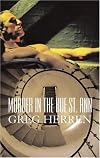
Rating: 4* of five
The Publisher Says: When sexy gay private eye Chanse MacLeod investigates the financial shenanigans of club promoter Mark Williams, he discovers that not only does Williams have ties to the New Orleans judiciary, he also has ties to Chanse’s lover, Paul—a connection that reveals secrets about Paul’s past that Chanse had never guessed and now wishes he didn’t know. When Paul disappears, it seems his past has caught up with him in a terrifying way.
My Review: Second of show more the Chanse MacLeod murder mysteries set in New Orleans, this is a more assured performance by author Herren. He winds a good tale around the sudden end of happiness for our tight-lipped hero...boyfriend Paul goes, in the space of twenty-four *really* lousy hours, from apple dumpling sweetie pie to murder suspect to missing person. Chanse reveals more to us in the course of his frantic search for Paul, and along the way steps in the dogshit-laden middle of a Federal Mob case, almost becomes a wrestle-porn whore, and winds up with a tender and loving experience of family and love and acceptance. As his entire world ends. Ain't it always the way?
*SPOILERS FROM HERE ON*
*
*
I don't know if I've told my grim secrets often enough for them to be scabbed over or not, but this book ripped them scabs right off. Chanse's trailer-trash past is detailed here, and while the setting of his agonies was way way down-market from mine and my mother was the abuser not my father, we came from similar backgrounds of unknowable trigger-points for screaming violent abuse. It was harrowing to read. (Sucked to live, too.)
Then, after a very unpleasant break-up, we see Chanse's self-involvement and inability to love and care in a real and significant way for others: Check! Did that. I hid it behind being an AIDS volunteer, and put a braver face on it for the public, but oh yeah. Ask any of the women I married. Ask the men I dated. I promise they'd back me up here: Cold as a walk-in freezer when it came down to it.
And then, and then...oh my oh my...Chanse loses Paul to a vile and horrible crime, as I lost my son to his mother's drunk driving in 1981, as I lost my dearly, dearly treasured Bland to AIDS in 1992. Herren gives his reactions to the horror in a direct and laconic way, which makes them all the more affecting. Those of us only slightly and tangentially able to feel emotions anyway respond to grief in a particular way...all the color goes out of the world. There may be a storm of weeping, then *slam* the gate goes down. No more tears. And then the torment begins: You are made of lead, of iron-bound lead, and the world is papier mache. Moving is a delicate task. Nothing at all works. Drinking and drugging suddenly seem like *wonderful* ideas, so off you go!
And that, my friends, is where Herren leaves Chanse--at a bar, drink in front of him, at 11:45am.
Oh yeah. Been there, done that, and so (I suspect) has Herren. I don't think a person can make this imaginitive leap without a real solid launching pad. I hurt for him, no one should have to know what it's like. But then, isn't that what art does? Take the fortunate to the places the unfortunate know how to find? Well, whatever the source, the book takes the reader there, that awful agonized place of loss.
But then you get to close the book, put it on a shelf, and get a glass of water for your nightstand as you go to bed.
Sweet dreams. show less
The Publisher Says: When sexy gay private eye Chanse MacLeod investigates the financial shenanigans of club promoter Mark Williams, he discovers that not only does Williams have ties to the New Orleans judiciary, he also has ties to Chanse’s lover, Paul—a connection that reveals secrets about Paul’s past that Chanse had never guessed and now wishes he didn’t know. When Paul disappears, it seems his past has caught up with him in a terrifying way.
My Review: Second of show more the Chanse MacLeod murder mysteries set in New Orleans, this is a more assured performance by author Herren. He winds a good tale around the sudden end of happiness for our tight-lipped hero...boyfriend Paul goes, in the space of twenty-four *really* lousy hours, from apple dumpling sweetie pie to murder suspect to missing person. Chanse reveals more to us in the course of his frantic search for Paul, and along the way steps in the dogshit-laden middle of a Federal Mob case, almost becomes a wrestle-porn whore, and winds up with a tender and loving experience of family and love and acceptance. As his entire world ends. Ain't it always the way?
*SPOILERS FROM HERE ON*
*
*
I don't know if I've told my grim secrets often enough for them to be scabbed over or not, but this book ripped them scabs right off. Chanse's trailer-trash past is detailed here, and while the setting of his agonies was way way down-market from mine and my mother was the abuser not my father, we came from similar backgrounds of unknowable trigger-points for screaming violent abuse. It was harrowing to read. (Sucked to live, too.)
Then, after a very unpleasant break-up, we see Chanse's self-involvement and inability to love and care in a real and significant way for others: Check! Did that. I hid it behind being an AIDS volunteer, and put a braver face on it for the public, but oh yeah. Ask any of the women I married. Ask the men I dated. I promise they'd back me up here: Cold as a walk-in freezer when it came down to it.
And then, and then...oh my oh my...Chanse loses Paul to a vile and horrible crime, as I lost my son to his mother's drunk driving in 1981, as I lost my dearly, dearly treasured Bland to AIDS in 1992. Herren gives his reactions to the horror in a direct and laconic way, which makes them all the more affecting. Those of us only slightly and tangentially able to feel emotions anyway respond to grief in a particular way...all the color goes out of the world. There may be a storm of weeping, then *slam* the gate goes down. No more tears. And then the torment begins: You are made of lead, of iron-bound lead, and the world is papier mache. Moving is a delicate task. Nothing at all works. Drinking and drugging suddenly seem like *wonderful* ideas, so off you go!
And that, my friends, is where Herren leaves Chanse--at a bar, drink in front of him, at 11:45am.
Oh yeah. Been there, done that, and so (I suspect) has Herren. I don't think a person can make this imaginitive leap without a real solid launching pad. I hurt for him, no one should have to know what it's like. But then, isn't that what art does? Take the fortunate to the places the unfortunate know how to find? Well, whatever the source, the book takes the reader there, that awful agonized place of loss.
But then you get to close the book, put it on a shelf, and get a glass of water for your nightstand as you go to bed.
Sweet dreams. show less
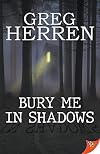
After landing in the hospital after a bad breakup and an ensuing drug-and-alcohol binge, college student Jake Chapman is given two options: rehab, or spend the summer at his dying grandmother’s decaying home in rural Alabama. The choice is obvious. His grandmother’s land has been in Jake’s family since the early nineteenth century; the ruins of the old plantation house are a short walk through the woods behind her home. An archaeological team is excavating the ruins, looking for show more evidence to prove an old family legend―and there’s a meth lab just over the ridge. Once Jake is there, he begins having strange experiences―flashes of memory, inexplicable emotions―that he can’t explain, and he keeps seeing something strange out in the woods. As he explores his family history, he uncovers some dark secrets someone ―or something―is willing to kill to keep hidden.
Jake is trying to readjust to life after a terrible breakup and a hospital stay...the results of a drugs-and-alcohol binge. To help him recover, his mother sends him to his dying grandmother’s house in rural Alabama. Jake hasn’t been there in over a decade. What greets him is a dilapidated house, a suspicious roommate, and a town that is not exactly welcoming. There are rumors of a meth lab nearby, and an archaeological team is digging the ruins of a plantation house on the land. To make things even worse, Jake starts to experience visions and strange emotions that occur anytime and without any warning. He knows that he has to find out about his family history or his life could be in real danger. In one of his strange experiences he says, "In my head I heard a loud noise, and somehow, I was inside, running, terrified, through a darkened hallway. Must get away must get away don’t want to die oh my God I don’t want to die..." He hears lots of messages like this in his head.
The question now isWhat happens when your past is all a lie? The book explores this question through the eyes of our 19-year-old Jake. From the struggles in his life, he might discover the truth behind his family’s secrets. Learn why his mother has kept him away from his grandmother for past 10-years. Why his uncle disappeared without a word many years ago. There are ghosts in this story, both real and imaginary.
The book does a really good job of portraying what it’s like for a young gay man to live in a rural southern town.... how fragile life and safety can be. Learning of the rundown, dirty house and the secluded location it was in, made it feel suffocating. Jake meets other gay men who are dealing with situations in their lives in their own ways, sometimes to their own detriment. It makes for a very sobering read. Not all the characters are likeable and even the ones that are, sometimes come across as homophobic. Oppression is fairly rampart throughout and racism is high on the radar. Non-white people get the same "cold shoulder" as the gay people simply for daring to live in this town. The entire story shows how difficult life was for both gay and black people in the past eras, and how progress still has some ways to go even now.
The ideas in this book were intriguing, but the promised "mystery" is almost non-existent, and the story's pacing is uneven at times. In spite of that I still did enjoy this book.... or rather I just really HAD to know how or if, Jake survived. This IS NOT something that everyone will enjoy. It does mostly show the worst traits of humanity, but also it also shows that there is the potential for something better. In whole the book is about the secrets and the trauma that makes the real world equally as bad and as scary as the supernatural one. show less
Jake is trying to readjust to life after a terrible breakup and a hospital stay...the results of a drugs-and-alcohol binge. To help him recover, his mother sends him to his dying grandmother’s house in rural Alabama. Jake hasn’t been there in over a decade. What greets him is a dilapidated house, a suspicious roommate, and a town that is not exactly welcoming. There are rumors of a meth lab nearby, and an archaeological team is digging the ruins of a plantation house on the land. To make things even worse, Jake starts to experience visions and strange emotions that occur anytime and without any warning. He knows that he has to find out about his family history or his life could be in real danger. In one of his strange experiences he says, "In my head I heard a loud noise, and somehow, I was inside, running, terrified, through a darkened hallway. Must get away must get away don’t want to die oh my God I don’t want to die..." He hears lots of messages like this in his head.
The question now isWhat happens when your past is all a lie? The book explores this question through the eyes of our 19-year-old Jake. From the struggles in his life, he might discover the truth behind his family’s secrets. Learn why his mother has kept him away from his grandmother for past 10-years. Why his uncle disappeared without a word many years ago. There are ghosts in this story, both real and imaginary.
The book does a really good job of portraying what it’s like for a young gay man to live in a rural southern town.... how fragile life and safety can be. Learning of the rundown, dirty house and the secluded location it was in, made it feel suffocating. Jake meets other gay men who are dealing with situations in their lives in their own ways, sometimes to their own detriment. It makes for a very sobering read. Not all the characters are likeable and even the ones that are, sometimes come across as homophobic. Oppression is fairly rampart throughout and racism is high on the radar. Non-white people get the same "cold shoulder" as the gay people simply for daring to live in this town. The entire story shows how difficult life was for both gay and black people in the past eras, and how progress still has some ways to go even now.
The ideas in this book were intriguing, but the promised "mystery" is almost non-existent, and the story's pacing is uneven at times. In spite of that I still did enjoy this book.... or rather I just really HAD to know how or if, Jake survived. This IS NOT something that everyone will enjoy. It does mostly show the worst traits of humanity, but also it also shows that there is the potential for something better. In whole the book is about the secrets and the trauma that makes the real world equally as bad and as scary as the supernatural one. show less
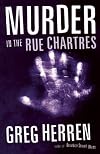
Rating: 4.3* of five
The Publisher Says: Murder hits the Big Easy.
In the wake of Hurricane Katrina, Chanse MacLeod returns to a different, shattered New Orleans in an attempt to rebuild his own life and face his own future. When he discovers that his last client before the storm was murdered the very night she hired him to find her long-missing father, he is drawn into a web of intrigue and evil that surrounds the Verlaine family.
My Review: There is no escape from the past. It supports us, if show more we're lucky; it drags us down from otherwise attainable heights, if we're not. This third installment of Herren's Chanse MacLeod mysteries reinforces this sad, inescapable lesson in a harsh and cruel and painful way, only for once it's not Chanse that does most of the suffering. Hired to look into a 32-year-old disappearance by the daughter of a vanished father, Chanse ends up fired before he can so much as cash the check...and then his client turns up dead. Odd, that...and her in the throes of planning her wedding? Something smells fishy to Chanse, who returns her retainer check in person to the dead woman's older brother. Surprise there: Chanse now has a much larger retainer check and a new client who wants the same job done. In short order, Chanse meets the patriarch of this singularly unlucky clan; loses his new client to what he is morally sure is murder; breaks up with his rebound guy, a nice-but... that he met in the last book; has a quickie with an old friend, newly single; and learns that his hag/best friend is leaving post-Katrina New Orleans. To finish her book, she says.
Rest assured, though: The right people end up in the right places and Chanse, for a wonder, actually unthaws his cryogenically preserved, battered, bruised, and broken heart, resolving to live his life and not simply exist in it because he's not dead yet.
New Orleans post-Katrina is a grim backdrop for this outing. I suspect in many ways anyone who has written about New Orleans since 2005 has written out of a sense of atonement, or expiation, or making things right, because after all they're alive and so very many aren't any more. Chanse comes home from a stay in Dallas to find that he's lost nothing in the storm or the flood; his friend Venus lost everything, for example, as did so many. The hero of a mystery series needs obstacles to make him more interesting that simply a crime-solving computer. The obstacles here, well, they're pretty grisly...driving around and seeing those horrible, horrible "X"s showing where bodies were found...refrigerators abandoned as far from homes as possible so they won't add to the mold problems, and adorned with anti-government slogans...well, this leads Chanse to a minor breakdown. No duh.
I am not, at heart, a New Orleanian. I got out of the car in 1975 and said, "Jesus, what a dump." Nothing in all the time since has made me think anything different. I don't miss going there, and wish our friends from there would come here to visit. But the city is one of the world's most popular destinations, and it's got a certain raffish charm that shines through in these books. I still don't want to go there. But I like the Chanse MacLeod character's development and growth, and I like the secondary characters like Paige, his hag, and Venus, the tall and elegant lady detective; who knows, maybe Herren has let us see a glimmer of hope for Chanse to have a shot at boyfriendly bliss!
Kinda doubt it, though. Remember what happened to "Moonlighting" when Cybill Shepard and Bruce Willis finally got it on? show less
The Publisher Says: Murder hits the Big Easy.
In the wake of Hurricane Katrina, Chanse MacLeod returns to a different, shattered New Orleans in an attempt to rebuild his own life and face his own future. When he discovers that his last client before the storm was murdered the very night she hired him to find her long-missing father, he is drawn into a web of intrigue and evil that surrounds the Verlaine family.
My Review: There is no escape from the past. It supports us, if show more we're lucky; it drags us down from otherwise attainable heights, if we're not. This third installment of Herren's Chanse MacLeod mysteries reinforces this sad, inescapable lesson in a harsh and cruel and painful way, only for once it's not Chanse that does most of the suffering. Hired to look into a 32-year-old disappearance by the daughter of a vanished father, Chanse ends up fired before he can so much as cash the check...and then his client turns up dead. Odd, that...and her in the throes of planning her wedding? Something smells fishy to Chanse, who returns her retainer check in person to the dead woman's older brother. Surprise there: Chanse now has a much larger retainer check and a new client who wants the same job done. In short order, Chanse meets the patriarch of this singularly unlucky clan; loses his new client to what he is morally sure is murder; breaks up with his rebound guy, a nice-but... that he met in the last book; has a quickie with an old friend, newly single; and learns that his hag/best friend is leaving post-Katrina New Orleans. To finish her book, she says.
Rest assured, though: The right people end up in the right places and Chanse, for a wonder, actually unthaws his cryogenically preserved, battered, bruised, and broken heart, resolving to live his life and not simply exist in it because he's not dead yet.
New Orleans post-Katrina is a grim backdrop for this outing. I suspect in many ways anyone who has written about New Orleans since 2005 has written out of a sense of atonement, or expiation, or making things right, because after all they're alive and so very many aren't any more. Chanse comes home from a stay in Dallas to find that he's lost nothing in the storm or the flood; his friend Venus lost everything, for example, as did so many. The hero of a mystery series needs obstacles to make him more interesting that simply a crime-solving computer. The obstacles here, well, they're pretty grisly...driving around and seeing those horrible, horrible "X"s showing where bodies were found...refrigerators abandoned as far from homes as possible so they won't add to the mold problems, and adorned with anti-government slogans...well, this leads Chanse to a minor breakdown. No duh.
I am not, at heart, a New Orleanian. I got out of the car in 1975 and said, "Jesus, what a dump." Nothing in all the time since has made me think anything different. I don't miss going there, and wish our friends from there would come here to visit. But the city is one of the world's most popular destinations, and it's got a certain raffish charm that shines through in these books. I still don't want to go there. But I like the Chanse MacLeod character's development and growth, and I like the secondary characters like Paige, his hag, and Venus, the tall and elegant lady detective; who knows, maybe Herren has let us see a glimmer of hope for Chanse to have a shot at boyfriendly bliss!
Kinda doubt it, though. Remember what happened to "Moonlighting" when Cybill Shepard and Bruce Willis finally got it on? show less
Lists
Awards


You May Also Like


Associated Authors
Statistics
- Works
- 70
- Also by
- 16
- Members
- 2,014
- Popularity
- #12,780
- Rating
- 3.8
- Reviews
- 79
- ISBNs
- 117
- Languages
- 1
- Favorited
- 5