
Renée Ahdieh
Author of The Wrath and the Dawn
About the Author
Renée Ahdieh is a graduate of the University of North Carolina and author of The Wrath and the Dawn. She made The IBooks Bestseller List with her title Flame in the Mist. (Bowker Author Biography)
Image credit: Author's own website
Series
Works by Renée Ahdieh
Associated Works
From a Certain Point of View: 40 Stories Celebrating 40 Years of Star Wars (2017) — Contributor — 1,066 copies, 41 reviews
Hope Nation: YA Authors Share Personal Moments of Inspiration (2018) — Contributor — 179 copies, 7 reviews
Tagged
Common Knowledge
- Birthdate
- 1983-07-07
- Gender
- female
- Agent
- Barbara Poelle (Irene Goodman Literary Agency)
- Nationality
- USA
- Places of residence
- Charlotte, North Carolina, USA
- Map Location
- USA
Members
Reviews
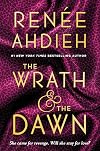
4.5 stars Oh my, my, my, I am breathless ! What a glorious twist of One Thousand and One Nights. The vivid detailing in this story was so richly done I think I gained 5 pounds on description of foods alone. The clothing, the town, the palace, the horses, the landscape, each given such beauty in this author's words. I found myself rereading sections aloud just to hear them spoken, I have to get this on audio. The story is a tangle of what is believed, what is assumed and the truth somewhere show more in the middle. Hate, fear, resentment, revenge, friendship, respect, love and sacrifice. I loved it all. Now I must go order book 2 beacuse of a cliffhanger ending, beware. :D show less

Flame in the Mist may have a compelling story or characters but I wouldn't know because I was completely distracted by the staccato writing style that Ahdieh employs.
Through the first pages, I thought the style was being employed to increase the tension and enhance the abrupt surrealness of seeing one's parent beheaded, and then to underline the disconnect between the surface appearance of Mariko's convoy and the reality of why she is being sent to the emperor's household and what that means show more for her traveling companions.
Unfortunately, though there are a handful of flowing sections, the staccato rhythm of the writing continues throughout the book (I spot-checked through the end) and makes every single line a Stop-Start-Stop-Start feeling that breaks up imagery or uses needless repetition.
An example, from pages 12-13:
It has been one of her earliest inventions. Small enough to hide in a kimono sleeve. A special slow-burning wick suspended by the thinnest of wires. The wick was fashioned from cotton braided with river reeds dipped in wax. It kept its shape despite its size, all while burning a steady light. Mariko had made it as a child. In the heavy dark of night, this tiny invention had been her savior. She'd placed it beside her blankets, where it cast a warm, cheery glow by which she'd penned her newest ideas.
Smiling in remembrance, Mariko began to eat. A few black sesame seeds fell onto the painted silk of her kimono; she brushed them aside. The fabric felt like water at her fingertips. The color of sweetened cream, its hem bled through with darkest indigo. Pale ink cherry blossoms crowded the long sleeves, unfurling into branches near Mariko's feet.
A princess kimono. Made of rare tatsumura silk. One of the many gifts sent to her by the emperor's son. It was beautiful. More beautiful than anything Mariko had ever owned in her life.
This is admittedly not as bad as other sections, but I tried to avoid anything that might be a spoiler or which would be a legitimate use of the style. It also tends to not be nearly so difficult to read in isolation - when all the pages are like this, it's very wearisome.
At first, I thought the heavy use of sentences without subject/verb parts was meant to resemble the Japanese language, but honestly even if that is the case, it was so difficult to read and made it so hard to connect with the story that I don't care.
I made it to page 95 of 392 before giving up. show less
Through the first pages, I thought the style was being employed to increase the tension and enhance the abrupt surrealness of seeing one's parent beheaded, and then to underline the disconnect between the surface appearance of Mariko's convoy and the reality of why she is being sent to the emperor's household and what that means show more for her traveling companions.
Unfortunately, though there are a handful of flowing sections, the staccato rhythm of the writing continues throughout the book (I spot-checked through the end) and makes every single line a Stop-Start-Stop-Start feeling that breaks up imagery or uses needless repetition.
An example, from pages 12-13:
It has been one of her earliest inventions. Small enough to hide in a kimono sleeve. A special slow-burning wick suspended by the thinnest of wires. The wick was fashioned from cotton braided with river reeds dipped in wax. It kept its shape despite its size, all while burning a steady light. Mariko had made it as a child. In the heavy dark of night, this tiny invention had been her savior. She'd placed it beside her blankets, where it cast a warm, cheery glow by which she'd penned her newest ideas.
Smiling in remembrance, Mariko began to eat. A few black sesame seeds fell onto the painted silk of her kimono; she brushed them aside. The fabric felt like water at her fingertips. The color of sweetened cream, its hem bled through with darkest indigo. Pale ink cherry blossoms crowded the long sleeves, unfurling into branches near Mariko's feet.
A princess kimono. Made of rare tatsumura silk. One of the many gifts sent to her by the emperor's son. It was beautiful. More beautiful than anything Mariko had ever owned in her life.
This is admittedly not as bad as other sections, but I tried to avoid anything that might be a spoiler or which would be a legitimate use of the style. It also tends to not be nearly so difficult to read in isolation - when all the pages are like this, it's very wearisome.
At first, I thought the heavy use of sentences without subject/verb parts was meant to resemble the Japanese language, but honestly even if that is the case, it was so difficult to read and made it so hard to connect with the story that I don't care.
I made it to page 95 of 392 before giving up. show less
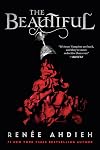
Ahdieh brings 1870s New Orleans to life as equal parts danger and excitement. Impetuous Celine, arriving from Paris, hopes for a fresh start but instead finds herself courting danger and followed by murder. She is a bold, clever main character and her romance with the smoldering Bastien has the perfect amount of tension. The ending felt a little sloppy, but I‘m still on board for book 2.
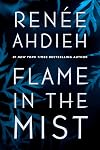
In Ahdieh’s previous duology set in a fantasy version of the Islamic Golden Age, the story revolved around a brooding bad boy and a sassy, independent girl, each of whom really wants to hate the other, at least at first. It featured an exotic milieu skillfully evoked. And finally, there is also a mystery, a bit of magic, very likable characters, and a hot romance.
This new series has all those same elements except the time period, which is now in feudal Japan. It begins with 17-year old show more Lady Mariko Hattori riding in a convoy on her way to the imperial city of Inako to become the wife of the second son of Emperor Minamoto Masaru. She was angry that she “was being exchanged like property in order to curry favor”: in order, as her father said, to “be a tribute to your family. . . . As you were raised to be.”
Mariko knew it was foolish to want more. She was not a male; her value came from aesthetic qualities only: as the property of men with power, and as a "reward," not someone valued in her own right. She knew her place in life. And yet. When the convoy is attacked by bandits appearing to be from the notorious Black Clan, she is the only one who escapes. She disguises herself as a boy and vows to find the Black Clan, infiltrate their ranks, and get her revenge.
Instead, she discovers that not everything is black and white, and the Black Clan is not what she thought. Nor are the boys and men who comprise its ranks. In her new-found freedom disguised as a boy, she is treated as smart and capable, rather than as an object. But she also learns there is strength in being a woman. Thus Mariko is able to find out what it means to be brave, and even what it means to love.
Unfortunately, however, she just exchanges the pitfalls of her old life for the dangers of her new one.
Discussion: Ahdieh isn’t a world-builder like many fantasy writers. She seems to have more interest in depicting enchanting fairy-tale-like settings, replete with richly-colored fabrics, gorgeous gardens, and spectacular buildings. Her world-building may not be all that meticulous, but I enjoy immersing myself in the sensuous scenes she paints.
There is some background, however, about feudal Japan. Mariko, brought up in a family of samurai, often contemplates the "Way of the Warrior" (Bushidô), a rigid value system of discipline and honor that consisted of seven tenets: integrity, courage, benevolence, respect, honesty, honor, and loyalty. As the plot unfolds, Mariko has reason to consider all of them and what they can and should mean in her life.
With Ahdieh, one also gets plenty of “swoony” romantic episodes she writes for her protagonists, as in this passage:
“…his knee grazing her inner thigh. The instant it happened, [he] knew it was a mistake. The sharp intake of her breath. The darting eyes. His thundering heart.”
Sure, not all of it is realistic. But it’s a fantasy, and moreover, one interspersed with magic. I’m all in for the next book. show less
This new series has all those same elements except the time period, which is now in feudal Japan. It begins with 17-year old show more Lady Mariko Hattori riding in a convoy on her way to the imperial city of Inako to become the wife of the second son of Emperor Minamoto Masaru. She was angry that she “was being exchanged like property in order to curry favor”: in order, as her father said, to “be a tribute to your family. . . . As you were raised to be.”
Mariko knew it was foolish to want more. She was not a male; her value came from aesthetic qualities only: as the property of men with power, and as a "reward," not someone valued in her own right. She knew her place in life. And yet. When the convoy is attacked by bandits appearing to be from the notorious Black Clan, she is the only one who escapes. She disguises herself as a boy and vows to find the Black Clan, infiltrate their ranks, and get her revenge.
Instead, she discovers that not everything is black and white, and the Black Clan is not what she thought. Nor are the boys and men who comprise its ranks. In her new-found freedom disguised as a boy, she is treated as smart and capable, rather than as an object. But she also learns there is strength in being a woman. Thus Mariko is able to find out what it means to be brave, and even what it means to love.
Unfortunately, however, she just exchanges the pitfalls of her old life for the dangers of her new one.
Discussion: Ahdieh isn’t a world-builder like many fantasy writers. She seems to have more interest in depicting enchanting fairy-tale-like settings, replete with richly-colored fabrics, gorgeous gardens, and spectacular buildings. Her world-building may not be all that meticulous, but I enjoy immersing myself in the sensuous scenes she paints.
There is some background, however, about feudal Japan. Mariko, brought up in a family of samurai, often contemplates the "Way of the Warrior" (Bushidô), a rigid value system of discipline and honor that consisted of seven tenets: integrity, courage, benevolence, respect, honesty, honor, and loyalty. As the plot unfolds, Mariko has reason to consider all of them and what they can and should mean in her life.
With Ahdieh, one also gets plenty of “swoony” romantic episodes she writes for her protagonists, as in this passage:
“…his knee grazing her inner thigh. The instant it happened, [he] knew it was a mistake. The sharp intake of her breath. The darting eyes. His thundering heart.”
Sure, not all of it is realistic. But it’s a fantasy, and moreover, one interspersed with magic. I’m all in for the next book. show less
Lists
Awards


You May Also Like


Associated Authors
Statistics
- Works
- 24
- Also by
- 5
- Members
- 11,800
- Popularity
- #1,992
- Rating
- 3.8
- Reviews
- 372
- ISBNs
- 167
- Languages
- 9
- Favorited
- 10