
Richard J. Bernstein (1932–2022)
Author of Beyond Objectivism and Relativism: Science, Hermeneutics, and Praxis
About the Author
Richard J. Bernstein argues that Arendt should be read today because her penetrating insights help us to think about both the darkness of our times and the sources of illumination. He explores her thinking about statelessness and refugees; the right to have rights; racism and segregation; her show more critique of Zionism; the meaning of the banality of evil; the complex relations between truth, lying, power, and violence; the tradition of the revolutionary spirit; and the urgent need for each of us to assume responsibility for our political lives. This short and very readable book will be of great interest to anyone who wants to understand the forces that are shaping our world today. Richard J. Bernstein is Vera List Professor of Philosophy at the New School for Social Research in New York show less
Image credit: Richard J. Bernstein; Date 1 November 2007. By Jerrie Speier (Email exchange)
Works by Richard J. Bernstein
Abuse of Evil: The Corruption of Politics and Religion since 9/11 (Themes for the 21st Century Ser.) (2005) 41 copies
Associated Works
Universalism vs. Relativism: Making Moral Judgments in a Changing, Pluralistic, and Threatening World (2006) — Contributor — 3 copies
Tagged
Common Knowledge
- Legal name
- Bernstein, Richard Jacob
- Other names
- Bernstin, Ričard
- Birthdate
- 1932-05-14
- Date of death
- 2022-07-07
- Gender
- male
- Education
- Yale University (PhD)
- Occupations
- Philospher
professor - Organizations
- Haverford College
The New School - Awards and honors
- T. Wistar Brown Professor of Philosophy
President, American Philosophical Association Eastern Division (1988-1989) - Nationality
- USA
- Associated Place (for map)
- USA
Members
Reviews
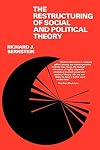
Excellent overview of what social theory should aim for today. The author argues that it must be empirical, interpretive and critical all at the same time. As always in Bernstein's books, the argumentation goes deep to the heart of the matter with a clarity that few writers can match.
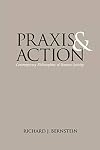
In this book originally published in 1971, Richard Bernstein pulls together and compares four different movements in modern philosophy dealing with praxis or action: the Marxist tradition, existentialism, pragmatism and analytical philosophy. The first three (which address praxis) he puts in the context of influence by and reaction to Hegel. The fourth (which addresses action) treats Hegel as irrelevant and styles itself on modern science and linguistic philosophy. But Bernstein points out show more how analytical philosophy, through a dialectic of its own, begins to move unwittingly toward a recognition of Hegelian concepts. Bernstein is a lucid and disciplined writer who takes the reader from basic concepts to his own conclusions and observations. Thus, in the context of praxis/action, the book can serve as an introduction to the four movements as well as an insightful criticism of how each of them deal with the question of action, including criticism drawn from comparing how the movements deal with the issue in different ways. show less
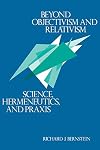
Richard Bernstein examines the works of Gadamer, Habermas, Rorty, and Arendt. He focuses on some controversies to demonstrate changes in the discussion of human rationality. This goes beyond the traditional notions of reason, whether objective or not, expanding understanding and emphasizing its practical character. For example, in discussing Gadamer, Bernstein noted how he uses the concept of "play" to establish "an order" for the work of art. This is used in developing an ontology of art, show more i.e. what is their ontological status? How are works of art related to us and we to them? The work of art is not complete without the spectator (reader, listener, looker). This is perhaps easiest to imagine in the case of drama when the audience interacts, knowingly or not, with the actors in the process of the production of the work of art. For Gadamer "a work of art is seen as an event (or being). Understanding must be conceived as a part of the process of the coming into being of meaning." show less
What's the best way to navigate between and beyond the Scylla of objectivism and the Charybdis of relativism? The author has assembled a fine crew of Kuhn, Gadamer, and Arendt to show you the ropes. Good introductions to philosophy of science with Thomas Kuhn, hermeneutics with Hans-Georg Gadamer, and practical wisdom (praxis) with Hannah Arendt.
Lists
You May Also Like


Associated Authors
Statistics
- Works
- 26
- Also by
- 5
- Members
- 980
- Popularity
- #26,286
- Rating
- 3.8
- Reviews
- 8
- ISBNs
- 102
- Languages
- 6
- Favorited
- 2