
Hans Moravec
Author of Mind Children: The Future of Robot and Human Intelligence
About the Author
Works by Hans Moravec
Associated Works
Tagged
Common Knowledge
- Canonical name
- Moravec, Hans
- Birthdate
- 1948-11-30
- Gender
- male
- Occupations
- Wissenschaftler
Zukunftsforscher - Nationality
- Austria
- Birthplace
- Kautzen, Niederösterreich, Österreich
- Map Location
- Autriche
- Associated Place (for map)
- Austria
Members
Reviews
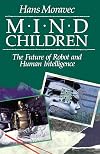
Hans Moravec is director of the Mobile Robot Laboratory of Carnegie Mellon University and has spent his time from his days as a graduate student investigating artificial intelligence. Specifically he was attracted by the debate about the possibility of replacing the human nervous system with a more durable artificial equivalent. His essays turned into articles and his articles eventually turned into this book.
Of course the idea is not accepted by many people but Moravec doesn't go into the show more moral question. In his view the new world will be one in which "the human race has been swept away by the tide of cultural change, usurped by its own artificial progeny". In other words given the rate of improvement in artificial intelligence, robots in the not too distant future will be able outperform human beings and so they won't need them anymore.
At first the idea seems bizarre but so would the technology of the late 20th century looking from the vantage point of the 19th. Moravec collects all the evidence throughout the book. He presents very clearly data on the increases in computing power running from electro-mechanical machines, vacuum tubes, transistors to integrated circuits and shows how a top down approach (system design) and bottom up approach (learning evolving systems) are gradually chipping away at "humans only" areas.
Interestingly computers in medicine can already offer reliable diagnosis and they can play chess at grand-master level. They are everywhere in process control and are taking the first steps in learning by being given likes and dislikes and the capacity for boredom (the gradual fade of learnt and recorded tasks in favour of new ones).
Moravec builds up a convincing picture and along the way the reader gets to look at the 1972 ARPAnet breakdown caused by a spontaneous error (mutation) in a piece of data that went on to infect the whole network. Or alternatively the direction that the evolution of duplicating speciating data objects might take. He expects digital wildlife to reproduce sexually as this is the optimum way to provide the variety needed to fill the niches in their new world.
He plays a robotic version of Axelrod's prisoners dilemma and concludes that the "tit for tat" result applies (i.e. robots would find it in their interests to cooperate between themselves-but not necessarily with us).
Essentially the book follows Dawkins idea of human evolution having switched from genes to memes (stored knowledge evolution or evolution in the library) and takes it to its logical conclusion when knowledge abandons its human hosts.
This is a very surprising book worth looking out for. show less
Of course the idea is not accepted by many people but Moravec doesn't go into the show more moral question. In his view the new world will be one in which "the human race has been swept away by the tide of cultural change, usurped by its own artificial progeny". In other words given the rate of improvement in artificial intelligence, robots in the not too distant future will be able outperform human beings and so they won't need them anymore.
At first the idea seems bizarre but so would the technology of the late 20th century looking from the vantage point of the 19th. Moravec collects all the evidence throughout the book. He presents very clearly data on the increases in computing power running from electro-mechanical machines, vacuum tubes, transistors to integrated circuits and shows how a top down approach (system design) and bottom up approach (learning evolving systems) are gradually chipping away at "humans only" areas.
Interestingly computers in medicine can already offer reliable diagnosis and they can play chess at grand-master level. They are everywhere in process control and are taking the first steps in learning by being given likes and dislikes and the capacity for boredom (the gradual fade of learnt and recorded tasks in favour of new ones).
Moravec builds up a convincing picture and along the way the reader gets to look at the 1972 ARPAnet breakdown caused by a spontaneous error (mutation) in a piece of data that went on to infect the whole network. Or alternatively the direction that the evolution of duplicating speciating data objects might take. He expects digital wildlife to reproduce sexually as this is the optimum way to provide the variety needed to fill the niches in their new world.
He plays a robotic version of Axelrod's prisoners dilemma and concludes that the "tit for tat" result applies (i.e. robots would find it in their interests to cooperate between themselves-but not necessarily with us).
Essentially the book follows Dawkins idea of human evolution having switched from genes to memes (stored knowledge evolution or evolution in the library) and takes it to its logical conclusion when knowledge abandons its human hosts.
This is a very surprising book worth looking out for. show less
A great read, thought-provoking and my go-to reference when it comes to AI. Keeps me in the check when I'm out there shaping behaviors with new technology.
A great read, thought-provoking and my go-to reference when it comes to AI. Keeps me in the check when I'm out there shaping behaviors with new technology.
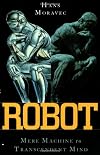
Bit of an update of Mind Children. Fun for Singularitarians but too optimistic, as was Mind Children
Lists
You May Also Like


Associated Authors
Statistics
- Works
- 6
- Also by
- 4
- Members
- 496
- Popularity
- #49,830
- Rating
- 3.6
- Reviews
- 6
- ISBNs
- 15
- Languages
- 4
- Favorited
- 1