
John Terraine (1921–2003)
Author of To Win a War: 1918, the Year of Victory
About the Author
John Terraine was educated at Stamford School and Keble College, Oxford. For sheer scholarship, the quality and accessibility of his writing and for his debunking of historical myths, Terraine was one of the outstanding military historians of the 20th century. He is known for his persistent defence show more of Douglas Haig and as the lead screenwriter on the BBC's landmark 1960s documentary The Great War. Other books written by John Terraine are The Smoke and The Fire and The Western Front 1914-1918, both published by Pen and Sword Books. show less
Works by John Terraine
Associated Works
A Military History of the Western World: From the Earliest Time to Leyte Gulf (1945) — Editor — 66 copies
General Jack's Diary, 1914-18 (Cassell Military Paperbacks) (2000) — Editor, some editions; Editor, some editions — 44 copies
Tagged
Common Knowledge
- Legal name
- Terraine, John Alfred
- Birthdate
- 1921-01-15
- Date of death
- 2003-12-28
- Gender
- male
- Education
- Stamford School, Lincolnshire
University of Oxford (Keble College) - Occupations
- historian
television screenwriter - Organizations
- British Broadcasting Corporation
Western Front Association (1980) - Awards and honors
- Royal Historical Society (Fellow, 1987)
Chesney Gold Medal (1982) - Nationality
- UK
- Birthplace
- London, England
- Place of death
- London, England
- Associated Place (for map)
- London, England
Members
Reviews

This book was first published in 1963, and therefore might be regarded by some as being out of touch with modern
WWI scholarship?
Every time I read a biography of one of these 'donkeys' ('Lions led by donkeys.'), I'm struck by the fact that even in
'supportive' or 'sympathetic' biographies, these WWI commanders come off as more than a little stupid, incompetent,
arrogant, etc. Even sympathetic authors seem unable to come up with anything other than a half-hearted approval of
the decisions taken show more by their subject.
This book (strictly, an account of Haig's career in WWI, rather than a biography) is no exception, though like all such
books, it's fascinating (if you are interested in WWI in the first place, of course). It is however (as far as I am concerned),
a 'white-wash'.
Considering one battle - the Somme:
One sentence jumped off the page at me as I read this section of the book: "It is perfectly clear from Haigs Diary that
he had no sense whatever, on June 1st, of the catastrophe that had befallen his army." (p.207). For me, that says it
all - donkeys indeed - not only has this clown got thousands of men killed and injured unnecessarily, he doesn't
seem to realise it!
Another example: "At the end of the next day, on the strength of such returns as the Adjutant-General had been able
to compose out of the chaos, Haig stlll believed that his losses had been 40,000 in two days, instead of nearly 60,000
in one day, and more on the next." (p. 208). He still doesn't know what has happened one full day later...
Finally, it wasn't only the English (British, if you prefer) commanders who were blood-thirsty, cretinous idiots. Von
Below (one of the German commanders), says: "I forbid the voluntary evacuation of trenches. The will to stand
firm must be impressed on every man in the Army. I hold Commanding Officers responsible for this. The enemy
should have to carve his way over heaps of corpses... (pp. 208-9).
Conscientious objectors (not dealt with in this book) were imprisoned for cowardice in WWI and treated brutally.
I wonder if incompetent commanders who sacrificed the lives of many tens of thousands of men in pointless battles
might have behaved a little differently if they had been held responsible for their actions and treated the same way
as the 'conchies'? This is a question which I personally have not seen addressed in books about WWI.
Blackadder afficionados will be familiar with 'Captain Cook', an episode in which General Haig is portrayed as
being keen on an assault because it would allow him to 'Move his drinks cabinet six inches closer to Berlin'.
Very funny, but very, very sad... show less
WWI scholarship?
Every time I read a biography of one of these 'donkeys' ('Lions led by donkeys.'), I'm struck by the fact that even in
'supportive' or 'sympathetic' biographies, these WWI commanders come off as more than a little stupid, incompetent,
arrogant, etc. Even sympathetic authors seem unable to come up with anything other than a half-hearted approval of
the decisions taken show more by their subject.
This book (strictly, an account of Haig's career in WWI, rather than a biography) is no exception, though like all such
books, it's fascinating (if you are interested in WWI in the first place, of course). It is however (as far as I am concerned),
a 'white-wash'.
Considering one battle - the Somme:
One sentence jumped off the page at me as I read this section of the book: "It is perfectly clear from Haigs Diary that
he had no sense whatever, on June 1st, of the catastrophe that had befallen his army." (p.207). For me, that says it
all - donkeys indeed - not only has this clown got thousands of men killed and injured unnecessarily, he doesn't
seem to realise it!
Another example: "At the end of the next day, on the strength of such returns as the Adjutant-General had been able
to compose out of the chaos, Haig stlll believed that his losses had been 40,000 in two days, instead of nearly 60,000
in one day, and more on the next." (p. 208). He still doesn't know what has happened one full day later...
Finally, it wasn't only the English (British, if you prefer) commanders who were blood-thirsty, cretinous idiots. Von
Below (one of the German commanders), says: "I forbid the voluntary evacuation of trenches. The will to stand
firm must be impressed on every man in the Army. I hold Commanding Officers responsible for this. The enemy
should have to carve his way over heaps of corpses... (pp. 208-9).
Conscientious objectors (not dealt with in this book) were imprisoned for cowardice in WWI and treated brutally.
I wonder if incompetent commanders who sacrificed the lives of many tens of thousands of men in pointless battles
might have behaved a little differently if they had been held responsible for their actions and treated the same way
as the 'conchies'? This is a question which I personally have not seen addressed in books about WWI.
Blackadder afficionados will be familiar with 'Captain Cook', an episode in which General Haig is portrayed as
being keen on an assault because it would allow him to 'Move his drinks cabinet six inches closer to Berlin'.
Very funny, but very, very sad... show less

Rather than an overview of the Western Front as a whole the book turns out to be a series of essays the author wrote between 1957 and 1962 which were finally collected in book form in 1964.
In the introduction Terraine is at pains to emphasise that the casualty rate in World War 1 was by no means unprecedented. Starting with Waterloo and taking in the Crimea, The American Civil War and the Boer War he illustrates that, for those with eyes to see, in a time of increasingly industrialised show more warfare high casualties were inevitable once the fighting started. This was a theme he developed fully in his later book The Smoke And The Fire.
World War 1 was unique, though, in the prolonged timescale of the battles and the static nature of the Western Front. (Other fronts had movement but sustained equally high, or even higher, percentage casualties.) The carnage of the Second World War eclipsed even that of the First, but Britain escaped most of it.
The focus of the book is, however, more on the personalities on the British side than the battles themselves; in particular in the antipathy between Lloyd George and his top commanders. Now, Terraine is a military historian and it is not surprising that his sympathies should lie with the generals but the evidence he presents for Lloyd George’s unhelpfulness is convincing.
His assessment of Douglas Haig as being far from the stolid and hidebound figure of the popular imagination is well argued. His highest praise, though, is reserved for the all but forgotten British general Herbert Plumer.
There is also a discursion into the baneful effect the cult of Napoleon had on the French military mind – and on others. In Terraine’s view Napoleon was anything but the tactical and strategic genius he is usually taken for and, moreover, was exceedingly careless with the lives of his men. The yearning for “something else,” the strategic or tactical genius who might have been able to circumvent the Western Front’s defences was always a chimera. None of the generals, on either side, had a quick and easy solution. In the end, by applying the lessons learned throughout and the integration of new tactics and weapons like the tank, it should not be forgotten that the war was won, and it was won on the Western Front. And that within the three months of late summer and early autumn of 1918.
While Terraine mentions it briefly, the most important assessment of the implications of the war is outwith the scope of this book. Britain was unable to wield sea power effectively (with the launch of the first modern battleship, Dreadnought, and the subsequent naval arms race its dominance had in essence been lost.) The development of the mine and torpedo and the advent of the submarine made a surface fleet almost useless in any case. As a result Britain was sucked in by force of events to becoming a land power; from 1917 onwards - arguably from the Battle of the Somme a year earlier - the major contributor to the Allies’ fighting strength and the instrument of final victory.
Had the navy been able to ensure safe passage across the North Sea (rather than keep secure the shorter distance to France) an amphibious landing might have been attempted in Northern Belgium and the Western Front’s flank turned. Whether that would actually have led to an earlier German defeat is another matter. show less
In the introduction Terraine is at pains to emphasise that the casualty rate in World War 1 was by no means unprecedented. Starting with Waterloo and taking in the Crimea, The American Civil War and the Boer War he illustrates that, for those with eyes to see, in a time of increasingly industrialised show more warfare high casualties were inevitable once the fighting started. This was a theme he developed fully in his later book The Smoke And The Fire.
World War 1 was unique, though, in the prolonged timescale of the battles and the static nature of the Western Front. (Other fronts had movement but sustained equally high, or even higher, percentage casualties.) The carnage of the Second World War eclipsed even that of the First, but Britain escaped most of it.
The focus of the book is, however, more on the personalities on the British side than the battles themselves; in particular in the antipathy between Lloyd George and his top commanders. Now, Terraine is a military historian and it is not surprising that his sympathies should lie with the generals but the evidence he presents for Lloyd George’s unhelpfulness is convincing.
His assessment of Douglas Haig as being far from the stolid and hidebound figure of the popular imagination is well argued. His highest praise, though, is reserved for the all but forgotten British general Herbert Plumer.
There is also a discursion into the baneful effect the cult of Napoleon had on the French military mind – and on others. In Terraine’s view Napoleon was anything but the tactical and strategic genius he is usually taken for and, moreover, was exceedingly careless with the lives of his men. The yearning for “something else,” the strategic or tactical genius who might have been able to circumvent the Western Front’s defences was always a chimera. None of the generals, on either side, had a quick and easy solution. In the end, by applying the lessons learned throughout and the integration of new tactics and weapons like the tank, it should not be forgotten that the war was won, and it was won on the Western Front. And that within the three months of late summer and early autumn of 1918.
While Terraine mentions it briefly, the most important assessment of the implications of the war is outwith the scope of this book. Britain was unable to wield sea power effectively (with the launch of the first modern battleship, Dreadnought, and the subsequent naval arms race its dominance had in essence been lost.) The development of the mine and torpedo and the advent of the submarine made a surface fleet almost useless in any case. As a result Britain was sucked in by force of events to becoming a land power; from 1917 onwards - arguably from the Battle of the Somme a year earlier - the major contributor to the Allies’ fighting strength and the instrument of final victory.
Had the navy been able to ensure safe passage across the North Sea (rather than keep secure the shorter distance to France) an amphibious landing might have been attempted in Northern Belgium and the Western Front’s flank turned. Whether that would actually have led to an earlier German defeat is another matter. show less

REVIEW: A lot of information on the strategic side of the RAF. Personalities and plans figure heavily into this. The actual conduct is not the focus, so if you want action look elsewhere. As an American, I was a bit surprised at the degree the author took Monty to task for the conduct of Overlord and the poor communication between he and the air commands. Good reading if you are a wonk on WW2, probably not if you are just a casual reader.
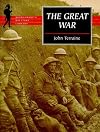
Pretty good one volume digest of the "War to end all wars." Now go elsewhere to get the details. This is a Wordsworth Military History Reprint. Wordsworth tends to reprint rather obscure or hard to find but otherwise excellent military history books, some recent, some not so. The writing is always good and the subject, big or small, is usually interesting. The view is decidedly British in all cases.
This book was a great digest of how a little assassination in Sarajevo led to the little mass show more suicide ritual put on by the Germans. Once the stage is set, Terraine lets the story tell itself in military terms so you are not going to get any elucidation of economics but you will understand what did and did not work on the battlefield and why. Terraine is also not afraid of pointing out the idiots and the geniuses on both sides. The writing is lively and full of the author's opinion which makes for a more engaging read.
Lots of vintage photographs although for my taste there were too many weapons and could have used more inset maps for particular battles.
Hey, I picked up a whole pile of these lavish and quirky Wordsworth Editions for almost nothing and have never been disappointed by any of them. I lost my copy of The Eighth Passenger and have been bummed out ever since. show less
This book was a great digest of how a little assassination in Sarajevo led to the little mass show more suicide ritual put on by the Germans. Once the stage is set, Terraine lets the story tell itself in military terms so you are not going to get any elucidation of economics but you will understand what did and did not work on the battlefield and why. Terraine is also not afraid of pointing out the idiots and the geniuses on both sides. The writing is lively and full of the author's opinion which makes for a more engaging read.
Lots of vintage photographs although for my taste there were too many weapons and could have used more inset maps for particular battles.
Hey, I picked up a whole pile of these lavish and quirky Wordsworth Editions for almost nothing and have never been disappointed by any of them. I lost my copy of The Eighth Passenger and have been bummed out ever since. show less
Lists
Awards

You May Also Like


Associated Authors
Statistics
- Works
- 21
- Also by
- 3
- Members
- 1,207
- Popularity
- #21,276
- Rating
- 3.6
- Reviews
- 15
- ISBNs
- 70
- Languages
- 2
- Favorited
- 2