
Martin Palmer
Author of The Jesus Sutras: Rediscovering the Lost Scrolls of Taoist Christianity
About the Author
Works by Martin Palmer
The Jesus Sutras: Rediscovering the Lost Scrolls of Taoist Christianity (2001) 175 copies, 5 reviews
Sacred Britain: A Guide to the Sacred Sites and Pilgrim Routes of England, Scotland and Wales (1997) 129 copies
The Sacred History of Britain: Landscape, Myth and Power: The Forces that Have Shaped Britain's Spirituality (2002) 49 copies, 4 reviews
Sacred Gardens: Inspirational and Practical Ideas for Creating Peaceful and Tranquil Places (2000) 18 copies
Sacred Land: Decoding Britain's extraordinary past through its towns, villages and countryside (2012) 16 copies
Yin & Yang: Understanding the Chinese Philosophy of Opposites and How to Apply It to Your Everyday Life (1997) 13 copies
Faith in Conservation: New Approaches to Religions and the Environment (Directions in Development) (2003) 11 copies, 1 review
Chinese mythology 1 copy
Elementos do taoísmo 1 copy
Associated Works
Sister and Brother: Lesbians and Gay Men Write About Their Lives Together (1994) — Contributor — 227 copies, 1 review
Sacred Journeys: An Illustrated Guide to Pilgrimages Around the World (1997) — Foreword, some editions — 82 copies, 2 reviews
The Eight Immortals of Taoism: Legends and Fables of Popular Taoism (1990) — Introduction — 82 copies
Tagged
Common Knowledge
- Other names
- Palmer, Martin Giles
- Birthdate
- 1953-10-15
- Gender
- male
- Education
- University of Cambridge
- Organizations
- Sacred Land Project (development officer)
BBC - Short biography
- Martin Palmer is the director of the International Consultancy of Religion, Education and Culture. He is an expert on interfaith work, as well as the author of many books and the translator of numerous Chinese texts. Palmer lives in England.
- Nationality
- UK
- Associated Place (for map)
- UK
Members
Reviews

Faith is for fools, and Faith in conservation. New approaches to religions and the environment is an extremely naive publication. The book consists of two parts. Part 1 consists of five chapters describing world efforts in environmental protection and the religious dimension in views on the environment. Part 2 consists of 12 short chapters, an introduction followed by 11 chapters each devoted to one of the major religions. For each of these religions, the authors point out what the basic show more views of each of these religions is on the world and the environment. However, this is all very theoretical. The authors suggest that almost all religions are very positive about protecting nature and the environment, but they seem to forget that this has not helped very much during the past 1000 years, or so. Besides, the overall worldwide trend is one of secularisation, which means that religious groups have less influence than before. Since the book apparently in meant to show similarities between religions, the structure of the 11 chapters in Part 2 is similar, making the book boring and repetitive. Many sections in each of these chapters are very short, half a page or less. The five chapters in Part 1 are simple, while a lot of interesting material is spread out over the introductions to each of the 11 chapters of Part 2. show less
The Sacred History of Britain: Landscape, Myth and Power: The Forces that Have Shaped Britain's Spirituality by Martin Palmer
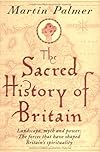
Fascinating book - everything viewed exclusively through Christian lenses, but thoroughly researched, and interesting conclusions drawn.
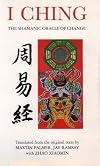
This probably the closest thing I possess to a religious text that I actually consult on a regular basis to help me make decisions. It may not be the most historically accurate translation - and it doesn't have any of the standard classical analysis - but that's OK. It was written as a new, modern take on it, and to be used on a practical day-to-day basis.
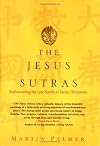
This is a good translation of the Dunhuang manuscripts. I think there are some earlier translations but this one is the best. It also gives a good general background of the circumstances under which they were discovered and a general account of the rise and decline of early Chinese Christianity.I don't think that the description of the scrolls as "Taoist" really carries any weight and I don't know where he is getting this. I'd say that the scrolls do not have any particular Chinese ideology, show more just Chinese terms. God is referred to as "the One Sacred Spirit" or the "World-Honored One," the Holy Spirit as "the pure Wind," Satan becomes the "Great Evil Ghost," angels become "flying immortals," and saints and prophets become "Buddhas." So I see terminology borrowed, but no ideology. If there is an ideological basis, it would be in Buddhism rather than Taoism, because of the strong aversion to killing. A strong case can be made for Ebionite beliefs being the basis of the Sutras. For example, John the Baptist as well as Jesus are vegetarian, corresponding to the view the Ebionites had of John and Jesus, and this would explain the precepts about not killing. show less
Lists
You May Also Like


Associated Authors
Statistics
- Works
- 50
- Also by
- 7
- Members
- 1,140
- Popularity
- #22,523
- Rating
- 3.9
- Reviews
- 21
- ISBNs
- 100
- Languages
- 10
