
Richard Dreyfuss
Author of The Two Georges
About the Author
Image credit: Richard Dreyfuss
Works by Richard Dreyfuss
Associated Works
Easy Riders, Raging Bulls [2003 film] — Narrator — 15 copies
The Papal Concert to Commemorate the Holocaust [1994 film] — Narrator — 6 copies
Collector’s Edition: Bette Midler [DVD box set] — Actor — 1 copy
Remembering JFK : 50th anniversary concert — Narrator — 1 copy
Tagged
Common Knowledge
- Legal name
- Dreyfuss, Richard Stephen
- Birthdate
- 1947-10-29
- Gender
- male
- Occupations
- actor
- Organizations
- LA Classic Theatre Works (cofounder)
- Awards and honors
- Academy Award
Golden Globe Award - Nationality
- USA
- Birthplace
- Brooklyn, New York, USA
- Places of residence
- Brooklyn, New York, USA
- Associated Place (for map)
- Brooklyn, New York, USA
Members
Reviews
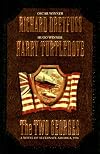
America, 1996, but not our America. RAM Bushell lives in a version of America that proves that the more things change, the more they stay the same. America did not break away from England in this time line but is an important part of the UK. But there are always people who want to break things…. And you don’t always know people as well as you think you do. Strong characters, viable version of this time line, good plot. Would like to see more of it.

My reaction to reading this novel in 1996. Spoilers follow.
This novel about the recovery of a famous painting symbolizing, with the presentation of George Washington to King George III’s privy council, the continued union of North America with England, was ok as a thriller with tours of the militarized frontier (the Queen Charlotte Islands and the border with the Russian), the semi-autonomous Iroquois Six Nations, the hellish and impoverished coal mines of Virginia, and the capitol of show more Victoria.
However, the treachery of Sir Horace Bragg was obvious about two-thirds of the way through, and the book had one of the oldest clichés in thrillers when Kathleen Flannary and Colonel Thomas Bushell fall in love.
As an alternate history, there is something lacking here, but I don’t know what exactly since there are lots of touches showing how different – and, generally, more pleasant – the culture of this world’s British Empire is. Policemen don’t regularly carry guns, and the vicious criminal that uses one is rare. TV exists but only as a communal activity. The rare person who can afford a private tv is regarded as odd for wanting one. While we can sympathize with the Sons of Liberty, they are a violent, racist lot and definitely regarded by most as a violent fringe groups. John Kennedy is one of their leaders, and Irish in general are looked down on. (And Richard Nixon, murdered early on, is a notorious used car dealer) The Irish are the main workers in the awful coal mines that power the North American Union. Unions seem totally absent, and they are naturally resentful of their horrible conditions, and Bushell, at novel’s end, will perhaps be involved in reforming them. Blacks, after freed from slavery sometimes in the 19th century, form sizeable chunk of the civil service and have a reputation for fussiness. Not only have blacks fared better but so have the Iroquois (though the book is noticeably silent about the fate of other Indians). George Washington is remembered fondly by the Iroquois' for enforcing a 1763 ban on white settlement west of the Appalachians. Whites eventually move into the land, but the Iroquois have time to reform their culture and learn modern ways and hold their own in the North American Union.
The neatest part about this alternate history is the maps of North America and the world. They show a world largely divided between three power blocs: the British Empire, the Franco-Spanish Empire, and the Russian Empire. The French revolution seems not to have happened (a reference is made to a Beethoven work written to commemorate those killed by Napoleon Bonaparte’s cannon while he served Louis XVI in quelling a revolt). In the absence of an independent America and the two World Wars, technological progress has been greatly slowed. Computer technology (and its effect on long distance phone calls which take a long time here as they used to do in our world) seems non-existent. Air transportation is done by charming dirigibles with aeroplanes (no one needs to be in that much of a hurry is the general consensus) reserved for military use. Military weapons seem stuck about 100 years behind ours.
The problem I have with this alternate history is its lack of exploration of the divergent history. It’s hard to do that without clumsy explication, but it can be done. I did like certain scenes – the raid on the Queen Charlotte Island Sons of Liberty hideout, the descent into a coal mine, and the Six Nations. I really can’t detect any element of Richard Dreyfuss in this novel in either style or content. I thought maybe the well-done resentment of Bushell for Sir David Clarke (though he comes to hate him less at novel’s end) and the uneasy relationship of Bushell with his ex-wife were Dreyfuss' contribution, but Turtledove has also been divorced and strife between ex-lovers is an element in Turtledove’s Worldwar series. I also liked the French Ambassador hinting to Bushell of Bragg’s treachery. show less
This novel about the recovery of a famous painting symbolizing, with the presentation of George Washington to King George III’s privy council, the continued union of North America with England, was ok as a thriller with tours of the militarized frontier (the Queen Charlotte Islands and the border with the Russian), the semi-autonomous Iroquois Six Nations, the hellish and impoverished coal mines of Virginia, and the capitol of show more Victoria.
However, the treachery of Sir Horace Bragg was obvious about two-thirds of the way through, and the book had one of the oldest clichés in thrillers when Kathleen Flannary and Colonel Thomas Bushell fall in love.
As an alternate history, there is something lacking here, but I don’t know what exactly since there are lots of touches showing how different – and, generally, more pleasant – the culture of this world’s British Empire is. Policemen don’t regularly carry guns, and the vicious criminal that uses one is rare. TV exists but only as a communal activity. The rare person who can afford a private tv is regarded as odd for wanting one. While we can sympathize with the Sons of Liberty, they are a violent, racist lot and definitely regarded by most as a violent fringe groups. John Kennedy is one of their leaders, and Irish in general are looked down on. (And Richard Nixon, murdered early on, is a notorious used car dealer) The Irish are the main workers in the awful coal mines that power the North American Union. Unions seem totally absent, and they are naturally resentful of their horrible conditions, and Bushell, at novel’s end, will perhaps be involved in reforming them. Blacks, after freed from slavery sometimes in the 19th century, form sizeable chunk of the civil service and have a reputation for fussiness. Not only have blacks fared better but so have the Iroquois (though the book is noticeably silent about the fate of other Indians). George Washington is remembered fondly by the Iroquois' for enforcing a 1763 ban on white settlement west of the Appalachians. Whites eventually move into the land, but the Iroquois have time to reform their culture and learn modern ways and hold their own in the North American Union.
The neatest part about this alternate history is the maps of North America and the world. They show a world largely divided between three power blocs: the British Empire, the Franco-Spanish Empire, and the Russian Empire. The French revolution seems not to have happened (a reference is made to a Beethoven work written to commemorate those killed by Napoleon Bonaparte’s cannon while he served Louis XVI in quelling a revolt). In the absence of an independent America and the two World Wars, technological progress has been greatly slowed. Computer technology (and its effect on long distance phone calls which take a long time here as they used to do in our world) seems non-existent. Air transportation is done by charming dirigibles with aeroplanes (no one needs to be in that much of a hurry is the general consensus) reserved for military use. Military weapons seem stuck about 100 years behind ours.
The problem I have with this alternate history is its lack of exploration of the divergent history. It’s hard to do that without clumsy explication, but it can be done. I did like certain scenes – the raid on the Queen Charlotte Island Sons of Liberty hideout, the descent into a coal mine, and the Six Nations. I really can’t detect any element of Richard Dreyfuss in this novel in either style or content. I thought maybe the well-done resentment of Bushell for Sir David Clarke (though he comes to hate him less at novel’s end) and the uneasy relationship of Bushell with his ex-wife were Dreyfuss' contribution, but Turtledove has also been divorced and strife between ex-lovers is an element in Turtledove’s Worldwar series. I also liked the French Ambassador hinting to Bushell of Bragg’s treachery. show less
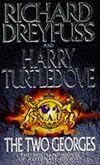
This political thriller is a slightly more unusual alternate history in which the American wars of independence never happened and where the North American Union under its Governor-General Sir Martin Luther King is part of the British Empire under the King-Emperor Charles III. This is a less technologically advanced modern world with steam-powered transport, airships and wireless as the main form of mass communication. The plot involves the theft of a famous painting and an assassination show more plot by the terrorist Sons of Liberty foiled by the heroes of the Royal American Mounted Police. Interesting and politically thought-provoking, if rather unlikely in places. show less
This is one of the more interesting examples of an alternate history where the war of Independance never takes place.
Unlike, say, Harry Harrison's A Transatlantic Tunnel, Hurrah, the colonials came to an accomodation with the British Government and avoided any of the resultant bitterness (mostly). So we come to a late twentieth century greatly different from our own.
There is a seamy side to life in this reality - the Pensylvania miners live lives no better than their British colleagues and show more there are rumblings of an independance movement willing to do anything to kick the British off the continent.
With the current King-Emperor visiting his imperial jewel, the scebe is set for the pro independance movement to make their move and it's up to Thomas Bushall of the Royal American Mounted Police to stop the plotters before they can carry out their dastardly plan.
This is a rollicking read, full of adventure and a well detailed world as one would expect from Turtledove though the near absolute worship that Bushell has for the Empire strikes a somewhat jarring note (and I say this as a Brit!) show less
Unlike, say, Harry Harrison's A Transatlantic Tunnel, Hurrah, the colonials came to an accomodation with the British Government and avoided any of the resultant bitterness (mostly). So we come to a late twentieth century greatly different from our own.
There is a seamy side to life in this reality - the Pensylvania miners live lives no better than their British colleagues and show more there are rumblings of an independance movement willing to do anything to kick the British off the continent.
With the current King-Emperor visiting his imperial jewel, the scebe is set for the pro independance movement to make their move and it's up to Thomas Bushall of the Royal American Mounted Police to stop the plotters before they can carry out their dastardly plan.
This is a rollicking read, full of adventure and a well detailed world as one would expect from Turtledove though the near absolute worship that Bushell has for the Empire strikes a somewhat jarring note (and I say this as a Brit!) show less
Awards

You May Also Like


Associated Authors
Statistics
- Works
- 17
- Also by
- 62
- Members
- 578
- Popularity
- #43,350
- Rating
- 3.7
- Reviews
- 10
- ISBNs
- 15
