

Beatrice Gormley
Author of Amelia Earhart: Young Aviator
About the Author
Beatrice Gormley is the author of many popular books for young readers, including Maria Mitchell: The Soul of an Astronomer and C. S. Lewis: Christian and Storyteller. As a writer, she admires the drama of Bible stories and is intrigued by their people. She lives in Ossining, New York
Series
Works by Beatrice Gormley
Tagged
Common Knowledge
- Canonical name
- Gormley, Beatrice
- Birthdate
- 1942
- Gender
- female
- Nationality
- USA
- Associated Place (for map)
- USA
Members
Reviews
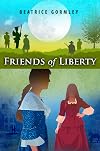
Sally Gifford and Kitty Lawton are unlikely friends. Both live in Boston as the American colonies are close to declaring independence. Sally is the daughter of a Patriot shoemaker and Kitty the daughter of a wealthy Loyalist merchant. The girls both lost their mothers when they were younger and are determined to be "sisters at heart" despite their differences. Tensions are rising in the Colonies and Sally finds it harder to remain friends with Kitty as she accidentally gives away information show more about her brother-in-law who carries letters for the Patriots and informs Kitty's father about a raid by a Patriot group. Sally is torn between loyalty to her friend and loyalty to her family. She must make an important choice when her cousin is captured and sentenced to serve in the British Navy.
An interesting story of friendship during the American Revolution! Sally is caught in the middle, wanting to keep her friend, but not wanting to hurt her family. I liked that it took place before the Boston Tea Party and the war and showed the difficult choices people had to make as they chose a side. Fans of historical fiction and Dear America type books will enjoy this story. show less
An interesting story of friendship during the American Revolution! Sally is caught in the middle, wanting to keep her friend, but not wanting to hurt her family. I liked that it took place before the Boston Tea Party and the war and showed the difficult choices people had to make as they chose a side. Fans of historical fiction and Dear America type books will enjoy this story. show less
 This review was written for LibraryThing Early Reviewers.
What an intriguing idea for a book targeted towards young adult females. Salome is the only daughter Herodias and Herod Junior, and she idolizes her beautiful, charming, shallow mother. When Herodias leaves her husband for her brother-in-law, Herod Antipas, a maturing Salome begins to see the flaws in her mother's character. At this point, she has no wish to leave Rome for Galilee. She wishes to remain and become a priestess in the Temple of Diana, to lead a quiet of life of sacred dancing. show more Herodias insists on bringing her to the new land, to eventually be married to whomever will advance her ambitions. Herodias gets more than she bargained for- she is expected to change her Roman ways, she is disliked by the people, and John The Baptizer in particular condemns her marriage. Herod Antipas doesn't bring her the glory she left Rome for. Quickly realizing she is a pawn in this mess, Salome plans to escape to the Temple of Diana. Instead she makes a terrible mistake, in one last bid to earn her mother's heart.
The characters come across as very believable. Even Herodias comes across as sympathetic at times, since, as a woman, she had very few ways to control her life besides manipulation. The reader is given a very clear picture of the political climate and culture without it appearing like a boring, nonfiction text. On the surface, Salome's decisions seem unthinkable but Gormely does an amazing job explaining why she did what she did.
Young girls who love historical fiction with female protagonists will adore this one. The setting is a bit unusual, compared to other tired, worn out eras over utilized in historical fiction. Salome is complicated and not the flat, strong, brave heroine in most other books. The family and romantic intrigues are just as fascinating as the political intrigue. show less
The characters come across as very believable. Even Herodias comes across as sympathetic at times, since, as a woman, she had very few ways to control her life besides manipulation. The reader is given a very clear picture of the political climate and culture without it appearing like a boring, nonfiction text. On the surface, Salome's decisions seem unthinkable but Gormely does an amazing job explaining why she did what she did.
Young girls who love historical fiction with female protagonists will adore this one. The setting is a bit unusual, compared to other tired, worn out eras over utilized in historical fiction. Salome is complicated and not the flat, strong, brave heroine in most other books. The family and romantic intrigues are just as fascinating as the political intrigue. show less

"A young troublemaker grows up to be a civil rights activist, president of his country and world leader in this overview of the life and work of the Nobel Prize–winning peacemaker.
In an engaging narrative that avoids hagiography, Gormley chronicles Mandela’s childhood and youth as a village herder, his successful career as a lawyer defending victims of South Africa’s apartheid policies, his work with the African National Congress, his imprisonment on Robben Island, his presidency of show more post-apartheid South Africa and his efforts later in life as an international peacemaker. She effectively describes the gross injustices and absurdities of apartheid policies, including numerous examples of Mandela’s personal experiences living in a racist society. Mandela’s extraordinary ability as president to ease both the fearful suspicions of whites and the vengeful impulses of long-oppressed blacks, preventing the nation from plunging into civil war, is appropriately depicted as his crowning accomplishment. The author does note that Mandela was less successful in his personal life, with two failed marriages and estranged relationships with his children.
A complete, informative introduction to a nonviolent revolutionary and one of history’s most important champions of human rights. (photos, timeline, glossary, source notes) (Biography. 10-14)" From Kirkus Reviews, www.kirkusreviews.com show less
In an engaging narrative that avoids hagiography, Gormley chronicles Mandela’s childhood and youth as a village herder, his successful career as a lawyer defending victims of South Africa’s apartheid policies, his work with the African National Congress, his imprisonment on Robben Island, his presidency of show more post-apartheid South Africa and his efforts later in life as an international peacemaker. She effectively describes the gross injustices and absurdities of apartheid policies, including numerous examples of Mandela’s personal experiences living in a racist society. Mandela’s extraordinary ability as president to ease both the fearful suspicions of whites and the vengeful impulses of long-oppressed blacks, preventing the nation from plunging into civil war, is appropriately depicted as his crowning accomplishment. The author does note that Mandela was less successful in his personal life, with two failed marriages and estranged relationships with his children.
A complete, informative introduction to a nonviolent revolutionary and one of history’s most important champions of human rights. (photos, timeline, glossary, source notes) (Biography. 10-14)" From Kirkus Reviews, www.kirkusreviews.com show less

Review courtesy of Dark Faerie Tales.
Quick & Dirty: A realistic, and therefore, somewhat sad story of what the author perceives to be a good explanation of what Mary’s day-to-day life and major experiences may have been like, starting in adolescence and moving through to a more refreshing conclusion, perhaps to where the story would begin in the Bible.
Opening Sentence: I was possessed.
The Review:
Marianme, also called Mari, lives in a time period where, as we know, everything was controlled show more by men. Women were just tools to be used, and were expected to act as such. Women did all the work of the household and lived to serve men, whether their fathers, their husbands, or, even their brothers. Beatrice Gormley, the author, does a most excellent job of describing not only what day-to-day drudgery this equated to, but how trapped and desperate a woman like Mari would feel, with such slim chances that she would be able to live a happy life, with people who love her and she loves in return.
Gormley builds up Mari’s character exquisitely. She definitely had an exact point she wanted to get across in this book and I think she was able to do that. The narrative makes sense, as do the characters. The characters do not just make decisions on a whim, they are a distressed people and are dealing so much with life and death situations that they have little left for things like true love. They have dreams, but must often give them up for the good of their family, which Mari ultimately ends up doing.
It really is no surprise when the despicable life Mari is thrust into drives her ultimately to the point of madness. Overall, her story is a depressing one, and most hope is lost that she will be able to recover. The few people that she could trust have been driven away from fear that she is just too much of a risk. Gormley times the book just right, to show that Mari begins as a pretty regular girl, with pretty regular dreams, but with an extra gift, shown to come from her father, that can either be a great blessing when she has the freedom to use it correctly, or a great curse without her even realizing the difference. When she tries to follow her heart, she is rejected at every turn, even by those who love her, and so she ends up using it for selfish purposes instead. When she finally has the experience and wisdom to overcome the evil, she becomes a more powerful woman than even she could imagine.
Although Mari is definitely the main character, Gormley alternately gives the view from a man’s perspective as well, however, not just any ordinary man. Matthew, as a tax collector, portrays that although men have more control than the women, they are still driven by their opportunities and circumstances. Birth, religion, class and social standing, and business all play a role in decision making as well, and although Matthew’s heart tells him one thing, he often listens to his head, knowing that any illogical risk could have deadly circumstances. As Gormley walks through Matthew’s decision-making process, it becomes understandable why good people still often make bad choices.
Although most of the book shows the difficult journey of survival through less than ideal circumstances, there begins to be hope when the brother that originally surrendered Mari’s happiness to save the family’s business takes pity on her in her completely despicable state and takes her to the rabbi Yeshua. This is really where the whole story becomes worth reading, when brotherly love is justly shown, especially by those with imperfect faith. Although parts of the book are hard to read, not because they are ill written, but because the pain and hopelessness are so apparent, only someone who knows what true unhappiness is would risk everything to have true happiness.
Notable Scene:
In the following days, I was glad for the sparrow’s company, and I quickly got to depend on it. One morning, I came down the stairs chatting out loud with Tsippor, thinking the courtyard was empty. Suddenly I realized that Chava was standing there in the shade, watching me.
She didn’t seem disturbed, and she didn’t say anything, but the incident made me remember Ramla’s warning about letting spirits follow me into our world: They can do all kinds of mischief. Probably Ramla didn’t mean a harmless spirit like the sparrow, but maybe I needed to ask her.
By that afternoon, I’d decided to go tell Ramla about the sparrow spirit and ask her advice. On my way to Susannah’s house, though, I kept changing my mind. What if Ramla urged me to banish the sparrow, even from my private garden? He was an old friend. These days, I didn’t have such a great crowd of friends that I could afford to lose one.
FTC Advisory: Knopf Books for Young Readers/Random House provided me with a copy of Poisoned Honey: A Story of Mary Magdalene. No goody bags, sponsorships, “material connections,” or bribes were exchanged for my review. show less
Quick & Dirty: A realistic, and therefore, somewhat sad story of what the author perceives to be a good explanation of what Mary’s day-to-day life and major experiences may have been like, starting in adolescence and moving through to a more refreshing conclusion, perhaps to where the story would begin in the Bible.
Opening Sentence: I was possessed.
The Review:
Marianme, also called Mari, lives in a time period where, as we know, everything was controlled show more by men. Women were just tools to be used, and were expected to act as such. Women did all the work of the household and lived to serve men, whether their fathers, their husbands, or, even their brothers. Beatrice Gormley, the author, does a most excellent job of describing not only what day-to-day drudgery this equated to, but how trapped and desperate a woman like Mari would feel, with such slim chances that she would be able to live a happy life, with people who love her and she loves in return.
Gormley builds up Mari’s character exquisitely. She definitely had an exact point she wanted to get across in this book and I think she was able to do that. The narrative makes sense, as do the characters. The characters do not just make decisions on a whim, they are a distressed people and are dealing so much with life and death situations that they have little left for things like true love. They have dreams, but must often give them up for the good of their family, which Mari ultimately ends up doing.
It really is no surprise when the despicable life Mari is thrust into drives her ultimately to the point of madness. Overall, her story is a depressing one, and most hope is lost that she will be able to recover. The few people that she could trust have been driven away from fear that she is just too much of a risk. Gormley times the book just right, to show that Mari begins as a pretty regular girl, with pretty regular dreams, but with an extra gift, shown to come from her father, that can either be a great blessing when she has the freedom to use it correctly, or a great curse without her even realizing the difference. When she tries to follow her heart, she is rejected at every turn, even by those who love her, and so she ends up using it for selfish purposes instead. When she finally has the experience and wisdom to overcome the evil, she becomes a more powerful woman than even she could imagine.
Although Mari is definitely the main character, Gormley alternately gives the view from a man’s perspective as well, however, not just any ordinary man. Matthew, as a tax collector, portrays that although men have more control than the women, they are still driven by their opportunities and circumstances. Birth, religion, class and social standing, and business all play a role in decision making as well, and although Matthew’s heart tells him one thing, he often listens to his head, knowing that any illogical risk could have deadly circumstances. As Gormley walks through Matthew’s decision-making process, it becomes understandable why good people still often make bad choices.
Although most of the book shows the difficult journey of survival through less than ideal circumstances, there begins to be hope when the brother that originally surrendered Mari’s happiness to save the family’s business takes pity on her in her completely despicable state and takes her to the rabbi Yeshua. This is really where the whole story becomes worth reading, when brotherly love is justly shown, especially by those with imperfect faith. Although parts of the book are hard to read, not because they are ill written, but because the pain and hopelessness are so apparent, only someone who knows what true unhappiness is would risk everything to have true happiness.
Notable Scene:
In the following days, I was glad for the sparrow’s company, and I quickly got to depend on it. One morning, I came down the stairs chatting out loud with Tsippor, thinking the courtyard was empty. Suddenly I realized that Chava was standing there in the shade, watching me.
She didn’t seem disturbed, and she didn’t say anything, but the incident made me remember Ramla’s warning about letting spirits follow me into our world: They can do all kinds of mischief. Probably Ramla didn’t mean a harmless spirit like the sparrow, but maybe I needed to ask her.
By that afternoon, I’d decided to go tell Ramla about the sparrow spirit and ask her advice. On my way to Susannah’s house, though, I kept changing my mind. What if Ramla urged me to banish the sparrow, even from my private garden? He was an old friend. These days, I didn’t have such a great crowd of friends that I could afford to lose one.
FTC Advisory: Knopf Books for Young Readers/Random House provided me with a copy of Poisoned Honey: A Story of Mary Magdalene. No goody bags, sponsorships, “material connections,” or bribes were exchanged for my review. show less
Lists
Precious People (1)
Awards


You May Also Like


Statistics
- Works
- 48
- Members
- 4,103
- Popularity
- #6,130
- Rating
- 3.8
- Reviews
- 37
- ISBNs
- 142
- Languages
- 1
