
Mrs. Humphry Ward (1851–1920)
Author of Marcella
About the Author
Works by Mrs. Humphry Ward
Marcella, Volume I 3 copies
The Book War 1906-1908 Two Letters 2 copies
Robert Elsmere, Vol I 2 copies
Diana Mallory 1 copy
English Poets (4 vols.) 1 copy
Robert Elsmere Volume III 1 copy
Associated Works
The Professor to Which is Added the Poems of Currer, Ellis, and Acton Bell (2009) — Introduction — 20 copies, 1 review
Tagged
Common Knowledge
- Legal name
- Arnold, Mary Augusta
Ward, Mary Augusta - Other names
- Ward, Mary Augusta Arnold
Arnold, Mary Augusta - Birthdate
- 1851-06-11
- Date of death
- 1920-03-24
- Gender
- female
- Occupations
- novelist
autobiographer
educational reformer
war correspondent - Organizations
- Women's National Anti-Suffrage League
Evening Play Centre Committee
Mary Ward Settlement (formerly Passmore Edwards Settlement) - Relationships
- Ward, Thomas Humphry (husband)
Arnold, Thomas (younger-father, elder-grandfather)
Arnold, Matthew (uncle)
Huxley, Leonard (brother-in-law)
Huxley, Julian (nephew)
Huxley, Aldous (nephew) (show all 8)
Huxley, Matthew (great-nephew)
Arnold, William Delafield (uncle) - Short biography
- Mary Augusta Ward, née Arnold, was born in Hobart, Tasmania, Australia, to a prominent British intellectual and literary family. Her father Tom Arnold was a literary scholar and professor of literature, her paternal uncle was poet Matthew Arnold, and her paternal grandfather was Thomas Arnold, headmaster of Rugby School. Julian and Aldous Huxley were her nephews. In 1856, her father moved the family to Ireland and she was sent to various boarding schools for her education. At 16, she went to live with her parents at Oxford, where her father had become a lecturer in history at the university. In 1872, she married Humphry Ward, a fellow of Brasenose College, Oxford, and a writer. In 1877, she wrote a large number of entries for the Dictionary of Christian Biography. She began contributing articles to Macmillan's Magazine and the Pall Mall Gazette while writing a children's book, Milly and Olly, or a Holiday Among the Mountains, published in 1881. Her works were published under her married name Mrs. Humphry Ward. Her controversial and successful novel for adults Robert Elsmere (1888) was followed by more than 20 other novels, and by the end of the 19th-century, she had become a famous bestselling author. She also worked for social reform and helped establish adult educational colleges first at Marchmont Hall and later at Tavistock Place in Bloomsbury, now known as the Mary Ward Centre. She opposed the women's suffrage movement but favored women's participation in local government. During World War I, she visited the front in France and reported on it in three books, including England's Effort—Six Letters to an American Friend (1916) and Towards the Goal (1917), with a foreword by former President Theodore Roosevelt. She published her autobiography, A Writer’s Recollections, in 1918.
- Nationality
- UK
- Birthplace
- Hobart, Tasmania, Australia
- Places of residence
- Hobart, Tasmania, Australia
Oxford, Oxfordshire, England, UK
London, England, UK - Place of death
- London, England, UK
- Burial location
- Aldbury, Hertfordshire, England, UK
- Map Location
- UK
Members
Reviews
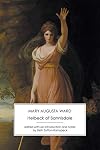
Bannisdale was an old family home in the Lake District, a part of the world that the author knew well and brought to life with lovely and evocative prose.
“It was an old and weather-beaten house, of a singular character and dignity; yet not large. It was built of grey stone, covered with a rough-cast, so tempered by age to the colour and surface of the stone, that the many patches where it had dropped away produced hardly any disfiguring effect. The rugged “pele” tower, origin and show more source of all the rest, was now grouped with the gables and projections, the broad casemented windows, and deep doorways of a Tudor manor-house. But the whole structure seemed still to lean upon and draw towards the tower; and it was the tower which gave accent to a general expression of austerity, depending perhaps on the plain simplicity of all the approaches and immediate neighbourhood of the house. For in front of it were neither flowers nor shrubs—only wide stretches of plain turf and gravel; while behind it, beyond some thin intervening trees, rose a grey limestone fell, into which the house seemed to withdraw itself, as into the rock, “whence it was hewn.”
The story begins on a chilly March day, late in the nineteen century. Alan Helbeck has invited his newly-widowed sister, Augustina, and her stepdaughter, Laura, to live with him at Bannisdale. They had been estranged for many years, because he was a devout Catholic and his sister had abandoned her faith to marry an atheist scholar. She was happy that the estrangement was over, that she was home again, but she found that the house and the estate were much changed. The estate was diminished and the house was cold and bare, because her brother has sold land and valuables to support the Catholic orphanages that Jesuit priests had urged him to establish.
Alan was happy with that, and he would have followed his vocation and become a priest had he not been heir to the family fortune and responsibilities; but Laura was horrified. Like her father, she had no faith, but she saw the value of beauty and history, and she couldn’t understand why he didn’t appreciate those things.
Laura found the asceticism of the household oppressive, but she stayed at Bannisdale because she loved her stepmother and she knew that she needed her. She stayed even when Augustina reverted to Catholicism. The contrast between the two women, one who thinks for herself and one who follows the lead of her male protector, is striking.
At first Laura dislikes Alan and finds him very cold, but in time she comes to appreciate his thoughtfulness towards to her and her stepmother, and to appreciate the beauty of his chapel and the value of the good works he does; though her dislike of his faith and the priests who expect so much from him is unwavering. He is captivated by the spirited young woman, loving her openness and honesty, but worrying about her lack of faith.
Over times their feelings strengthen, and events conspire to make them declare their love.
I loved that this book didn’t lead to a marriage at the very end, that a proposal came a little before the story was half over, and that the rest of the book explored the difficulty of marriage between two people whose beliefs were fundamentally different.
It did that with a wonderful empathy towards all of the characters and their different feelings. I knew that the author’s own feelings chimed with Laura’s but she didn’t let that unbalance the story, and she didn’t let the ideas that she was exploring to unbalance the story that she had to tell.
The plot was well constructed and the writing was lovely. It had both academic and emotional intelligence, it evoked the time and the place beautifully, and it always placed the characters, their lives and relationships, at the centre of things.
Laura was a marvellous heroine; she was a ‘new woman’ with wonderful potential, but she was also young and grieving for her beloved father, and terribly torn between the ways he had taught her and the ways of the man she had come to love deeply.
I felt for her as she escaped to visit friends in London, and as she was drawn back to Bannisdale to nurse her dying stepmother ….
It was only at the very end of the story that things went a little awry. It was dramatic, it was emotional, but I wasn’t as convinced by the final act as I had been by the rest of the story.
I think that maybe that was inevitable, because a story has to have a resolution and the problem that the author set out could never be resolved.
That was my only issue, because I loved what the author had to say and I loved the way that she said it. show less
“It was an old and weather-beaten house, of a singular character and dignity; yet not large. It was built of grey stone, covered with a rough-cast, so tempered by age to the colour and surface of the stone, that the many patches where it had dropped away produced hardly any disfiguring effect. The rugged “pele” tower, origin and show more source of all the rest, was now grouped with the gables and projections, the broad casemented windows, and deep doorways of a Tudor manor-house. But the whole structure seemed still to lean upon and draw towards the tower; and it was the tower which gave accent to a general expression of austerity, depending perhaps on the plain simplicity of all the approaches and immediate neighbourhood of the house. For in front of it were neither flowers nor shrubs—only wide stretches of plain turf and gravel; while behind it, beyond some thin intervening trees, rose a grey limestone fell, into which the house seemed to withdraw itself, as into the rock, “whence it was hewn.”
The story begins on a chilly March day, late in the nineteen century. Alan Helbeck has invited his newly-widowed sister, Augustina, and her stepdaughter, Laura, to live with him at Bannisdale. They had been estranged for many years, because he was a devout Catholic and his sister had abandoned her faith to marry an atheist scholar. She was happy that the estrangement was over, that she was home again, but she found that the house and the estate were much changed. The estate was diminished and the house was cold and bare, because her brother has sold land and valuables to support the Catholic orphanages that Jesuit priests had urged him to establish.
Alan was happy with that, and he would have followed his vocation and become a priest had he not been heir to the family fortune and responsibilities; but Laura was horrified. Like her father, she had no faith, but she saw the value of beauty and history, and she couldn’t understand why he didn’t appreciate those things.
Laura found the asceticism of the household oppressive, but she stayed at Bannisdale because she loved her stepmother and she knew that she needed her. She stayed even when Augustina reverted to Catholicism. The contrast between the two women, one who thinks for herself and one who follows the lead of her male protector, is striking.
At first Laura dislikes Alan and finds him very cold, but in time she comes to appreciate his thoughtfulness towards to her and her stepmother, and to appreciate the beauty of his chapel and the value of the good works he does; though her dislike of his faith and the priests who expect so much from him is unwavering. He is captivated by the spirited young woman, loving her openness and honesty, but worrying about her lack of faith.
Over times their feelings strengthen, and events conspire to make them declare their love.
I loved that this book didn’t lead to a marriage at the very end, that a proposal came a little before the story was half over, and that the rest of the book explored the difficulty of marriage between two people whose beliefs were fundamentally different.
It did that with a wonderful empathy towards all of the characters and their different feelings. I knew that the author’s own feelings chimed with Laura’s but she didn’t let that unbalance the story, and she didn’t let the ideas that she was exploring to unbalance the story that she had to tell.
The plot was well constructed and the writing was lovely. It had both academic and emotional intelligence, it evoked the time and the place beautifully, and it always placed the characters, their lives and relationships, at the centre of things.
Laura was a marvellous heroine; she was a ‘new woman’ with wonderful potential, but she was also young and grieving for her beloved father, and terribly torn between the ways he had taught her and the ways of the man she had come to love deeply.
I felt for her as she escaped to visit friends in London, and as she was drawn back to Bannisdale to nurse her dying stepmother ….
It was only at the very end of the story that things went a little awry. It was dramatic, it was emotional, but I wasn’t as convinced by the final act as I had been by the rest of the story.
I think that maybe that was inevitable, because a story has to have a resolution and the problem that the author set out could never be resolved.
That was my only issue, because I loved what the author had to say and I loved the way that she said it. show less
FYI, the synopsis provided above is not an actual synopsis, it's just the first paragraph of the novel. The novel is actually about an aristocratic English family divided by politics and their fiery tempers, and the star-crossed romances they enter into. The mother, Lady Coryston, is a bossy domineering Conservative woman who (gasp!) has inherited her husband's estate and (gasp!) intends to interfere with English custom by not leaving it to her oldest son, two things that were outrageously show more crazy at the time. The oldest son, Lord Coryston aka Cory, is a radical Socialist who wants to inherit the estate so he can split it up into model farms, and he does everything he can to be a thorn in his mother's side. The daughter, can't remember her name, is interested in the Suffrage movement but what she really wants is a strong man to love her and show her what's right and wrong--could her fanatically religious neighbor be the one for her or would she be better off with the poor librarian? The other son, Arthur, a member of the House of Commons, lets his mother write his speeches and tell him what to do, but now he's fallen in love with the daughter of the Liberal opposition and if his mother finds out, she'll cream him. Then there's another son, James, who literally does nothing throughout the entire novel and I'm not sure why he is there. Then there's a couple who may be evicted from their farm because although they are legally married, one of them was previously (gasp!) divorced, meaning that they are living in S-I-N in a major way. When I turned the last page, I felt a little spasm of thankfulness that I am alive today and not 100 years ago. If you like Victorian/Edwardian novels, you will enjoy this one. Downton Abbey is hella boring and weird compared to this. show less
I enjoyed Mrs. Ward’s 1913 offering, but this anti-suffragette novel was hard to take. The eponymous character is a rich, beautiful, and charismatic young woman whose father has just died. But instead of inheriting her fortune outright, she’s been saddled with a guardian/trustee because her dying father correctly believed that she would devote all her money and all her to life to the cause of woman’s suffrage if she had control. Of course the guardian is a magnificent unmarried show more middle-aged man who is handsome, noble, etc etc, and sparks fly between him and Delia Blanchflower. Delia is under the sway of an unscrupulous older suffragette. They live together and are devoted to each other. Although it’s explained that the older woman only wants Delia’s money for the cause and doesn’t really care about her, she appears to get jealous of the guardian and basically cuts Delia off. There was a lot of stuff about how their group was blowing up mailboxes, which seemed ridiculous to me, but it turns out that suffragettes really did blow up mailboxes. One woman complains about how her former servant was sick and dying and wrote a letter to her, but it was blown up, so the servant died thinking her mistress didn’t care about her. (I learned from this book that the most important part of noblesse oblige is taking care of your servants when they’re sick.)
There are a number of anti-suffrage women role model characters in the book, and also a woman who believe that women should get the vote, but she doesn’t care if it’s in her lifetime or her daughter’s lifetime or neither, and that it’s wrong for women to do anything except patiently wait for the vote. The stuff that these women say makes absolutely no sense and reminds me of the stuff that people say today that makes absolutely no sense. It’s not about content, it’s about being dignified and an upstanding member of society. People just want everything to be comfy and pleasant. Anyway, there’s a beautiful old historic home that the suffragettes want to blow up (I’m assuming this is based on Lloyd George’s home that really was bombed) and in the end even though Delia and her guardian try to prevent it, the wicked suffragette lady sets it on fire, killing a little disabled girl who has no function in this book other than to be sacrificed—and the suffragette lady dies too. Is this book racist? Of course. Here’s a sample line: “From her face and figure the half savage, or Asiatic note, present in the physiognomy and complexions of her brothers and sisters, was entirely absent.” show less
There are a number of anti-suffrage women role model characters in the book, and also a woman who believe that women should get the vote, but she doesn’t care if it’s in her lifetime or her daughter’s lifetime or neither, and that it’s wrong for women to do anything except patiently wait for the vote. The stuff that these women say makes absolutely no sense and reminds me of the stuff that people say today that makes absolutely no sense. It’s not about content, it’s about being dignified and an upstanding member of society. People just want everything to be comfy and pleasant.
FYI, the synopsis provided above is not an actual synopsis, it's just the first paragraph of the novel. The novel is actually about an aristocratic English family divided by politics and their fiery tempers, and the star-crossed romances they enter into. The mother, Lady Coryston, is a bossy domineering Conservative woman who (gasp!) has inherited her husband's estate and (gasp!) intends to interfere with English custom by not leaving it to her oldest son, two things that were outrageously show more crazy at the time. The oldest son, Lord Coryston aka Cory, is a radical Socialist who wants to inherit the estate so he can split it up into model farms, and he does everything he can to be a thorn in his mother's side. The daughter, can't remember her name, is interested in the Suffrage movement but what she really wants is a strong man to love her and show her what's right and wrong--could her fanatically religious neighbor be the one for her or would she be better off with the poor librarian? The other son, Arthur, a member of the House of Commons, lets his mother write his speeches and tell him what to do, but now he's fallen in love with the daughter of the Liberal opposition and if his mother finds out, she'll cream him. Then there's another son, James, who literally does nothing throughout the entire novel and I'm not sure why he is there. Then there's a couple who may be evicted from their farm because although they are legally married, one of them was previously (gasp!) divorced, meaning that they are living in S-I-N in a major way. When I turned the last page, I felt a little spasm of thankfulness that I am alive today and not 100 years ago. If you like Victorian/Edwardian novels, you will enjoy this one. Downton Abbey is hella boring and weird compared to this.
My brother said that when he was in graduate school studying English, Mrs. Humphry Ward was dismissed as a nobody; they didn’t read any of her books; and she wasn’t sufficiently rehabilitated to be given a first name. (Turns out she was Mary Augusta Ward.) But I liked this book and I’m looking forward to her 1914 offering. My brother was also told she was a Victorian so he could not believe she had a book in 1913. However, all English writers did not conveniently die at the same moment as Queen Victoria, so there was some overlap, and in fact two thirds of Mrs. Humphry Ward’s books were written in the Edwardian period. She did seem to have a kind of Victorian viewpoint, though. There was a strange timeless quality to this novel, and it’s hard to know when it was set. The House of Commons was debating a Land Bill and the aristocrats were very concerned about their “rights” and estates being taken from them, making it feel like 1830. But the main character was a Suffragist, which was accepted as a common viewpoint (although derided as wrong), making it seem more contemporary to 1913. The characters drove about in strange conveyances but I think I remember some cars. I guess it was probably set in 1913 but the ways of the English aristocracy are so peculiar and unchanging that everything was the same as in Victorian times.
The characters had political opinions ranging from Conservative to radical Socialist. I couldn’t figure out which platform the author agreed with, except that she seemed to think women should not vote but instead use their exquisite goodness to make the world a better place without meddling in politics. show less
My brother said that when he was in graduate school studying English, Mrs. Humphry Ward was dismissed as a nobody; they didn’t read any of her books; and she wasn’t sufficiently rehabilitated to be given a first name. (Turns out she was Mary Augusta Ward.) But I liked this book and I’m looking forward to her 1914 offering. My brother was also told she was a Victorian so he could not believe she had a book in 1913. However, all English writers did not conveniently die at the same moment as Queen Victoria, so there was some overlap, and in fact two thirds of Mrs. Humphry Ward’s books were written in the Edwardian period. She did seem to have a kind of Victorian viewpoint, though. There was a strange timeless quality to this novel, and it’s hard to know when it was set. The House of Commons was debating a Land Bill and the aristocrats were very concerned about their “rights” and estates being taken from them, making it feel like 1830. But the main character was a Suffragist, which was accepted as a common viewpoint (although derided as wrong), making it seem more contemporary to 1913. The characters drove about in strange conveyances but I think I remember some cars. I guess it was probably set in 1913 but the ways of the English aristocracy are so peculiar and unchanging that everything was the same as in Victorian times.
The characters had political opinions ranging from Conservative to radical Socialist. I couldn’t figure out which platform the author agreed with, except that she seemed to think women should not vote but instead use their exquisite goodness to make the world a better place without meddling in politics. show less
Lists
Awards


You May Also Like


Associated Authors
Statistics
- Works
- 54
- Also by
- 7
- Members
- 707
- Popularity
- #35,839
- Rating
- 3.8
- Reviews
- 14
- ISBNs
- 256
- Languages
- 1
- Favorited
- 3