
Jerome K. Jerome (1859–1927)
Author of Three Men in a Boat
About the Author
Jerome K. Jerome was born in Walsall, Staffordshire, England on May 2, 1859. He grew up in London and had to leave school at the age of 14 because of his parents' death. Afterwards, he worked as a clerk, an actor, a journalist, and a school teacher. In 1885, he published his first book On the Stage show more - and Off: The Brief Career of a Would-Be Actor. This was followed by numerous plays, books, and magazine articles including Idle Thoughts of an Idle Fellow, Second Thoughts of an Idle Fellow, Three Men in a Boat, and Three Men on the Bummel. He founded the weekly magazine To-Day in 1893 and edited it and a monthly magazine called The Idler until 1898. He also worked as a lecturer. During World War I, he enlisted in the French army as an ambulance driver because he was rejected for active service in his own country. He published his autobiography My Life and Times in 1926. He suffered a paralytic stroke and a cerebral hemorrhage and died on June 14, 1927. (Bowker Author Biography) show less
Series
Works by Jerome K. Jerome
Reading & Training : Jerome K. Jerome : Three men in a boat [book + sound recording] (2002) — Writer — 13 copies
Anthony John 5 copies
Three Men In A Boat (To Say Nothing Of The Dog) (Longmans' Simplified English Series) (1948) 4 copies
Barbara: A Play in One Act 3 copies
Three Men in a Boat | Three Men on the Bummel | Idle Thoughts of an Idle Fellow: The best of Jerome K. Jerome (2013) 3 copies
Robina in Search of a Husband 3 copies
Трое в лодке и другие произведения 2 copies
Pagine umoristiche 2 copies
Divagaciones sobre los bebés 1 copy
The Clementine Vulgate 1 copy
Tommy & Co. 1 copy
Tea Table Talk 1 copy
Paul Kelver 1 copy
Three Men on Wheels 1 copy
Трима души в една лодка 1 copy
A Pathetic Story 1 copy
The Idler Magazine 1892-3 1 copy
Избранные произведения в 2 томах. Т.2. Рассказы. (Selected works in two volumes, Vol.2, Stories) 1 copy
Roman-Studien 1 copy
Storia di un romanzo 1 copy
Should Women be Beautiful? 1 copy
On Being Idle 1 copy
Jerome K. Jerome Collection, Vol 1: Three Men in a Boat, Three Men on the Bummel, Tea-Table Talk (2018) 1 copy
Idle Thoughts on Ireland — Author — 1 copy
Sunset 1 copy
The Snake 1 copy
The Woman of the Sæter 1 copy
Tre mñ i en bt̄ 1 copy
Associated Works
Alfred Hitchcock Presents : Stories They Wouldn't Let Me Do on TV (1957) — Contributor — 180 copies, 7 reviews
Famous Fantastic Mysteries: 30 Great Tales of Fantasy and Horror from the Classic Pulp Magazines Famous Fantastic Mysteries & Fantastic Novels (1991) — Contributor — 67 copies, 1 review
Deadly Dolls: Midnight Tales of Uncanny Playthings: 50 (British Library Tales of the Weird) (2024) — Contributor — 33 copies, 1 review
Scientific Romance: An International Anthology of Pioneering Science Fiction (2016) — Contributor — 19 copies, 2 reviews
Stories in the Dark: Tales of Terror by Jerome K. Jerome, Robert Barr, and Barry Pain (1989) — Contributor — 15 copies, 1 review
The Afterlife of Frankenstein: A Century of Mad Science, Automata, and Monsters Inspired by Mary Shelley, 1818-1918 (Clockwork Editions) (2023) — Contributor — 12 copies
The Second Christmas Megapack: 29 Modern and Classic Christmas Stories (2012) — Contributor — 3 copies
Tagged
Common Knowledge
- Canonical name
- Jerome, Jerome K.
- Legal name
- Jerome, Jerome Clapp (birth)
- Other names
- Jerome, Jerome Klapka
- Birthdate
- 1859-05-02
- Date of death
- 1927-06-14
- Gender
- male
- Education
- Philological School in Lisson Grove
- Occupations
- novelist
humorist
playwright
actor
teacher
railway worker (show all 9)
clerk
journalist
ambulance driver (WWI) - Organizations
- London and North Western Railway
- Relationships
- Barr, Robert (co-editor of The Idler)
- Short biography
- Jerome Klapka Jerome (2 May 1859 – 14 June 1927) was an English writer and humourist, best known for the comic travelogue Three Men in a Boat (1889).
Other works include the essay collections Idle Thoughts of an Idle Fellow (1886) and Second Thoughts of an Idle Fellow; Three Men on the Bummel, a sequel to Three Men in a Boat, and several other novels.
Jerome was born in Caldmore, Walsall, England. He was the fourth child of Marguerite Jones and Jerome Clapp (who later renamed himself Jerome Clapp Jerome), an ironmonger and lay preacher who dabbled in architecture. He had two sisters, Paulina and Blandina, and one brother, Milton, who died at an early age. Jerome was registered as Jerome Clapp Jerome, like his father's amended name, and the Klapka appears to be a later variation (after the exiled Hungarian general György Klapka). The family fell into poverty owing to bad investments in the local mining industry, and debt collectors visited often, an experience that Jerome described vividly in his autobiography My Life and Times (1926).[3]
The young Jerome attended St Marylebone Grammar School. He wished to go into politics or be a man of letters, but the death of his father when Jerome was 13 and of his mother when he was 15 forced him to quit his studies and find work to support himself. He was employed at the London and North Western Railway, initially collecting coal that fell along the railway, and he remained there for four years. - Cause of death
- cerebral hemorrhage
- Nationality
- UK
- Birthplace
- Caldmore, Walsall, England, UK
- Places of residence
- Walsall, Staffordshire, England, UK
Stourbridge, Worcestershire, England, UK
London, England, UK (Poplar ∙ East End)
Northampton, Northhamptonshire, England - Place of death
- Northampton, East Midlands, England, UK
- Burial location
- St Mary's Church, Ewelme, Oxfordshire, England, UK (ashes)
- Map Location
- England, UK
Members
Reviews
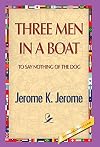
Three Men in a Boat is a completely and absolutely delightful waste of time. I must have bookmarked at least twenty hilarious passages to go back and read again for a last chuckle before returning to the library (I may subject you to some of them if the mood hits me before I wind this up). I listened and then read so I could enjoy the nonsense dialogue (both verbal and literary) a second time. Published in 1889 this book is in the Public Domain and available for free download from the show more Gutenberg Project and probably elsewhere. It is also available on Kindle Unlimited. There are several audio versions, probably all good, but I chose the narration by Hugh Laurie and the delivery was perfect!
The (very lean) plot: Three idle young men (Jerome, George, and Harrison), who seemingly have nothing better to do with their time than to ramble reflectively for hours regarding their hypochondriasis ailments and on every other moronic thought that pops into their heads, decided that although a sea voyage might benefit their health. They did not have the time to do so - but, they mused, wouldn’t it be lovely to book a boat and take a fortnight boat-ride holiday of canals and locks on the river Thames? Although this does sound sublime, these three young swells and their dog Montmorency, are not taking a barge cruise but rather more like a camping trip along the Thames and since they are adept at absolutely nothing but sloth they are in for surprising adventures (surprising to them but not to the reader). The plot here is nothing more than a vehicle for the comical ruminations of Jerome.
Before setting out, the three of them carefully planned – down to the last detail – what they needed to prepare for their trip. If this was today, it would probably read like one of my camping trip lists starting with the essentials: electronics and chargers, blow-up mattress and snuggly bedclothes, wet-wipes, tissues, toilet paper, Tupperware laden food supply, plastic dinner service (shame on me), wine, flashlights, and at least half a dozen family card games. But since it was 1889 the prep and carriage was a lot more cumbersome and there are a few hilarious descriptions of their packing.
Of course, they forgot to pack a can opener and there is also a funny passage describing their attempts to get at the pineapple inside a tin. (Okay, I can't resist, i'm still chuckling so I'm adding the scene below:)
They had a tarp cover of sorts and frame to protect them from the rain (and there was plenty of it)…their struggle to construct the covering had me giggling (too bad they couldn’t hop over to the convenience store at the gas station near my house – they could have bought a tent that pops open to a three room villa for $20)!
On their sightseeing tour they were lost in a maze for a few hours with about twenty other people who were lost inside including the staff member who came in to help them find their way out.
One night, after mooring the boat and heading into the town for a pub, on the way back, it was raining so hard they decided to spend the night in town but there were no rooms to be let. They considered punching a policeman but then they mused that the policemen might just punch them back instead of hauling them in to spend the night in jail.
By the end of he story Jerome was pooped…he felt he had been put upon and that the others should share in the work (his rationale):
To be honest, I had never heard of Jerome K. Jerome, before reading a review of this book by GR Friend Peter. I was sure it must be a pen-name for Oscar Wilde, because it was Wilde who popped into my head as soon as the humorous rambling began. Jerome K. Jerome was in fact a writer of the same period and may have traveled the same literary circles, but they do not appear to have been friends. I read a little blurb on the internet suggesting that it might even have been Jerome who outed Wilde in one of the former’s publications, but the latter was hardly discreet. show less
The (very lean) plot: Three idle young men (Jerome, George, and Harrison), who seemingly have nothing better to do with their time than to ramble reflectively for hours regarding their hypochondriasis ailments and on every other moronic thought that pops into their heads, decided that although a sea voyage might benefit their health. They did not have the time to do so - but, they mused, wouldn’t it be lovely to book a boat and take a fortnight boat-ride holiday of canals and locks on the river Thames? Although this does sound sublime, these three young swells and their dog Montmorency, are not taking a barge cruise but rather more like a camping trip along the Thames and since they are adept at absolutely nothing but sloth they are in for surprising adventures (surprising to them but not to the reader). The plot here is nothing more than a vehicle for the comical ruminations of Jerome.
Before setting out, the three of them carefully planned – down to the last detail – what they needed to prepare for their trip. If this was today, it would probably read like one of my camping trip lists starting with the essentials: electronics and chargers, blow-up mattress and snuggly bedclothes, wet-wipes, tissues, toilet paper, Tupperware laden food supply, plastic dinner service (shame on me), wine, flashlights, and at least half a dozen family card games. But since it was 1889 the prep and carriage was a lot more cumbersome and there are a few hilarious descriptions of their packing.
“…chaos reigned… and then there remained the hampers to do. They began in a light-hearted spirit, and I looked at the piles of plates and cups, and kettles, and bottles and jars, and pies, and stoves, and cakes, and tomatoes, &c., and felt that the thing would soon become exciting.It did. They started with breaking a cup. That was the first thing they did. They did that just to show you what they could do, and to get you interested. Then Harris packed the strawberry jam on top of a tomato and squashed it, and they had to pick out the tomato with a teaspoon. And then it was George’s turn, and he trod on the butter…and they stepped on things, and put things behind them, and then couldn’t find them when they wanted them; and they packed the pies at the bottom, and put heavy things on top, and smashed the pies in. They upset salt over everything, and as for the butter! I never saw two men do more with one-and-twopence worth of butter in my whole life than they did (they obviously never watched Last Tango in Paris). After George had got it off his slipper, they tried to put it in the kettle. It wouldn’t go in, and what was in wouldn’t come out. They did scrape it out at last, and put it down on a chair, and Harris sat on it, and it stuck to him, and they went looking for it all over the room.”
Of course, they forgot to pack a can opener and there is also a funny passage describing their attempts to get at the pineapple inside a tin. (Okay, I can't resist, i'm still chuckling so I'm adding the scene below:)
"It cast a gloom over the boat, there being no mustard. We ate our beef in silence. Existence seemed hollow and uninteresting…. George drew out a tin of pine-apple from the bottom of the hamper, and rolled it into the middle of the boat, we felt that life was worth living after all…Then we looked for the knife to open the tin with. We turned out everything in the hamper. We turned out the bags. We pulled up the boards at the bottom of the boat. We took everything out on to the bank and shook it. There was no tin-opener to be found...Then Harris tried to open the tin with a pocket-knife, and broke the knife and cut himself badly; and George tried a pair of scissors, and the scissors flew up, and nearly put his eye out. While they were dressing their wounds, I tried to make a hole in the thing with the spiky end of the hitcher, and the hitcher slipped and jerked me out between the boat and the bank into two feet of muddy water, and the tin rolled over, uninjured, and broke a teacup….Harris went up into a field and got a big sharp stone, and I went back into the boat and brought out the mast, and George held the tin and Harris held the sharp end of his stone against the top of it…It was George’s straw hat that saved his life that day…Harris got off with merely a flesh wound…We beat it out flat; we beat it back square; we battered it into every form known to geometry—but we could not make a hole in it. Then George went at it, and knocked it into a shape, so strange, so weird, so unearthly in its wild hideousness, that he got frightened and threw away the mast. Then we all three sat round it on the grass and looked at it."
They had a tarp cover of sorts and frame to protect them from the rain (and there was plenty of it)…their struggle to construct the covering had me giggling (too bad they couldn’t hop over to the convenience store at the gas station near my house – they could have bought a tent that pops open to a three room villa for $20)!
On their sightseeing tour they were lost in a maze for a few hours with about twenty other people who were lost inside including the staff member who came in to help them find their way out.
One night, after mooring the boat and heading into the town for a pub, on the way back, it was raining so hard they decided to spend the night in town but there were no rooms to be let. They considered punching a policeman but then they mused that the policemen might just punch them back instead of hauling them in to spend the night in jail.
By the end of he story Jerome was pooped…he felt he had been put upon and that the others should share in the work (his rationale):
“I said I thought Harris would have been showing a more proper spirit if he had suggested that he and George should work, and let me rest a bit. It seemed to me that I was doing more than my fair share of the work on this trip, and I was beginning to feel strongly on the subject. It always does seem to me that I am doing more work than I should do. It is not that I object to the work, mind you; I like work: it fascinates me. I can sit and look at it for hours. I love to keep it by me: the idea of getting rid of it nearly breaks my heart. You cannot give me too much work; to accumulate work has almost become a passion with me: my study is so full of it now, that there is hardly an inch of room for anymore. I shall have to throw out a wing soon. And I am careful of my work, too. Why, some of the work that I have by me now has been in my possession for years and years, and there isn’t a finger-mark on it. I take a great pride in my work; I take it down now and then and dust it. No man keeps his work in a better state of preservation than I do….”
To be honest, I had never heard of Jerome K. Jerome, before reading a review of this book by GR Friend Peter. I was sure it must be a pen-name for Oscar Wilde, because it was Wilde who popped into my head as soon as the humorous rambling began. Jerome K. Jerome was in fact a writer of the same period and may have traveled the same literary circles, but they do not appear to have been friends. I read a little blurb on the internet suggesting that it might even have been Jerome who outed Wilde in one of the former’s publications, but the latter was hardly discreet. show less
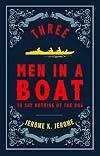
This isn’t as much a straight-up sequel to Three Men in a Boat as it is an excuse for Jerome to tear into a whole new range of satirical topics—but it still a sequel. It features the same characters, about ten years later, on another misguided but ultimately benign bout of tourism, and with about the same level of self-awareness as before.
Less of the book takes place in Germany than I’d thought going in, and there Jerome focuses on “highlights” like the dog chasing a pig around a show more restaurant or the habit of German carters to fall asleep at the reins, rather than the day-to-day. Most of the rest of the book’s about the trio planning the trip and setting off, with digressions into other unfortunate past travel adventures, explanations for why things must be done a particular way, and generally exaggerating social foibles and expectations to poke fun at them. My favourite of these was probably the passage about how nobody is bike ads ever seems to be putting in any effort and how they were sexualized even then. My least favourite was probably the continued harping about how rule-abiding the Germans are, and how they’ll fine you for everything.
But it’s still a fun story with much the same silliness and spirit of Three Men in a Boat, though. A lot of the humour’s still funny and relatable—running for public transit, language education that fails utterly, that guy who absolutely knows how to fix your vehicle but actually doesn’t—though there are bits that haven’t aged well. For some reason Jerome throws in a passage with a Black stereotype, he seems really into informing us how fat the Germans are, and some of his comments probably sounded great before the two World Wars. That sort of thing.
But all in all, it’s an amusing book and a decent sequel, but it’s not a must-read. I definitely got a sense reading this that if it had been written today, it would’ve been somebody’s stand-up routine rather than a novel, and maybe that’s all you need to know, to know if you’ll like it.
To bear in mind: May offend some Germans. May offend some English people. Almost certainly will offend fat people. Contains an exceptionally outdated word for Black people, and some parody dialogue for both Black and Scottish people, spelled-out dialect and all. (The Black one is notably worse, because of course it is.)
7/10 show less
Less of the book takes place in Germany than I’d thought going in, and there Jerome focuses on “highlights” like the dog chasing a pig around a show more restaurant or the habit of German carters to fall asleep at the reins, rather than the day-to-day. Most of the rest of the book’s about the trio planning the trip and setting off, with digressions into other unfortunate past travel adventures, explanations for why things must be done a particular way, and generally exaggerating social foibles and expectations to poke fun at them. My favourite of these was probably the passage about how nobody is bike ads ever seems to be putting in any effort and how they were sexualized even then. My least favourite was probably the continued harping about how rule-abiding the Germans are, and how they’ll fine you for everything.
But it’s still a fun story with much the same silliness and spirit of Three Men in a Boat, though. A lot of the humour’s still funny and relatable—running for public transit, language education that fails utterly, that guy who absolutely knows how to fix your vehicle but actually doesn’t—though there are bits that haven’t aged well. For some reason Jerome throws in a passage with a Black stereotype, he seems really into informing us how fat the Germans are, and some of his comments probably sounded great before the two World Wars. That sort of thing.
But all in all, it’s an amusing book and a decent sequel, but it’s not a must-read. I definitely got a sense reading this that if it had been written today, it would’ve been somebody’s stand-up routine rather than a novel, and maybe that’s all you need to know, to know if you’ll like it.
To bear in mind: May offend some Germans. May offend some English people. Almost certainly will offend fat people. Contains an exceptionally outdated word for Black people, and some parody dialogue for both Black and Scottish people, spelled-out dialect and all. (The Black one is notably worse, because of course it is.)
7/10 show less

Sequels are rarely as good as the original and this follow-up to Three Men in a Boat is no exception to the general rule. In this one our intrepid trio go on a cycling tour of the Black Forest. There are some genuinely funny set pieces mixed in with an awful lot of rather unfunny generalising about German society. As lazy national stereotyping goes it’s all fairly innocuous and good-natured (‘your German’, as Jerome somewhat unfortunately and indeed repeatedly has it, is law-abiding show more and efficient, but perhaps over-deferential to authority; all that sort of thing) and there was nothing here to seriously offend my delicate 21st century sensibilities. Still, it’s quite a big part of the book, and soon became more than slightly tedious. The real problem with Jerome’s humorous essaying on Germany is that most of it isn’t funny; in a comic novel this is surely the worst offence of all. To be fair, he depicts the English abroad in equally hackneyed fashion, though I’m not convinced that improves matters.
He was, nonetheless, an unusually nimble prose stylist, at his best every inch the equal of Wodehouse, whom he clearly influenced, and his playfully digressive narrative voice is the best thing about this book. At the end of it (don’t worry, this isn’t a plot spoiler, for the very good reason that there is no plot) he claims that a bummel is a rambling and pleasant journey, short or long, without an end. I haven’t the faintest, but it’s certainly a pretty neat metaphor for the way he wrote.
This is a flawed and curious outing, to be sure. I was alternately amused and irritated by it, and sometimes I was both simultaneously. A collection of sketches in search of a structure, it lacks the satisfying formal completeness of Boat, but is by no means the complete dud some have claimed. Jerome’s sweeping observations on national identity have dated embarrassingly, while his wonderfully funny sideswipes at advertising and cycling fads - including a super-duper ergonomic saddle which is excruciatingly uncomfortable - seem bang up-to-date. It’s a bumpy ride but, during the more rewarding stretches of the trip, the present reader was left in no doubt that his genial tour guide was a comic master of the first order. show less
He was, nonetheless, an unusually nimble prose stylist, at his best every inch the equal of Wodehouse, whom he clearly influenced, and his playfully digressive narrative voice is the best thing about this book. At the end of it (don’t worry, this isn’t a plot spoiler, for the very good reason that there is no plot) he claims that a bummel is a rambling and pleasant journey, short or long, without an end. I haven’t the faintest, but it’s certainly a pretty neat metaphor for the way he wrote.
This is a flawed and curious outing, to be sure. I was alternately amused and irritated by it, and sometimes I was both simultaneously. A collection of sketches in search of a structure, it lacks the satisfying formal completeness of Boat, but is by no means the complete dud some have claimed. Jerome’s sweeping observations on national identity have dated embarrassingly, while his wonderfully funny sideswipes at advertising and cycling fads - including a super-duper ergonomic saddle which is excruciatingly uncomfortable - seem bang up-to-date. It’s a bumpy ride but, during the more rewarding stretches of the trip, the present reader was left in no doubt that his genial tour guide was a comic master of the first order. show less
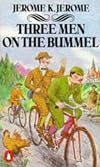
A capable light travelogue that fails to recapture the magic of its predecessor, Three Men in a Boat. In Three Men on the Bummel, Jerome K. Jerome revives his two friends from the Boat journey and takes them to Germany, but where the Thames of the first book came through vividly and generously, Bummel's Black Forest does not. We don't arrive in Germany until 80 pages in, and when we do there's no organisation, no real difference on the page between Stuttgart and Dresden and Hanover. There's show more a general sense of Germanness – beer, Alpine views, strict policemen – but not enough to satisfy.
There is plenty that still appeals: Jerome can still deliver a dry and amusing anecdote about his friends, and his general observations are still funny: "At the end of each bridge stands a policeman to tell the German how to cross it. Were there no policeman there, he would probably sit down and wait till the river had passed by" (pg. 197). In the humour there's a lot of truth, not only in the German deference to petty authority but also in the influence of the travelling Englishman: it was not Shakespeare or Milton who spread the English language throughout the world, Jerome says, but "the Englishman who, unable or unwilling to learn a single word of any language but his own, travels purse in hand into every corner of the Continent… For him it is that every foreign hotel- and restaurant-keeper adds to his advertisement: 'Only those with fair knowledge of English need apply.'" (pg. 165).
With such light and clever content in its pages, Bummel remains a fun and inoffensive read. A 'bummel', after all – Jerome informs us – is a journey where "the only thing regulating it being the necessity of getting back within a given time to the point from which one started", and to have "a pleasant time, and [be] sorry when 'tis over" (pg. 207). That's all Three Men on the Bummel tries to do, and it does it well. It would be perhaps ungrateful to expect it to also recreate the improbable success that was Three Men in a Boat. show less
There is plenty that still appeals: Jerome can still deliver a dry and amusing anecdote about his friends, and his general observations are still funny: "At the end of each bridge stands a policeman to tell the German how to cross it. Were there no policeman there, he would probably sit down and wait till the river had passed by" (pg. 197). In the humour there's a lot of truth, not only in the German deference to petty authority but also in the influence of the travelling Englishman: it was not Shakespeare or Milton who spread the English language throughout the world, Jerome says, but "the Englishman who, unable or unwilling to learn a single word of any language but his own, travels purse in hand into every corner of the Continent… For him it is that every foreign hotel- and restaurant-keeper adds to his advertisement: 'Only those with fair knowledge of English need apply.'" (pg. 165).
With such light and clever content in its pages, Bummel remains a fun and inoffensive read. A 'bummel', after all – Jerome informs us – is a journey where "the only thing regulating it being the necessity of getting back within a given time to the point from which one started", and to have "a pleasant time, and [be] sorry when 'tis over" (pg. 207). That's all Three Men on the Bummel tries to do, and it does it well. It would be perhaps ungrateful to expect it to also recreate the improbable success that was Three Men in a Boat. show less
Lists
Folio Society (2)
BBC Big Read (1)
Favourite Books (1)
Five star books (1)
Reading LIst (1)
Ignore This List (1)
Ambleside Books (1)
Funny Books (1)
Out of Copyright (1)
Sonlight Books (2)
A Novel Cure (1)
Victorian Period (1)
19th Century (1)
Fiction For Men (1)
Best Dog Stories (1)
Best Satire (1)
Summer Books (1)
Awards


You May Also Like


Associated Authors
Statistics
- Works
- 178
- Also by
- 79
- Members
- 13,359
- Popularity
- #1,742
- Rating
- 3.9
- Reviews
- 456
- ISBNs
- 1,513
- Languages
- 29
- Favorited
- 57


