

Alma Guillermoprieto
Author of Looking for History: Dispatches from Latin America
About the Author
Alma Guillermoprieto worked for "The Washington Post" before joining "The New Yorker" in the late 1980s. She also writes for "The New York Review of Books". She is the author of two previous books, "Samba" & "The Heart That Bleeds" (both available from Vintage) & was named a MacArthur Fellow in show more 1995. She lives in Mexico City. (Bowker Author Biography) show less
Image credit: Guillermoprieto in 2018
Works by Alma Guillermoprieto
Associated Works
Tagged
Common Knowledge
- Canonical name
- Guillermoprieto, Alma
- Birthdate
- 1949-05-27
- Gender
- female
- Occupations
- writer
journalist (reporter in Central America for the Guardian and the Washington Post)
dancer (1962-1973)
dance instructor (Cuba, 1970)
bureau chief (Newsweek, South America)
correspondent (New Yorker, 1989--) - Organizations
- American Academy of Arts and Sciences (Honorary Foreign Member)
- Awards and honors
- Alicia Patterson Fellowship (1985)
Maria Moors Cabot Prize (Columbia University, 1990)
Latin American Studies Association Award (1992)
National Magazine Award nominee (1994, for an article on the Shining Path in Peru)
Samuel Chavkin Prize (first recipient, 1994, for integrity in Latin American journalism)
MacArthur Fellowship (1995) (show all 7)
George Polk Award (foreign reporting, 2001) - Nationality
- Mexico
- Birthplace
- Mexico City, Mexico
- Associated Place (for map)
- Mexico City, Mexico
Members
Reviews
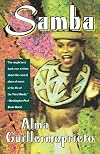
Alma Guillermoprieto is a journalist specialising in Latin America (she's originally Mexican but now US-based). This book is an account of preparations for the Rio Carnival in 1988, by one of the 'samba schools' - loose organisations which compete with each other during the Carnival, each with a parade complete with elaborate floats, costumes, and a 'story samba' song encapsulating the theme, which can be surprisingly serious (in the 1988 carnival many of the schools chose to theme their show more parade around the 100th anniversary of the abolition of slavery).
Guillermoprieto was an avant-garde ballet dancer before she became a journalist (last year I really enjoyed her memoir of being a ballet instructor in revolutionary Cuba, Dancing With Cuba). She becomes a member of the samba school, learning to dance in the parade, and after some time moves to the favela where the school is based.
Her book would be a wonderful read even if it stuck only to the subject of the preparations for Carnival, because of her descriptive abilities:
Gradually a ripple set in, laid over the basic rhythm by smaller drums. Then the cuica: a subversive, humorous squeak, dirty and enticing, produced by rubbing a stick inserted into the middle of a drumskin. The cuica is like an itch, and the only way to scratch it is to dance. Already, people were wiggling in place to the beat, not yet dancing, building up the rhythm inside their bodies, waiting for some releasing command of the drums.
Or later:
She must have been about fourteen years old, but there was none of the sharp-edged busyness of the mosquito brigade's dancing in her movements, and none of the blatant sexual appeal coached into sambistas from toddlerhood. Delicately, she explored every interstice in the rhythm, dancing first to the light metal instruments, then to the drums, reshaping the music into movement and making all its different parts visible: the song line's rise and fall, the changes in rhythm, the backbeat of the mandolin.
But Carnival is much more than just a community event: it's mass entertainment, part of a major money-spinning industry. It's exclusive - I had assumed that Carnival paraded through the streets for all to enjoy, but in fact it takes place in a vast purpose-built Sambadrome, with the seats filled by the wealthiest Cariocas. And it's also an excellent window onto the relationships between classes and races in Brazil. "In Rio, when state of local officials want to show appreciation for black culture, they visit a samba school": but the only paid members of the samba school are the parade designers (carnavalescos), generally white, and the prestigious roles of singers on the floats are also generally handed out to the white and wealthy. The exhausting job of dancing in the parade, continuously while the floats are moving through the sambadrome, goes to the favelados who are perceived as the ones with the real 'samba spirit'.
I found this book absolutely fascinating and would love to read a 2011 update - I wonder whether Brazil's improving economy has had any impact on the lives of the favelados in the last twenty years. show less
Guillermoprieto was an avant-garde ballet dancer before she became a journalist (last year I really enjoyed her memoir of being a ballet instructor in revolutionary Cuba, Dancing With Cuba). She becomes a member of the samba school, learning to dance in the parade, and after some time moves to the favela where the school is based.
Her book would be a wonderful read even if it stuck only to the subject of the preparations for Carnival, because of her descriptive abilities:
Gradually a ripple set in, laid over the basic rhythm by smaller drums. Then the cuica: a subversive, humorous squeak, dirty and enticing, produced by rubbing a stick inserted into the middle of a drumskin. The cuica is like an itch, and the only way to scratch it is to dance. Already, people were wiggling in place to the beat, not yet dancing, building up the rhythm inside their bodies, waiting for some releasing command of the drums.
Or later:
She must have been about fourteen years old, but there was none of the sharp-edged busyness of the mosquito brigade's dancing in her movements, and none of the blatant sexual appeal coached into sambistas from toddlerhood. Delicately, she explored every interstice in the rhythm, dancing first to the light metal instruments, then to the drums, reshaping the music into movement and making all its different parts visible: the song line's rise and fall, the changes in rhythm, the backbeat of the mandolin.
But Carnival is much more than just a community event: it's mass entertainment, part of a major money-spinning industry. It's exclusive - I had assumed that Carnival paraded through the streets for all to enjoy, but in fact it takes place in a vast purpose-built Sambadrome, with the seats filled by the wealthiest Cariocas. And it's also an excellent window onto the relationships between classes and races in Brazil. "In Rio, when state of local officials want to show appreciation for black culture, they visit a samba school": but the only paid members of the samba school are the parade designers (carnavalescos), generally white, and the prestigious roles of singers on the floats are also generally handed out to the white and wealthy. The exhausting job of dancing in the parade, continuously while the floats are moving through the sambadrome, goes to the favelados who are perceived as the ones with the real 'samba spirit'.
I found this book absolutely fascinating and would love to read a 2011 update - I wonder whether Brazil's improving economy has had any impact on the lives of the favelados in the last twenty years. show less
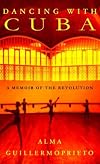
Alma Guillermoprieto is now a very respected journalist and writer on Latin American affairs. but in the early 1970s she was a dancer in New York City, trying to scrape a living in avant-garde classical dance. Fed up with being third choice for every part, when Merce Cunningham suggests she apply for a post teaching dance in Cuba, she takes this as a (devastating) sign - he had noticed her, but not asked her to dance in his company - and heads to Cuba more out of a sense of wounded show more self-esteem than any commitment to the cause. In fact, while reflexively left-wing in the mode of her environment, Alma was pretty politically naive. On top of that, she could not have known just how underfunded and under-regarded the dance school would be. The clash of cultures is made obvious in her first class where she starts to explain avant-garde dance and is told, vanguardia just means anything to do with the Party. There are no mirrors in the classrooms because they are seen by the management as a sign of bourgeois vanity, rather than an essential tool for a dancer to see what their body movements look like.
From this tiny corner of the Revolution, Guillermoprieto manages to craft a very revealing portrait of its contradictions and complexities - the gaps between the rhetoric and reality, but also the passion for the revolution's principles felt even by some of those who are disillusioned with the reality. Writing with hindsight, she even manages to make her rather self-involved and hapless younger self sympathetic, mainly by being very honest about her faults but also clear about the desperation she was feeling. For example, she is constantly tormented by conflicting desires - as a dancer and artist, she wants to be unique, yet she is also desperate to fit in and therefore needs to be more 'revolutionary'.
Sample: Conversation, a way of sharing time that in New York was ruled by the imperative of maximum speed and concision, was, here in Cuba, a baroque art. Standing in line, Galo and Pablo ramblingly narrated to Carlos and Boris, in minute detail, the ride we'd just taken, adorning each stage of the journey with its little dose of exaggeration, sting, and humor, and there was still plenty of time left over for me to give a detailed account of my first week in Cubanacán. show less
From this tiny corner of the Revolution, Guillermoprieto manages to craft a very revealing portrait of its contradictions and complexities - the gaps between the rhetoric and reality, but also the passion for the revolution's principles felt even by some of those who are disillusioned with the reality. Writing with hindsight, she even manages to make her rather self-involved and hapless younger self sympathetic, mainly by being very honest about her faults but also clear about the desperation she was feeling. For example, she is constantly tormented by conflicting desires - as a dancer and artist, she wants to be unique, yet she is also desperate to fit in and therefore needs to be more 'revolutionary'.
Sample: Conversation, a way of sharing time that in New York was ruled by the imperative of maximum speed and concision, was, here in Cuba, a baroque art. Standing in line, Galo and Pablo ramblingly narrated to Carlos and Boris, in minute detail, the ride we'd just taken, adorning each stage of the journey with its little dose of exaggeration, sting, and humor, and there was still plenty of time left over for me to give a detailed account of my first week in Cubanacán. show less
This is a relatively well-written account of Ms. Guillermoprieto's teaching sojourn in Havana in the 70's. She was a Mexican modern dancer living in New York when she was given the opportunity to teach modern dance at the National School in Cuba. This book isn't really about dance, though. It's about Cuban life post-revolution, the secrets, the lack of outside knowledge and creative liscense and the oppressed desires as seen through the lens of one of the few outsiders.
Ms. Guillermoprieto's show more descriptions of the decay and the overwhelming stench of crushed potential are staggering and the tale of her own coming-of-age and growth is what ties the unfamiliar of Cuban life into our own experiences.
I liked this book. show less
Ms. Guillermoprieto's show more descriptions of the decay and the overwhelming stench of crushed potential are staggering and the tale of her own coming-of-age and growth is what ties the unfamiliar of Cuban life into our own experiences.
I liked this book. show less
Magnificent memoir of a 20 year old dancer with Merce, Twyla and Martha, invited in 1969 to teach students in the National School for Modern Dance in Cuba. Her six months there are compellingly told, and raise profound questions about the contradictions inherent in the Cuban revolution—the decadence of a capitalist culture, the delights of a society searching for meaning, the role of the intellectual versus that of the soldier. She falls under the revolutionary spell, enchanted, along with show more the Cuban people, for a charismatic leader who includes a whole society in his vision of a life where all work for the benefit of each other. Fascinating contradictions abound in the story of the failure of the sugar harvest, the thoughts of other Latin American revolutionaries she meets, the success of the health care system. Her descriptions of the people she encounters—and their ways of incorporating Latino culture into the revolutionary precepts of Fanon and Lenin, etc., and their celebrations—bring life to the page.
As an artist still at the beginning of her career, she becomes aware of her shortcomings as she begins to teach at the school—she really isn’t qualified to teach what they need to learn. Merce’s style, based on abstraction and random connections of movement, is incomprehensible to the Cuban students. AND she has to teach without mirrors.
In that society, homophobic, sexist and not free of racism, art becomes extraneous to the furthering of revolutionary goals, though the government half-heartedly supports it. (In charge of the school of the arts is a revolutionary hero who has no idea what art is about). Her devotion to art, and the evolution of her revolutionary consciousness fall into such violent conflict that she falls prey to thoughts of suicide—what good does art do??? What has she ever done with her life? She is useless….Not until near the end of the book does she reveal what she finally figures out about the socialist argument/relationship to art that is fallacious. (And she only discovers it years later). “Not much is left in Cuba of the Revolution I knew,” she tells us.
This is an incredibly powerful descriptive odyssey of a young idealist through the theory and reality of the Cuban revolution, replete with questions that resonate about the value of art, the deadening spiritual effect of a capitalist consumerist culture, social responsibility, the need to act against evil, poverty, and injustice, and the significance of the individual in society. show less
As an artist still at the beginning of her career, she becomes aware of her shortcomings as she begins to teach at the school—she really isn’t qualified to teach what they need to learn. Merce’s style, based on abstraction and random connections of movement, is incomprehensible to the Cuban students. AND she has to teach without mirrors.
In that society, homophobic, sexist and not free of racism, art becomes extraneous to the furthering of revolutionary goals, though the government half-heartedly supports it. (In charge of the school of the arts is a revolutionary hero who has no idea what art is about). Her devotion to art, and the evolution of her revolutionary consciousness fall into such violent conflict that she falls prey to thoughts of suicide—what good does art do??? What has she ever done with her life? She is useless….Not until near the end of the book does she reveal what she finally figures out about the socialist argument/relationship to art that is fallacious. (And she only discovers it years later). “Not much is left in Cuba of the Revolution I knew,” she tells us.
This is an incredibly powerful descriptive odyssey of a young idealist through the theory and reality of the Cuban revolution, replete with questions that resonate about the value of art, the deadening spiritual effect of a capitalist consumerist culture, social responsibility, the need to act against evil, poverty, and injustice, and the significance of the individual in society. show less
Lists
Awards


You May Also Like


Associated Authors
Statistics
- Works
- 19
- Also by
- 5
- Members
- 689
- Popularity
- #36,712
- Rating
- 3.7
- Reviews
- 10
- ISBNs
- 42
- Languages
- 5
- Favorited
- 2