
Jon Lee Anderson
Author of Che Guevara: A Revolutionary Life
About the Author
Jon Lee Anderson (born January 15, 1957) is a biographer, author, international investigative reporter, and staff writer for The New Yorker, reporting from war zone locales such as Afghanistan, Iraq, Uganda, Israel, El Salvador, Ireland, Lebanon, Iran, and throughout the Middle East. Anderson has show more also written for The New York Times, Harper's, Life, and The Nation. Anderson is renowned for his numerous profiles of political leaders, including Hugo Chavez, Fidel Castro, and Augusto Pinochet. Anderson is also the author of the best-selling and definitive 800 + page biography of the iconic Marxist revolutionary Che Guevara. Entitled Che Guevara: A Revolutionary Life, it was first published in 1997. While researching the book in Bolivia, he discovered the hidden location of Guevara's burial from where his skeletal remains were exhumed in 1997 and returned to Cuba. (Bowker Author Biography) show less
Series
Works by Jon Lee Anderson
Inside the League: The Shocking Expose of How Terrorists, Nazis, and Latin American Death Squads Have Infiltrated the World Anti-Communist League (1986) 43 copies, 1 review
Che: A Revolutionary Life: A Graphic Biography, Volume 3 of 3: The Necessary Sacrifice (2014) 10 copies, 1 review
Che: A Revolutionary Life: A Graphic Biography, Volume 1 of 3: Dr. Guevara (2016) 9 copies, 1 review
Guerra, paz y periodismo 1 copy
Associated Works
And We Came Outside and Saw the Stars Again: Writers from Around the World on the COVID-19 Pandemic (2020) — Contributor — 16 copies
Tagged
Common Knowledge
- Birthdate
- 1957-01-15
- Gender
- male
- Relationships
- Anderson, Scott (brother)
- Nationality
- USA
- Places of residence
- Dorset, England, UK
- Associated Place (for map)
- Dorset, England, UK
Members
Reviews

Ernesto "Che" Guevara's legacy was to become more symbol than man, his image made a statement. This biography sheds all of these trappings to examine the man himself, as Jon Lee Anderson tells a comprehensive story from birth to death without any gaps. Che was firstborn of four children to an upper-class Argentine family, though it sometimes struggled at managing money. A bad case of asthma began in childhood that plagued him his entire life. He was proudly defiant of social conventions, a show more voracious reader with early leftist sympathies, but he never chose a firm side as a youth: no protests, no serious organizational affiliations. Never a noteworthy student in terms of grades but very intelligent, at first he pursued engineering and then switched to medicine. A flare for adventure and risky behaviours landed him in a few close calls which could have made this a very short biography.
Two questions predominated that I wanted answers to. The first was, why did he choose a revolutionary life? Satisfying a thirst for travel, Che came to know the lives of lower classes not just across Argentina but throughout Latin America, cementing his socialist beliefs which eventually turned to devoted Marxism. From there it was a short step to sympathizing with Guatamala's fallen socialist regime and Cuban revolutionary aims. My second question was, why did he abandon his comfortable position in Cuba to take up causes elsewhere? Che never viewed his role at Fidel's side as an end in itself but only the first step of his own journey: a worldwide overthrow of the capitalist yoke. He was devoted to this single extreme cause with unwavering fierceness. Cuba was merely the beginning of something grander, the "freeing" of all Latin America and beyond.
The sheer amount of research and wonderfully objective writing make this biography a model to follow. There is consistent balance between personal and public views into his life, including brief backgrounds of other key players and the drawing of interesting connections. The speed of time's passage adjusted depending on how much of interest there was to share, and notification was helpfully provided when someone entered Che's life who would be of greater significance later. I only missed more insight into how the Cuban revolution was victorious against superior numbers, and a more precise study of evolution in the relationship between Che and Fidel after Fidel was in power.
Che Guevara's image is sometimes sanitized as a generic symbol for defying the status quo. His rough Marxist-agenda edges are smoothed away, his call for hatred as a tool to win bloody war against capitalist imperialism conveniently disregarded, his vow forgotten that he would have fired the Cuban missiles had they been in his power. But his story - the real story of the man, not the symbol - is a human story. A reminder that greatness begins with adopting a corresponding risk tolerance; that close-minded devotion to a cause requires sacrifice, including blinding oneself to the world's complexities beyond any simplified black-and-white view. Ultimately it demonstrates the hollowness of violence as means to an end. His image to this day is hoisted by movements embracing armed uprising as their solution, a determination to lash out and destroy as a means to create. So far as that goes, it has earned its place. show less
Two questions predominated that I wanted answers to. The first was, why did he choose a revolutionary life? Satisfying a thirst for travel, Che came to know the lives of lower classes not just across Argentina but throughout Latin America, cementing his socialist beliefs which eventually turned to devoted Marxism. From there it was a short step to sympathizing with Guatamala's fallen socialist regime and Cuban revolutionary aims. My second question was, why did he abandon his comfortable position in Cuba to take up causes elsewhere? Che never viewed his role at Fidel's side as an end in itself but only the first step of his own journey: a worldwide overthrow of the capitalist yoke. He was devoted to this single extreme cause with unwavering fierceness. Cuba was merely the beginning of something grander, the "freeing" of all Latin America and beyond.
The sheer amount of research and wonderfully objective writing make this biography a model to follow. There is consistent balance between personal and public views into his life, including brief backgrounds of other key players and the drawing of interesting connections. The speed of time's passage adjusted depending on how much of interest there was to share, and notification was helpfully provided when someone entered Che's life who would be of greater significance later. I only missed more insight into how the Cuban revolution was victorious against superior numbers, and a more precise study of evolution in the relationship between Che and Fidel after Fidel was in power.
Che Guevara's image is sometimes sanitized as a generic symbol for defying the status quo. His rough Marxist-agenda edges are smoothed away, his call for hatred as a tool to win bloody war against capitalist imperialism conveniently disregarded, his vow forgotten that he would have fired the Cuban missiles had they been in his power. But his story - the real story of the man, not the symbol - is a human story. A reminder that greatness begins with adopting a corresponding risk tolerance; that close-minded devotion to a cause requires sacrifice, including blinding oneself to the world's complexities beyond any simplified black-and-white view. Ultimately it demonstrates the hollowness of violence as means to an end. His image to this day is hoisted by movements embracing armed uprising as their solution, a determination to lash out and destroy as a means to create. So far as that goes, it has earned its place. show less
I started Fall of Baghdad immediately after finishing Steve Coll's The Achilles Trap. In Achilles Trap, Coll disentangles the relationship between Saddam Hussein and the 4 United States administrations he interacted with from his rise to power in the late 1970's through his capture by US forces in 2003.
Fall of Baghdad was a perfect follow up, because it took me from a thousand foot view down onto the streets of Baghdad leading up to and throughout the collapse of Sadddam's regime. Anderson show more does an excellent job of providing readers with a glimpse into the perspective of many different Iraqis living in Baghdad during the invasion.
This was a painful read. Both during Saddam's reign and throughout the invasion, those bearing the brunt of suffering were Iraqi civilians. In America we're taught that we liberated Iraq, unfortunately the truth is far messier: by removing the existing power structure, Saddam, without having a viable replacement, we sent Iraq into a rapid spiral of chaos. show less
Fall of Baghdad was a perfect follow up, because it took me from a thousand foot view down onto the streets of Baghdad leading up to and throughout the collapse of Sadddam's regime. Anderson show more does an excellent job of providing readers with a glimpse into the perspective of many different Iraqis living in Baghdad during the invasion.
This was a painful read. Both during Saddam's reign and throughout the invasion, those bearing the brunt of suffering were Iraqi civilians. In America we're taught that we liberated Iraq, unfortunately the truth is far messier: by removing the existing power structure, Saddam, without having a viable replacement, we sent Iraq into a rapid spiral of chaos. show less
Inside the League: The Shocking Expose of How Terrorists, Nazis, and Latin American Death Squads Have Infiltrated the World Anti-Communist League by Scott Anderson

Very interesting book about the anti-communist/anti-bolshevik organization created by Taiwan and South Korea after WW2 to mobilize the world (so called Free World, I like this euphemism) to fight against the [scare, scareeeee!] world communism.
Joking aside, Cold War was marked by myriad of proxy wars and government changes ont he world chess board and both camps (led by US and USSR) were not above using locals and instigating civil wars where needed. In order to get things going West created show more a truly fear mongering atmosphere in which everybody was expecting USSR tanks right around the corner. This was used to strengthen the grip on key areas in the world in any way possible because reds! And most important play field for this was of course Latin America.
But unfortunate element for West is that by providing shelter for various monsters that fought on German side, they created basis on which today's world rests. By leaving things unfinished and by supporting the survivors of atrocious governments West created the weapon to wield in years following end of Cold War. Weapon that leaves its blood trail even today in the very countries it came from (always for the sake of the "Free World" or in case of 1980's Afghanistan war veterans fighting for their view of the paradise - one of the cases when everything backfired).
While for majority of people role of death squads and fascist regimes in Western supported countries of Central and South America, role of surviving members of fascist and Nazi organizations from Eastern Europe and Balkans or role of surviving actual German Nazis and Italian and Spanish fascist will hardly be a surprise, I think that eyebrows will go up when one gets introduced to the historical role played by Taiwan (that benevolent Kuomingtang that just decided they own Formosa and destroyed locals) and South Korea. For me this was ...... what! moment. I wont spoil anything but the role played by Taiwan ..... unbelievable!
And as things of this nature usually go, when Reagan came to power all of these organizations, heads of a single hydra-like organism, got finally fully organized and streamlined by (unfortunately) zealous US special operations personnel, retired professionals and think tanks/PMCs (at the time still called advisors or mercenaries) led by general Singlaub. And this only paved the way for never ending war, constant struggle and use of paramilitaries (and discarding them as seen fit) to this very day.
Now, what makes this book interesting is that authors are no leftists, no. More than once they do note how these radical elements are doing the disservice to the true freedom fighters. They are aware of the "Red Danger: and to a degree they understand even WACL various chapters (radical or not). But at least (and this is something that is almost impossible to find in our modern times) they are aware that two bad things do not make good.
It is interesting how US special forces and CIA do get mentioned, but they are always in the background, like extras in the film. Which is strange because in 1980's US SF and CIA were running very elaborate support missions in Latin America in support of the repressive regimes.I assume authors had their reasons.
If after this book there is still doubt about role of Gladio and politics of constants tension ....... I truly do not know what to say.
Highly recommended. show less
Joking aside, Cold War was marked by myriad of proxy wars and government changes ont he world chess board and both camps (led by US and USSR) were not above using locals and instigating civil wars where needed. In order to get things going West created show more a truly fear mongering atmosphere in which everybody was expecting USSR tanks right around the corner. This was used to strengthen the grip on key areas in the world in any way possible because reds! And most important play field for this was of course Latin America.
But unfortunate element for West is that by providing shelter for various monsters that fought on German side, they created basis on which today's world rests. By leaving things unfinished and by supporting the survivors of atrocious governments West created the weapon to wield in years following end of Cold War. Weapon that leaves its blood trail even today in the very countries it came from (always for the sake of the "Free World" or in case of 1980's Afghanistan war veterans fighting for their view of the paradise - one of the cases when everything backfired).
While for majority of people role of death squads and fascist regimes in Western supported countries of Central and South America, role of surviving members of fascist and Nazi organizations from Eastern Europe and Balkans or role of surviving actual German Nazis and Italian and Spanish fascist will hardly be a surprise, I think that eyebrows will go up when one gets introduced to the historical role played by Taiwan (that benevolent Kuomingtang that just decided they own Formosa and destroyed locals) and South Korea. For me this was ...... what! moment. I wont spoil anything but the role played by Taiwan ..... unbelievable!
And as things of this nature usually go, when Reagan came to power all of these organizations, heads of a single hydra-like organism, got finally fully organized and streamlined by (unfortunately) zealous US special operations personnel, retired professionals and think tanks/PMCs (at the time still called advisors or mercenaries) led by general Singlaub. And this only paved the way for never ending war, constant struggle and use of paramilitaries (and discarding them as seen fit) to this very day.
Now, what makes this book interesting is that authors are no leftists, no. More than once they do note how these radical elements are doing the disservice to the true freedom fighters. They are aware of the "Red Danger: and to a degree they understand even WACL various chapters (radical or not). But at least (and this is something that is almost impossible to find in our modern times) they are aware that two bad things do not make good.
It is interesting how US special forces and CIA do get mentioned, but they are always in the background, like extras in the film. Which is strange because in 1980's US SF and CIA were running very elaborate support missions in Latin America in support of the repressive regimes.I assume authors had their reasons.
If after this book there is still doubt about role of Gladio and politics of constants tension ....... I truly do not know what to say.
Highly recommended. show less
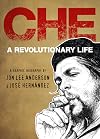
Che, A Revolutionary Life
Author: Jon Lee Anderson & Jose Hernandez
Publisher: Penguin Press
Publishing Date: 2016
Pgs: 432
Dewey: 972.9106 GUE
Disposition: Irving Public Library - South Campus - Irving, TX
=======================================
REVIEW MAY CONTAIN SPOILERS
Summary:
Adapted from Jon Lee Anderson's definitive masterwork, Che vividly transports us from young Ernesto's medical school days as a sensitive asthmatic to the battlefields of the Cuban revolution, from his place of power show more alongside Castro, to his disastrous sojourn in the Congo, and his violent end in Bolivia. Through renowned Mexican artist José Hernández's drawings we feel the bullets wing past the head of the young rebel in Cuba, we smell the thick smoke of his and Castro's cigars, and scrutinize his proud face as he's called "Comandante" for the first time. With astonishing precision, color, and drama, Anderson and Hernández's Che makes us a witness to the revolutionary life and times of Che Guevara.
_________________________________________
Genre:
History
Cuban History
Latin American History
Politics
Biography
Graphic Novel
Communism
_________________________________________
Cover and Interior Art:
This was beautifully drawn. Very moody.
The Feel:
There’s a sadness here of watching ego destroy a man.
Favorite Character:
Least Favorite Character:
Hmm, Che's words...or the words that the author puts in his mouth among these pretty panels talk of liberty and justice...did he really know what Lenninist Stalinist Communism was? Did he understand who he was fighting with? Fidel seemed to end up as just another flavor of the same guy he replaced, strongman, thug, puppet of a foreign power. Che, if he didn’t realize, came to. He wanted to be Fidel. He wanted to be the strongman. He wanted to be the face. He talked of revolution, but he wanted to be the one in charge. And his inability to take the win in Cuba and enjoy it, lead directly to everything else that he got into and that happened. Though I still believe, eventually, he would have ended up executed or disappeared in Cuba when he challenged the Castros.
About the time that the Revolution moved to the occupation stage when Fidel was meeting Nixon, when Che's army was being dismantled when he ordered his subcommander's arrest and death because the man had dared stand up for his men and their place in the revolution, when Che had gone on his trip to explore selling sugar to the Badung Pact of nations when Che was appointed as the leader of the Bank of Cuba and started making asinine changes to the new building, Che slipped from revolutionary deeper into what appears to be some kind of psychosis. He was coldblooded from the time he fell in with the revolutionaries after he left Argentina, but he became much moreso after going to war in Cuba. He seemed quick to bring up the firing squad.
Hmm Moments:
So, the US was courting Fidel's compatriots to come over and overthrow Batista, who was their puppet, and replace him with a military junta connected to the US and Fidel's revolution. ...seems like part of the Cuban Revolution is being left out of the history books in the US.
After his disastrous revolution in the Congo, Che let his ideas get ahead of his logistics. The Cuban part of his life succeeded mostly because he wasn't in control. He had big ideas and was quick to put a bullet in those who didn't have the fervor or the fortitude, but he wasn't in charge of logistics. In the Congo, he wasn't in charge of anything, he was an advisor who thought that just because he had succeeded in Cuba, he would be inaugurated as commander of the armed insurgency, he wasn't. In Bolivia, he was betrayed and while the party intended one of their own to be in charge, he took command on the ground and was pushed aside by the leader that the party intended. The quisling told the Bolivians in the group that the party wouldn't support their ongoing participation in Che's rebellion. Then, Che started trying to set up an Argentine rebellion...money, power, and a country that he hadn't been home to in over 20 years is going to be more than he can bite off.
Not sure that I buy the idea that a CIA agent in Bolivia tried to save Guevara’s life when the Bolivians wanted to stand him against the wall and shoot him, which they did.
Wisdom:
Firing squads and guillotines have their place in revolutions. But everyone who has ever used them have always failed to absorb the lesson that those bullets, those blades could be aimed at you as well and far, far sooner than they ever consider.
Of course, if Che would have stayed in Cuba, there is every possibility that the Castros would have had to stand him against a wall at some point to keep him from being a thorn in their sides as well.
_________________________________________
Last Page Sound:
Book makes you recognize the man, but not respect him. He was an idealist with largely no ability to translate those ideas. He was a product of Fidel's revolution. He was quick with the pistol to enforce the will of the revolution(?). He clothed it in the spirit of the revolution, but it was his ego that drove him to leave Cuba and continue trying to forge a rebellion where he would be Fidel when it succeded. Failed to learn the lesson of the Congo and paid the price for it in Bolivia.
Questions I’m Left With:
Wonder if Che and Fidel worried when they saw past the facade of the Soviet Union and that their Communist Party leadership had taken on the trappings of an aristocracy even though all were supposed to be equal in the eyes of the party? And the little brother/colonialist attitude of the Soviets toward all of their satellites. Of course, Che was dead within a few years and Fidel grew fat in the rulership of Cuba as his days in the jungle fell further and further into the past.
Conclusions I’ve Drawn:
This was really well done. There should be more graphic novel biographies drawn by Jose Hernandez.
======================================= show less
Author: Jon Lee Anderson & Jose Hernandez
Publisher: Penguin Press
Publishing Date: 2016
Pgs: 432
Dewey: 972.9106 GUE
Disposition: Irving Public Library - South Campus - Irving, TX
=======================================
REVIEW MAY CONTAIN SPOILERS
Summary:
Adapted from Jon Lee Anderson's definitive masterwork, Che vividly transports us from young Ernesto's medical school days as a sensitive asthmatic to the battlefields of the Cuban revolution, from his place of power show more alongside Castro, to his disastrous sojourn in the Congo, and his violent end in Bolivia. Through renowned Mexican artist José Hernández's drawings we feel the bullets wing past the head of the young rebel in Cuba, we smell the thick smoke of his and Castro's cigars, and scrutinize his proud face as he's called "Comandante" for the first time. With astonishing precision, color, and drama, Anderson and Hernández's Che makes us a witness to the revolutionary life and times of Che Guevara.
_________________________________________
Genre:
History
Cuban History
Latin American History
Politics
Biography
Graphic Novel
Communism
_________________________________________
Cover and Interior Art:
This was beautifully drawn. Very moody.
The Feel:
There’s a sadness here of watching ego destroy a man.
Favorite Character:
Least Favorite Character:
Hmm, Che's words...or the words that the author puts in his mouth among these pretty panels talk of liberty and justice...did he really know what Lenninist Stalinist Communism was? Did he understand who he was fighting with? Fidel seemed to end up as just another flavor of the same guy he replaced, strongman, thug, puppet of a foreign power. Che, if he didn’t realize, came to. He wanted to be Fidel. He wanted to be the strongman. He wanted to be the face. He talked of revolution, but he wanted to be the one in charge. And his inability to take the win in Cuba and enjoy it, lead directly to everything else that he got into and that happened. Though I still believe, eventually, he would have ended up executed or disappeared in Cuba when he challenged the Castros.
About the time that the Revolution moved to the occupation stage when Fidel was meeting Nixon, when Che's army was being dismantled when he ordered his subcommander's arrest and death because the man had dared stand up for his men and their place in the revolution, when Che had gone on his trip to explore selling sugar to the Badung Pact of nations when Che was appointed as the leader of the Bank of Cuba and started making asinine changes to the new building, Che slipped from revolutionary deeper into what appears to be some kind of psychosis. He was coldblooded from the time he fell in with the revolutionaries after he left Argentina, but he became much moreso after going to war in Cuba. He seemed quick to bring up the firing squad.
Hmm Moments:
So, the US was courting Fidel's compatriots to come over and overthrow Batista, who was their puppet, and replace him with a military junta connected to the US and Fidel's revolution. ...seems like part of the Cuban Revolution is being left out of the history books in the US.
After his disastrous revolution in the Congo, Che let his ideas get ahead of his logistics. The Cuban part of his life succeeded mostly because he wasn't in control. He had big ideas and was quick to put a bullet in those who didn't have the fervor or the fortitude, but he wasn't in charge of logistics. In the Congo, he wasn't in charge of anything, he was an advisor who thought that just because he had succeeded in Cuba, he would be inaugurated as commander of the armed insurgency, he wasn't. In Bolivia, he was betrayed and while the party intended one of their own to be in charge, he took command on the ground and was pushed aside by the leader that the party intended. The quisling told the Bolivians in the group that the party wouldn't support their ongoing participation in Che's rebellion. Then, Che started trying to set up an Argentine rebellion...money, power, and a country that he hadn't been home to in over 20 years is going to be more than he can bite off.
Not sure that I buy the idea that a CIA agent in Bolivia tried to save Guevara’s life when the Bolivians wanted to stand him against the wall and shoot him, which they did.
Wisdom:
Firing squads and guillotines have their place in revolutions. But everyone who has ever used them have always failed to absorb the lesson that those bullets, those blades could be aimed at you as well and far, far sooner than they ever consider.
Of course, if Che would have stayed in Cuba, there is every possibility that the Castros would have had to stand him against a wall at some point to keep him from being a thorn in their sides as well.
_________________________________________
Last Page Sound:
Book makes you recognize the man, but not respect him. He was an idealist with largely no ability to translate those ideas. He was a product of Fidel's revolution. He was quick with the pistol to enforce the will of the revolution(?). He clothed it in the spirit of the revolution, but it was his ego that drove him to leave Cuba and continue trying to forge a rebellion where he would be Fidel when it succeded. Failed to learn the lesson of the Congo and paid the price for it in Bolivia.
Questions I’m Left With:
Wonder if Che and Fidel worried when they saw past the facade of the Soviet Union and that their Communist Party leadership had taken on the trappings of an aristocracy even though all were supposed to be equal in the eyes of the party? And the little brother/colonialist attitude of the Soviets toward all of their satellites. Of course, Che was dead within a few years and Fidel grew fat in the rulership of Cuba as his days in the jungle fell further and further into the past.
Conclusions I’ve Drawn:
This was really well done. There should be more graphic novel biographies drawn by Jose Hernandez.
======================================= show less
Lists
Afghanistan (1)
Cuba (1)
Awards


You May Also Like


Associated Authors
Statistics
- Works
- 24
- Also by
- 6
- Members
- 2,751
- Popularity
- #9,325
- Rating
- 3.9
- Reviews
- 39
- ISBNs
- 110
- Languages
- 11
- Favorited
- 1
