
Jorge Castañeda
Author of Compañero: The Life & Death of Che Guevara
About the Author
Works by Jorge Castañeda
La herencia: Arqueologia de la sucesion presidencial en Mexico (Extra Alfaguara) (Spanish Edition) (1999) 54 copies
Sólo así: Por una agenda ciudadana / Only Thus: Towards an Independent Civic Age nda (Spanish Edition) (2016) 3 copies
Negotiations on the exclusive economic zone at the third United Nations conference on the law of the sea /Jorge Castañeda. 2 copies, 1 review
Utopia Desarmada 1 copy
La utopía desarmada 1 copy
Estados Unidos: en la intimidad y a la distancia / United States: Up Close and At a Distance (Spanish Edition) (2020) 1 copy
Latin Americans Stand Up To Corruption: The Silver Lining in a Spate of Scandals [journal article] 1 copy
Che Guevara Yoldaş 1 copy
LA HERENCIA 1 copy
El economismo dependentista 1 copy
Associated Works
The Case Against Free Trade: GATT, NAFTA, and the Globalization of Corporate Power (1993) — Contributor — 58 copies, 1 review
Mexico in Transition: Implications for U.S. Policy : Essays from Both Sides of the Border (1988) — Contributor — 5 copies
Tagged
Common Knowledge
- Canonical name
- Castañeda, Jorge
- Legal name
- Castañeda Gutman, Jorge Germán
- Birthdate
- 1953-05-24
- Gender
- male
- Education
- Lycée Franco-Mexicain
Princeton University
Panthéon-La Sorbonne - Occupations
- professor
Mexican Secretary of Foreign Affairs (2000-2003) - Nationality
- Mexico
- Birthplace
- Mexico City, Mexico
- Associated Place (for map)
- Mexico City, Mexico
Members
Reviews
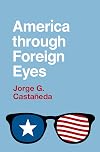
Anyone with a reasonable grasp of US history won't find much that is surprising in the first half of the book. Castaneda makes a lot of generalizations about forces that have shaped US history and the way these trends have been perceived by a variety of foreign observers. Those who are expecting a lot of American bashing here will probably bs surprised; Castaneda is a sympathetic observer; indeed, he is perhaps prone to be overly critical of some of the foreign observers who might have been show more a little snarky but actually proved to be pretty accurate in their assessment of US weaknesses.
The second half, however, is what makes this book valuable. This is where Castaneda turns to an analysis of the current political gridlock in the US, its causal factors, and whether there is anything that can be done about it. Unlike the somewhat meandering nature of the first part of the book, the analysis in the second half is laser-focused and relentless. The take-away is really simple: politically, the US is fucked. This probably isn't news to anyone who hasn't been living under a rock for the past decade. But the trajectory of Castaneda's analysis is even more disturbing: there isn't any realistic way the US can fix its political system. It is saddled with a legacy political structure designed to protect the interests of a moneyed and propertied class of a former era; demographically and culturally the US is now a very different place, and the influence of the traditional elites and those who benefitted from their patronage (white males, basically) are fighting a desperate rearguard action. The US Constitution, its amendment structure, the flawed electoral mapping system, the mechanisms that select the people who control the electoral maps. . .all of these are forming a perfect storm which means that while the US is effectively gridlocked in meaningfully addressing any of its real problem, the gridlock will continue because it actually maintains the power of those who benefitted from the old power system.
Castaneda is ruthlessly efficient in laying all this out. But what is really interesting is that he can't seem to follow this through to its logical conclusion. Instead, we are treated to a kind of "well, the US has survived this long, it will probably be able to fix this problem. The end!" But there is nothing, absolutely nothing, in his own analysis that provides any basis for such a conclusion. It is a fascinating example of an author desperately running from the power of their own logic. show less
The second half, however, is what makes this book valuable. This is where Castaneda turns to an analysis of the current political gridlock in the US, its causal factors, and whether there is anything that can be done about it. Unlike the somewhat meandering nature of the first part of the book, the analysis in the second half is laser-focused and relentless. The take-away is really simple: politically, the US is fucked. This probably isn't news to anyone who hasn't been living under a rock for the past decade. But the trajectory of Castaneda's analysis is even more disturbing: there isn't any realistic way the US can fix its political system. It is saddled with a legacy political structure designed to protect the interests of a moneyed and propertied class of a former era; demographically and culturally the US is now a very different place, and the influence of the traditional elites and those who benefitted from their patronage (white males, basically) are fighting a desperate rearguard action. The US Constitution, its amendment structure, the flawed electoral mapping system, the mechanisms that select the people who control the electoral maps. . .all of these are forming a perfect storm which means that while the US is effectively gridlocked in meaningfully addressing any of its real problem, the gridlock will continue because it actually maintains the power of those who benefitted from the old power system.
Castaneda is ruthlessly efficient in laying all this out. But what is really interesting is that he can't seem to follow this through to its logical conclusion. Instead, we are treated to a kind of "well, the US has survived this long, it will probably be able to fix this problem. The end!" But there is nothing, absolutely nothing, in his own analysis that provides any basis for such a conclusion. It is a fascinating example of an author desperately running from the power of their own logic. show less
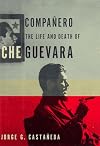
A biography of the legendary Che Guevara. Love him or hate him, Che lived one of the more interesting 20th Century lives. Companero is a somewhat dry tome at times but at least avoids pitfalls of hagiography or overly critical biography as it covers Guevara's life and separates fact from fiction.
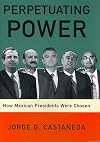
As the title says, this book is a review of how presidents were chosen in Mexico's one-party system between 1970 and 1994. This could have be an interesting case study if the author had focused on the contradictions of quasi-democratic one-party rule in a relatively free society, but instead he just narrates how each president designated his successor. So page after page lists the names various people in the president's cabinet and inner circle, and explains how they did or did not get along show more with each other, who influenced the selection process, and how each president eventually settled on the candidate who succeeded him.
The first part of the book contains the author's own analysis of the successions, and the second part contains transcripts of interviews with the Mexican presidents who were still living when the book was written. These interviews contain some amusing comments especially on the elections of 1988, when the party leadership distraughtly realized that their means for electoral fraud might be insufficient for bringing forth the result they had decided beforehand. But other than that, I don't think this book can be of much interest to non-Mexicans.
The author does not put the presidential selection mechanism into any general societal context. The internal squabbles of Mexican political elites are hardly of much interest without some analytic tools which would enable the reader to draw parallels to other political systems, such as China, for example. All in all, I can certainly see that this book is of interest for locals who lived through these years, but readers who don't have any previous familiarity with the persons involved in the narrative will probably find it uninformative. show less
The first part of the book contains the author's own analysis of the successions, and the second part contains transcripts of interviews with the Mexican presidents who were still living when the book was written. These interviews contain some amusing comments especially on the elections of 1988, when the party leadership distraughtly realized that their means for electoral fraud might be insufficient for bringing forth the result they had decided beforehand. But other than that, I don't think this book can be of much interest to non-Mexicans.
The author does not put the presidential selection mechanism into any general societal context. The internal squabbles of Mexican political elites are hardly of much interest without some analytic tools which would enable the reader to draw parallels to other political systems, such as China, for example. All in all, I can certainly see that this book is of interest for locals who lived through these years, but readers who don't have any previous familiarity with the persons involved in the narrative will probably find it uninformative. show less
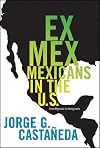
JorgeG. Castaneda, a foreign minister for Mexico during the Bush administration, illuminates the many and complex issues confronting the U.S./Mexico immigration situation. The book is very readable, though at times a bit heavy on statistics. He does a good job of presenting the problem and then discussing the reasons for it (from both sides) and possible solutions (again for both sides)--some which have been tried and some proposed. He gives the political background and climate as well. He show more was, I thought, very kind to President Bush and complimentary to Condolezza Rice and Colin Powell. He's supportive of President Vicente Foxes position, but always saw the other side and explained why the U.S. or Mexico acted as they did. I'd recommend this book to anyone striving to understand the U.S./Mexican immigration issues. show less
You May Also Like


Associated Authors
Statistics
- Works
- 51
- Also by
- 3
- Members
- 1,032
- Popularity
- #24,951
- Rating
- 3.5
- Reviews
- 14
- ISBNs
- 84
- Languages
- 9