
Jeffrey Kluger
Author of Apollo 13
About the Author
Jeffrey Kluger is editor-at-large at Time and Time.com. He is a coauthor of the bestseller Apollo 13 and the author of The Sibling Effect, Simplexity, Splendid Solution, Moon Hunters, and two novels for young adults. Kluger lives in New York City with his family.
Works by Jeffrey Kluger
The Sibling Effect: What the Bonds Among Brothers and Sisters Reveal About Us (2011) 154 copies, 9 reviews
Journey Beyond Selene: Remarkable Expeditions Past Our Moon and to the Ends of the Solar System (1999) 122 copies, 3 reviews
The Narcissist Next Door: Understanding the Monster in Your Family, in Your Office, in Your Bed-in Your World (2014) 110 copies, 8 reviews
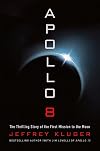
To the Moon!: The True Story of the American Heroes on the Apollo 8 Spaceship (2018) 69 copies, 1 review
The Apollo Adventure: The Making of the Apollo Space Program and the Movie Apollo 13 (1995) 64 copies, 2 reviews
Moon Hunters: NASA's Remarkable Expeditions to the Ends of the Solar Systems (2001) 62 copies, 2 reviews
TIME A Year in Space: Inside Scott Kelly’s Historic Mission – Is Travel to Mars Next? (2016) 10 copies
Light Elements: Dog-eared 1 copy
Light Elements: Tea'd Off 1 copy
Light Elements: Oh Rubbish 1 copy
Light Elements: What a Gas 1 copy
Rocket on a Round Trip 1 copy
Light Elements: Batted About 1 copy
Light Elements: Paper Trail 1 copy
Spinal Tap 1 copy
Light Elements: CIA ESP 1 copy
Light Elements: Quiz Show 1 copy
Time: New Space Discoveries 1 copy
The Siblings Effect 1 copy
Evolution Watch: Go Fish 1 copy
Space Watch: Atoms for Peace 1 copy
Mars, In Earth's Image 1 copy
Light Elements: Love Thy Bug 1 copy
Time: New Space Discoveries 1 copy
Associated Works
Tagged
Common Knowledge
- Canonical name
- Kluger, Jeffrey
- Birthdate
- 1954-05-21
- Gender
- male
- Education
- University of Maryland (BA, Political Science; 1976)
University of Baltimore (JD; 1979) - Occupations
- journalist
attorney - Organizations
- Time Magazine (senior writer)
- Agent
- Joy Harris Literary Agency
- Nationality
- USA
- Places of residence
- Baltimore, Maryland, USA
New York, New York, USA
Pikesville, Maryland, USA - Associated Place (for map)
- Maryland, USA
Members
Reviews
The Narcissist Next Door: Understanding the Monster in Your Family, in Your Office, in Your Bed-in Your World by Jeffrey Kluger
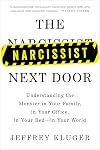
The author is an editor at “Time Magazine” and is clearly adept at creating entertainment suitable for magazine articles. But he should have limited himself to that medium. This work is a book-long plunge into pop psychology replete with the usual logical fallacies that stem from lack of rigor, peppered by entertaining anecdotes reflecting Kluger's opinions about people, whether positive or negative.
Kluger begins by defining Narcissistic Personality Disorder, or NPD, and then proceeds to show more manipulate data and anecdotes in a procrustean fashion to fit his premise.
According to the psychiatric designation in the “Diagnostic and Statistical Manual (DSM),” NPD is defined as:
“…in effect, three conditions: a toxic mash-up of grandiosity, an unquenchable thirst for admiration and a near-total blindness to how other people see you. But those are only the broadest features. There is, too, a lack of empathy in the narcissist - an utter inability not only to understand what other people are feeling but how they may be responsible for those feelings, especially when they’re bad.”
Kluger adds some other traits to the list: a bottomless appetite for recognition, attention, glory, and rewards; an outsized sense of entitlement; a willingness to take advantage of other people for one’s own gain; a conviction they are too clever to get caught at malfeasance; an indifference to any harm they do to others; and a profound sense of grievance when their schemes don’t work out.
You may be thinking, wow, that’s the U.S. President. And in fact, ironically enough, Kluger began the book, published in 2014, with a profile of Donald Trump, who indeed fit the definition pretty well. And this was before he had the power to act on all the characteristics of NPD to a destructive level only seen historically in the worst authoritarian leaders.
But Trump is a happy exception, we might say, to Kluger’s tendency to apply the definition of NPD willy-nilly and not always appropriately to people. Kluger admits his diagnosis is descriptive “more or less” or “often” and “on a continuum.” If Ingrid Bergman got divorced from her quiet doctor husband to marry a sexy [sic] Italian director, it was, according to Kluger, because she was a narcissist; not, say, because she and her husband grew apart from each other, or even because her husband opted against staying with her anymore. If Taylor Swift has gone through a lot of boyfriends, again it is because of narcissism, with no consideration that it might be difficult for young males to be the partner of one of the most popular and highly-paid pop stars in the world who is besieged by paparazzi, giving the couples little chance for privacy or normalcy. Warren Beatty was (at first) a narcissist, per Kluger, because he allegedly slept with a lot of women, but then he grew out of it somehow when he met Annette Bening. On the other hand, maybe when he was a young, attractive Hollywood star, women were throwing themselves at him, and he, like many other young men would do in that position, could not or did not see a reason to resist.
At the back of the book, the author reprints the Narcissistic Personality Inventory Test used for self-classification of narcissists. The nature of the questions seems directly to contradict the definition of a narcissist. If, as suggested, narcissists have no idea how un-wonderful they are, why would they be able to rate themselves realistically? And where is the line drawn between narcissism and, say, self-confidence? Kluger points out, for example, that Tom Hanks is an admirably nice person. But clearly he is self-confident. What is the distinction between him and others Kluger mentions besides the fact that Kluger likes Hanks and dislikes those he considers narcissists? And when is behavior simply bad or even pathological rather than “narcissistic?” Kluger describes some of the thoughts expressed by the two boys who went on a shooting spree at Columbine High School. He classifies them as “narcissists.” Wouldn’t they more realistically be labeled as sociopaths?
In short, it seems like “narcissism” describes whomever and whatever Kluger wants it to describe. To support his thesis he cherry-picks data and does not consider other explanations for the same phenomena. Scientific rigor is not his strong suit. E.g., that Carly Simon allegedly was targeting Warren Beatty with her song “You’re So Vain” is evidence of nothing. The section ranking all U.S. Presidents based on very biased and very incomplete information is particularly bizarre. Yes, now we have some audiotapes that reveal presidential conversations, but for most of U.S. history, the motives and behaviors of presidents were opaque. From the very beginning, George Washington, who was extremely conscious of his historical legacy, carefully oversaw and curated what would be written about him, and instructed Martha to burn all their letters. How are these “ratings” based on manipulated legacies (and/or histories that are generally written with an eye toward shaping collective memory) even informative?
Kluger regularly confuses or conflates correlation with causation, as in the cases of Taylor Swift and Ingrid Bergman. And, as mentioned above, he is apt to change or modify his definitions when he can’t get the data to fit any other way.
Evaluation: While Kluger’s book has lots of diverting anecdotes, I don’t think it should have been couched in a form purporting to be “science.” Jim and I read this for a book club, and because of its controversial premises, gossipy content, and near universal applicability, it did make a great selection for discussion. show less
Kluger begins by defining Narcissistic Personality Disorder, or NPD, and then proceeds to show more manipulate data and anecdotes in a procrustean fashion to fit his premise.
According to the psychiatric designation in the “Diagnostic and Statistical Manual (DSM),” NPD is defined as:
“…in effect, three conditions: a toxic mash-up of grandiosity, an unquenchable thirst for admiration and a near-total blindness to how other people see you. But those are only the broadest features. There is, too, a lack of empathy in the narcissist - an utter inability not only to understand what other people are feeling but how they may be responsible for those feelings, especially when they’re bad.”
Kluger adds some other traits to the list: a bottomless appetite for recognition, attention, glory, and rewards; an outsized sense of entitlement; a willingness to take advantage of other people for one’s own gain; a conviction they are too clever to get caught at malfeasance; an indifference to any harm they do to others; and a profound sense of grievance when their schemes don’t work out.
You may be thinking, wow, that’s the U.S. President. And in fact, ironically enough, Kluger began the book, published in 2014, with a profile of Donald Trump, who indeed fit the definition pretty well. And this was before he had the power to act on all the characteristics of NPD to a destructive level only seen historically in the worst authoritarian leaders.
But Trump is a happy exception, we might say, to Kluger’s tendency to apply the definition of NPD willy-nilly and not always appropriately to people. Kluger admits his diagnosis is descriptive “more or less” or “often” and “on a continuum.” If Ingrid Bergman got divorced from her quiet doctor husband to marry a sexy [sic] Italian director, it was, according to Kluger, because she was a narcissist; not, say, because she and her husband grew apart from each other, or even because her husband opted against staying with her anymore. If Taylor Swift has gone through a lot of boyfriends, again it is because of narcissism, with no consideration that it might be difficult for young males to be the partner of one of the most popular and highly-paid pop stars in the world who is besieged by paparazzi, giving the couples little chance for privacy or normalcy. Warren Beatty was (at first) a narcissist, per Kluger, because he allegedly slept with a lot of women, but then he grew out of it somehow when he met Annette Bening. On the other hand, maybe when he was a young, attractive Hollywood star, women were throwing themselves at him, and he, like many other young men would do in that position, could not or did not see a reason to resist.
At the back of the book, the author reprints the Narcissistic Personality Inventory Test used for self-classification of narcissists. The nature of the questions seems directly to contradict the definition of a narcissist. If, as suggested, narcissists have no idea how un-wonderful they are, why would they be able to rate themselves realistically? And where is the line drawn between narcissism and, say, self-confidence? Kluger points out, for example, that Tom Hanks is an admirably nice person. But clearly he is self-confident. What is the distinction between him and others Kluger mentions besides the fact that Kluger likes Hanks and dislikes those he considers narcissists? And when is behavior simply bad or even pathological rather than “narcissistic?” Kluger describes some of the thoughts expressed by the two boys who went on a shooting spree at Columbine High School. He classifies them as “narcissists.” Wouldn’t they more realistically be labeled as sociopaths?
In short, it seems like “narcissism” describes whomever and whatever Kluger wants it to describe. To support his thesis he cherry-picks data and does not consider other explanations for the same phenomena. Scientific rigor is not his strong suit. E.g., that Carly Simon allegedly was targeting Warren Beatty with her song “You’re So Vain” is evidence of nothing. The section ranking all U.S. Presidents based on very biased and very incomplete information is particularly bizarre. Yes, now we have some audiotapes that reveal presidential conversations, but for most of U.S. history, the motives and behaviors of presidents were opaque. From the very beginning, George Washington, who was extremely conscious of his historical legacy, carefully oversaw and curated what would be written about him, and instructed Martha to burn all their letters. How are these “ratings” based on manipulated legacies (and/or histories that are generally written with an eye toward shaping collective memory) even informative?
Kluger regularly confuses or conflates correlation with causation, as in the cases of Taylor Swift and Ingrid Bergman. And, as mentioned above, he is apt to change or modify his definitions when he can’t get the data to fit any other way.
Evaluation: While Kluger’s book has lots of diverting anecdotes, I don’t think it should have been couched in a form purporting to be “science.” Jim and I read this for a book club, and because of its controversial premises, gossipy content, and near universal applicability, it did make a great selection for discussion. show less
"Collins sat back in his seat. He was startled to discover that what should have been one of the most thrilling moments of his life was actually one of the most unsatisfying.
Three human beings, he reflected, were about to tear themselves away from the gravitational grip of the Earth, and in three days' time they would surrender to the gravity of another celestial body. No living creature had ever done that before. There ought to be an oompah band, he thought. There out to be fireworks. there show more ought to be some way to mark the moment. Instead there was just this dull, flat little scrap of language: You are go for TLI.
But the jargon was deliberate; it was designed to hollow out those very feelings of momentousness, because feelings like those could be distractions when you needed to focus on the only the task at hand."
One of my favorite reading genres is US Space Program History and within that, the Apollo program specifically. I very much enjoyed Kluger's novel Lost Moon: The Perilous Voyage of Apollo 13, which he wrote with astronaut Jim Lovell. Lovell was also aboard Apollo 8 and so when I received the book, I automatically assumed he would be the star of this story as well. But Kluger pleasantly surprised me by letting astronaut Frank Borman have the spotlight this time.
Apollo 8 was the first manned flight to the Moon. No one at NASA was 100% confident the capsule could get into lunar orbit or even successfully splashdown back on Earth. Mission Control had the numbers and the theory but no hard verification. The crew was stepping out into terra incognita of their own by even leaving Earth orbit. The mission was to discover how a lunar landing could be accomplished and it paved the way for all the following missions that brought such pride and glory to the USA.
What I like about Kluger's writing is how much color he injects into the material. It's never boring and is most always insightful and amusing. From the astronauts, their wives and family to the Mission Control brass and even to their Russian counterparts, the book provides well-rounded insight into the mission. I ate through this like a 5 course meal, hungry and eagerly expecting each new delight. Kluger did not let me down. Highly recommended.
This book was provided to me by LibraryThing's Early Reviewer program. show less
Three human beings, he reflected, were about to tear themselves away from the gravitational grip of the Earth, and in three days' time they would surrender to the gravity of another celestial body. No living creature had ever done that before. There ought to be an oompah band, he thought. There out to be fireworks. there show more ought to be some way to mark the moment. Instead there was just this dull, flat little scrap of language: You are go for TLI.
But the jargon was deliberate; it was designed to hollow out those very feelings of momentousness, because feelings like those could be distractions when you needed to focus on the only the task at hand."
One of my favorite reading genres is US Space Program History and within that, the Apollo program specifically. I very much enjoyed Kluger's novel Lost Moon: The Perilous Voyage of Apollo 13, which he wrote with astronaut Jim Lovell. Lovell was also aboard Apollo 8 and so when I received the book, I automatically assumed he would be the star of this story as well. But Kluger pleasantly surprised me by letting astronaut Frank Borman have the spotlight this time.
Apollo 8 was the first manned flight to the Moon. No one at NASA was 100% confident the capsule could get into lunar orbit or even successfully splashdown back on Earth. Mission Control had the numbers and the theory but no hard verification. The crew was stepping out into terra incognita of their own by even leaving Earth orbit. The mission was to discover how a lunar landing could be accomplished and it paved the way for all the following missions that brought such pride and glory to the USA.
What I like about Kluger's writing is how much color he injects into the material. It's never boring and is most always insightful and amusing. From the astronauts, their wives and family to the Mission Control brass and even to their Russian counterparts, the book provides well-rounded insight into the mission. I ate through this like a 5 course meal, hungry and eagerly expecting each new delight. Kluger did not let me down. Highly recommended.
This book was provided to me by LibraryThing's Early Reviewer program. show less
 This review was written for LibraryThing Early Reviewers.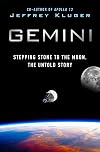
I'm a huge history buff, and who doesn't love space travel? I was very excited to read this book and find out more about the Gemini program, because, as the author points out, the Mercery and Apollo programs get all the glory, and we didn't jump from the Mercury program straight to the Apollo program, so what happened in the interim, and how did this tie them together?
What a treat this book was! I haven't read anything by this author before, and with nonfiction books, especially those show more having to do with science and space, you never quite know what you're going to get in terms of how technical the author gets and how they get that information across. I'm very happy to report that Jeffrey Kluger is one of the good ones. The writing is such that, even when you're getting a lot of dates and scientific data thrown at you, it flows naturally, which makes it relatively easy to read. I got through this book so much faster than I thought I would because it was really well written and very interesting. I really had no idea what happened with the Gemini program because there doesn't seem to be as much interest in this program when compared to the Mercury and Apollo programs and I just don't remember ever being taught much about it, but it was fascinating to see the crossover between those 2 programs and how one led to the other.
This is all to say that I loved this book and highly recommend it.
5/5 stars
*** I would like to thank NetGalley, St. Martin's Press, and Jeffrey Kluger for the opportunity to read and review Gemini: Stepping Stone to the Moon, the Untold Story. show less
What a treat this book was! I haven't read anything by this author before, and with nonfiction books, especially those show more having to do with science and space, you never quite know what you're going to get in terms of how technical the author gets and how they get that information across. I'm very happy to report that Jeffrey Kluger is one of the good ones. The writing is such that, even when you're getting a lot of dates and scientific data thrown at you, it flows naturally, which makes it relatively easy to read. I got through this book so much faster than I thought I would because it was really well written and very interesting. I really had no idea what happened with the Gemini program because there doesn't seem to be as much interest in this program when compared to the Mercury and Apollo programs and I just don't remember ever being taught much about it, but it was fascinating to see the crossover between those 2 programs and how one led to the other.
This is all to say that I loved this book and highly recommend it.
5/5 stars
*** I would like to thank NetGalley, St. Martin's Press, and Jeffrey Kluger for the opportunity to read and review Gemini: Stepping Stone to the Moon, the Untold Story. show less
Rating: 5* of five
The Publisher Says: From the bestselling author of Apollo 13 comes the thrilling untold story of the pioneering Gemini program that was instrumental in getting Americans on the moon.
Without Gemini, there would be no Apollo.
After we first launched Americans into space but before we touched down on the moon’s surface, there was the Gemini program. It was no easy jump from manned missions in low-Earth orbit to a successful moon landing, and the ten-flight, twenty-month show more celestial story of the Gemini program is an extraordinary one. There was unavoidable darkness in the program—the deaths and near-deaths that defined it, and the blood feud with the Soviet Union that animated it.
But there were undeniable and previously inconceivable successes. With a war raging in Vietnam and lawmakers calling for cuts to NASA’s budget, the success of the Gemini program—or the space program in general—was never guaranteed. Yet against all odds, the remarkable scientists and astronauts behind the project persevered, and their efforts paid off. Later, with the knowledge gained from the Gemini flights, NASA would launch the legendary Apollo program.
Told with Jeffrey Kluger’s signature cinematic storytelling and in-depth research and interviews, Gemini is an edge-of-your-seat narrative chronicling the history of the least appreciated—and most groundbreaking—space program in American history. Finally, Gemini’s story will be told, and finally, we’ll learn the truth of how we landed on the moon.
I RECEIVED A DRC FROM THE PUBLISHER VIA NETGALLEY. THANK YOU.
My Review: First, read this:
I was alive, and eagerly obsessed, for the whole space race. I honestly forgot Gemini existed until I was reminded by this book. I'd say the author got his thesis exactly right...we needed the knowledge gained by the Gemini program to land on the moon, but once that happened, we rather forgot the Gemini program that taught us the lessons.
So I read this fascinating, detailed recapitulation of all the many milestones the Gemini and its personnel achieved, the engineers as well as the astronauts, the designers and testers and troubleshooters...all making important contributions to the pursuit of real knowledge. I was as exciting to me as it was when I watched Uncle Walter (Cronkite) carefully elucidating the sheer miraculous science underpinning these incredible achievements.
As an old man I'm more aware of the reasons the space race took place. I'm still astounded that the Congress appropriated that much money to accomplish these scientific goals. I'm still sad that the education budget was ever-expanding then because we wanted our country to have the knowledge base to solve these sorts of problems to achieve the goal of solving them, no matter it was for a political game of one-upsmanship. We now have a system that's not interested in this kind of goal anymore. "AI" is a cash grab and a thought-control mechanism, not a pursuit of knowledge that resulted in huge advances in chemistry and engineering and electronics that ended up benefiting the general public.
Gemini's technical achievements were lovely to recall because the public was very invested in their success. I remember the techno-optimism of the era with wistful amusement. I'd love to see something get the hoi polloi reinvested in expanding human knowledge for the simple reason that it is a worthy goal. Alas....
I deeply enjoyed the period headlines, reimmersing me into the era's emotional valence; I was delighted that there were notes and a bibliography to allow me to follow the author's thought processes; I appreciated the clarity of the technical talk, the way the jargon was explained (though one is expected to recall the details, they aren't continually restated) in context.
The audience for the story is me: someone who wants technical explanations with context, not a social history with some jargon sprinkled in. Put in the effort and the story's rewarding. The telling in non-fiction terms might not work for you, so I recommend reading a Kindle sample to see if you resonate positively with Author Kluger's writing.
My fellow elderly kids of the 1960s might really love this as a Yule gift. I know I'd've been thrilled by it had I received it as a gift! show less
The Publisher Says: From the bestselling author of Apollo 13 comes the thrilling untold story of the pioneering Gemini program that was instrumental in getting Americans on the moon.
Without Gemini, there would be no Apollo.
After we first launched Americans into space but before we touched down on the moon’s surface, there was the Gemini program. It was no easy jump from manned missions in low-Earth orbit to a successful moon landing, and the ten-flight, twenty-month show more celestial story of the Gemini program is an extraordinary one. There was unavoidable darkness in the program—the deaths and near-deaths that defined it, and the blood feud with the Soviet Union that animated it.
But there were undeniable and previously inconceivable successes. With a war raging in Vietnam and lawmakers calling for cuts to NASA’s budget, the success of the Gemini program—or the space program in general—was never guaranteed. Yet against all odds, the remarkable scientists and astronauts behind the project persevered, and their efforts paid off. Later, with the knowledge gained from the Gemini flights, NASA would launch the legendary Apollo program.
Told with Jeffrey Kluger’s signature cinematic storytelling and in-depth research and interviews, Gemini is an edge-of-your-seat narrative chronicling the history of the least appreciated—and most groundbreaking—space program in American history. Finally, Gemini’s story will be told, and finally, we’ll learn the truth of how we landed on the moon.
I RECEIVED A DRC FROM THE PUBLISHER VIA NETGALLEY. THANK YOU.
My Review: First, read this:
America would ultimately celebrate Mercury and Apollo—its first venture into space and its first venture to another world—louder and longer and with more passion than it would celebrate Gemini, the middle sibling of the manned space program. But it was Gemini that taught the US to live in space, to work in space, to walk in space, to thrive in space. Without Gemini, men would never have walked on the moon. The green shoots of space habitation poked up in the soil that was the Gemini program. Sixteen men flew those ten missions—and those same sixteen men have never been fully celebrated for the greatness they exhibited. Let history right that wrong at last.
I was alive, and eagerly obsessed, for the whole space race. I honestly forgot Gemini existed until I was reminded by this book. I'd say the author got his thesis exactly right...we needed the knowledge gained by the Gemini program to land on the moon, but once that happened, we rather forgot the Gemini program that taught us the lessons.
So I read this fascinating, detailed recapitulation of all the many milestones the Gemini and its personnel achieved, the engineers as well as the astronauts, the designers and testers and troubleshooters...all making important contributions to the pursuit of real knowledge. I was as exciting to me as it was when I watched Uncle Walter (Cronkite) carefully elucidating the sheer miraculous science underpinning these incredible achievements.
As an old man I'm more aware of the reasons the space race took place. I'm still astounded that the Congress appropriated that much money to accomplish these scientific goals. I'm still sad that the education budget was ever-expanding then because we wanted our country to have the knowledge base to solve these sorts of problems to achieve the goal of solving them, no matter it was for a political game of one-upsmanship. We now have a system that's not interested in this kind of goal anymore. "AI" is a cash grab and a thought-control mechanism, not a pursuit of knowledge that resulted in huge advances in chemistry and engineering and electronics that ended up benefiting the general public.
Gemini's technical achievements were lovely to recall because the public was very invested in their success. I remember the techno-optimism of the era with wistful amusement. I'd love to see something get the hoi polloi reinvested in expanding human knowledge for the simple reason that it is a worthy goal. Alas....
I deeply enjoyed the period headlines, reimmersing me into the era's emotional valence; I was delighted that there were notes and a bibliography to allow me to follow the author's thought processes; I appreciated the clarity of the technical talk, the way the jargon was explained (though one is expected to recall the details, they aren't continually restated) in context.
The audience for the story is me: someone who wants technical explanations with context, not a social history with some jargon sprinkled in. Put in the effort and the story's rewarding. The telling in non-fiction terms might not work for you, so I recommend reading a Kindle sample to see if you resonate positively with Author Kluger's writing.
My fellow elderly kids of the 1960s might really love this as a Yule gift. I know I'd've been thrilled by it had I received it as a gift! show less
Lists
Awards


You May Also Like


Associated Authors
Statistics
- Works
- 78
- Also by
- 1
- Members
- 4,852
- Popularity
- #5,176
- Rating
- 4.0
- Reviews
- 209
- ISBNs
- 152
- Languages
- 11
- Favorited
- 1


