
Jenny Nimmo
Author of Midnight for Charlie Bone
About the Author
Born in Windsor, England in 1944, Nimmo's father died when she was only five. By the time she was fourteen, she had gone to two boarding schools and had joined a theater company in England. Her unstable childhood led to a series of diverse jobs where she worked in several fields as a nanny, a show more photographic researcher, and a floor manager at the BBC. At the BBC she became a director of Jackanory, a children's show. After having her first child, Nimmo left the BBC and began work on her first novel, "The Bronze Trumpeteer." Nimmo is best known for two series of fantasy novels: The Magician Trilogy (1986 to 1989), contemporary stories rooted in Welsh myth, and Children of the Red King (2002 to 2010), featuring Charlie Bone and other magically endowed school children. The Snow Spider, first of the Magician books, won the second annual Nestlé Smarties Book Prize and the 1987 Tir na n-Og Award as the year's best original-English-language book with "authentic Welsh background". The Stone Mouse was highly commended for the 1993 Carnegie Medal. (Bowker Author Biography) show less
Series
Works by Jenny Nimmo
Associated Works
Tagged
Common Knowledge
- Birthdate
- 1944-01-15
- Gender
- female
- Awards and honors
- Smarties Prize
Tir na n-Og Award - Relationships
- Millward, David Wynn (husband)
- Nationality
- UK
- Birthplace
- Windsor, Berkshire, England, UK
- Places of residence
- Wales, UK
- Map Location
- England, UK
Members
Reviews
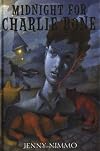
(Note: I scrapped my old rant review here and finally wrote a new one.)
This book is like a simple magic trick: it's captivating when you're younger and don't know how it's done, but once you've figured it out, the mystique vanishes. And unlike the first Harry Potter book—a novel that moves sensibly from chapter to chapter—Charlie Bone comes across as scattered and uneven; akin to a rough draft in need of more development.
To begin with, nothing really happens for the first fourth of the show more book. We're introduced to the main Dahlian family: Charlie's kind mother and uncle, his wicked aunts and conniving grandmother, and also Charlie's normal (read: non-magical) friend next door. What happens next is a bit of a family feud over a macguffin wherein Charlie's uncle builds rapport with Charlie in lieu of the boy's absent father. This is all well and good, but it goes on for too long. At least in HP, there's a clearer point to all the setup (Harry's suppression finally coming to an end with the line: 'Harry — yer a wizard.'), and it's easy to root for Harry while he lives through dire circumstances. By contrast, Charlie doesn't really want to go to the magical school (he's in denial about his special power), and his family doesn't treat him all that terribly (his aunts and grandma, meant to be "bad," are actually kind of entertaining and not very threatening), so things become monotonous while we wait for the school—"Bloor's Academy for the Endowed"—to inevitably enter the picture.
But what happens when we finally get there? Unfortunately, not much. The school itself is dysfunctional in a way that prevents any real learning from happening; the kids are hardly taught how to harness or understand their powers, which undermines the whole point of having a school like Bloor's. And while Nimmo utilizes the same boarding school idea that HP does, Nimmo's version, an academy of horrors, is flimsy in its portrayal of nasty authority figures and a student hierarchy. It seems like Nimmo wanted to focus more on the characters than figure out how to make the school function on a broader social level, which is fine, but the characters themselves lack any real depth (besides Charlie's uncle or grandma), and their chances to develop get stifled by people telling them to shush or sending them to detention for random trifles. I get that it's a trope intended to show how cruel the people at the academy are, but all it does is postpone some much-needed character development (and lead to some unintentionally silly moments).
As for the magic, there's not a lot of it. I don't mind "low fantasy" settings, but due to the rushed nature of this story, a lot of the better magical moments get engulfed by a tide of padding. And, for some reason, Charlie doesn't get to use his ability all that often. But I like how the kids' powers aren't stereotypically useful or powerful, as this requires more creativity on Nimmo's part to make it all work. There's also the intriguing ways that a few folktales and fairy tales are woven into the book, not to mention the Poe influence that I now see, and the academy itself does contain some dangerous places that give rise to decent tension.
It's just too bad that the lifeblood of the story, the characters, remain unconvincing. There's some camaraderie between them, there's some rivalry, but Nimmo is too flighty a writer to really make it all work in a manner similar to that of Rowling, Dahl, or even Trenton Lee Stewart. Stewart's characters in particular are more idiosyncratic and rounded; more "real" and therefore a lot more suited for a children's book. And Dahl's characters work because, although they're not the most developed, they provide a good, oftentimes satirical look at human nature. Nimmo's characters are neither rounded nor insightful; they're just caricatures.
And Bloor's itself doesn't make a lot of sense. What purpose does it serve if not to give the endowed a tailored education? Is it only there to funnel them into a dark place and scare the crap out of them? Why don't some try to escape? Why hasn't there been a student rebellion? I don't get it.
Well, those are my thoughts. I might skim through the next book out of curiosity (and nostalgia). At one point I intended to read through the whole series again, but given my dislike for the first book, I think I'll just move on. show less
This book is like a simple magic trick: it's captivating when you're younger and don't know how it's done, but once you've figured it out, the mystique vanishes. And unlike the first Harry Potter book—a novel that moves sensibly from chapter to chapter—Charlie Bone comes across as scattered and uneven; akin to a rough draft in need of more development.
To begin with, nothing really happens for the first fourth of the show more book. We're introduced to the main Dahlian family: Charlie's kind mother and uncle, his wicked aunts and conniving grandmother, and also Charlie's normal (read: non-magical) friend next door. What happens next is a bit of a family feud over a macguffin wherein Charlie's uncle builds rapport with Charlie in lieu of the boy's absent father. This is all well and good, but it goes on for too long. At least in HP, there's a clearer point to all the setup (Harry's suppression finally coming to an end with the line: 'Harry — yer a wizard.'), and it's easy to root for Harry while he lives through dire circumstances. By contrast, Charlie doesn't really want to go to the magical school (he's in denial about his special power), and his family doesn't treat him all that terribly (his aunts and grandma, meant to be "bad," are actually kind of entertaining and not very threatening), so things become monotonous while we wait for the school—"Bloor's Academy for the Endowed"—to inevitably enter the picture.
But what happens when we finally get there? Unfortunately, not much. The school itself is dysfunctional in a way that prevents any real learning from happening; the kids are hardly taught how to harness or understand their powers, which undermines the whole point of having a school like Bloor's. And while Nimmo utilizes the same boarding school idea that HP does, Nimmo's version, an academy of horrors, is flimsy in its portrayal of nasty authority figures and a student hierarchy. It seems like Nimmo wanted to focus more on the characters than figure out how to make the school function on a broader social level, which is fine, but the characters themselves lack any real depth (besides Charlie's uncle or grandma), and their chances to develop get stifled by people telling them to shush or sending them to detention for random trifles. I get that it's a trope intended to show how cruel the people at the academy are, but all it does is postpone some much-needed character development (and lead to some unintentionally silly moments).
As for the magic, there's not a lot of it. I don't mind "low fantasy" settings, but due to the rushed nature of this story, a lot of the better magical moments get engulfed by a tide of padding. And, for some reason, Charlie doesn't get to use his ability all that often. But I like how the kids' powers aren't stereotypically useful or powerful, as this requires more creativity on Nimmo's part to make it all work. There's also the intriguing ways that a few folktales and fairy tales are woven into the book, not to mention the Poe influence that I now see, and the academy itself does contain some dangerous places that give rise to decent tension.
It's just too bad that the lifeblood of the story, the characters, remain unconvincing. There's some camaraderie between them, there's some rivalry, but Nimmo is too flighty a writer to really make it all work in a manner similar to that of Rowling, Dahl, or even Trenton Lee Stewart. Stewart's characters in particular are more idiosyncratic and rounded; more "real" and therefore a lot more suited for a children's book. And Dahl's characters work because, although they're not the most developed, they provide a good, oftentimes satirical look at human nature. Nimmo's characters are neither rounded nor insightful; they're just caricatures.
And Bloor's itself doesn't make a lot of sense. What purpose does it serve if not to give the endowed a tailored education? Is it only there to funnel them into a dark place and scare the crap out of them? Why don't some try to escape? Why hasn't there been a student rebellion? I don't get it.
Well, those are my thoughts. I might skim through the next book out of curiosity (and nostalgia). At one point I intended to read through the whole series again, but given my dislike for the first book, I think I'll just move on. show less

Daisy is frightened by the unfamiliar sounds in her new bedroom, but each night one of the Beasties under her bed tells en engrossing story, until the young girl is able to conquer her fears, and even become a storyteller herself. From Ferdinand's tale of protecting a king's treasure, to Weevil's story of mutual friendship with a bird, the tales each draw upon some object, from which the storyteller spins his or her yarn. Floot's button leads to the history of his interactions with a show more princess, while Daisy - with the encouragement of the three Beasties - uses a seashell to launch a tale involving the rescue of a mermaid.
Apparently Jenny Nimmo, a British children's author best known for fantasy series such as the Charlie Bone books, or The Snow Spider Trilogy, and Gwen Millward, an illustrator whose beautiful artwork can be found in such titles as The Bog Baby and Guess What I Found in Dragon Wood, are mother and daughter! I really had no idea until picking up this charming bedtime tale, although I have admired the work of both. In any case, I found The Beasties a delightfully engaging little book, one which takes the classic bedtime fear of monsters under the bed, and turns it on its head. Not only are these Beasties not malicious - an idea explored in a number of other bedtime tales - they play an active role in easing the the young heroine's fears, and teaching her the skills she needs to avoid future frights. As I expected, the artwork by Millward is lovely, with vibrant colors - Daisy's red hair provides a bright note on most pages, and contrasts wonderfully with the blue background tones - and adorable creatures. I really wanted to give Ferdinand some scritches (maybe even a hug)! Recommended to anyone looking for good picture-books that address night-time fears, or the theme of storytelling. show less
Apparently Jenny Nimmo, a British children's author best known for fantasy series such as the Charlie Bone books, or The Snow Spider Trilogy, and Gwen Millward, an illustrator whose beautiful artwork can be found in such titles as The Bog Baby and Guess What I Found in Dragon Wood, are mother and daughter! I really had no idea until picking up this charming bedtime tale, although I have admired the work of both. In any case, I found The Beasties a delightfully engaging little book, one which takes the classic bedtime fear of monsters under the bed, and turns it on its head. Not only are these Beasties not malicious - an idea explored in a number of other bedtime tales - they play an active role in easing the the young heroine's fears, and teaching her the skills she needs to avoid future frights. As I expected, the artwork by Millward is lovely, with vibrant colors - Daisy's red hair provides a bright note on most pages, and contrasts wonderfully with the blue background tones - and adorable creatures. I really wanted to give Ferdinand some scritches (maybe even a hug)! Recommended to anyone looking for good picture-books that address night-time fears, or the theme of storytelling. show less
The Charlie Bone series was taking up a large amount of valuable shelf space in my library and hadn't been checked out in a while. I was considering weeding it and asked a colleague what she thought of the series. She loves it and recommends it as a series similar to Harry Potter with an easier reading level. I knew I needed to read it myself so that I could recommend it to students and provide an accurate book talk.
Charlie Bone has no siblings, his father is presumed dead, and he lives with show more his mom, uncle, and two grandmas. Because his grandma with special powers funds their living situation, they all abide by what Grandma Bone says. One day, Charlie discovers that he can hear people in photographs. When Grandma Bone learns of this special power, she immediately enrolls Charlie in a boarding school. From one photograph, Charlie learns that there is a baby who was stolen years ago and now attends his school under a hypnotization. Charlie and some of his friends, work together to solve the mystery of who this person is and how to awake her from her hypnosis.
This book is full of adventure, mystery, and suspense. It moves quickly due to simple sentences and large spacing between lines. Reluctant readers would feel successful completing this thick book. A few parts of the story were a little confusing to me, but I don't think students would be hung up on this. It is definitely not as captivating as the Harry Potter series, but is a great introduction to longer fantasy books. show less
Charlie Bone has no siblings, his father is presumed dead, and he lives with show more his mom, uncle, and two grandmas. Because his grandma with special powers funds their living situation, they all abide by what Grandma Bone says. One day, Charlie discovers that he can hear people in photographs. When Grandma Bone learns of this special power, she immediately enrolls Charlie in a boarding school. From one photograph, Charlie learns that there is a baby who was stolen years ago and now attends his school under a hypnotization. Charlie and some of his friends, work together to solve the mystery of who this person is and how to awake her from her hypnosis.
This book is full of adventure, mystery, and suspense. It moves quickly due to simple sentences and large spacing between lines. Reluctant readers would feel successful completing this thick book. A few parts of the story were a little confusing to me, but I don't think students would be hung up on this. It is definitely not as captivating as the Harry Potter series, but is a great introduction to longer fantasy books. show less
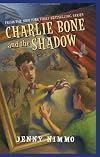
I feel like I could copy and paste one of my reviews from any of the last several books in the series and it would still detail how I feel about this particular book completely. Despite this being the seventh book in the series, the writing and characterization have failed to develop. I'm not saying that its horrible or the worst series I've ever read or anything, but the issues that I do have with it haven't improved in the slightest. I believe this particular book actually may have even show more gone on to highlight some of the main issues I have with the book in further detail... mainly characterization.
However, I do feel like I should note some of the book's good qualities. I really enjoyed the new development of picture traveling and meeting the new characters inside. I find certain details described about the universe inside the painting fascinating and I hope the final book will return to touch base on it further. I also really loved "the giant." I actually don't know why, but I found him the most authentic character thus far.
Overall, I would give this book 2.75 stars. While I keep waiting for this series to blow me away, I keep getting let down. Hopefully the last book will do something that will leave a memorable impression on me. show less
However, I do feel like I should note some of the book's good qualities. I really enjoyed the new development of picture traveling and meeting the new characters inside. I find certain details described about the universe inside the painting fascinating and I hope the final book will return to touch base on it further. I also really loved "the giant." I actually don't know why, but I found him the most authentic character thus far.
Overall, I would give this book 2.75 stars. While I keep waiting for this series to blow me away, I keep getting let down. Hopefully the last book will do something that will leave a memorable impression on me. show less
Lists
Awards


You May Also Like


Associated Authors
Statistics
- Works
- 92
- Also by
- 5
- Members
- 23,803
- Popularity
- #881
- Rating
- 3.8
- Reviews
- 280
- ISBNs
- 642
- Languages
- 13
- Favorited
- 24