
David Pryce-Jones (1936–2025)
Author of The Closed Circle: An Interpretation of the Arabs
About the Author
Works by David Pryce-Jones
Quondam 2 copies
Sands of Summer, The 1 copy
The stranger's view 1 copy
LES GRANDE CITES ''VIENNE'' 1 copy
Associated Works
Counterpoints: 25 Years of The New Criterion on Culture and the Arts (2007) — Contributor — 48 copies
Tagged
Common Knowledge
- Canonical name
- Pryce-Jones, David
- Legal name
- Pryce-Jones, David Eugene Henry
- Birthdate
- 1936-02-15
- Date of death
- 2025-11-17
- Gender
- male
- Education
- University of Oxford (Magdalen College)
Eton College, Eton, Berkshire, England, UK - Occupations
- writer
editor
journalist - Organizations
- National Review
The Spectator
Financial Times - Awards and honors
- Royal Society of Literature (Fellow)
- Relationships
- Pryce-Jones, Alan (father)
- Nationality
- UK
- Birthplace
- Vienna, Austria
- Places of residence
- London, England, UK
- Associated Place (for map)
- UK
Members
Reviews

A unique hybrid of criticism, memoir and essay. David Pryce-Jones uses books that authors have inscribed to him as a springboard to discuss their life, works, themes or subjects – all interwoven with and informed by his personal experiences and reflections. The book is arranged alphabetically by subject, which suggests that should be browsed rather than read. However, Pryce-Jones is so engaging, and his style so consistent, that it is easy to read Signatures as a cohesive work rather than show more a collection of disparate pieces. Pryce-Jones's own enthusiasms and preoccupations run throughout the book; this leads to some repetition, though it is entirely forgivable and justified by the context. One final plaudit must be given to the book as a physical object: Signatures is one of the most elegantly designed volumes that I have seen in recent times; from the choice of typeface to the architecture of the page and to the blind-stamped cover border, this is a book that honours its contents. Highly recommended. show less

A stylish exploration of faith and fervour in rural England. Shirley's Guild is enigmatic, evocative and a joy to read.

The mention of Vienna evokes images of symphonies and concertos, long coats and powder puff hairdos, elegant dances, fairy lights and beautiful landscapes, all linked to our memories of Mozart, Julie Andrews and the Sound of Music. This volume in the Great Cities series shows us the darker side of Vienna and the legacy of the Habsburg regime, with its social hierarchies amounting to almost a type of 'caste' system, the barriers to entry and recognition, the watertight compartments, and so show more on. An absorbing and informed account, supported by unique images of a bygone age. show less
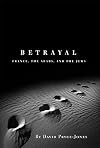
This is a good book and an interesting approach, but it's so slim--it was expanded from a magazine article--that it leaves you hungering for more.
As an excellent summary in Amazon by Craig Matteon puts it, "Anti-Semitism has been a part of the tradition and history of the French Foreign Affairs Ministry - ... and is reflected increasingly in its policies towards Israel, but this is not the focus of the book. " The focus is on France's long quest to be a power broker in North Africa and the show more Middle East, regardless of the dire collateral damage.
And, boy, there has been a tremendous amount of that. Just consider how many people were killed from $20 billion in arms sales to Saddam (well, that's something I thought he should have elaborate on. Ditto why it was supplying Iran at the same time). Ditto Chirac's role over so many years in that. There was new info to me, tho: I didn't realize Chirac was the one that broke the deal between Arafat and Israel during the Clinton administration.
To backtrack, he also skims over the British-French struggle to control the region from Napoleon through WW2 and beyond. It may sound like the Crusades, but, as Pryce-Jones shows with documents from the Quai D'Orsay, some of the high-level anti-Semitism of the 20th century stems from France's vision of itself as the protector of Christianity in Palestine and vicinity.
How does France influence overall EU policy vis a vis Israel, Iraq and Arab countries? Does the Quai d'Orsay still have a great deal of autonomy? Just a few of the questions not answered here. show less
As an excellent summary in Amazon by Craig Matteon puts it, "Anti-Semitism has been a part of the tradition and history of the French Foreign Affairs Ministry - ... and is reflected increasingly in its policies towards Israel, but this is not the focus of the book. " The focus is on France's long quest to be a power broker in North Africa and the show more Middle East, regardless of the dire collateral damage.
And, boy, there has been a tremendous amount of that. Just consider how many people were killed from $20 billion in arms sales to Saddam (well, that's something I thought he should have elaborate on. Ditto why it was supplying Iran at the same time). Ditto Chirac's role over so many years in that. There was new info to me, tho: I didn't realize Chirac was the one that broke the deal between Arafat and Israel during the Clinton administration.
To backtrack, he also skims over the British-French struggle to control the region from Napoleon through WW2 and beyond. It may sound like the Crusades, but, as Pryce-Jones shows with documents from the Quai D'Orsay, some of the high-level anti-Semitism of the 20th century stems from France's vision of itself as the protector of Christianity in Palestine and vicinity.
How does France influence overall EU policy vis a vis Israel, Iraq and Arab countries? Does the Quai d'Orsay still have a great deal of autonomy? Just a few of the questions not answered here. show less
Lists
You May Also Like


Associated Authors
Statistics
- Works
- 27
- Also by
- 4
- Members
- 869
- Popularity
- #29,448
- Rating
- 3.9
- Reviews
- 12
- ISBNs
- 56
- Languages
- 3