
Lynne Barasch (1939–2024)
Author of Radio Rescue
About the Author
Image credit: via Audible.com
Works by Lynne Barasch
Tagged
Common Knowledge
- Birthdate
- 1939-03-23
- Date of death
- 2024-03-07
- Gender
- female
- Education
- Rhode Island School of Design
Parsons School of Design (BFA) - Occupations
- picture book author
picture book illustrator - Nationality
- USA
- Birthplace
- New York, New York, USA
- Places of residence
- Woodmere, Long Island, New York, USA
New York, New York, USA - Associated Place (for map)
- New York, USA
Members
Reviews
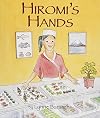
There were many things that I liked about this book. The overall message of the book is a good one: hard work pays off. Both the title character and her father are able to find great success in the sushi industry by training and working for over seven years in the field. This tale can show children how dedication and perseverance pays off. I also liked the inclusion of wordless picture pages in the story, used to show rather than tell different parts of the story. These pages will engage show more visual learners, learners who are not strong readers, and can be used by the teacher to ask critical thinking questions while reading to students.
However, I wish that the author had striven to create a more powerful message regarding the successes of women. This story included the success of a girl in what is described as a traditionally male role, but does not address that the logic behind the previous banning of women from the field is faulty. At one point the girl’s father says that “this is America. Girls can do things here that they cannot do in Japan.” Although this is an honest look into the Japanese culture, I wish that there had been more emphasis that the sexist beliefs previously stated are wrong, especially considering the young girls that will hear and read this book. show less
However, I wish that the author had striven to create a more powerful message regarding the successes of women. This story included the success of a girl in what is described as a traditionally male role, but does not address that the logic behind the previous banning of women from the field is faulty. At one point the girl’s father says that “this is America. Girls can do things here that they cannot do in Japan.” Although this is an honest look into the Japanese culture, I wish that there had been more emphasis that the sexist beliefs previously stated are wrong, especially considering the young girls that will hear and read this book. show less

Inspired by a family trip to Kenya, and a discussion she had there with one of her guides, author/illustrator Lynne Barasch wrote this original story about two boys - one Maasai and one Kikuyu - who manage to look past tribal differences, and work together, eventually even becoming friends. When Abaani, a young Maasai boy, happens upon a Kikuyu boy named Haki while herding his cattle, his thoughtless words - a repetition of things he has heard his elders say - leads to hostility between the show more two. But when a young baby is jeopardized, they come together to save him, each discovering that the other is really OK, and that they can be friends.
I enjoyed the story in First Come the Zebra, which sets up a very effective parallel between the various species which are a part of the great migration in that part of the world, and the human tribes, demonstrating how it is possible to co-exist peacefully, despite different eating habits and/or lifestyles. I appreciate the fact that Barasch's story highlights the human diversity in Africa, and the tensions between various tribal groups, as so many Americans seem to think that the continent is a homogeneous whole. I also appreciated the message - that differences don't have to lead to violence, and that young people can choose to follow a better path. I'm not sure the illustrations really appealed to me, but I think First Come the Zebra is an engaging book, for all that, and I recommend it to young readers looking for books set in Kenya, or for stories that emphasize the importance of making peace, and getting along. show less
I enjoyed the story in First Come the Zebra, which sets up a very effective parallel between the various species which are a part of the great migration in that part of the world, and the human tribes, demonstrating how it is possible to co-exist peacefully, despite different eating habits and/or lifestyles. I appreciate the fact that Barasch's story highlights the human diversity in Africa, and the tensions between various tribal groups, as so many Americans seem to think that the continent is a homogeneous whole. I also appreciated the message - that differences don't have to lead to violence, and that young people can choose to follow a better path. I'm not sure the illustrations really appealed to me, but I think First Come the Zebra is an engaging book, for all that, and I recommend it to young readers looking for books set in Kenya, or for stories that emphasize the importance of making peace, and getting along. show less
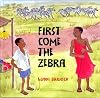
I really enjoyed reading this book. The author used descriptive imagery which allowed me to feel as though I could see what she was describing. For example, in the beginning she stated, “the sun is rising over the grassland” and “the tall grass is lush and green after the long rainy season.” Throughout the story, she continued to use strong wording which allowed me to create the scenes in my mind. I also enjoyed this book because I encountered foreshadowing in the beginning which show more made me eager to continue reading. The author described how the animals shared the grass in the field by stating, “By sharing the land, there will be plenty for all. There will be peace among the grazers.” This quote made me think that soon there would not be peace due to the inability to share, most likely between humans.
The main purpose of this book was to promote friendship and the need for peaceful coexistence among groups of people. It emphasized the need to help one another. The benefit of helping one another was proven when both Albaani and Haki worked together to save the baby from the warthogs and when they shared their fruits, vegetables, and milk. This story teaches children that sharing and working together can benefit everyone. show less
The main purpose of this book was to promote friendship and the need for peaceful coexistence among groups of people. It emphasized the need to help one another. The benefit of helping one another was proven when both Albaani and Haki worked together to save the baby from the warthogs and when they shared their fruits, vegetables, and milk. This story teaches children that sharing and working together can benefit everyone. show less
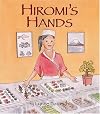
Hiromi’s Hands is an inspirational story about Hiromi Suzuki and her journey to become an itamae-san, professional sushi chef. I liked this story because it went into great detail of the process of making sushi. The story goes into detail about how to pick the right fish to use “’your fingers should not leave a dent’… ’Firm is fresh. Soft is not. Notice the eyes too. They should be clear. The fins should not be broken.’” This alone is great information for me in the future if show more I am ever buying fish I can remember back to this story and know what to look for. Another aspect of this book I liked was that it named different types of sushi, with their English and Japanese names. This is particularly interesting to me because I work at a restaurant that sells sushi, so I could make connections to my job. For example one page Hiromi is holding a tray with Nigiri, including maguro, which is tuna, and Ebi, which is shrimp, and I could recognize these from the menu at my work, which was just interesting for me to see. In the back of the book there was even a glossary and pronunciation guide for all of the Japanese words featured in the story, which is helpful for readers unfamiliar with the words. The main idea of the story was that people can do anything they want if they put their minds to it. This is evident from Hiromi because she became one of the first female chefs in New York through her hard work and dedication working with her father. show less
Awards


You May Also Like


Statistics
- Works
- 13
- Members
- 677
- Popularity
- #37,311
- Rating
- 4.0
- Reviews
- 57
- ISBNs
- 37
- Languages
- 3