
Saad Hossain
Author of The Gurkha and the Lord of Tuesday
About the Author
Series
Works by Saad Hossain
Associated Works
The Apex Book of World SF: Volume 4 (Apex World of Speculative Fiction) (2015) — Contributor — 84 copies, 25 reviews
New Suns 2: Original Speculative Fiction by People of Color (2023) — Contributor — 59 copies, 1 review
The Best Science Fiction and Fantasy of the Year Volume Twelve (2018) — Contributor — 47 copies, 2 reviews
Tagged
Common Knowledge
- Birthdate
- 20th century
- Gender
- male
- Short biography
- Saad Z. Hossain writes in a niche genre of fantasy, science fiction and black comedy with an action-adventure twist. He lives and works in Bangladesh; he writes in English.
- Nationality
- Bangladesh
- Places of residence
- Dhaka, Bangladesh
- Associated Place (for map)
- Dhaka, Bangladesh
Members
Reviews

If you end up in Dhaka, Bangladesh in 2089, you won't recognize the city (not that you will recognize any other major city...). Humanity had managed to screw up the atmosphere so much that the only way to actually survive is to populate everyone's bodies with biological nanotech which can control the climate locally - as long as there are enough of them. So Dhaka is in a really good shape - the old overpopulation problem had turned into its salvation when the world was taken over by show more corporations and then the global climate apocalypse wrecked havoc with everyone's lives. Add to that the jinns (who are very real indeed) and you just got your crash introduction to the world of this novel.
Add a gamer (a really good one) who is also a hacker and his friends. Add a few AIs. Add a guy who seems to be invincible and keeps cutting people's heads. Add the Russian mafia, hidden servers (collapsing small countries leave infrastructure behind), a missing space station (nope, nothing fancy - it is our well known space station) and a boy with a crush and things start getting interesting really quickly - even before things escalate into an almost war.
I suspect that some of parts of the book will resonate better with someone who plays video games - I found some of the passages describing the game play a bit boring. But even with that, the novel manages to be hilarious. And if you had read the author's earlier [The Gurkha and the Lord of Tuesday], you may even realize before it becomes clear in the text who one of the characters is. The book is also a continuation of [Djinn City] (which I had not read yet) - set decades later but still sharing a few characters (and possibly spoiling some of the earlier book). I plan to go chase that one now.
Hossain's mixing of jinns and technology sounds like a possible disaster but he manages to make it work marvelously. show less
Add a gamer (a really good one) who is also a hacker and his friends. Add a few AIs. Add a guy who seems to be invincible and keeps cutting people's heads. Add the Russian mafia, hidden servers (collapsing small countries leave infrastructure behind), a missing space station (nope, nothing fancy - it is our well known space station) and a boy with a crush and things start getting interesting really quickly - even before things escalate into an almost war.
I suspect that some of parts of the book will resonate better with someone who plays video games - I found some of the passages describing the game play a bit boring. But even with that, the novel manages to be hilarious. And if you had read the author's earlier [The Gurkha and the Lord of Tuesday], you may even realize before it becomes clear in the text who one of the characters is. The book is also a continuation of [Djinn City] (which I had not read yet) - set decades later but still sharing a few characters (and possibly spoiling some of the earlier book). I plan to go chase that one now.
Hossain's mixing of jinns and technology sounds like a possible disaster but he manages to make it work marvelously. show less
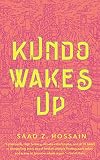
I found this to be so different from The Gurkha and the Lord of Tuesday that at first I wasn't sure if I would finish this book. It doesn't help that I start out skeptical of stories of sad men trying to figure out why their wives left them. But, as it turns out, we are supposed to be skeptical of Kundo, and his eventual growth here, coupled with the way that the story just continues to unfold into increasing dimensions of unexpected strangeness, made sticking with it rewarding. Especially show more the messages about the power of human connection in the real world, however broken it may be, despite the lure of shiny virtual words to disappear into. show less

When Melek Ahmar wakes up something just does not look right. There are no humans to welcome him. Noone seems to care that the king of the djinn had escaped from his stone grave (or had awaken - whatever you prefer to call it). The only man he meets is the old Gurkha soldier Bhan Gurung - and the man does not behave as one would expect. Apparently being asleep for 4 millennia (or thereabouts) is not a good idea. Not that Melek Ahmar had a lot of choice but still.
While the djinn was asleep, show more humanity managed to mess up the planet - the air is unbreathable unless you have a lot of nano-machines to assist you and to top it all, the big city close to the mountain, Kathmandu. had given up everything and is not ruled by Karma - an all-seeing all-knowing computer which controls everything based on the karma of its citizens - you do good things, you win karma; bad things - you lose some and you pay for everything you nee with karma. The system is supposed to work, right? Well... ask Bhan Gurung - who was supposed to be dead but somehow managed to not be executed and instead lives outside of the city.
Melek Ahmar is really trying to figure out what had happened and how he can be a king again - and Bhan Gurung wants revenge (or wants the truth to finally be revealed - sometimes even he is not sure). The two of them end up allied, each of them for their own purposes and each of them believing that they are driving the agenda. Add another jinn and an old massacre into the mix and the calm and nice reign of Karma starts to get a bit less calm... and a lot less nice.
The novella was a lot more entertaining than I expected it to be. The story ends up being familiar - people are people, people with power will not allow anything to take away that power - but still, the storytelling and the exact details were interesting enough. And I loved the ending.
Apparently there is a second book coming out this year - I am not sure if it will be just the same world or a real continuation of the story but I plan to find out as soon as I can. show less
While the djinn was asleep, show more humanity managed to mess up the planet - the air is unbreathable unless you have a lot of nano-machines to assist you and to top it all, the big city close to the mountain, Kathmandu. had given up everything and is not ruled by Karma - an all-seeing all-knowing computer which controls everything based on the karma of its citizens - you do good things, you win karma; bad things - you lose some and you pay for everything you nee with karma. The system is supposed to work, right? Well... ask Bhan Gurung - who was supposed to be dead but somehow managed to not be executed and instead lives outside of the city.
Melek Ahmar is really trying to figure out what had happened and how he can be a king again - and Bhan Gurung wants revenge (or wants the truth to finally be revealed - sometimes even he is not sure). The two of them end up allied, each of them for their own purposes and each of them believing that they are driving the agenda. Add another jinn and an old massacre into the mix and the calm and nice reign of Karma starts to get a bit less calm... and a lot less nice.
The novella was a lot more entertaining than I expected it to be. The story ends up being familiar - people are people, people with power will not allow anything to take away that power - but still, the storytelling and the exact details were interesting enough. And I loved the ending.
Apparently there is a second book coming out this year - I am not sure if it will be just the same world or a real continuation of the story but I plan to find out as soon as I can. show less
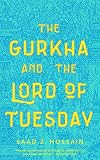
When the djinn Melek Ahmar escapes from the stone tomb in which he's been imprisoned for a few thousand years -- even the best of spells wear off eventually -- he is determined to return to the power and status to which he is entitled as the Lord of Mars, the Red King, the Lord of Tuesday, Most August Rajah of Djinn.
But things have changed since Melek was entombed. There are no human servants waiting to greet him; the only person anywhere nearby is Bhan Gurung, an elderly Nepalese soldier. show more That's because almost everyone now lives in a handful of cities, where nanotech makes it possible to survive after the climate apocalypse has made most of the planet uninhabitable. But being ruler of Kathmandu is better than being ruler of nothing at all, so Melek and Gurung set off for the city.
Is there anything harder to read than comedy that doesn't mesh with your own sense of humor? I can see all of the influences on Hossain's comic style -- a bit of Christopher Buckley, a little Douglas Adams, some Christopher Moore -- and they are mostly authors who I like. But those influences clash badly; the artfully "random" digressions he draws from Adams don't mix well with Buckleyesque political satire. And the violent confrontations that end the book are jarringly out of place with all of it.
Humor is subjective, and I'm sure there are people for whom this will work beautifully. The prose is skillfully put together and pleasant to read; the ideas are clever. And there are even a handful of jokes scattered throughout that did click for me. But mostly, I found this an exercise in counting the endless series of Joke-Like Objects as they thudded to the floor. show less
But things have changed since Melek was entombed. There are no human servants waiting to greet him; the only person anywhere nearby is Bhan Gurung, an elderly Nepalese soldier. show more That's because almost everyone now lives in a handful of cities, where nanotech makes it possible to survive after the climate apocalypse has made most of the planet uninhabitable. But being ruler of Kathmandu is better than being ruler of nothing at all, so Melek and Gurung set off for the city.
Is there anything harder to read than comedy that doesn't mesh with your own sense of humor? I can see all of the influences on Hossain's comic style -- a bit of Christopher Buckley, a little Douglas Adams, some Christopher Moore -- and they are mostly authors who I like. But those influences clash badly; the artfully "random" digressions he draws from Adams don't mix well with Buckleyesque political satire. And the violent confrontations that end the book are jarringly out of place with all of it.
Humor is subjective, and I'm sure there are people for whom this will work beautifully. The prose is skillfully put together and pleasant to read; the ideas are clever. And there are even a handful of jokes scattered throughout that did click for me. But mostly, I found this an exercise in counting the endless series of Joke-Like Objects as they thudded to the floor. show less
Lists
Awards


You May Also Like


Associated Authors
Statistics
- Works
- 11
- Also by
- 11
- Members
- 693
- Popularity
- #36,520
- Rating
- 3.7
- Reviews
- 30
- ISBNs
- 23
- Languages
- 2