
Emily Tesh
Author of Some Desperate Glory
About the Author
Series
Works by Emily Tesh
Associated Works
Tor.com Publishing 2019 Debut Sampler: Some of the Most Exciting New Voices in Science Fiction and Fantasy (2019) — Contributor — 28 copies
Tor.com ebook club, Feb 2022: BUNDLE O' LOVE: All Systems Red | Silver in the Wood | Witchmark (2022) — Contributor — 7 copies
Tagged
Common Knowledge
- Birthdate
- 20th century
- Gender
- female
- Education
- Trinity College, Cambridge
University of Chicago - Occupations
- teacher
writer - Awards and honors
- Astounding Award for Best New Writer (2021)
- Agent
- Kurestin Armada (Root Literary)
- Nationality
- England
- Places of residence
- London, England, UK
Hertfordshire, England, UK - Map Location
- England, UK
Members
Discussions
British Author Challenge August 2025: Emily Tesh & Alex Wheatle in 75 Books Challenge for 2025 (October 2025)
Reviews
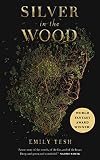
This is rather gorgeous. It's a short novella but the characters and world-building just mesh wonderfully into a lovely intricate story of history, revenge, romance and redemption.
Tobias is the local Wild Man of the Woods, living a simple life in a cottage among the trees, with dryads and a cat to keep him company. In general the villagers avoid him, but keep the traditions alive, donating to the old gods when they remember. However the Manner has a new Lord, and when he passes by in a storm show more Tobias offers him shelter. The generosity is returned when Tobias is accidentally shot. Henry is interested in folklore and slowly uncovers some of the strangeness surrounding Tobias, and curiosity can't keep him away even when Tobias strictly warns him that some nights are not safe in the Woods.
It's marvellously done, the pacing is perfect, slowly revealing more and more details, explaining oddities mentioned earlier. The characters work well together and the motivations are clear. I seldom enjoy novellas, being either too short or too long, but this was just right. An author to watch out for. show less
Tobias is the local Wild Man of the Woods, living a simple life in a cottage among the trees, with dryads and a cat to keep him company. In general the villagers avoid him, but keep the traditions alive, donating to the old gods when they remember. However the Manner has a new Lord, and when he passes by in a storm show more Tobias offers him shelter. The generosity is returned when Tobias is accidentally shot. Henry is interested in folklore and slowly uncovers some of the strangeness surrounding Tobias, and curiosity can't keep him away even when Tobias strictly warns him that some nights are not safe in the Woods.
It's marvellously done, the pacing is perfect, slowly revealing more and more details, explaining oddities mentioned earlier. The characters work well together and the motivations are clear. I seldom enjoy novellas, being either too short or too long, but this was just right. An author to watch out for. show less
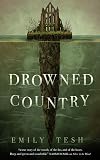
Two years after the end of Silver in the Wood. I was disappointed that Silver and Tobias were no longer together in the Wood, but the new story grabbed me as quickly as the first. Tesh fleshes out Silver's mother, an aging monster hunter, who demands her wayward son's help with a young woman abducted by a vampire. This vampire is a far cry from Twilight's teen angst, so I enjoyed his story much more. Tesh also introduces a new character in the strong-minded, though rash Maud. She and Silver show more have some laugh-out loud conversations. I related to the Celtic mythology that matched many of the old tales I've read, such as the Green Man myth, and added new nuances and surprises. show less

Emily Tesh won the 2024 Hugo Award for Best Novel for Some Desperate Glory, which I really enjoyed. So I was very much looking forward to The Incandescent. While Some Desperate Glory was a science fiction novel about fascism, The Incandescent is a magic school novel—so quite different in terms of genre, though I think animated by some common concerns.
Harry Potter didn't invent the magic school novel, of course, but there's a generation of readers and writers for whom it did. Some of show more these probably pretty much reproduce the tropes of the genre as is, but many others take the features and project of the genre and complicate them. Naomi Novik's Scholomance books, for example, clearly have as their starting point the question, "Why would you send your kid to a school where the students are always dying?" and come up with an arrangement where that's better than the alternative. Moniquill Blackgoose's To Shape a Dragon's Breath, on the other hand, uses a Native American character to explore questions of class and race and privilege that J. K. Rowling pushes to the side. As Nicole Schrag astutely points out, the school novel is usually about the school changing the student, and so Blackgoose purposefully writes a school novel where the student protagonist is resolutely unchanged by forces attempting to remake her in their own image.
The Incandescent's tweak on the genre is that it tells the magic school story from the perspective of the teachers, as opposed to the students. This seems so obvious once you say it, yet as far as I know, no one has ever made this move before.
Genre, famously, has two levels: features and project. The first of those means the things that appear in the story, the things that let you know you're looking at a school story. (For example, this book has the obligatory scene where the kids think about going to an adult, but don't, though it provides a nice explanation as to why.) Related to this, I think, is the pleasure of what China Miéville calls "rationalized alienation": a world that is not your world, but is nonetheless built on rational lines. Tesh introduces that quite clearly from the opening, which is about risk assessment forms... for a magic lab! A lot of the pleasure of the book, as a teacher myself, is seeing the world of teaching accurately rendered, but in this totally new context. I can believe that if magic was real, magic school would work like this. (At a fancy British prep school, anyway.) It's a lot like the pleasure I get out of reading Novik's Temeraire novels. Which is funny, because even though both The Incandescent and Novik's own Scholomance novels think through how a magic school would "really" work, Novik just removes the entire idea of teachers! On the other hand, Tesh's conception of magical demons seems to owe a bit to Novik's, or at least they were thinking along similar lines.
There are lots of clever bits: demons occupy small living things. But they can also occupy objects people treat like living things. Swear at your copy machine enough, and a demon can reside in it. Thus, mobile phones represent a huge threat vector. As Saffy says to one of her students, that means her students are at threat in a way she never was, because her students have phones on them at all times since middle school. Which is literally true in the world of the story... but also obviously a metaphor for ours!
If this is all this book did, it would be a good book. But genre also works on the level of project: what is the story doing? What point is it trying to make by flipping around how the school story usually operates? I think there's two things The Incandescent is up to, both related to the purpose of education. The purpose of education if you're a student in a school story, is self-actualization: like most YA fiction, it's about working out your place in the universe. By the end of a school story, you know who you are, and that's who you will be. I keep talking about Harry Potter in this review for obvious reasons, and that's certainly true there: by the end of book seven, Harry Potter is Harry Potter. He has entered adulthood, and he is fully formed. But I think a particularly good example of this is a different magic school story, Ursula K. Le Guin's A Wizard of Earthsea, where the climax of the book hinges around the protagonist Naming himself.
But is that what education is for from the perspective of the adults? Does a parent send a student to school for self-actualization; does a teacher teach self-actualization? Arguably not. "'Character' was one of the things that every school claimed to instil and that no school could really control" (406). But if school is not really about self-actualization, then what is it about?
As our protagonist Saffy reflects, "no one was paying for magical boarding school because of the magic.... No: Chetwood's school fees were insurance money, a policy taken out against the future. Let my child be safe. Let my child be happy. Let my child have every single possible chance at freedom, joy, hope, power.... You could never completely future-proof your children. But power would keep them safe from the bitter grind of survival in a way nothing else could" (325). What school is really for—if you're a parent, anyway—is to give your child the best possible chance to succeed in a difficult and hostile universe. Shades of the Scholomance again, actually; like those books, this book makes this literal by having demons out there ready to pick off kids if they don't learn their lessons adequately.
I've seen some criticisms that The Incandescent's setting of an elite private magical school seems unnecessary and elitist... but I would argue that it's fundamental to what the book is doing. All of the adult characters we see here have parlayed or are parlaying their education into power: Saffy, Laura, Mark. Making it into a magic school literalizes that aspect of education, education is literally power. Making it into an elite school heightens that aspect of how the novel plays with the genre: it just wouldn't be as significant if Saffy was teaching at, say, a public comprehensive or something. As she remarks much later, "Mark was exactly the kind of person that Chetwood School existed to create: powerful, free, capable of anything, capable of getting away with anything" (401).
But even if there's another angle to it from the perspective of teachers and parents, the school story is still about self-actualization. Your character who enters school as a child will exit it as an adult. If you think through the logic of school story, what that implies is that when you leave... you're done! You don't change anymore, you are who you will be. To go back to Harry Potter yet again, this is probably why everyone hates the epilogue. Harry Potter nineteen years later is the same person he was when he finished school at age 18, because that's how the school story works: you're an adult now, so no more growth and development. (You can also see this in how for every adult in the Harry Potter books, nothing significant seems to have happened to them since they graduated from school.) You can get away with this if your books don't ever show your characters in their thirties, but J. K. Rowling unwisely chose to do this. (Actually, to circle back to Tesh's previous novel, which was also a school story of sorts, Some Desperate Glory even implies this to a degree: Valkyr has learned how the world works by the end of the novel, so she's done developing. She's entered adulthood!)
By placing a late thirties protagonist (I actually think Saffy is basically exactly my age, plus or minus one year), among all these teenagers Tesh highlights some of the complexities of this. Earlier in the novel Saffy seems to think she's done growing: "And you became old, and strong, and terrible" (352).
And indeed, it would be terrible if you never continued to grow or develop once you entered adulthood. But the lesson that Saffy learns here is that, contrary to what the project of the school story implies, the end of your education is not the end of your growth and development. It would be terrible if we never did become new people, if we were always stuck being who we are when we enter adulthood. But it's not true, you're never stuck being who you have become. (This, like many life lessons, is one that's easy to hear or read intellectually, but hard to believe emotionally.) That we always can become a new self is probably the greatest blessing we have as human beings. "You're never too old to learn" (414). By telling a school story from the perspective of a fully grown adult, someone who technically is fully self-actualized, Tesh can highlight how we're never too old to keep growing and keep learning. I think this is a clever and well-done move, and really made the book for me.
It's well-written, does some clever stuff with form, and is genuinely exciting. I have one plot quibble (it's hard to believe Laura was never briefed about Old Faithful given it killed multiple students!), but I really enjoyed this book. The best Hugo finalist I've read so far. show less
Harry Potter didn't invent the magic school novel, of course, but there's a generation of readers and writers for whom it did. Some of show more these probably pretty much reproduce the tropes of the genre as is, but many others take the features and project of the genre and complicate them. Naomi Novik's Scholomance books, for example, clearly have as their starting point the question, "Why would you send your kid to a school where the students are always dying?" and come up with an arrangement where that's better than the alternative. Moniquill Blackgoose's To Shape a Dragon's Breath, on the other hand, uses a Native American character to explore questions of class and race and privilege that J. K. Rowling pushes to the side. As Nicole Schrag astutely points out, the school novel is usually about the school changing the student, and so Blackgoose purposefully writes a school novel where the student protagonist is resolutely unchanged by forces attempting to remake her in their own image.
The Incandescent's tweak on the genre is that it tells the magic school story from the perspective of the teachers, as opposed to the students. This seems so obvious once you say it, yet as far as I know, no one has ever made this move before.
Genre, famously, has two levels: features and project. The first of those means the things that appear in the story, the things that let you know you're looking at a school story. (For example, this book has the obligatory scene where the kids think about going to an adult, but don't, though it provides a nice explanation as to why.) Related to this, I think, is the pleasure of what China Miéville calls "rationalized alienation": a world that is not your world, but is nonetheless built on rational lines. Tesh introduces that quite clearly from the opening, which is about risk assessment forms... for a magic lab! A lot of the pleasure of the book, as a teacher myself, is seeing the world of teaching accurately rendered, but in this totally new context. I can believe that if magic was real, magic school would work like this. (At a fancy British prep school, anyway.) It's a lot like the pleasure I get out of reading Novik's Temeraire novels. Which is funny, because even though both The Incandescent and Novik's own Scholomance novels think through how a magic school would "really" work, Novik just removes the entire idea of teachers! On the other hand, Tesh's conception of magical demons seems to owe a bit to Novik's, or at least they were thinking along similar lines.
There are lots of clever bits: demons occupy small living things. But they can also occupy objects people treat like living things. Swear at your copy machine enough, and a demon can reside in it. Thus, mobile phones represent a huge threat vector. As Saffy says to one of her students, that means her students are at threat in a way she never was, because her students have phones on them at all times since middle school. Which is literally true in the world of the story... but also obviously a metaphor for ours!
If this is all this book did, it would be a good book. But genre also works on the level of project: what is the story doing? What point is it trying to make by flipping around how the school story usually operates? I think there's two things The Incandescent is up to, both related to the purpose of education. The purpose of education if you're a student in a school story, is self-actualization: like most YA fiction, it's about working out your place in the universe. By the end of a school story, you know who you are, and that's who you will be. I keep talking about Harry Potter in this review for obvious reasons, and that's certainly true there: by the end of book seven, Harry Potter is Harry Potter. He has entered adulthood, and he is fully formed. But I think a particularly good example of this is a different magic school story, Ursula K. Le Guin's A Wizard of Earthsea, where the climax of the book hinges around the protagonist Naming himself.
But is that what education is for from the perspective of the adults? Does a parent send a student to school for self-actualization; does a teacher teach self-actualization? Arguably not. "'Character' was one of the things that every school claimed to instil and that no school could really control" (406). But if school is not really about self-actualization, then what is it about?
As our protagonist Saffy reflects, "no one was paying for magical boarding school because of the magic.... No: Chetwood's school fees were insurance money, a policy taken out against the future. Let my child be safe. Let my child be happy. Let my child have every single possible chance at freedom, joy, hope, power.... You could never completely future-proof your children. But power would keep them safe from the bitter grind of survival in a way nothing else could" (325). What school is really for—if you're a parent, anyway—is to give your child the best possible chance to succeed in a difficult and hostile universe. Shades of the Scholomance again, actually; like those books, this book makes this literal by having demons out there ready to pick off kids if they don't learn their lessons adequately.
I've seen some criticisms that The Incandescent's setting of an elite private magical school seems unnecessary and elitist... but I would argue that it's fundamental to what the book is doing. All of the adult characters we see here have parlayed or are parlaying their education into power: Saffy, Laura, Mark. Making it into a magic school literalizes that aspect of education, education is literally power. Making it into an elite school heightens that aspect of how the novel plays with the genre: it just wouldn't be as significant if Saffy was teaching at, say, a public comprehensive or something. As she remarks much later, "Mark was exactly the kind of person that Chetwood School existed to create: powerful, free, capable of anything, capable of getting away with anything" (401).
But even if there's another angle to it from the perspective of teachers and parents, the school story is still about self-actualization. Your character who enters school as a child will exit it as an adult. If you think through the logic of school story, what that implies is that when you leave... you're done! You don't change anymore, you are who you will be. To go back to Harry Potter yet again, this is probably why everyone hates the epilogue. Harry Potter nineteen years later is the same person he was when he finished school at age 18, because that's how the school story works: you're an adult now, so no more growth and development. (You can also see this in how for every adult in the Harry Potter books, nothing significant seems to have happened to them since they graduated from school.) You can get away with this if your books don't ever show your characters in their thirties, but J. K. Rowling unwisely chose to do this. (Actually, to circle back to Tesh's previous novel, which was also a school story of sorts, Some Desperate Glory even implies this to a degree: Valkyr has learned how the world works by the end of the novel, so she's done developing. She's entered adulthood!)
By placing a late thirties protagonist (I actually think Saffy is basically exactly my age, plus or minus one year), among all these teenagers Tesh highlights some of the complexities of this. Earlier in the novel Saffy seems to think she's done growing: "And you became old, and strong, and terrible" (352).
And indeed, it would be terrible if you never continued to grow or develop once you entered adulthood. But the lesson that Saffy learns here is that, contrary to what the project of the school story implies, the end of your education is not the end of your growth and development. It would be terrible if we never did become new people, if we were always stuck being who we are when we enter adulthood. But it's not true, you're never stuck being who you have become. (This, like many life lessons, is one that's easy to hear or read intellectually, but hard to believe emotionally.) That we always can become a new self is probably the greatest blessing we have as human beings. "You're never too old to learn" (414). By telling a school story from the perspective of a fully grown adult, someone who technically is fully self-actualized, Tesh can highlight how we're never too old to keep growing and keep learning. I think this is a clever and well-done move, and really made the book for me.
It's well-written, does some clever stuff with form, and is genuinely exciting. I have one plot quibble (it's hard to believe Laura was never briefed about Old Faithful given it killed multiple students!), but I really enjoyed this book. The best Hugo finalist I've read so far. show less

This is the first short story/novella in a very long time that I've loved. Emily Tesh wrote an amazingly vibrant narrative with skilful world-building that did not overwhelm the narrative. Her nuanced main character, Tobias, was engaging from the very start. There was a gentle, even serene tone to this myth that nonetheless had some major evil realities at its core.
Lost 1 star for me at the end, because the fate of what Tobias was to become seemed so undefined. The hazy events that precede show more this dénouement were too undeveloped. Despite that niggle, I highly recommend this tale to those who love retold folklore and atmospheric adventures in the world of "The Green Man". show less
Lost 1 star for me at the end, because the fate of what Tobias was to become seemed so undefined. The hazy events that precede show more this dénouement were too undeveloped. Despite that niggle, I highly recommend this tale to those who love retold folklore and atmospheric adventures in the world of "The Green Man". show less
Lists
Awards


You May Also Like


Associated Authors
Statistics
- Works
- 6
- Also by
- 2
- Members
- 3,710
- Popularity
- #6,828
- Rating
- 4.0
- Reviews
- 188
- ISBNs
- 30
- Languages
- 1
- Favorited
- 4