
Charles Laurence Barber (1915–2000)
Author of The English Language: A Historical Introduction
About the Author
Works by Charles Laurence Barber
The Flux of Language 1 copy
Associated Works
Tagged
Common Knowledge
- Other names
- Barber, C. L.
Barber, Charles L. - Birthdate
- 1915
- Date of death
- 2000
- Gender
- male
- Education
- University of Cambridge (MA)
- Occupations
- Lecturer in English
- Organizations
- University of Gothenburg (1947-56)
University of Leeds (1959-80) - Short biography
- C.L. (Charles) Barber was appointed to Leeds in 1959 and retired as Reader in English Language and Literature. Indeed, he had a distinguished career in both disciplines, publishing, for instance, on Shakespeare and editing Middleton (e.g., Women Beware Women [1969]) as well as writing one of the most influential and widely-read books on the history of the language, The Story of Language (1964) and, later, The English Language: A Historical Introduction for Cambridge University Press in 1993. Dr Barber was an active supporter of the Yorkshire Playhouse.
- Nationality
- United Kingdom
- Map Location
- United Kingdom
Members
Reviews
The English Language: A Historical Introduction (Cambridge Approaches to Linguistics) by Charles Barber
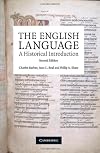
When I first started reading this book I was terrified by the linguistics portion containe din the first 50 pages or so. I have to say that I learned A LOT reading this book. It is very academic and scholarly; unfortunately, it may be a little too scholarly for an undergrad class and I would have appreciated it more if I had been majoring in Linguistics. Overall, a very insightful book.
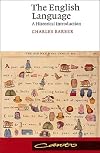
The "pitch" of this book doesn't interest me enough to plough through all the way. But the warm up—the chapters on linguistics, on Indo-European languages, on the Germanic languages and on the earliest history of the English language are exceptional. I've read a lot of short introductions to Indo-European linguistics, but few that were finer. It posed and answered a number of questions I'd never before encountered. Here, as with the best non-fiction, one gets the sense the author could show more write an excellent book on any of the topics he touched on, rather than being a narrow specialist ill at ease outside his specialty. show less

An exemplary introduction to the history of the English language. It's concise, it ticks off all the important points, and it's written by an authority on the subject.
My main point of critique is that too many pages are devoted to sound laws while too few pages deal with culture and mentality. Some more illustrations and tables wouldn't have hurt, either. That is offset, though, by the general professionalism throughout, as well as some excellent chapters on Proto-Indo-European and show more Germanic. Those chapters in particular were a refreshing read, because they managed to convey something of the complexity of the issues without dumbing them down or oversimplifying; they deal very lucidly with obscure-ish matters in ways that feel eye-opening rather than a received summary of long-established scholarship.
There probably exist dozens, if not hundreds of books like this (I myself own several). If your main interest is linguistic, and if you're particularly drawn to the older stages of the language (especially pre-Old English) -- then this book has chapters on offer that outclass its competitors. If not -- this one will do as well as any other, and probably a bit better than most. show less
My main point of critique is that too many pages are devoted to sound laws while too few pages deal with culture and mentality. Some more illustrations and tables wouldn't have hurt, either. That is offset, though, by the general professionalism throughout, as well as some excellent chapters on Proto-Indo-European and show more Germanic. Those chapters in particular were a refreshing read, because they managed to convey something of the complexity of the issues without dumbing them down or oversimplifying; they deal very lucidly with obscure-ish matters in ways that feel eye-opening rather than a received summary of long-established scholarship.
There probably exist dozens, if not hundreds of books like this (I myself own several). If your main interest is linguistic, and if you're particularly drawn to the older stages of the language (especially pre-Old English) -- then this book has chapters on offer that outclass its competitors. If not -- this one will do as well as any other, and probably a bit better than most. show less
Lists
Awards

You May Also Like


Associated Authors
Statistics
- Works
- 12
- Also by
- 1
- Members
- 574
- Popularity
- #43,645
- Rating
- 3.6
- Reviews
- 3
- ISBNs
- 31