
Robert McCrum
Author of The Story of English
About the Author
Robert McCrum is the author of Wodehouse: A Life and the Coauthor of the best-selling book and television series. The Story of English. He is the associate editor of the Observer and lives in London with his wife, Sarah Lyall.
Works by Robert McCrum
Associated Works
Jeeves & Wooster: The Inimitable Jeeves / Carry On, Jeeves / Very Good, Jeeves (2010) — Introduction — 31 copies
Tagged
Common Knowledge
- Legal name
- McCrum, John Robert
- Birthdate
- 1953-07-07
- Gender
- male
- Education
- Sherborne School, Dorset, England, UK
University of Cambridge (Corpus Christi College)
University of Pennsylvania - Occupations
- journalist
editor - Organizations
- Faber & Faber
The Observer - Relationships
- McCrum, Michael (father)
Lyall, Sarah (wife) - Nationality
- UK
- Birthplace
- Cambridge, Cambridgeshire, England, UK
- Places of residence
- London, England, UK
- Associated Place (for map)
- England, UK
Members
Reviews
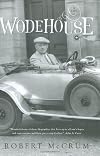
This book is best suited to researchers and truly obsessive Wodehouse fans. For those readers who have simply enjoyed a few Bertie and Jeeves or Psmith novels, this biography will be a struggle.
The problem is that PG Wodehouse was a person of rigid routine who had only a handful of interests (cricket, his old high school, pekinese dogs, and his own writing); he was also a workaholic. This makes for pretty dull reading, but the author did his best with it and managed to wring a real show more doorstopper out of it all. We learn how many words Wodehouse writes per day, how many words each book contains, how many words were written up in the initial plot outlines, and how many words had to be scratched out from the final copies of every book. Each year's articles, short stories, poems, Broadway show lyrics, script revisions, and books are faithfully reported. His daily routine is laid out in both short and long forms in 21 of the 26 chapters, even though this routine does not change for sixty years.
In fact, we learn a lot about the minutiae of Wodehouse's life without really learning much about the man himself. The overall picture is of a brilliant writer who saves everything for the page, leaving nothing for life itself. Affable and harmless, he comes off as rather simple-minded in this book. This last characteristic leads to the only interesting event in his life, the "Berlin Broadcasts", when he gave a series of radio broadcasts on Nazi radio during WWII. The biographer attempts to justify Wodehouse's conduct by claiming that he is "ill-equipped to deal with the challenge confronting him", and that when asked by friends-turned-Nazis to do the broadcasts Wodehouse "behaved as he always did when confronted by difficult or complex choices, which was to let others take care of the arrangements" (p. 304). For my part, I take the side of Harold Nicolson, who wrote, "I resent the theory that 'poor old P.G. is so innocent that he is not responsible'" (p. 316). It was hard to look at this episode with my modern eyes and feel anything but incredulity at Wodehouse's conduct, and rightly or not it did sour me towards him. As much as the previous chapters had been a slog, at least I was on his side. Afterwards and all throughout the rest of the book I wasn't sure if I liked him at all. show less
The problem is that PG Wodehouse was a person of rigid routine who had only a handful of interests (cricket, his old high school, pekinese dogs, and his own writing); he was also a workaholic. This makes for pretty dull reading, but the author did his best with it and managed to wring a real show more doorstopper out of it all. We learn how many words Wodehouse writes per day, how many words each book contains, how many words were written up in the initial plot outlines, and how many words had to be scratched out from the final copies of every book. Each year's articles, short stories, poems, Broadway show lyrics, script revisions, and books are faithfully reported. His daily routine is laid out in both short and long forms in 21 of the 26 chapters, even though this routine does not change for sixty years.
In fact, we learn a lot about the minutiae of Wodehouse's life without really learning much about the man himself. The overall picture is of a brilliant writer who saves everything for the page, leaving nothing for life itself. Affable and harmless, he comes off as rather simple-minded in this book. This last characteristic leads to the only interesting event in his life, the "Berlin Broadcasts", when he gave a series of radio broadcasts on Nazi radio during WWII. The biographer attempts to justify Wodehouse's conduct by claiming that he is "ill-equipped to deal with the challenge confronting him", and that when asked by friends-turned-Nazis to do the broadcasts Wodehouse "behaved as he always did when confronted by difficult or complex choices, which was to let others take care of the arrangements" (p. 304). For my part, I take the side of Harold Nicolson, who wrote, "I resent the theory that 'poor old P.G. is so innocent that he is not responsible'" (p. 316). It was hard to look at this episode with my modern eyes and feel anything but incredulity at Wodehouse's conduct, and rightly or not it did sour me towards him. As much as the previous chapters had been a slog, at least I was on his side. Afterwards and all throughout the rest of the book I wasn't sure if I liked him at all. show less

This is an interesting thesis, interspersed with personal recollection and ongoing discussion of Shakespeare's relevance to later times.
The books takes a generally chronological approach to Shakespeare's literary output, The general idea is that Shakespeare wrote during times of great upheaval and disruption. That sense of either reflecting or providing an antidote to his times is partly why he resonates today. The turmoil can reflect turmoil of a different time and place, or the bucolic show more can provide a contrast and comfort. The idea that at certain times different plays rise and fall in popularity was quite startling to me.
I'm not sure I followed the entire line of argument, I listened to this and it took me at least a month of commutes to finish it, which was maybe too long. Having said that, A plan to listen to more Shakespeare has already resulted in a couple of library reservations being placed - watch this space. show less
The books takes a generally chronological approach to Shakespeare's literary output, The general idea is that Shakespeare wrote during times of great upheaval and disruption. That sense of either reflecting or providing an antidote to his times is partly why he resonates today. The turmoil can reflect turmoil of a different time and place, or the bucolic show more can provide a contrast and comfort. The idea that at certain times different plays rise and fall in popularity was quite startling to me.
I'm not sure I followed the entire line of argument, I listened to this and it took me at least a month of commutes to finish it, which was maybe too long. Having said that, A plan to listen to more Shakespeare has already resulted in a couple of library reservations being placed - watch this space. show less
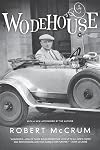
As a writer, P.G. Wodehouse was something of a Jeeves, his most famous character. He came up with outrageous solutions to outrageous problems. He even out-jeeved Jeeves by inventing the problems in the first place. Wodehouse said his novels usually began with an absurd situation. Then he just had to figure out a way to get his characters into that situation and out of it again by the last page.
Otherwise Wodehouse was more like Lord Emsworth (Clarence) of his Blandings novels, the character show more he most identified with according to Robert McCrum, author of the superb 2004 biography “Wodehouse.” Clarence gives every appearance of being a befuddled old man. Actually he is just preoccupied. The only thing he cares to think about is his prize-winning pig, the Empress of Blandings. On that subject he is always alert, always on top of things. Everything else just goes over his head. Wodehouse was that way. It was his writing that drew his focus. Most everything else he preferred to let his wife, agent or somebody else handle for him. When his wife gave parties, he would make a brief appearance, then suddenly disappear to return to his work.
It was this Lord Emsworth quality that led to the biggest crisis of Wodehouse's life, to which McCrumb devotes several chapters. Wodehouse was living in France when the Germans invaded early in World War II. He made no attempt to leave, although in fairness it should be noted that many other British citizens also stayed in France, assuming the Germans would be stopped just as they were in the first war.
The Nazis kept coming, however, and Wodehouse was soon their prisoner. Wodehouse being Wodehouse, he kept writing his funny stories and making light of a bad situation. When the Nazis, recognizing his propaganda value, offered him his release in exchange for doing a series of radio broadcasts, the writer viewed it as an opportunity to connect with his fans and assure them he was alright. In Great Britain especially, many saw it as betrayal, a collaboration with the enemy.
Wodehouse lived in the United States for the remainder of his long life, never returning to England because of his shame and, for many years, fear of prosecution. He was eventually knighted, but by then he was too old to travel and probably would not have returned to his home country even if he could have.
Most of the biography, if not as light as Wodehouse's novels, is at least lighter than most biographies. McCrumb describes the plots of much of his best work, and so much of his work was terrific. For about 70 years he was an important writer, not just of books but also of short stories, pieces for magazines and newspapers and even Broadway plays and Hollywood movies. For a number of years, in fact, his was one of the biggest names on Broadway, teaming with the likes of Jerome Kern and George Gershwin. His books remain in print and loved around the world. I have seen a couple of his musicals performed in recent years, and they are still entertaining.
Even though Wodehouse remained productive while a Nazi prisoner, for about five years after the war he found it difficult coming up with anything funny. Eventually he put his embarrassment behind him. Wodehouse fans would be kind to do likewise. show less
Otherwise Wodehouse was more like Lord Emsworth (Clarence) of his Blandings novels, the character show more he most identified with according to Robert McCrum, author of the superb 2004 biography “Wodehouse.” Clarence gives every appearance of being a befuddled old man. Actually he is just preoccupied. The only thing he cares to think about is his prize-winning pig, the Empress of Blandings. On that subject he is always alert, always on top of things. Everything else just goes over his head. Wodehouse was that way. It was his writing that drew his focus. Most everything else he preferred to let his wife, agent or somebody else handle for him. When his wife gave parties, he would make a brief appearance, then suddenly disappear to return to his work.
It was this Lord Emsworth quality that led to the biggest crisis of Wodehouse's life, to which McCrumb devotes several chapters. Wodehouse was living in France when the Germans invaded early in World War II. He made no attempt to leave, although in fairness it should be noted that many other British citizens also stayed in France, assuming the Germans would be stopped just as they were in the first war.
The Nazis kept coming, however, and Wodehouse was soon their prisoner. Wodehouse being Wodehouse, he kept writing his funny stories and making light of a bad situation. When the Nazis, recognizing his propaganda value, offered him his release in exchange for doing a series of radio broadcasts, the writer viewed it as an opportunity to connect with his fans and assure them he was alright. In Great Britain especially, many saw it as betrayal, a collaboration with the enemy.
Wodehouse lived in the United States for the remainder of his long life, never returning to England because of his shame and, for many years, fear of prosecution. He was eventually knighted, but by then he was too old to travel and probably would not have returned to his home country even if he could have.
Most of the biography, if not as light as Wodehouse's novels, is at least lighter than most biographies. McCrumb describes the plots of much of his best work, and so much of his work was terrific. For about 70 years he was an important writer, not just of books but also of short stories, pieces for magazines and newspapers and even Broadway plays and Hollywood movies. For a number of years, in fact, his was one of the biggest names on Broadway, teaming with the likes of Jerome Kern and George Gershwin. His books remain in print and loved around the world. I have seen a couple of his musicals performed in recent years, and they are still entertaining.
Even though Wodehouse remained productive while a Nazi prisoner, for about five years after the war he found it difficult coming up with anything funny. Eventually he put his embarrassment behind him. Wodehouse fans would be kind to do likewise. show less
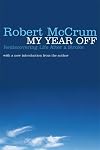
Having suffered a stroke myself, aged 27 (half a lifetime ago), this book was particularly interesting and poignant. It took me back to my own struggles, physical and psychological, and the devastating effect it had on not only my life but my husband of 7 months. McCrum was one of the lucky ones - his marriage survived, but as he observed many don't and mine was one of those. However I was (am) fortunate that my physical recovery was about 95% - though no thanks to the NHS: in hospital for show more nearly 4 weeks then kicked out and left to my own devices to relearn to walk, talk and write. Could I drive? When should I return to work? What should I expect as I recover? As a private patient, McCrum's experience here was very different as he is well aware, but he describes so much that I remember: the inability to get a limb to respond, the enormous tiredness, the anger and frustration, the very great self-involvement.
I intend to recommend this book to my GP for any stroke patients she might have. Although it is particularly relevant to "young strokes" and their friends, family and carers, there is much that will inform anyone who has anything to do with stroke victims of any age. show less
I intend to recommend this book to my GP for any stroke patients she might have. Although it is particularly relevant to "young strokes" and their friends, family and carers, there is much that will inform anyone who has anything to do with stroke victims of any age. show less
Lists
Awards


You May Also Like


Associated Authors
Statistics
- Works
- 26
- Also by
- 3
- Members
- 4,173
- Popularity
- #6,034
- Rating
- 3.8
- Reviews
- 65
- ISBNs
- 144
- Languages
- 8