

Joan Lingard (1932–2022)
Author of Across the Barricades
About the Author
Image credit: via Goodreads
Series
Works by Joan Lingard
Associated Works
The Other voice : Scottish women's writing since 1808 : an anthology (1988) — Contributor — 10 copies
Tagged
Common Knowledge
- Legal name
- Lingard, Joan Amelia
- Birthdate
- 1932-04-23
- Date of death
- 2022-07-12
- Gender
- female
- Education
- Strandtown Primary School
Bloomfield Collegiate
Edinburgh University - Occupations
- primary school teacher
novelist - Awards and honors
- Order of the British Empire (Member, 1998)
- Nationality
- UK
- Birthplace
- Edinburgh, Scotland, UK
- Places of residence
- Edinburgh, Scotland, UK
Belfast, Northern Ireland, UK
Cheshire, England, UK - Associated Place (for map)
- UK
Members
Reviews
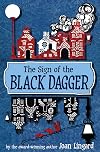
The Sign of the Black Dagger reads rather like A Wrinkle in Time, A Pattern of Roses, The Lion, the Witch, and the Wardrobe, or The Children of Green Knowe, just a soupçon of an old-timey feel despite the book’s mention of cellphones and answering machines. Created by the rich language perhaps? Or the nostalgic plot in which modern-day children learn of the doings of their own ancestors as children? I actually checked to see if the book was a re-issue of something from the 1950s or 1960s! show more (It’s not.) I think, if anything, that vague sense of nostalgia made me love The Sign of the Black Dagger all the more.
I promise not to give too much away. Modern-day twins Will and Lucy Cunningham become quite frightened when their feckless father Ranald does not come home from work — especially as a rather nasty man is trying to track him down. Soon thereafter they discover a journal from 1796 hidden in the fireplace wall of their ancient Edinburgh home. The journal was written by yet another pair of twins, William and Louisa Cunningham, whose own father was named, yes, Ranald; this Ranald, equally impractical and improvident as his descendent, also runs into some trouble. Could these two events, separated by two centuries, be related? And what is the meaning of the Black Dagger, found both on the cover of the journal and in the modern-day Ranald’s doodles?
Author Joan Lingard had me from the very first page. Like A Pattern of Roses, The Lion, the Witch, and the Wardrobe, and the other children’s classics mentioned above, The Sign of the Black Dagger will appeal to discerning adults who love a good and well-written yarn. Highly recommended.
In the interest of full disclosure, I received this book from NetGalley and Myrick Marketing & Media, LLC, in exchange for an honest review. show less
I promise not to give too much away. Modern-day twins Will and Lucy Cunningham become quite frightened when their feckless father Ranald does not come home from work — especially as a rather nasty man is trying to track him down. Soon thereafter they discover a journal from 1796 hidden in the fireplace wall of their ancient Edinburgh home. The journal was written by yet another pair of twins, William and Louisa Cunningham, whose own father was named, yes, Ranald; this Ranald, equally impractical and improvident as his descendent, also runs into some trouble. Could these two events, separated by two centuries, be related? And what is the meaning of the Black Dagger, found both on the cover of the journal and in the modern-day Ranald’s doodles?
Author Joan Lingard had me from the very first page. Like A Pattern of Roses, The Lion, the Witch, and the Wardrobe, and the other children’s classics mentioned above, The Sign of the Black Dagger will appeal to discerning adults who love a good and well-written yarn. Highly recommended.
In the interest of full disclosure, I received this book from NetGalley and Myrick Marketing & Media, LLC, in exchange for an honest review. show less

"All they want to do is take walks, hold hands . . . but Sadie is Protestant and Kevin is Catholic, and in Northern Ireland those two don't mix" was the tag line to the Scholastic Book Club (or a similar one) in the late 70's. It captures the essence of this book, as it is not just the threat of bombings and the British Army that puts barriers in their way, but their families and gossipy neighbors. "Did you see your Sadie recently?" is one conversation that begins, and involves parents, show more siblings, and neighbors into the lives of this young couple. Also described are the propaganda that parents learn in their Lodge or in their pubs about the other side, then throw back at their children or at one another in a fit of anger.
And the bombings and threats become very personal in this book, as do the instances of young boys running around practicing shooting one another. It's very chilling, and all not so long ago. And still relevant in so many instances. While it is considered a "young adult" novel, it is geared towards the "adult" in that phrase and presents a young reader with realities that others of their age have had to confront on a daily basis. show less
And the bombings and threats become very personal in this book, as do the instances of young boys running around practicing shooting one another. It's very chilling, and all not so long ago. And still relevant in so many instances. While it is considered a "young adult" novel, it is geared towards the "adult" in that phrase and presents a young reader with realities that others of their age have had to confront on a daily basis. show less
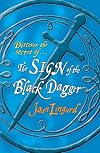
Interesting story set in Edinburgh where two sets of twins from the same family deal with the same issue separated by several years.
Half of the story is set in the present day (the book was published in 2005) and the other half is from a journal the twins, Lucy and Will, find in their house from 1796. Their mother works in the library and their father is a businessman who hasn't come home yet and doesn't appear when debt collectors turn up. The other story also has debt collectors but it's show more more complicated and there are debtors prisons involved. It's interesting to see the parallels. There's intrigues also with the Black Dagger Brotherhood in the past and in the end it all works out for both parties.
It's an interesting read and she does evoke Edinburgh quite well. show less
Half of the story is set in the present day (the book was published in 2005) and the other half is from a journal the twins, Lucy and Will, find in their house from 1796. Their mother works in the library and their father is a businessman who hasn't come home yet and doesn't appear when debt collectors turn up. The other story also has debt collectors but it's show more more complicated and there are debtors prisons involved. It's interesting to see the parallels. There's intrigues also with the Black Dagger Brotherhood in the past and in the end it all works out for both parties.
It's an interesting read and she does evoke Edinburgh quite well. show less

This is a book for young adults but it entertained me and I wanted to finish it and see what would happen. Since I recently read The Nightingale, I was more familiar with the role that France played during the German occupation during World War II and the French Resistance fighters. This knowledge helped me to understand the character of Grandfather. This book takes place in France about twenty years after the end of World War II. I wish maybe the book ended differently with possibly show more Grandfather finding forgiveness in his heart but perhaps that was asking too much. A very good book to discuss with young adult readers. show less
Lists
Awards


You May Also Like


Associated Authors
Statistics
- Works
- 70
- Also by
- 1
- Members
- 1,475
- Popularity
- #17,414
- Rating
- 3.6
- Reviews
- 19
- ISBNs
- 267
- Languages
- 8
- Favorited
- 1