
Hans Ørberg (1920–2010)
Author of Lingua Latina per se Illustrata, Pars 1: Familia Romana
About the Author
Image credit: Wikimedia Commons
Series
Works by Hans Ørberg
Grammatica Latina 15 copies
Lingua latina per se illustrata. Exercitia latina. Con espansione online. Per i Licei e gli Ist. magistrali (2013) 12 copies
Lingua Latina: (MAC OS X) CD-Rom of Familia Romana, Roma Aeterna, Excertia Latina I & II & Grammatica Latina (2006) 5 copies, 1 review
Lingua Latina: Menaechmi Ex Plauti Comoedia: Menaechmi Ex Plauti Comoedia (Latin Edition) (2001) 3 copies
Lingua Latina: Latine Audio (Audio CD ONLY) Chapters 1-10 only from "Familia Romana" (Latin Edition) (Pt. 1) (2005) 3 copies
Lingua Latina Vol. 1 3 copies
Lingua Latina Pars 1, Vol. 2 2 copies
Lingua Latina: Pars I, Volumen I 2 copies
Lingua latina per se illustrata. Exercitia latina. Per i Licei e gli Ist. magistrali. Cap. I-XXXV (Vol. 1) (2005) 2 copies
Lingua Latina 2 copies
Lingua latina per se illustrata. Pars I Familia Romana. Enchiridion discipulorum (cap. I-XXXV) 1 copy
Lingua latina per se illustrata. Latine doceo Guida per gli insegnanti. Parte I: Familia Romana 1 copy
Lingva Latina: Interactive Latin Course, Pars II: Roma Aeterna (PC) (Lingua Latina) (Latin Edition) (2005) 1 copy
Exercitia Latina I 1 copy
Lingua Latina Secundum Naturae Rationem Explicata - Exercitia Latina II (Cap. XXI-XXXV) (1977) 1 copy
Latin enligt naturmetoden 1 copy
Associated Works
Tagged
Common Knowledge
- Canonical name
- Ørberg, Hans
- Legal name
- Ørberg, Hans Henning
- Birthdate
- 1920-04-21
- Date of death
- 2010-02-17
- Gender
- male
- Education
- University of Copenhagen (MA|English, French and Latin|1946)
- Occupations
- linguist
teacher - Nationality
- Denmark
- Birthplace
- Store Andst, Denmark
- Places of residence
- Copenhagen, Denmark
- Place of death
- Grenå, Denmark
- Associated Place (for map)
- Denmark
Members
Reviews
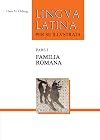
Although when one starts to work one's way through this Latin grammar and reader, it will seem like the Latin equivalent of "Dick and Jane" at first, this is by far the best introduction to Latin I've ever encountered. Orberg employs the Direct, or Natural Method of language instruction. Lingua Latina is entirely written in Latin. As the subtitle, "per se illustrata," states, this is Latin explained through itself. Through constant repetition, rephrasing, and the graduated addition of new show more and more complex grammar and vocabulary the student is immersed step by step in Latin. From the start you find yourself actually reading and understanding Latin without first having to translate the text into your native language, and without having first to memorize daunting paradigms of noun, pronoun, and adjective declensions and verb conjugations. You're having so much fun being able to understand Latin right from the get-go, you don't mind the "See Spot Run" simplicity of the first stories. The difference in using Orberg vs. traditional Latin grammars is the difference between reading with understanding right from the start and painstakingly decoding, as amother reviewer put it.
Most of the entertaining, simple stories, that Orberg wrote himself, center around a well-off Roman family and their household slaves. Through the adventures of the members of this household the reader is introduced to Roman life and culture, at least as Orberg understood it.
In addition to the stories, vocabulary and grammar are illuminated through notes (in Latin) and drawings in the margins. Each of the 35 chapters concludes with an easy to follow (Latin) explanation of the main grammar points introduced in the chapter, followed by three exercises. In the first, you just add the correct inflection to the words in the sentences; in the second, you add the correctly inflected words to the sentences; the third exercise is a series of questions about the story, that you answer by formulating your own Latin sentences. When you run into difficulty in completing the exercises, you learn what you don't know, and you can then go back and look up what you're confused about. These exercises can be done together with small groups of students in a classroom, or in a group of other Latin learners. In the back of the book are the usual, helpful paradigms of all the declensions and conjugations, the numerals, and all the vocabulary used in the text.
Start with this book if you want to learn Latin as painlessly as this difficult language can be learned. Orberg has also written a companion book of stories to those in the text, Colloquia Personarum. When you're ready to get into real Latin literature, Orberg has prepared a Pars II, which contains a graduated collection of classical Latin texts. show less
Most of the entertaining, simple stories, that Orberg wrote himself, center around a well-off Roman family and their household slaves. Through the adventures of the members of this household the reader is introduced to Roman life and culture, at least as Orberg understood it.
In addition to the stories, vocabulary and grammar are illuminated through notes (in Latin) and drawings in the margins. Each of the 35 chapters concludes with an easy to follow (Latin) explanation of the main grammar points introduced in the chapter, followed by three exercises. In the first, you just add the correct inflection to the words in the sentences; in the second, you add the correctly inflected words to the sentences; the third exercise is a series of questions about the story, that you answer by formulating your own Latin sentences. When you run into difficulty in completing the exercises, you learn what you don't know, and you can then go back and look up what you're confused about. These exercises can be done together with small groups of students in a classroom, or in a group of other Latin learners. In the back of the book are the usual, helpful paradigms of all the declensions and conjugations, the numerals, and all the vocabulary used in the text.
Start with this book if you want to learn Latin as painlessly as this difficult language can be learned. Orberg has also written a companion book of stories to those in the text, Colloquia Personarum. When you're ready to get into real Latin literature, Orberg has prepared a Pars II, which contains a graduated collection of classical Latin texts. show less
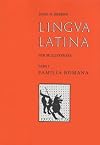
Absolutely excellent on all counts. One of the few Latin primers on the market that teaches the language as a language should be taught -- with the emphasis on extensive, coherent texts to read rather than arid paradigms to learn by heart. Naturally no language -- and especially not a language with as much grammatical complexity as Latin -- can be mastered without putting in one's fair share of rote learning, but this is one of the few texts that acknowledges, or even appears to care, that show more all such rote learning is not an end in itself, but a means to learn to read (and compose too, why not?) page after page of Latin and grasp their sense without having to translate them into one’s mother tongue.
Orberg’s text doesn’t contain a single word in any language other than Latin. This means that new vocabulary and grammatical constructions are explained by repetition, rephrasing, synonyms or antonyms, and illustration (the margins are liberally sprinkled with little explanatory drawings). As an added bonus, the text could be used without adaptation by teachers and students from any linguistic background, and they’ll enjoy it more and benefit more than from the average text that relies heavily on paradigms and translations. There’s just no excuse NOT to use a primer like this one, and Latin teachers everywhere and at all levels should take note. show less
Orberg’s text doesn’t contain a single word in any language other than Latin. This means that new vocabulary and grammatical constructions are explained by repetition, rephrasing, synonyms or antonyms, and illustration (the margins are liberally sprinkled with little explanatory drawings). As an added bonus, the text could be used without adaptation by teachers and students from any linguistic background, and they’ll enjoy it more and benefit more than from the average text that relies heavily on paradigms and translations. There’s just no excuse NOT to use a primer like this one, and Latin teachers everywhere and at all levels should take note. show less
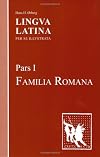
This was a pretty good book to work with when I was taking Latin classes. It's fairly easy to use, at least with my experience, there's a little dictionary that comes with it with basic Latin to English words that I do recommend you also get as this book is in Latin only.

"Roma in Italia est. Italia in Europa est." And so it goes. Before you know it you are reading Latin without so much as a word of English explanation. Dozens of clear, attractive pictures in headings and margins do their bit to help, but it's mainly the clarity and logic of the presentation that makes this such an amazing text. Even the grammar is explained, understandably, in Latin.
Lists
You May Also Like


Associated Authors
Statistics
- Works
- 68
- Also by
- 1
- Members
- 2,949
- Popularity
- #8,664
- Rating
- 4.5
- Reviews
- 9
- ISBNs
- 86
- Languages
- 4
- Favorited
- 5