
Maurice Balme (1925–2012)
Author of Athenaze: An Introduction to Ancient Greek: Book I
About the Author
Image credit: via The Telegraph (UK)
Series
Works by Maurice Balme
Associated Works
Tagged
Common Knowledge
- Canonical name
- Balme, Maurice
- Legal name
- Balme, Maurice George
- Birthdate
- 1925-10-22
- Date of death
- 2012-12-07
- Gender
- male
- Education
- Trinity College, Oxford (BA)
Marlborough College - Occupations
- Classics scholar
- Organizations
- Harrow School
Charterhouse School
Radley College
Royal Marines (WWII) - Short biography
- Maurice Balme, who died in December 2012, played a major role in ensuring the survival of Classics as a significant subject in school and university curricula. Oxford and Cambridge dropped Latin as a compulsary entry qualification in 1960. Balme, a master at Harrow for 33 years, with his colleague Mark Warman immediately published Aestimanda (Up for discussion), which took Greek and Latin extracts and presented them as subjects for literary debate, directly increasing the appreciation of classical literature within everyday classroom teaching. Balme was also instrumental in changing Classical teaching methods: in the 1960s he was a major contributor to the Cambridge Latin Course, while he also created the beginners' Greek course, Athenaze (To Athens) - a grammatically based reading course published by OUP with a diverting narrative set in the fifth century BC. Athenaze is now the world's best selling Greek course. A subsequent collaboration with James Morwood resulted in The Oxford Latin Course.
- Nationality
- UK
- Associated Place (for map)
- UK
Members
Discussions
Found: Latin "textbook" with comics in Name that Book (May 2025)
Reviews

Good old Dicaeopolis! Lazy Xanthias! Brave Philip! How we students enjoyed snickering at the "Dick and Jane" approach to classical Greek that is to be found in this introductory text, and what an effective teaching tool it turned out to be...
This was the book used in the beginning Greek class I took in college, Book I the first semester, and Book II the second. Each unit contains a list of vocabulary, a text in Greek, a Word Study, a section on Grammar, and a list of exercises. Taken show more sequentially, the texts tell the story of Attic farmer Dicaeopolis and his family, living in Greece at the beginning of the Peloponnesian War. Interspersed throughout are various passages explaining some of the cultural background of the story. This first volume has 16 units, each divided into two lessons. The book also contains a reference grammar at the back , a brief dictionary, and an index.
These books are ideally suited, I think, for introducing students to this ancient language. They allow one to jump into textual passages right from the beginning, even though very little grammar or vocabulary has been learned. While I can think of any number of things more interesting than Dicaeopolis digging stones out of a field, it would be impossible to jump right into Homer, Plato, or any of the other greats. Nor would it be especially pleasant to spend an entire year doing nothing but memorizing lists of vocabulary and tables of grammar paradigms. Here is a noble compromise: and though my classmates and I may have groaned, I look back now with nostalgic fondness... show less
This was the book used in the beginning Greek class I took in college, Book I the first semester, and Book II the second. Each unit contains a list of vocabulary, a text in Greek, a Word Study, a section on Grammar, and a list of exercises. Taken show more sequentially, the texts tell the story of Attic farmer Dicaeopolis and his family, living in Greece at the beginning of the Peloponnesian War. Interspersed throughout are various passages explaining some of the cultural background of the story. This first volume has 16 units, each divided into two lessons. The book also contains a reference grammar at the back , a brief dictionary, and an index.
These books are ideally suited, I think, for introducing students to this ancient language. They allow one to jump into textual passages right from the beginning, even though very little grammar or vocabulary has been learned. While I can think of any number of things more interesting than Dicaeopolis digging stones out of a field, it would be impossible to jump right into Homer, Plato, or any of the other greats. Nor would it be especially pleasant to spend an entire year doing nothing but memorizing lists of vocabulary and tables of grammar paradigms. Here is a noble compromise: and though my classmates and I may have groaned, I look back now with nostalgic fondness... show less

I look upon Balme & Lawall's introductory classical Greek text, Athenaze, as a single work that happens to be published in two volumes. Nothing expresses my feelings about Book II better than my review of Book I, which I have duplicated below (with some minor adjustments):
Good old Dicaeopolis! Lazy Xanthias! Brave Philip! How we students enjoyed snickering at the "Dick and Jane" approach to classical Greek that is to be found in this introductory text, and what an effective teaching tool it show more turned out to be...
This was the book used in the beginning Greek class I took in college, Book I the first semester, and Book II the second. Each unit contains a list of vocabulary, a text in Greek, a Word Study, a section on Grammar, and a list of exercises. Taken sequentially, the texts tell the story of Attic farmer Dicaeopolis and his family, living in Greece at the beginning of the Peloponnesian War. Interspersed throughout are various passages explaining some of the cultural background of the story. This second volume has 15 units, each divided into two lessons. The book also contains a reference grammar at the back , a brief dictionary, and an index.
These books are ideally suited, I think, for introducing students to this ancient language. They allow one to jump into textual passages right from the beginning, even though very little grammar or vocabulary has been learned. While I can think of any number of things more interesting than Dicaeopolis digging stones out of a field, it would be impossible to jump right into Homer, Plato, or any of the other greats. Nor would it be especially pleasant to spend an entire year doing nothing but memorizing lists of vocabulary and tables of grammar paradigms. Here is a noble compromise: and though my classmates and I may have groaned, I look back now with nostalgic fondness. show less
Good old Dicaeopolis! Lazy Xanthias! Brave Philip! How we students enjoyed snickering at the "Dick and Jane" approach to classical Greek that is to be found in this introductory text, and what an effective teaching tool it show more turned out to be...
This was the book used in the beginning Greek class I took in college, Book I the first semester, and Book II the second. Each unit contains a list of vocabulary, a text in Greek, a Word Study, a section on Grammar, and a list of exercises. Taken sequentially, the texts tell the story of Attic farmer Dicaeopolis and his family, living in Greece at the beginning of the Peloponnesian War. Interspersed throughout are various passages explaining some of the cultural background of the story. This second volume has 15 units, each divided into two lessons. The book also contains a reference grammar at the back , a brief dictionary, and an index.
These books are ideally suited, I think, for introducing students to this ancient language. They allow one to jump into textual passages right from the beginning, even though very little grammar or vocabulary has been learned. While I can think of any number of things more interesting than Dicaeopolis digging stones out of a field, it would be impossible to jump right into Homer, Plato, or any of the other greats. Nor would it be especially pleasant to spend an entire year doing nothing but memorizing lists of vocabulary and tables of grammar paradigms. Here is a noble compromise: and though my classmates and I may have groaned, I look back now with nostalgic fondness. show less

This slender title is the teacher's companion to the first volume of the Athenaze text on ancient Greek, and contains the answers to that book's questions and exercises, as well as some helpful hints for the instructor.
The utility of such a book for teachers need hardly be commented upon. But this companion to the Athenaze text on ancient Greek is also of value to the independent student, or someone (like me), who returns to their studies after a significant absence, and wishes to review show more some basics before progressing to the next level. show less
The utility of such a book for teachers need hardly be commented upon. But this companion to the Athenaze text on ancient Greek is also of value to the independent student, or someone (like me), who returns to their studies after a significant absence, and wishes to review show more some basics before progressing to the next level. show less
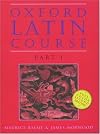
The Oxford Latin Course is fairly well-regarded, and for the most part it served me well. It does, however, rely heavily on the presence of an experienced teacher to guide the student, as it does not always explain everything sufficiently (to my mind). Its dictionary of terms in the back is also severely lacking and must be supplemented by outside sources. Finally, it keeps the student carefully blind, parsing out knowledge in tiny bits, which I personally found extremely aggravating. With show more these reservations, however, it is a useful course, and its grammar tables are well-organized. show less
You May Also Like


Associated Authors
Statistics
- Works
- 34
- Also by
- 3
- Members
- 3,593
- Popularity
- #7,052
- Rating
- 3.6
- Reviews
- 18
- ISBNs
- 58
- Languages
- 4