
Frederic M. Wheelock (1902–1987)
Author of Wheelock's Latin
About the Author
Works by Frederic M. Wheelock
Tagged
Common Knowledge
- Canonical name
- Wheelock, Frederic M.
- Legal name
- Wheelock, Frederic Melvin
- Birthdate
- 1902-09-19
- Date of death
- 1987-10-29
- Gender
- male
- Education
- Harvard University (BA|1925|MA|Ph.D)
- Occupations
- professor
classicist - Organizations
- University of Toledo
American Classical League
American Philological Association - Short biography
- Dr. Frederic M. Wheelock, a retired classics professor who had taught at Brooklyn College and City College, died of a heart attack on Oct. 29 at Sharon (Conn.) Hospital. He was 85 years old and lived in Kent, Conn.
Dr. Wheelock taught at the two colleges from 1938 to 1952, when he moved to Cazenovia Junior College in Cazenovia, N.Y., then to the Darrow School in New Lebanon, N.Y., and finally to the University of Toledo. He was the author of several books on Latin, the most recent of which was ''Quintilian As Educator.''
He was born in Lawrence, Mass., and graduated cum laude in 1925 from Harvard University, where he later earned master's and doctorate degrees.
From the NY Times Obituary. - Cause of death
- heart attack
- Nationality
- USA
- Birthplace
- Lawrence, Massachusetts, USA
- Places of residence
- Kent, Connecticut, USA
- Place of death
- Sharon, Connecticut, USA
- Associated Place (for map)
- Connecticut, USA
Members
Reviews
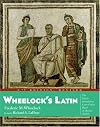
For generations of American students, "Wheelock's" is the Latin textbook they remember from their schoolyard days. And indeed, if you had a charismatic teacher who could convey his/her love of the language, these 40 chapters contain almost everything you'd need to know about the language. But if your teacher is mediocre, your extracurricular syllabus is annoying, or if you're learning on your own... you'll need a bit of backup.
The more I use Wheelock's, the more I acknowledge that it's a show more damn thorough textbook. If you read each chapter in detail, and do all the exercises (both in the chapter, in the supplements, and preferably in the additional Exercise Book) you should have a thorough grounding of how to use Latin. The book features edited excerpts from real Roman texts in each chapter, so you also get a sense of the variety of usage when the language is actually placed in context.
If there are problems, they're simply that this isn't the most innovative of texts. It's a top-down approach, itemising a few grammatical concepts each chapter and then parading examples in front of you. The examples use the same nouns over and over again, which helps to cement your focus on the grammatical item du jour, but makes things a little repetitive for sure. It's rote learning (which, don't mistake me, is necessary for an inflected language like Latin) but it relies so much on a passionate teacher. This is probably why many kids come out of school with dreary memories of their Latin classroom!
I highly recommend the enjoyable, narrative-based Cambridge Latin Course (which, to my mind, introduces the concepts in a more logical sequence) or - if you're an adult learner on your own - Reading Latin, by Peter V. Jones, which focuses on translation. They're both far more immersive in both Roman culture and the language, and will be a lot more fun. At the same time, I've finally committed to doing the Wheelock, and I must admit it works well. I'd probably recommend a combination of any 2 of the above. If you're going with the Wheelock, I recommend finding Dale Grote's companion book, or even his lectures which can sometimes be found on line. He goes through all of the supplementary questions and details how the language works. It's a thoroughly engaging way to approach Wheelock. On your own, you may have the concepts down, but it's a heady tome that offers little in the way of mental stimulation.
I realise this is an ambiguous review (particularly when I've gone with 4-stars!). I guess in closing: Wheelock's is a textbook best as a support to either the Cambridge or Reading Latin. At the same time, its generous use of real Latin, combined with 40 chapters of thorough material, means that a seriously committed student will take a lot away from it. It's a shame so many kids these days are taught by underwhelmed literature teachers or dull curricula from the '70s! show less
The more I use Wheelock's, the more I acknowledge that it's a show more damn thorough textbook. If you read each chapter in detail, and do all the exercises (both in the chapter, in the supplements, and preferably in the additional Exercise Book) you should have a thorough grounding of how to use Latin. The book features edited excerpts from real Roman texts in each chapter, so you also get a sense of the variety of usage when the language is actually placed in context.
If there are problems, they're simply that this isn't the most innovative of texts. It's a top-down approach, itemising a few grammatical concepts each chapter and then parading examples in front of you. The examples use the same nouns over and over again, which helps to cement your focus on the grammatical item du jour, but makes things a little repetitive for sure. It's rote learning (which, don't mistake me, is necessary for an inflected language like Latin) but it relies so much on a passionate teacher. This is probably why many kids come out of school with dreary memories of their Latin classroom!
I highly recommend the enjoyable, narrative-based Cambridge Latin Course (which, to my mind, introduces the concepts in a more logical sequence) or - if you're an adult learner on your own - Reading Latin, by Peter V. Jones, which focuses on translation. They're both far more immersive in both Roman culture and the language, and will be a lot more fun. At the same time, I've finally committed to doing the Wheelock, and I must admit it works well. I'd probably recommend a combination of any 2 of the above. If you're going with the Wheelock, I recommend finding Dale Grote's companion book, or even his lectures which can sometimes be found on line. He goes through all of the supplementary questions and details how the language works. It's a thoroughly engaging way to approach Wheelock. On your own, you may have the concepts down, but it's a heady tome that offers little in the way of mental stimulation.
I realise this is an ambiguous review (particularly when I've gone with 4-stars!). I guess in closing: Wheelock's is a textbook best as a support to either the Cambridge or Reading Latin. At the same time, its generous use of real Latin, combined with 40 chapters of thorough material, means that a seriously committed student will take a lot away from it. It's a shame so many kids these days are taught by underwhelmed literature teachers or dull curricula from the '70s! show less
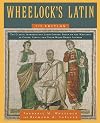
My review of the 6th edition of Wheelock's was ambivalently positive and I would say my feelings about the 7th are cautiously joyous.
This textbook was designed so that, in a sense, any teacher can teach Latin. It's comprehensive, straightforward, and treats the language rather like a maths textbook, with the formulas, the practice equations, and the answer key. For schools just wanting to teach the language and get the students through the exam, great. But, paradoxically, to instill a love show more of Latin using this method requires not just any teacher, but a passionate and well-read teacher. For this reason, I will probably always prefer the Cambridge Course with its broader emphasis on history and culture, and its narrative-based lesson style.
But those complaints are clearly personal biases, and shouldn't be taken too seriously! This is a wonderfully comprehensive first-year coursebook. The inclusion of "real" Latin from so early in the course has a beneficial impact. There are now five other books in the series that serve as adjacent texts - the student workbook, the "38 Latin Stories" (simple tales for in-class dissection), "Scribblers, Sculptors and Scribes" (providing real Latin from a variety of sources keyed to the chapters here), Grote's Guide (for students to solve thorny problems), and the Reader (for students who have completed the course) - and you can't go wrong. And the light-heartedness evident throughout (even if it's in a "dad joke" kind of way) is appreciated.
I will note that this still isn't a textbook for self-learning. Sure, you can pick up everything using this (especially if you buy the teacher's answer key from the publisher) but you'll lose it again without a classroom setting for constant drills and the enjoyment of Roman culture that comes with that. Caveat emptor, is all I'm saying!
A vibrant refresh of a classic textbook. show less
This textbook was designed so that, in a sense, any teacher can teach Latin. It's comprehensive, straightforward, and treats the language rather like a maths textbook, with the formulas, the practice equations, and the answer key. For schools just wanting to teach the language and get the students through the exam, great. But, paradoxically, to instill a love show more of Latin using this method requires not just any teacher, but a passionate and well-read teacher. For this reason, I will probably always prefer the Cambridge Course with its broader emphasis on history and culture, and its narrative-based lesson style.
But those complaints are clearly personal biases, and shouldn't be taken too seriously! This is a wonderfully comprehensive first-year coursebook. The inclusion of "real" Latin from so early in the course has a beneficial impact. There are now five other books in the series that serve as adjacent texts - the student workbook, the "38 Latin Stories" (simple tales for in-class dissection), "Scribblers, Sculptors and Scribes" (providing real Latin from a variety of sources keyed to the chapters here), Grote's Guide (for students to solve thorny problems), and the Reader (for students who have completed the course) - and you can't go wrong. And the light-heartedness evident throughout (even if it's in a "dad joke" kind of way) is appreciated.
I will note that this still isn't a textbook for self-learning. Sure, you can pick up everything using this (especially if you buy the teacher's answer key from the publisher) but you'll lose it again without a classroom setting for constant drills and the enjoyment of Roman culture that comes with that. Caveat emptor, is all I'm saying!
A vibrant refresh of a classic textbook. show less
If the number of copies a person has of the same book is any indication, I probably should have given Wheelock 5 stars. I have 3 copies (one for home, one for my carrel and an extra!) I do have a personal fondness for Wheelock since it is the book I learned Latin with. I use it all the time when translating to look up grammar tid bits because I find it easy to use since I have worked with it for so long. I only rated it four stars because if I had never used it, however, I probably wouldn't show more like it as much. When I need it, I find the index to be not very useful. Since this a popular teach yourself textbook for Latin, I wish some of the exercises had answers in the back. I translate the sentences sometimes as a refresher, and being out of school I never have anyone to ask if I have a question, so translations to check against would be useful. show less
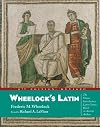
I love this book! I've taken Latin in several different settings, with a variety of curriculums, and this book is by far the best. The approach is intuitive and easy to grasp, and the lessons build on each other at a great pace for learning and retention. I rented the copy I've used this past semester, but I'm contemplating purchasing my own copy for future reference.
Lists
You May Also Like


Associated Authors
Statistics
- Works
- 8
- Members
- 5,776
- Popularity
- #4,267
- Rating
- 4.1
- Reviews
- 15
- ISBNs
- 21
- Languages
- 2
- Favorited
- 1