
Marcus Chown
Author of Quantum Theory Cannot Hurt You: A Guide to the Universe
About the Author
Formerly a radio astronomer at the California Institute of Technology in Pasadena, Marcus Chown is cosmology consultant of New Scientist. His books include The Ascent of Gravity (named the Sunday Times 2017 Science Book of the Year), What A Wonderful World, Quantum Theory Cannot Hurt You, and We show more Need to Talk About Kelvin. show less
Image credit: Jeff Fletcher. Courtesy of Allen & Unwin.
Works by Marcus Chown
Solar System: A Visual Exploration of All the Planets, Moons and Other Heavenly Bodies that Orbit Our Sun (2011) 233 copies, 9 reviews
We Need to Talk About Kelvin: What Everyday Things Tell Us About the Universe (2009) 223 copies, 6 reviews
The Never-Ending Days of Being Dead: Dispatches from the Front Line of Science (2007) 172 copies, 2 reviews
Afterglow of Creation: From the Fireball to the Discovery of Cosmic Ripples (1993) 146 copies, 2 reviews
The Ascent of Gravity: The Quest to Understand the Force that Explains Everything (2017) 141 copies, 8 reviews
Infinity in the Palm of Your Hand: Fifty Wonders That Reveal an Extraordinary Universe (2018) 104 copies, 3 reviews
Tweeting the Universe: Very Short Courses on Very Big Ideas. Marcus Chown, Govert Schilling (2011) 36 copies, 1 review
The One Thing You Need to Know: The Simple Way to Understand the Most Important Ideas in Science (2023) 33 copies, 1 review
A Crack in Everything: How Black Holes Came in from the Cold and Took Cosmic Centre Stage (2025) 27 copies, 2 reviews
Breakthrough: Spectacular stories of scientific discovery from the Higgs particle to black holes (2021) 13 copies, 1 review
Infinity in the Palm of Your Hand: Fifty Wonders That Reveal an Extraordinary Universe (2020) 13 copies
Big Bang: A Ladybird Expert Book: Discover how the universe began (Ladybird Expert Series) (2018) 10 copies
El instante mágico: Los diez descubrimientos asombrosos que cambiaron la historia de la ciencia (2021) 10 copies
Solar System 2016 Calendar: A Visual Exploration of the Planets, Moons and Other Heavenly Bodies That Orbit Our Sun (2015) 1 copy
Solar System 1 2 3 1 copy
La voce dello spazio 1 copy
Lo que necesitas saber 1 copy
Associated Works
Tagged
Common Knowledge
- Birthdate
- 1959-06-09
- Gender
- male
- Education
- University of London
California Institute of Technology - Occupations
- Cosmology consultant
science writer
journalist
broadcaster - Organizations
- New Scientist (contributor)
- Nationality
- UK
- Birthplace
- London, England, UK
- Associated Place (for map)
- England, UK
Members
Reviews
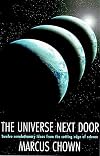
A good old fashioned romp through some of the daftest things that might just actually be true. All those silly things you have heard cosmologists, physicists and trekkies talking about are covered here for you in an easy to understand and fun style.
Impress the geeks in your life and confuse the crap out of everybody else with tales of immortality, multiple realities and alien fly tipping.
Enormously good fun - just not long enough.
Impress the geeks in your life and confuse the crap out of everybody else with tales of immortality, multiple realities and alien fly tipping.
Enormously good fun - just not long enough.
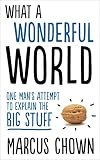
The thing about What a Wonderful World is that it is like a fruitcake – very rich, very dense, and full of tasty little nuggets. For instance, did you know that the invention of cookery was a milestone on a par with tool use? It allowed us to broaden our diets in prehistory, and any ecologist will tell you what access to good nutrition will do for any animal. Or that galaxies are organized, and indeed possibly even created, by the giant black holes at their centre?
What a Wonderful World is show more a digest, if you like, about the construction and function of practically everything – the cells in your body, the Earth itself, international banking, quantum theory, sex, Deep Time – the list goes on. It’s something that you dip into when you’re in the right mood, but when you are it’s consistently interesting and rewarding and represents a considerable body of scholarship and research which has been dissected to the point where you can be gently guided through its more fascinating corners. The image of a “plate graveyard” at the centre of the Earth where tectonic plates drift down to die still lingers in the imagination, and as I am not particularly driven to seek out books on plate tectonics, its something that I might, in the normal course of things, never have learned anything about.
It’s also deeply topical in places (see the section on international banking, for one). There’s a great discussion on the eminently newsworthy topic of inflation in relation to the Big Bang (I only received this book last year, and inflation is described within, quite carefully, as a theory). As a writer interested in the idea of multiverses, there is a fantastic wealth of imaginative detail. Did you know that scientists have worked out how far you need to walk in order to meet your doppelganger in another universe? (Clue, it’s a long, long way, but you will meet them if you keep going.)
Sometimes I was a little lost, but that’s okay, because you feel in safe hands just following on.
I really enjoyed it – in the madness of house, job, and life move and the insane rush of mandatory reading that took up the earlier part of my year, this was a guilty pleasure I could dip into as Fate allowed. Though challenging in places, there is nothing a reasonably literate person couldn’t follow. I’d recommend it to anyone interested in learning more about the universe than the usual surface tropes. show less
What a Wonderful World is show more a digest, if you like, about the construction and function of practically everything – the cells in your body, the Earth itself, international banking, quantum theory, sex, Deep Time – the list goes on. It’s something that you dip into when you’re in the right mood, but when you are it’s consistently interesting and rewarding and represents a considerable body of scholarship and research which has been dissected to the point where you can be gently guided through its more fascinating corners. The image of a “plate graveyard” at the centre of the Earth where tectonic plates drift down to die still lingers in the imagination, and as I am not particularly driven to seek out books on plate tectonics, its something that I might, in the normal course of things, never have learned anything about.
It’s also deeply topical in places (see the section on international banking, for one). There’s a great discussion on the eminently newsworthy topic of inflation in relation to the Big Bang (I only received this book last year, and inflation is described within, quite carefully, as a theory). As a writer interested in the idea of multiverses, there is a fantastic wealth of imaginative detail. Did you know that scientists have worked out how far you need to walk in order to meet your doppelganger in another universe? (Clue, it’s a long, long way, but you will meet them if you keep going.)
Sometimes I was a little lost, but that’s okay, because you feel in safe hands just following on.
I really enjoyed it – in the madness of house, job, and life move and the insane rush of mandatory reading that took up the earlier part of my year, this was a guilty pleasure I could dip into as Fate allowed. Though challenging in places, there is nothing a reasonably literate person couldn’t follow. I’d recommend it to anyone interested in learning more about the universe than the usual surface tropes. show less
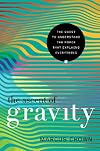
The Ascent of Gravity is a treat. It tells the story of what we know about gravity, based on the two biggest investigators of it. Marcus Chown has written a lively, engaging and often funny history of the most basic of scientific puzzles, one we still don’t have a handle on.
The book divides into two eras: Newton’s and Einstein’s. They both changed civilization forever with profound, non-intuitive, dramatic and elegant solutions. Newton’s challenge was overcoming entrenched show more superstition. Einstein’s challenge was overcoming Newton.
Newton made the concept of gravity scientific and real. He developed the math (calculus) to prove it. His determination that planets orbited in ellipses – and that he could prove it for one and all – shook science to its foundations. He was a solitary person, unable to socialize, unable to manage other people (he might have been an autistic genius). He waited 20 years before releasing his initial findings. His own mind gave him all the satisfaction he needed in life.
Einstein imagined his way to universal truths, and then had to prove Newton’s formulas wrong. In their stead, he showed that space and time were the same thing, that mass and energy were the same thing, and that the universe operates in four dimensions, not three.
Like space and time, gravity and acceleration are one. In order to understand gravity, you need to understand the effect of mass and acceleration on bodies. In Einstein’s universe, everything is capable of producing gravity, and does. This too is non-intuitive, but plugs unknowns and answers questions up and down the line. But not all.
Einstein was all about symmetry and elegant solutions. His formulas meant matter tells space-time how to warp. And warped space-time tells matter how to move. It took a long time for the world to understand what he was saying, and much longer still to prove it for themselves. Chown says: “Physicists scrawl arcane mathematical equations across blackboards but it is an enormous leap of faith to believe that nature really obeys those equations. It invariably comes as massive shock when it turns out nature really does.”
I love the way Chown will lay out all the logic and evidence necessary to prove a point, then follow with a one-line paragraph: “But he was wrong,” or “Only it didn’t.” (All right. It also is because I do the same thing, but seeing someone else do it drives home how engrossing this can be.) He also peppers the deeply serious with quotes from the likes of Douglas Adams, Terry Pratchett and Dave Barry, releasing the pressure of absorbing the often non-intuitive. It makes for a delightful rollercoaster of a read.
Chown describes the usual conundrums of quantum physics, where physicists can’t get their minds around things being both particles and waves, or how certain subatomic particles exhibit different (seemingly bizarre) properties at the quantum level. Numerous physicists have cutely stated that if you claim to understand quantum physics you are either lying or wrong. But I have no problem seeing that waves contain particles, and waves break out particles as needed. Similarly for many of the properties of quanta, it is self-evident to me that subatomic particles have very different properties when in a state of decoherence than when they are part of something bigger (coherence), like an atom. As I have said elsewhere, decoherence makes the world go round.
If you think about ants, they live an entire lifetime in a year, and the passing of time means nothing. So with Man on the scale of the universe. Man invented time, but it has no standing in the universe. For the universe there is no ticking, just being. It is part and parcel of space. For Man, the ant of the universe, his biology tells him there is a timeline, a lifetime, a history and a hurry. But this has no basis in the physics of the universe. It took an Einstein to break free of Man’s prejudice. Associating time with space opens minds to workings at the universe level, instead of the ant level we live in. On the other hand, Einstein might be wrong. Newton was.
This is the fifth book on the history of physics that I have reviewed. They all tell the same story, obviously, but Chown has developed a new angle, using gravity to frame developments. It works well, at least until the final section, today, where physicists around the world are spending their lives trying to out-Einstein Einstein. Like his theories, they raise more questions than they answer. Unlike his theories, not a single one of the new crop has the slightest hint of proof to its credit. For the moment, Einstein rules.
David Wineberg show less
The book divides into two eras: Newton’s and Einstein’s. They both changed civilization forever with profound, non-intuitive, dramatic and elegant solutions. Newton’s challenge was overcoming entrenched show more superstition. Einstein’s challenge was overcoming Newton.
Newton made the concept of gravity scientific and real. He developed the math (calculus) to prove it. His determination that planets orbited in ellipses – and that he could prove it for one and all – shook science to its foundations. He was a solitary person, unable to socialize, unable to manage other people (he might have been an autistic genius). He waited 20 years before releasing his initial findings. His own mind gave him all the satisfaction he needed in life.
Einstein imagined his way to universal truths, and then had to prove Newton’s formulas wrong. In their stead, he showed that space and time were the same thing, that mass and energy were the same thing, and that the universe operates in four dimensions, not three.
Like space and time, gravity and acceleration are one. In order to understand gravity, you need to understand the effect of mass and acceleration on bodies. In Einstein’s universe, everything is capable of producing gravity, and does. This too is non-intuitive, but plugs unknowns and answers questions up and down the line. But not all.
Einstein was all about symmetry and elegant solutions. His formulas meant matter tells space-time how to warp. And warped space-time tells matter how to move. It took a long time for the world to understand what he was saying, and much longer still to prove it for themselves. Chown says: “Physicists scrawl arcane mathematical equations across blackboards but it is an enormous leap of faith to believe that nature really obeys those equations. It invariably comes as massive shock when it turns out nature really does.”
I love the way Chown will lay out all the logic and evidence necessary to prove a point, then follow with a one-line paragraph: “But he was wrong,” or “Only it didn’t.” (All right. It also is because I do the same thing, but seeing someone else do it drives home how engrossing this can be.) He also peppers the deeply serious with quotes from the likes of Douglas Adams, Terry Pratchett and Dave Barry, releasing the pressure of absorbing the often non-intuitive. It makes for a delightful rollercoaster of a read.
Chown describes the usual conundrums of quantum physics, where physicists can’t get their minds around things being both particles and waves, or how certain subatomic particles exhibit different (seemingly bizarre) properties at the quantum level. Numerous physicists have cutely stated that if you claim to understand quantum physics you are either lying or wrong. But I have no problem seeing that waves contain particles, and waves break out particles as needed. Similarly for many of the properties of quanta, it is self-evident to me that subatomic particles have very different properties when in a state of decoherence than when they are part of something bigger (coherence), like an atom. As I have said elsewhere, decoherence makes the world go round.
If you think about ants, they live an entire lifetime in a year, and the passing of time means nothing. So with Man on the scale of the universe. Man invented time, but it has no standing in the universe. For the universe there is no ticking, just being. It is part and parcel of space. For Man, the ant of the universe, his biology tells him there is a timeline, a lifetime, a history and a hurry. But this has no basis in the physics of the universe. It took an Einstein to break free of Man’s prejudice. Associating time with space opens minds to workings at the universe level, instead of the ant level we live in. On the other hand, Einstein might be wrong. Newton was.
This is the fifth book on the history of physics that I have reviewed. They all tell the same story, obviously, but Chown has developed a new angle, using gravity to frame developments. It works well, at least until the final section, today, where physicists around the world are spending their lives trying to out-Einstein Einstein. Like his theories, they raise more questions than they answer. Unlike his theories, not a single one of the new crop has the slightest hint of proof to its credit. For the moment, Einstein rules.
David Wineberg show less
A Crack in Everything: How Black Holes Came in from the Cold and Took Cosmic Centre Stage by Marcus Chown
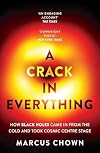
This book tells the history of black holes through a series of stories in 9 chapters and a summary. It starts with predictions, concepts and theories developed early in the 20th century (including by A. Einstein) that black hole exist, all the way to the identification, detection (gravitational waves), and actual proof and pictures in recent years. Black holes were initially seen as an oddity, an exception, something not to care too much about. Today black holes are seen as the essential show more building blocks of galaxies, its stars and down the road also life on earth. I did not know that each galaxy including ours (Milky Way) has a supermassive black hole at its center, and ours is particularly small compared to other galaxies which contributed to our current life on earth.
It was a fascinating read, although I did not get everything, and I got lost quite a few times, the author sometimes getting stuck on numerous details and long enumerations. But I made abstraction of this, and found the read overall very interesting. I appreciated the story telling in most of he chapters, it did not read like a scientific paper or text book at all. It also peaked my curiosity to understand more of (theoretical) cosmology, general relativity and space-time, quantum forces, the history and forming of the universe. I did end watching again the movie Insterstellar, it gave me a new perspective on the plot (except for the wormhole in the movie, which is not covered in the book as it is mostly a science fiction concept). show less
It was a fascinating read, although I did not get everything, and I got lost quite a few times, the author sometimes getting stuck on numerous details and long enumerations. But I made abstraction of this, and found the read overall very interesting. I appreciated the story telling in most of he chapters, it did not read like a scientific paper or text book at all. It also peaked my curiosity to understand more of (theoretical) cosmology, general relativity and space-time, quantum forces, the history and forming of the universe. I did end watching again the movie Insterstellar, it gave me a new perspective on the plot (except for the wormhole in the movie, which is not covered in the book as it is mostly a science fiction concept). show less
Lists
Awards


You May Also Like


Associated Authors
Statistics
- Works
- 37
- Also by
- 4
- Members
- 2,182
- Popularity
- #11,742
- Rating
- 3.7
- Reviews
- 56
- ISBNs
- 142
- Languages
- 12