

Pavlos Matesis (1933–2013)
Author of The Daughter
About the Author
Works by Pavlos Matesis
L'ancien des jours 1 copy
Ύλη δάσους 1 copy
Εξορία 1 copy
Tagged
Common Knowledge
- Canonical name
- Matesis, Pavlos
- Other names
- Μάτεσις, Παύλος
- Birthdate
- 1933
- Date of death
- 2013-01-20
- Gender
- male
- Occupations
- playwright
translator
novelist - Nationality
- Greece
- Birthplace
- Dirvi, Greece
- Place of death
- Athens, Greece
- Associated Place (for map)
- Athens, Greece
Members
Reviews
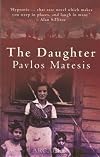
Now a grown woman, an accomplished actress in her own words, Rarau recounts her life as a child in a small village in rural Greece, when she was still Roubini and there was German occupation. In a fresh, almost impertinent tone, perfectly replicating the way an illiterate woman speaks, the author describes the horrors of the German occupation, the suffering inflicted on the population, in the drama of the women who, in order not to starve their children, are forced into prostitution. This is show more what happens to Roubini's mother, who is later humiliated as a collaborator at the time of liberation. A terrible shock for mother and daughter, which will destroy their minds forever. A truly beautiful book. show less
4.5
Special thanks to GR friend Violeta for the recommendation.
Pavlos Matesis's novel, The Daughter, is a mesmerizing work of contemporary Greek literature written from the viewpoint of Rubini Meskari, stage name Raraou, a theater extra who escaped to Athens after the Civil War. The novel moves back and forth in time as Raraou recounts her tragic childhood on an unnamed Greek island.
During the Nazi occupation, when famine was the price the Greeks paid for resistance, Raraou's mother took show more on an Italian lover to keep her family from starving. At the war's end, with the Civil War brewing, local village factions enacted an act of horrific revenge on those they saw as collaborators causing Raraou and her mother to flee to Athens.
Raraou recounts her childhood, coming of age, and time as a beggar in Athens with a brutal matter-of-fact realism interspersed with colorful and, at times, humorous tales of everyday life. The harshness of her life causes Raraou to begin to unravel. Matesis's use of narrative voice is masterful and subtle. He skillfully draws the reader into Raraou's world and opens a window into a difficult period of modern Greek history. Highly recommend. show less
Special thanks to GR friend Violeta for the recommendation.
Pavlos Matesis's novel, The Daughter, is a mesmerizing work of contemporary Greek literature written from the viewpoint of Rubini Meskari, stage name Raraou, a theater extra who escaped to Athens after the Civil War. The novel moves back and forth in time as Raraou recounts her tragic childhood on an unnamed Greek island.
During the Nazi occupation, when famine was the price the Greeks paid for resistance, Raraou's mother took show more on an Italian lover to keep her family from starving. At the war's end, with the Civil War brewing, local village factions enacted an act of horrific revenge on those they saw as collaborators causing Raraou and her mother to flee to Athens.
Raraou recounts her childhood, coming of age, and time as a beggar in Athens with a brutal matter-of-fact realism interspersed with colorful and, at times, humorous tales of everyday life. The harshness of her life causes Raraou to begin to unravel. Matesis's use of narrative voice is masterful and subtle. He skillfully draws the reader into Raraou's world and opens a window into a difficult period of modern Greek history. Highly recommend. show less

Μετά το ξάφνιασμα από τον Παλαιό των Ημερών ξεκίνησα την Μητέρα του Σκύλου ψυλλιασμένος... Αλλά και πάλι ο Μάτεσις κατάφερε να με εκπλήξει ευχάριστα. Τρομερή γραφή και ανεπανάληπτος τρόπος αφήγησης που ενώ είναι ακατάληπτη δεν κουράζει. Το απόλαυσα και ανυπομονώ να show more εξερευνήσω και άλλα αριστουργήματα του συγγραφέα. show less
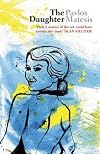
The Daughter is the story of a young Greek mother during WWII, the civil war, and the turmoil after the wars. She takes an Italian lover during the war in exchange for food for her children, though the story is mostly about the aftermath of this decision.
I think this book had great potential that it did not do enough with. I'm not sure if things were lost in translation, but I felt the topics covered in the book would have had much more weight had it not been written stream-of-consciousness show more with sudden shifts between characters and third person, making the actual story hard to follow. Without spoiling it, the end left me very confused - I'm just not sure what Matesis intended for me to get out of the book. I might read this again later knowing the end to try and gather more meaning, but as of now the book left me confused about pretty much everything related to the story - what's real? What's not? And that sense of confusion diminishes the rest of the story - which is powerful only because it's very real and sometimes shocking. show less
I think this book had great potential that it did not do enough with. I'm not sure if things were lost in translation, but I felt the topics covered in the book would have had much more weight had it not been written stream-of-consciousness show more with sudden shifts between characters and third person, making the actual story hard to follow. Without spoiling it, the end left me very confused - I'm just not sure what Matesis intended for me to get out of the book. I might read this again later knowing the end to try and gather more meaning, but as of now the book left me confused about pretty much everything related to the story - what's real? What's not? And that sense of confusion diminishes the rest of the story - which is powerful only because it's very real and sometimes shocking. show less
Awards


You May Also Like


Associated Authors
Statistics
- Works
- 21
- Members
- 207
- Popularity
- #106,919
- Rating
- 3.9
- Reviews
- 7
- ISBNs
- 33
- Languages
- 9