
Deborah E. Lipstadt
Author of Denying the Holocaust: The Growing Assault on Truth and Memory
About the Author
Deborah E. Lipstadt is Dorot Professor of Modern Jewish and Holocaust Studies and director of the Institute for Jewish Studies at Emory University.
Works by Deborah E. Lipstadt
Associated Works
The Irving Judgment : David Irving v. Penguin Books and Professor Deborah Lipstadt (2000) — Subject — 34 copies, 1 review
Tagged
Common Knowledge
- Birthdate
- 1947-03-18
- Gender
- female
- Education
- Brandeis University (MA ∙ 1972 ∙ PhD ∙ 1976)
City College of New York - Occupations
- historian
Professor of Modern Jewish History and Holocaust Studies - Organizations
- American Historical Association
Association for Jewish Studies
American Association for Religion
Phi Beta Kappa
Emory University - Relationships
- Julius, Anthony (lawyer)
- Nationality
- USA
- Birthplace
- New York, New York, USA
- Places of residence
- New York, New York, USA
- Associated Place (for map)
- New York, New York, USA
Members
Reviews
****.5
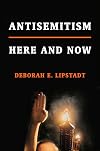
An excellent and highly accessible discussion of the current state of antisemitism, primarily in the US and Europe. She deliberately avoids an overly theoretical scholarly approach, and instead adopts a more conversational tone. For instance, she starts off the section on defining antisemitism with the rather droll statement that "an antisemite is someone who hates Jews more than is absolutely necessary."
She does a great job pointing out how trump in the US and Corbin in the UK are show more both guilty of fostering antisemitism, regardless of whether or not they are themselves antisemitic. As with other recent books on the subject, she goes on to examine various facets and expressions of antisemitism, as well as the prominent sources (right wing, left wing, Islamic extremism). As a professor, she spends a good deal of time exploring antisemitism on campus, the links between anti-Zionism and antisemitism, and the alienation that many progressive Jewish students (and faculty) feel when their own peer groups turn against them (a phenomenon that has continued to worsen since the book was written).
One point that I appreciated was the way that "antisemitism" should be written, i.e. lower case with no hyphen, with a well-considered rationale. show less
An excellent and highly accessible discussion of the current state of antisemitism, primarily in the US and Europe. She deliberately avoids an overly theoretical scholarly approach, and instead adopts a more conversational tone. For instance, she starts off the section on defining antisemitism with the rather droll statement that "an antisemite is someone who hates Jews more than is absolutely necessary."
She does a great job pointing out how trump in the US and Corbin in the UK are show more both guilty of fostering antisemitism, regardless of whether or not they are themselves antisemitic. As with other recent books on the subject, she goes on to examine various facets and expressions of antisemitism, as well as the prominent sources (right wing, left wing, Islamic extremism). As a professor, she spends a good deal of time exploring antisemitism on campus, the links between anti-Zionism and antisemitism, and the alienation that many progressive Jewish students (and faculty) feel when their own peer groups turn against them (a phenomenon that has continued to worsen since the book was written).
One point that I appreciated was the way that "antisemitism" should be written, i.e. lower case with no hyphen, with a well-considered rationale. show less
Dr. Lipstadt's timely book calls out antisemitism in all its iterations. She examines its growth on the far right and on the far left. One of the most unusual and disturbing aspects of the book was her analysis of Holocaust denial and its role in enabling antisemitism. She also demonstrates how Trump, and Corbyn enable antisemitism through witting or unwitting use of tropes and/ or failure to call out antisemitism when it comes from members of their base. Lipstadt argues that this "myopia" show more extends to members of the far right and far left as well, in that the far left only sees and condemns right wing antisemitism and vice versa. Neither, she believes, are willing to acknowledge in their own ranks.
Lipstadt's writing is lucid and accessible. The book is well written and sadly more timely than it was a year ago when it first came out. show less
Lipstadt's writing is lucid and accessible. The book is well written and sadly more timely than it was a year ago when it first came out. show less
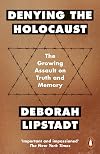
The 1993 book that annoyed the infamous David Irving enough to take its author to court for libel. I was unsurprised to read that Holocaust deniers like Irving have used the same tactics as creationists, climate change deniers, moon hoaxers, 9/11 thruthers, and every conspiracy theorist ever, namely: the ignoring of evidence that doesn't fit their narrative, presenting themselves as one side of a debate that is actually no debate at all, (mis)quoting out of context knowing most people will show more never bother to check original sources, claiming a credibility or authority for themselves that they do no have, bullying witnesses, just plain lying, etc. No surprise either that, almost without exception, it's easy to find strong links between Holocaust deniers and far-right and/or antisemitic organisations. In this book Lipstadt calls them out on their bullshit in clear, unequivocal terms, with numerous appalling examples of their mendacity... and gets dragged through the UK libel courts for her trouble, as if historical truth can be determined in a court of law. As we know, Irving lost spectacularly. show less
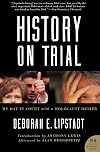
Having seen the recent movie (Denial) I thought the book might be worth the read. The movie was good, but the full-length treatment that a book provides is always certain to be more satisfying. The titles of each are suitable for attracting the interest of viewers and readers, but overlook, I think, what is also on trial here: historians, historiography and freedom of speech.
David Irving is a prolific writer of histories of Hitler and World War II, well-known for taking iconoclastic and show more revisionist views on Hitler's culpability for the massacre of the Jews in the "Final Solution" atrocities carried out by Germans. He also wrote a book on the bombing of Dresden by the allies that criticizes this as needless to the war effort and as a putative war crime because of the magnitude of casualties. Deborah Lipstadt is a professor of Modern Jewish History and Holocaust Studies at Emory University. She had been following the activities of Holocaust deniers and in her book "Denying the Holocaust: The Growing Assault on Truth and Memory" wrote that Irving deliberately falsified and misconstrued facts and data about the Holocaust to the point of claiming that whatever killings that occurred were not known to or sanctioned by Hitler and that the gas chambers of Auschwitz did not exist. She was concerned that, rather than being considered a crank, Irving had garnered considerable favorable attention in literary reviews and among some recognized historians.
Irving sued Lipstadt and Penguin, her UK publisher, for defamation. Defamation suits in Britain, unlike in America, place the burden of proof on the person making the allegedly defamatory statement(s); in other words, the defendant must prove the truth of her words. (Under US law the plaintiff must prove that the words were untrue and in the case involving public figures that the utterance was recklessly made.) The defendants would be liable for punitive awards, court costs, apology and retraction and, importantly, ceasing any further publication of the offending words. Irving had brought such suits, or threats of suits, in the past and this had caused publishers to settle for fear of losing. In this case, Lipstadt and Penguin determined to contest the suit and employed a first-rate team of legal minds and historians to prove that Irving had intentionally distorted and manipulated facts in his histories. Moreover, that his motivation for so doing was his virulent antisemitism as demonstrated by his public utterances and close ties with extremist groups around the world.
Through exhaustive review of sources and examination of Irving's writing and speeches, the defendants were able to prove conclusively that Irving went far beyond the pale of plausible interpretation of facts and willfully distorted evidence that did not support his preconceived conclusions. They showed also that Irving was a rabid and extreme antisemite who had made the most shocking and appalling statements about Jews and Holocaust survivors. Irving agreed with the defense to have the case heard before a judge and not a jury and had decided to represent himself. In his testimony and cross-examination of defense experts he was astoundingly inept, often contradicting himself from one day to the next. (Among the defense experts were Richard J. Evans, perhaps the world's most highly respected historian on 19th and 20th Germany, and Robert Jan Van Pelt whose research and knowledge of Auschwitz is unparalleled.)
Lipstadt recounts the trial with the drama it deserves. It concludes with a smashing victory by the defense. Irving was completely discredited and his reputation put into shreds. He foolishly appealed the judge's 375-page decision only to see his standing as a scholar further diminished. This case garnered international attention and, given the risks to his reputation, it is puzzling why Irving wouldn't have found it wiser to ignore Lipstadt's criticisms. Such is the price to be paid for a large ego and delusions driven by self-regard.
Here's why I think the movie and book are misnamed. Most people who have heard of the Holocaust "denials" understand it to be the work of crackpots and extremists. While we should worry about such fanatics as they tend toward violence, there is little chance that their views will ever garner credulity. But, Irving is different because his work had been fairly well-reviewed and moderately well-accepted by the academic community. Irving was perceived to be an iconoclast and revisionist whose research was thorough if his interpretations and conclusions were off base. This reception of Irving was, however, entirely unjustified and, disturbingly, no one looked closely at his treatment of his source material. When they finally did -- impelled by the court action he brought -- his falsifications, distortions and manipulations were patently clear. Why hadn't anyone done this before? One thinks of how outlandish it would be if scientists failed to check other scientists' data when evaluating their hypotheses and theories. Does not the academic world of historians bear the same obligation? Now, certainly, there is a place for revisionist interpretations in the study of history; we should actually be thankful for it. It is also appropriate to give wide latitude for divergent analysis and interpretation of the meaning of historical events, but this should not extend giving a pass to overt falsehoods, bias and purposeful manipulation of objective truth. The examination of Irving's use of his sources, when it finally occurred, revealed the most egregious dishonesty that was plain to see by anyone who bothered to look. In the aftermath of the trial, some historians criticized the dismantling of Irving's research by stating that any historian should fear such close scrutiny as the flaws in their work might certainly be detected; that's an astonishing statement that undermines our faith in scholarly integrity.
Finally, there's the issue of freedom of speech. Some commentators said that the efforts to discredit Irving served to inhibit the freedom of speech that's the foundation of academic freedom. Such view is entirely wrong headed. It was Irving who, by his legal action, was inhibiting (Lipstadt's) free speech. Certainly, the prospect of being sued for one's speech puts a chill on it. Lipstadt at the outset thought it likely that Penguin would cave in; it was logically in the firm's self-interest to do so. Moreover, academic freedom does not extend to freedom to lie without fear of challenge; indeed it is the dialectical nature of scholarly discourse that does most to advance truth. Irving should not have received a "pass" from his peers and thankfully someone finally (and courageously) called him on this. show less
David Irving is a prolific writer of histories of Hitler and World War II, well-known for taking iconoclastic and show more revisionist views on Hitler's culpability for the massacre of the Jews in the "Final Solution" atrocities carried out by Germans. He also wrote a book on the bombing of Dresden by the allies that criticizes this as needless to the war effort and as a putative war crime because of the magnitude of casualties. Deborah Lipstadt is a professor of Modern Jewish History and Holocaust Studies at Emory University. She had been following the activities of Holocaust deniers and in her book "Denying the Holocaust: The Growing Assault on Truth and Memory" wrote that Irving deliberately falsified and misconstrued facts and data about the Holocaust to the point of claiming that whatever killings that occurred were not known to or sanctioned by Hitler and that the gas chambers of Auschwitz did not exist. She was concerned that, rather than being considered a crank, Irving had garnered considerable favorable attention in literary reviews and among some recognized historians.
Irving sued Lipstadt and Penguin, her UK publisher, for defamation. Defamation suits in Britain, unlike in America, place the burden of proof on the person making the allegedly defamatory statement(s); in other words, the defendant must prove the truth of her words. (Under US law the plaintiff must prove that the words were untrue and in the case involving public figures that the utterance was recklessly made.) The defendants would be liable for punitive awards, court costs, apology and retraction and, importantly, ceasing any further publication of the offending words. Irving had brought such suits, or threats of suits, in the past and this had caused publishers to settle for fear of losing. In this case, Lipstadt and Penguin determined to contest the suit and employed a first-rate team of legal minds and historians to prove that Irving had intentionally distorted and manipulated facts in his histories. Moreover, that his motivation for so doing was his virulent antisemitism as demonstrated by his public utterances and close ties with extremist groups around the world.
Through exhaustive review of sources and examination of Irving's writing and speeches, the defendants were able to prove conclusively that Irving went far beyond the pale of plausible interpretation of facts and willfully distorted evidence that did not support his preconceived conclusions. They showed also that Irving was a rabid and extreme antisemite who had made the most shocking and appalling statements about Jews and Holocaust survivors. Irving agreed with the defense to have the case heard before a judge and not a jury and had decided to represent himself. In his testimony and cross-examination of defense experts he was astoundingly inept, often contradicting himself from one day to the next. (Among the defense experts were Richard J. Evans, perhaps the world's most highly respected historian on 19th and 20th Germany, and Robert Jan Van Pelt whose research and knowledge of Auschwitz is unparalleled.)
Lipstadt recounts the trial with the drama it deserves. It concludes with a smashing victory by the defense. Irving was completely discredited and his reputation put into shreds. He foolishly appealed the judge's 375-page decision only to see his standing as a scholar further diminished. This case garnered international attention and, given the risks to his reputation, it is puzzling why Irving wouldn't have found it wiser to ignore Lipstadt's criticisms. Such is the price to be paid for a large ego and delusions driven by self-regard.
Here's why I think the movie and book are misnamed. Most people who have heard of the Holocaust "denials" understand it to be the work of crackpots and extremists. While we should worry about such fanatics as they tend toward violence, there is little chance that their views will ever garner credulity. But, Irving is different because his work had been fairly well-reviewed and moderately well-accepted by the academic community. Irving was perceived to be an iconoclast and revisionist whose research was thorough if his interpretations and conclusions were off base. This reception of Irving was, however, entirely unjustified and, disturbingly, no one looked closely at his treatment of his source material. When they finally did -- impelled by the court action he brought -- his falsifications, distortions and manipulations were patently clear. Why hadn't anyone done this before? One thinks of how outlandish it would be if scientists failed to check other scientists' data when evaluating their hypotheses and theories. Does not the academic world of historians bear the same obligation? Now, certainly, there is a place for revisionist interpretations in the study of history; we should actually be thankful for it. It is also appropriate to give wide latitude for divergent analysis and interpretation of the meaning of historical events, but this should not extend giving a pass to overt falsehoods, bias and purposeful manipulation of objective truth. The examination of Irving's use of his sources, when it finally occurred, revealed the most egregious dishonesty that was plain to see by anyone who bothered to look. In the aftermath of the trial, some historians criticized the dismantling of Irving's research by stating that any historian should fear such close scrutiny as the flaws in their work might certainly be detected; that's an astonishing statement that undermines our faith in scholarly integrity.
Finally, there's the issue of freedom of speech. Some commentators said that the efforts to discredit Irving served to inhibit the freedom of speech that's the foundation of academic freedom. Such view is entirely wrong headed. It was Irving who, by his legal action, was inhibiting (Lipstadt's) free speech. Certainly, the prospect of being sued for one's speech puts a chill on it. Lipstadt at the outset thought it likely that Penguin would cave in; it was logically in the firm's self-interest to do so. Moreover, academic freedom does not extend to freedom to lie without fear of challenge; indeed it is the dialectical nature of scholarly discourse that does most to advance truth. Irving should not have received a "pass" from his peers and thankfully someone finally (and courageously) called him on this. show less
Lists
Awards


You May Also Like


Associated Authors
Statistics
- Works
- 10
- Also by
- 6
- Members
- 2,002
- Popularity
- #12,864
- Rating
- 4.0
- Reviews
- 39
- ISBNs
- 51
- Languages
- 7
- Favorited
- 1