
Friedrich de la Motte Fouqué (1777–1843)
Author of Undine
About the Author
Image credit: Image © ÖNB/Wien
Series
Works by Friedrich de la Motte Fouqué
Die wunderbaren Begebenheiten des Grafen Alethes von Lindenstein : ein Roman (1817) — Author — 9 copies
Los enanitos 5 copies
Werke / Sämtliche Romane und Novellenbücher / Der Todesbund /Undine: Ein Roman /Eine Erzählung (1992) 4 copies
Werke / Abteilung I - Sämtliche Romane und Novellenbücher: Der Zauberring - Ein Ritterroman (1989) — Author — 4 copies
Werke / Sämtliche Romane und Novellenbücher / Joseph und seine Geige /Kaiser Karl V. Angriff auf Algier: Zwei Novellen (1989) 4 copies
AALLOTAR 3 copies
Werke / Sämtliche Romane und Novellenbücher / Der Verfolgte: Eine Rittersage (1989) — Author — 3 copies
Werke / Sämtliche Romane und Novellenbücher / Abfall und Busse oder die Seelenspiegel: Ein Roman aus der Gränzscheide des achtzehnten und neunzehnten Jahrhunderts (1844) — Author — 3 copies
Werke / Sämtliche Romane und Novellenbücher / Der Refugié oder Heimat und Fremde: Ein Roman aus der neuern Zeit. Teil 2 und 3 (1989) — Author — 3 copies
Werke / Sämtliche Romane und Novellenbücher / Die vier Brüder von der Weserburg: Eine altdeutsche Geschichte (1989) 3 copies
Werke / Sämtliche Romane und Novellenbücher / Ritter Elidouc. Eine altbretannische Sage /Wilde Liebe. Ein Ritterroman (1989) 3 copies
Werke / Sämtliche Romane und Novellenbücher / Mandragora /Fata Morgana: Erzählungen und Novellen (1991) 3 copies
Werke / Sämtliche Romane und Novellenbücher / Welleda und Ganna /Schön Irsa und ihre weisse Kuh (1993) 3 copies
Werke / Sämtliche Romane und Novellenbücher / Die beiden Hauptleute /Sintram und seine Gefährten (1994) 3 copies
Werke: Abteilung II: Ausgewählte Dramen und Epen. Bd 10: Hieronymus von Stauf. Trauerspiel in fünf Aufzügen. (2011) 3 copies
The white lady and Undine: Tales from the German — Author — 2 copies
Vaterländische Schauspiele 2 copies
Reise-Erinnerungen 2 copies
The Four Seasons: Sintram and His Companions, Undine, The Two Captains & Aslauga’s Knight (2015) 2 copies
Stories by Musaus and Fouque (Studies in German Literature, Linguistics, and Culture) (Vol 1) (1991) 2 copies
Ondine 2 copies
Der Held des Nordens 1 copy
Bertrand Du-Guesclin : Ein historisches Rittergedicht in 4 Büchern mit erläuternden Anmerkungen 1 copy
Sintram and his companions 1 copy
Undine [tr. by F.E. Bunnett] 1 copy
Undine 1 copy
Fouqués Werke 1 copy
Undine and other tales 1 copy
Undine — Author — 1 copy
Gesammelte Werke: Dichtungen eines rheinischen Poeten / Undine / Johann Heinrich Voss' Werke (1905) — Author — 1 copy
PICCIOLA; UNDINE; TWO CAPTAINS; PAUL AND VIRGINIA — Author — 1 copy
Die Versuche und Hindernisse Karls : Eine deutsche Geschichte aus neuerer Zeit: Th. 1 (1808) — Author — 1 copy
Aus der Geisterwelt 1 copy
Undine & Das Bild der Mutter 1 copy
The Field Of Terror 1 copy
La caja mágica 1 copy
Werke: Abteilung I: Sämtliche Romane und Novellenbücher. Band 09.3: Wilde Liebe, Zweiter Theil. (2017) 1 copy
Undine, Großdruck 1 copy
Undine : eine Erzählung 1 copy
Undine. Mährchen-Dichtung. 1 copy
Kleine Romane 1 copy
Altsächsischer Bildersaal 1 copy
Heldenspiele 1 copy
Der Refugié oder : Heimath und Fremde : Ein Roman a. d. neuern Zeit — Author — 1 copy
Gedichte 1 copy
UDINE the two captains 1 copy
Werke / Abteilung II - Ausgewählte Dramen und Epen: Zwei Schauspiele (Der Falke / Das Reh) / Die Zwerge (1994) 1 copy
Werke / Abteilung II - Ausgewählte Dramen und Epen (Übersetzungen Band 3): Lalla Rukh die mongolische Prinzessin - Romantische Dichtung von Thomas Moore in den Versmaaßen des… (2015) — Author; Translator — 1 copy
Alwin: Eine Rittergeschichte des 16. Jahrhunderts: Historischer Roman (German Edition) (2017) 1 copy
Werke / Abteilung II - Ausgewählte Dramen und Epen: Dramatische Dichtungen für Deutsche (2006) — Author — 1 copy
Aus der Geisterwelt 1 copy
Wunderbuch Bd. 3 1 copy
Pique-Dame 1 copy
Ondine (French Edition) — Author — 1 copy
Werke / Dramen und Epen: Dramatische Dichtungen für Deutsche. Erschienen in der Serie Neue vaterländische Schauspiele (2006) 1 copy
Werke, Abteilung II: Ausgewählte Dramen und EpenBd. 1.2: Zwei Schauspiele (Der Falke; Das Reh); Die Zwerge (1994) 1 copy
Fouqué, Friedrich de La Motte- Bd. 1.1, .Dramatische Szenen Ausgewählte Dramen und Epen. - Hildesheim : Olm (1994) 1 copy
Werke / Sämtliche Romane und Novellenbücher / Die beiden Hauptleute /Sintram und seine Gefährten 1 copy
Werke / Abteilung II - Ausgewählte Dramen und Epen: Autobiographische Arbeiten - Autobiographie (2018) 1 copy
Associated Works
Tales Before Narnia: The Roots of Modern Fantasy and Science Fiction (2008) — Contributor — 126 copies, 3 reviews
Great Tales of Terror from Europe and America: Gothic Stories of Horror and Romance 1765-1840 (1972) — Contributor — 75 copies
Charakteristiken : die Romantiker in Selbstzeugnissen und Äusserungen ihrer Zeitgenossen — Contributor — 3 copies
Czarny pająk : opowieści niesamowite z literatury niemieckojęzycznej (1988) — Contributor — 3 copies
Lübbes Auswahlband. Die besten Schauergeschichten der deutschsprachigen Literatur. (1983) — Contributor — 2 copies
Dichtung der Romantik Bd. 4. Erzählungen 4 : Märchendichtung. Brentano, Fouqué, E. T. A. Hoffmann, Novalis, Runge — Contributor — 2 copies
Dichtung der Romantik Bd. 9. Lyrik : Gedicht, Ballade, Scherz. Vaterländisches — Contributor — 2 copies
Tagged
Common Knowledge
- Canonical name
- Fouqué, Friedrich de la Motte
- Legal name
- Fouqué, Friedrich Heinrich Karl de la Motte, Baron
- Other names
- Pellegrin
- Birthdate
- 1777-02-12
- Date of death
- 1843-01-23
- Gender
- male
- Education
- University of Halle
- Occupations
- army officer
novelist
playwright - Relationships
- Fouqué, Caroline de La Motte (wife)
- Nationality
- Prussia
Germany - Birthplace
- Brandenburg an der Havel, Brandenburg, Holy Roman Empire
- Places of residence
- Berlin, Prussia
- Place of death
- Berlin, Prussia
- Map Location
- Germany
Members
Reviews
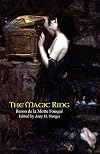
This is a very odd book. The author calls it a Ritterroman, a novel of knights, but it is not a novel in the 19th century sense of the word. Instead it takes its inspiration from the romances of chivalry so popular in the late Middle Ages, and it is obvious that Fouqué has read a lot of them, loves them and tries to shape his own effort in their image.
The result is a tale full of magic and coincidences, incredibly noble knightly heroes and unbelievably beautiful chaste maidens, set in the show more year Richard the Lionheart escaped from captivity. Everyone blushes, weeps, sighs and faints with reckless abandon, and the plot reminded me at every turn of operas like Rinaldo and Orlando furioso, no doubt because Fouqué knew the poems they are based on.
Of course, these romances have nothing to do with the Middle Ages as they actually happened. They describe chivalry as an ideal, elevate it to a level where it becomes a fairy tale (and can easily be satirised by the likes of Cervantes). Fouqué wants to return to the originals, but recreating their innocence and devoutness doesn’t really work. There are a lot of anachronisms, and the prose is so quaint it is eye-watering, not only to a modern reader, but already to his contemporaries.
I do not regret the time I spent reading it, but this is very much an acquired taste. show less
The result is a tale full of magic and coincidences, incredibly noble knightly heroes and unbelievably beautiful chaste maidens, set in the show more year Richard the Lionheart escaped from captivity. Everyone blushes, weeps, sighs and faints with reckless abandon, and the plot reminded me at every turn of operas like Rinaldo and Orlando furioso, no doubt because Fouqué knew the poems they are based on.
Of course, these romances have nothing to do with the Middle Ages as they actually happened. They describe chivalry as an ideal, elevate it to a level where it becomes a fairy tale (and can easily be satirised by the likes of Cervantes). Fouqué wants to return to the originals, but recreating their innocence and devoutness doesn’t really work. There are a lot of anachronisms, and the prose is so quaint it is eye-watering, not only to a modern reader, but already to his contemporaries.
I do not regret the time I spent reading it, but this is very much an acquired taste. show less

Sadly, the mermaids here are far and few between, like most mermaid stories I read. She's a human for about all of the book. She's some sort of orphaned water-nymph taken in by parents, and she never betrays a non-human nature. She marries a wandering knight, and then there's some strife and betrayal. To be honest, I tuned out the last quarter of the book once I realized the mermaids were not happening.
The nice thing about it was that it was classic romance genre, so there was nothing show more complex about it. It smacked of Ivanhoe -- wandering knight, torn between two women, and I think there was a joust. But it was much shorter so that was good. I can also see where Hans Christian Andersen got some of his influences for The Little Mermaid. If you want to say you've read some classic romantic literature, this is a good place to start. show less
The nice thing about it was that it was classic romance genre, so there was nothing show more complex about it. It smacked of Ivanhoe -- wandering knight, torn between two women, and I think there was a joust. But it was much shorter so that was good. I can also see where Hans Christian Andersen got some of his influences for The Little Mermaid. If you want to say you've read some classic romantic literature, this is a good place to start. show less
Friedrich de la Motte Fouque is a name pretty much forgotten in today's literary scene; information about him, especially critical treatment of his writings, is sparse and most of his writings have yet to be translated from the German. The Magic Ring hasn't been translated since the mid-19th century, and by all accounts, professes to be a barely adequate representation of the tale. Any critical comment I can make about his work seems similarly limited.
For all the influence Fouque held over show more writers such as George MacDonald, C.S. Lewis and J.R.R. Tolkein, those scholars who know him at all have never firmly decided whether he fits in the box of high or low culture. Towards the end of his career particularly, he was looked on as hopelessly sentimental, as his particular brand of romance faded out of fashion...of course, literary fashion really should be neither here nor there. However, The Magic Ring can't help but get sorted into the same hat as Horace Walpole's craptastic Castle of Otranto, and that's never a desirable association.
Most post-Medieval literature that takes a Medieval setting attempts to graft modern day values, ie. a sense of enlightenment, onto at least the more noble-seeming of the characters. Walpole and Fouque are unique in that they attempt to write a Medieval-type romance, while preserving the values of the period (however, I may gladly report that the similarities end there). Fouque's protagonists are all devoutly Christian, and therefore, they support unreservedly the Crusade into the Holy Land. It saddens me that the book's contents would probably turn away anyone who was not themselves a Christian, and at times it's hard to wonder if I shouldn't be turned off myself by the subtle (and not so subtle) racism portrayed at times by the characters.
However, every time my thoughts turn on to this particular train, I have to keep reminding myself what a stupid way of thinking this is. If my studies in Chaucer and House of Fame taught me nothing else (or rather, reinforced what I already know), it's that inquiring into the meaning of a text is completely different than inquiring into authorial intent. (George MacDonald's essay, "The Fantastic Imagination" has some fabulous things to say on this topic, and I highly reccommend it to anyone interested in *real* literary theory.) The point is, that if I didn't know that Fouque himself was a devout Christian and a member of the nobility, it wouldn't even occur to me to wonder if he too was a supporter of the Crusades even with over 600 years of historical perspective to ground his judgment. The fact is, it shouldn't matter even if Fouque really did think the Crusades ruled the school, which he most likely didn't, and that definitely shouldn't be the guiding force in determining the worth of his writing; all that matters is what the story itself seems to suggest, which (I really shouldn't have to remind myself) can be RADICALLY different from what the characters (even the Good ones) think or believe about it.
The overarching theme of the story, especially considering the resolution, as well as the central symbol of the ring, celebrates the unity frequently rejected by the characters, and Fouque certainly has mind enough to entwine pagan myth and symbols into his writing, even while his characters themselves reject them as anti-Christian. While (unfortunately) having no first-hand knowledge of this, the translation problems stem for the inherent complexity of Fouque's prose and the many symbolic layers that he packs into his story telling.
Finally, and most importantly, the story is a frickin' structural masterpiece. Each individual element serves it's own function as well as contributing to the main theme, and by the end you've heard a million stories as well as just hearing the one, and furthermore you can't but be convinced that all the stories you've ever heard are really just a part of the same story in different words. I've never before encountered a plot this crazy and twisted and magical, and while reading it the second time, I kept remembering shades of different plot threads that seemed to me couldn't all fit into that one book, one tale, but ended up showing themselves after all, as well as many more that I thought I remembered from somewhere else, but really just came from this show less
For all the influence Fouque held over show more writers such as George MacDonald, C.S. Lewis and J.R.R. Tolkein, those scholars who know him at all have never firmly decided whether he fits in the box of high or low culture. Towards the end of his career particularly, he was looked on as hopelessly sentimental, as his particular brand of romance faded out of fashion...of course, literary fashion really should be neither here nor there. However, The Magic Ring can't help but get sorted into the same hat as Horace Walpole's craptastic Castle of Otranto, and that's never a desirable association.
Most post-Medieval literature that takes a Medieval setting attempts to graft modern day values, ie. a sense of enlightenment, onto at least the more noble-seeming of the characters. Walpole and Fouque are unique in that they attempt to write a Medieval-type romance, while preserving the values of the period (however, I may gladly report that the similarities end there). Fouque's protagonists are all devoutly Christian, and therefore, they support unreservedly the Crusade into the Holy Land. It saddens me that the book's contents would probably turn away anyone who was not themselves a Christian, and at times it's hard to wonder if I shouldn't be turned off myself by the subtle (and not so subtle) racism portrayed at times by the characters.
However, every time my thoughts turn on to this particular train, I have to keep reminding myself what a stupid way of thinking this is. If my studies in Chaucer and House of Fame taught me nothing else (or rather, reinforced what I already know), it's that inquiring into the meaning of a text is completely different than inquiring into authorial intent. (George MacDonald's essay, "The Fantastic Imagination" has some fabulous things to say on this topic, and I highly reccommend it to anyone interested in *real* literary theory.) The point is, that if I didn't know that Fouque himself was a devout Christian and a member of the nobility, it wouldn't even occur to me to wonder if he too was a supporter of the Crusades even with over 600 years of historical perspective to ground his judgment. The fact is, it shouldn't matter even if Fouque really did think the Crusades ruled the school, which he most likely didn't, and that definitely shouldn't be the guiding force in determining the worth of his writing; all that matters is what the story itself seems to suggest, which (I really shouldn't have to remind myself) can be RADICALLY different from what the characters (even the Good ones) think or believe about it.
The overarching theme of the story, especially considering the resolution, as well as the central symbol of the ring, celebrates the unity frequently rejected by the characters, and Fouque certainly has mind enough to entwine pagan myth and symbols into his writing, even while his characters themselves reject them as anti-Christian. While (unfortunately) having no first-hand knowledge of this, the translation problems stem for the inherent complexity of Fouque's prose and the many symbolic layers that he packs into his story telling.
Finally, and most importantly, the story is a frickin' structural masterpiece. Each individual element serves it's own function as well as contributing to the main theme, and by the end you've heard a million stories as well as just hearing the one, and furthermore you can't but be convinced that all the stories you've ever heard are really just a part of the same story in different words. I've never before encountered a plot this crazy and twisted and magical, and while reading it the second time, I kept remembering shades of different plot threads that seemed to me couldn't all fit into that one book, one tale, but ended up showing themselves after all, as well as many more that I thought I remembered from somewhere else, but really just came from this show less

A fairy wife story, containing two of the usual morals of these types of stories: Fairy laws are arbitrary, but you'd better follow 'em anyway, and Men are horrible. (There is a touch of Fairies don't care about you, but since the whole point of the story is "the fairy wife gets a soul and uses it better than anyone who was born with one," that's pretty minor.)
Lists
You May Also Like


Associated Authors
Statistics
- Works
- 156
- Also by
- 27
- Members
- 1,087
- Popularity
- #23,625
- Rating
- 3.8
- Reviews
- 15
- ISBNs
- 185
- Languages
- 12
- Favorited
- 5