

Marie Corelli (1855–1924)
Author of The Sorrows of Satan
About the Author
Marie Corelli (1 May 1855 -- 21 April 1924) was a British novelist. She enjoyed a period of great literary success from the publication of her first novel in 1886 until World War I. Corelli's novels sold more copies than the combined sales of popular contemporaries, including Arthur Conan Doyle, H. show more G. Wells, and Rudyard Kipling. Corelli was born in London. She wrote both fiction and nonfiction, short stories and dramatic plays. Some of her works were adapted to film and theatre productions. In her final years, Corelli lived on Stratford-Upon-Avon. She was considered to be eccentric and could be seen boating there in a gondola from Venice complete with a gondolier. Corelli died there in 1924 and is buried in the Evesham Road cemetery. Her house, Mason Croft, still stands on Church Street and is now the home of the Shakespeare Institute. (Bowker Author Biography) show less
Works by Marie Corelli
Free opinions, freely expressed on certain phases of modern social life and conduct (2010) 6 copies, 1 review
Poems 2 copies
My 'little bit' 2 copies
Marie Corelli Collection: 14 Works. (Vendetta, Thelma, Ziska, Ardath, Innocent, The Sorrows of Satan, and more) (2013) 1 copy
A Romance of Two Worlds (Mint Editions (Horrific, Paranormal, Supernatural and Gothic Tales)) (2021) 1 copy
the young diana 1 copy
The Hired Baby 1 copy
Letters on the Simple Life 1 copy
Morgana 1 copy
HEIDÄN SUURI KEVÄÄNSÄ 1 copy
Associated Works
Queens of the Abyss: Lost Stories from the Women of the Weird (2020) — Contributor — 155 copies, 4 reviews
Weird Women: Classic Supernatural Fiction by Groundbreaking Female Writers: 1852-1923 (2020) — Contributor — 108 copies, 2 reviews
The Weiser Book of the Fantastic and Forgotten: Tales of the Supernatural, Strange, and Bizarre (2016) — Contributor — 30 copies
Tagged
Common Knowledge
- Canonical name
- Marie Corelli
- Legal name
- Mackay, Mary
- Birthdate
- 1855-05-01
- Date of death
- 1924-04-21
- Gender
- female
- Education
- Parisian Convent
- Occupations
- novelist
short story writer
poet
essayist - Relationships
- Mackay, Charles (father)
Vyver, Bertha (companion) - Short biography
- Mary Mackay was born in London, the daughter of a Scottish writer. She adopted the pseudonym Marie Corelli and became first a musician and then a bestselling author of more than 30 gothic, romance, mystical, and society novels. Her work was greatly admired by Queen Victoria and Prime Minister Gladstone, among many others. She also wrote short stories and poetry. She published her first book in 1886. Her first major success was Barabbas: A Dream of the World’s Tragedy (1893). The Sorrows of Satan (1895), also based on a religious theme, had even greater popular success. In 1901, she moved to Stratford-upon-Avon, where she lived for many years and was active in efforts to preserve historic buildings.
- Nationality
- UK
- Birthplace
- London, England, UK
- Places of residence
- Stratford-upon-Avon, Warwickshire, England
Paris, France - Place of death
- Stratford-upon-Avon, Warwickshire, England, UK
- Burial location
- Evesham Road cemetery, Stratford-upon-Avon, England, UK
- Map Location
- UK
Members
Reviews
The Sorrows of Satan: Or the Strange Experience of One Geoffrey Tempest, Millionaire, A Romance (Oxford Popular Fiction) by Marie Corelli
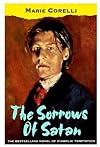
A fascinating and unintentionally hilarious book that illustrates wonderfully the difference between a book being popular and a book being good. Marie Corelli was perhaps the first best selling author (brought about by a move away from the library system to a private buyer system) and she wrote the equivalent of what airport thrillers are today.
A struggling writer is is saved by making a deal with a mysterious stranger, and he begins to descend into vice under the guidance of said stranger, show more a Byronic Lucifer as the story quickly reveals (and which the title gives away). Along this journey we also meet Mavis Clare, an obvious self-insert of Marie Corelli who opines that if only authors wrote the truth, like she does, they would become great like her. She also rails against reviewers and expounds that the people are the ones who recognize true brilliance. Additionally, Clare proves so virtuous and pure a character that Satan himself is utterly powerless to do any harm to her. The devil even admires her virtue.
The character of Mavis Clare would be funny on its own as a blatant example of narcissism on the part of Corelli, and as a sample of the delusion authors fall under concerning their own abilities once they become famous, but what really pushes the novel over the top is the contemporaneous reviews the novel includes. At least in my edition the final pages of the book included several reviews of the book from when it was first released stating that, while the book was sure to be a crowd pleaser, it lacked literary merit and would not stand the test of time. The reviewers were right on the money, which makes the ego trip of Mavis Clare retroactively hilarious. Read this book for a chuckle, not if you're looking for something of actual quality. show less
A struggling writer is is saved by making a deal with a mysterious stranger, and he begins to descend into vice under the guidance of said stranger, show more a Byronic Lucifer as the story quickly reveals (and which the title gives away). Along this journey we also meet Mavis Clare, an obvious self-insert of Marie Corelli who opines that if only authors wrote the truth, like she does, they would become great like her. She also rails against reviewers and expounds that the people are the ones who recognize true brilliance. Additionally, Clare proves so virtuous and pure a character that Satan himself is utterly powerless to do any harm to her. The devil even admires her virtue.
The character of Mavis Clare would be funny on its own as a blatant example of narcissism on the part of Corelli, and as a sample of the delusion authors fall under concerning their own abilities once they become famous, but what really pushes the novel over the top is the contemporaneous reviews the novel includes. At least in my edition the final pages of the book included several reviews of the book from when it was first released stating that, while the book was sure to be a crowd pleaser, it lacked literary merit and would not stand the test of time. The reviewers were right on the money, which makes the ego trip of Mavis Clare retroactively hilarious. Read this book for a chuckle, not if you're looking for something of actual quality. show less
What a strange, disturbing novel this turned out to be. Very gothic in nature and reminiscent of Anne Radcliff at times. I had serious doubts at the outset, but after about 75 pages it began to develop into what was a captivating story of a love gone wrong. Gaston Beauvais is a well-placed banker’s son, engaged to marry Pauline de Charmilles, the only daughter of a Count, and about to embark upon a life of wealth and honor. Into this idyllic scenario comes a novice priest, Silvion Guidel, show more the nephew of the local rector. It is immediately obvious that this man and Pauline are drawn to each other and that betrayal is in the air.
The story built momentum and I was quite torn between feeling pity for our wronged Gaston and horror at his overwhelming need for revenge on the two people by whom he feels so betrayed. Then the story went on far too long and became a treatise on the evils of absinthe. Whether lives were actually destroyed by absinthe, people went mad drinking absinthe due to the rotten wormwood used to make the drink, or actually suffered from hallucinations because of it, is disputed. That it was popular in the late 1800s and banned in 1915 is not. By the end of the book, I knew I had been hoodwinked by a clever member of the Paris temperance movement.
Even with its obvious political agenda, this could have been an interesting read had Corelli kept it to half the pages. She felt obligated to describe in great detail and more than once the travails of the addiction. As well, she turned her character from someone who could be understood as an injured man to someone who was far too callous and unfeeling toward even those who were blameless in his misfortune to be realistic. I’m sure addiction to any harmful substance alters personality and sometimes brings out all the worst in an individual, but I would not expect that it does so as quickly or as thoroughly as is pictured here. I wonder if Corelli was able to convince anyone to steer clear of the “green fairy” with this tale. show less
The story built momentum and I was quite torn between feeling pity for our wronged Gaston and horror at his overwhelming need for revenge on the two people by whom he feels so betrayed. Then the story went on far too long and became a treatise on the evils of absinthe. Whether lives were actually destroyed by absinthe, people went mad drinking absinthe due to the rotten wormwood used to make the drink, or actually suffered from hallucinations because of it, is disputed. That it was popular in the late 1800s and banned in 1915 is not. By the end of the book, I knew I had been hoodwinked by a clever member of the Paris temperance movement.
Even with its obvious political agenda, this could have been an interesting read had Corelli kept it to half the pages. She felt obligated to describe in great detail and more than once the travails of the addiction. As well, she turned her character from someone who could be understood as an injured man to someone who was far too callous and unfeeling toward even those who were blameless in his misfortune to be realistic. I’m sure addiction to any harmful substance alters personality and sometimes brings out all the worst in an individual, but I would not expect that it does so as quickly or as thoroughly as is pictured here. I wonder if Corelli was able to convince anyone to steer clear of the “green fairy” with this tale. show less

This is a short but powerful and quite horrific novel about the titular reincarnated ancient Egyptian woman and her desire for revenge against her former lover who murdered her, a warrior called Araxes, reincarnated in the form of a French artist Armand Gervase. It contains some dramatic passages about the power of love and passion and vengeance, and how these can lead to disaster, as exemplified in the dramatic final chapter set in basement of the Great Pyramid. Marie Corelli is very little show more read nowadays but should be better known - this novel came out in the same year as the much more famous horror novel Dracula, as well as Richard Marsh's The Beetle, another little known and underrated work and author. show less
In many ways the author of the book sounds more interesting than the book I have just read. Marie Corelli enjoyed great literary success from the publication of her first novel in 1886 until the First World War. Corelli’s novels sold more copies than the combined sales of popular contemporaries, including Arthur Conan Doyle, H G Wells and Rudyard Kipling, although critics often derided her work as “the favourite of the common multitude'. Apparently she dosed her fiction with mystical new show more age ideas, she was contemptuous of the press and was something of an eccentric. She lived with a female companion for much of her adult life and critics have noted that often there are erotic descriptions of her female characters in her novels.
A major criticism of her work is that it was overly melodramatic and this is certainly true of Innocent Her Fancy and his Fact, but then again it is unashamedly a romantic novel and a tragic one at that. Corelli’s prose is well written, however her continual striving to create an atmosphere can be a little repetitive. It certainly feels overdone. This is the story of Innocent, who as a young baby is abandoned to the care of an honest farmer by a mysterious stranger on a stormy night. She grows up into a waif like girl who is loved by all on the farm. She discovers some very old books in a trunk in a secret passage in the farm buildings; written on vellum in old French and spends her time translating and falling under the spell of the mysterious knight Sieur Amadis who wrote the books. She is innocent of the fact she is a foundling until the night before her protector (the old farmer) dies. She spurns an offer of marriage from the new young master of the farm who is passionately in love with her and travels to London to make a name for herself. Within two years she has become a famous novelist whose stories are based on the writings of Sieur Amadis. She falls in love with an artist also named Amadis and discovers that she is the daughter of Lady Blythe a cabinet ministers wife. From here on the coincidences and chance meetings pile up in ever more plot driven conventions, making it hard to take in any way seriously.
There are some interesting ideas amongst the gush. The old farmer runs a model farm which bans modern equipment and still manages to produce the best produce for miles around. There is a love of the old methods or the old ways and Innocence could be seen as an allegory of this battle against the mechanised age. The idea of the Sieur Amadis reaching out to Innocent from beyond the grave is well handled and Corelli has put a lot of thought in the character of Innocent herself. She could be seen as a photo feminist in the way she speaks out against the lot of women at the time:
“I do not want to marry anybody. It is the common lot of women - why should they envy or desire it, I cannot think! To give oneself up entirely to a man’s humours - to be glad of his caresses, and miserable when he is angry or tired - to bear his children and see them grow up and leave you for their own betterment as they would call it - oh what an old drudging life - a life of monotony, sickness and pain, and fatigue - and nothing higher done than what animals can do. There are plenty of women of the world who wish to stay at this level………….
Characterisation is strong throughout the book and the self centred lover Amadis is nicely contrasted with the young Robin the new manager of the farm. There are more good and kindly people of both sexes than bad and even the villains of the piece Amadis de Jocelyn and Mrs Blythe are not thoroughly evil.
Marie Corelli was coming to the end of her popularity when she published this book, whose themes looked backwards not forwards. Prosecuted for being a hoarder of food during the war did not help her cause. I tired of this book long before the end as it wound its inevitable route through a set of unlikely events. Not entirely without interest, with its hints of the gothic, but not one of the best books from 1914 that I have read. A 2.5 star read. show less
A major criticism of her work is that it was overly melodramatic and this is certainly true of Innocent Her Fancy and his Fact, but then again it is unashamedly a romantic novel and a tragic one at that. Corelli’s prose is well written, however her continual striving to create an atmosphere can be a little repetitive. It certainly feels overdone. This is the story of Innocent, who as a young baby is abandoned to the care of an honest farmer by a mysterious stranger on a stormy night. She grows up into a waif like girl who is loved by all on the farm. She discovers some very old books in a trunk in a secret passage in the farm buildings; written on vellum in old French and spends her time translating and falling under the spell of the mysterious knight Sieur Amadis who wrote the books. She is innocent of the fact she is a foundling until the night before her protector (the old farmer) dies. She spurns an offer of marriage from the new young master of the farm who is passionately in love with her and travels to London to make a name for herself. Within two years she has become a famous novelist whose stories are based on the writings of Sieur Amadis. She falls in love with an artist also named Amadis and discovers that she is the daughter of Lady Blythe a cabinet ministers wife. From here on the coincidences and chance meetings pile up in ever more plot driven conventions, making it hard to take in any way seriously.
There are some interesting ideas amongst the gush. The old farmer runs a model farm which bans modern equipment and still manages to produce the best produce for miles around. There is a love of the old methods or the old ways and Innocence could be seen as an allegory of this battle against the mechanised age. The idea of the Sieur Amadis reaching out to Innocent from beyond the grave is well handled and Corelli has put a lot of thought in the character of Innocent herself. She could be seen as a photo feminist in the way she speaks out against the lot of women at the time:
“I do not want to marry anybody. It is the common lot of women - why should they envy or desire it, I cannot think! To give oneself up entirely to a man’s humours - to be glad of his caresses, and miserable when he is angry or tired - to bear his children and see them grow up and leave you for their own betterment as they would call it - oh what an old drudging life - a life of monotony, sickness and pain, and fatigue - and nothing higher done than what animals can do. There are plenty of women of the world who wish to stay at this level………….
Characterisation is strong throughout the book and the self centred lover Amadis is nicely contrasted with the young Robin the new manager of the farm. There are more good and kindly people of both sexes than bad and even the villains of the piece Amadis de Jocelyn and Mrs Blythe are not thoroughly evil.
Marie Corelli was coming to the end of her popularity when she published this book, whose themes looked backwards not forwards. Prosecuted for being a hoarder of food during the war did not help her cause. I tired of this book long before the end as it wound its inevitable route through a set of unlikely events. Not entirely without interest, with its hints of the gothic, but not one of the best books from 1914 that I have read. A 2.5 star read. show less
Lists
Awards

You May Also Like


Associated Authors
Statistics
- Works
- 56
- Also by
- 10
- Members
- 1,232
- Popularity
- #20,834
- Rating
- 3.7
- Reviews
- 30
- ISBNs
- 495
- Languages
- 5
- Favorited
- 4
