
Liam McIlvanney
Author of The Quaker
Series
Works by Liam McIlvanney
Untitled (Duncan McCormack, #3) 2 copies
Tagged
Common Knowledge
- Gender
- male
- Education
- University of Glasgow (MA - Hons)
University of Oxford (PhD) - Occupations
- Professor of Scottish Studies
- Organizations
- University of Otago
- Relationships
- Mcilvanney, William (father)
Mcilvanney, Hugh (uncle) - Nationality
- UK
- Birthplace
- Kilmarnock, Ayrshire, Scotland, UK
- Places of residence
- Dunedin, New Zealand
- Associated Place (for map)
- UK
Members
Reviews
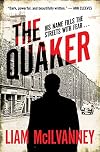
“The Quaker” is the nickname of the man who has been murdering women he picks up at Glasgow’s Barrowland dance hall. To the Glasgow police, he’s an investigation that has been going nowhere, and now they have another detective, Duncan McCormack, coming in for the purpose of recommending that the case be shut down. But then another murder occurs…maybe they will catch the Quaker after all.
McIlvanney evokes the Glasgow of the late 1960s very well, and the book captures the futile, show more grinding nature of the inquiry. McCormack is an interesting character, with just enough backstory revealed to hold the promise of more to learn about him in future books. The only thing I wasn’t sure about was what I called the “Susie Salmon” bits, after the main character in The Lovely Bones, where each of the murder victims speaks from beyond the grave after they’ve been murdered. Because the author is male, and because the women were raped as well as murdered, I felt uncomfortable about having such narration, even if the women don’t go into that much detail about it. It was a weird dynamic and I actually skipped the last couple of those, once I knew what they were about.
And speaking of weird, just recently I read another book set in Glasgow and featuring a serial killer who targeted women at dance halls: Witness the Dead, by Craig Robertson. The Robertson is set in the past and in the present, and the McIlvanney is set solely in the past. Both have qualities to recommend them: the Robertson has more (and dare I say better) female characters because of the present-day storyline, while the McIlvanney is more uniform in tone because it’s set in a single era. I ended up giving the McIlvanney the slight edge of the two because I liked the writing style just that little bit more, even though the crime felt grimmer than in the Robertson. It was a tough call, though. show less
McIlvanney evokes the Glasgow of the late 1960s very well, and the book captures the futile, show more grinding nature of the inquiry. McCormack is an interesting character, with just enough backstory revealed to hold the promise of more to learn about him in future books. The only thing I wasn’t sure about was what I called the “Susie Salmon” bits, after the main character in The Lovely Bones, where each of the murder victims speaks from beyond the grave after they’ve been murdered. Because the author is male, and because the women were raped as well as murdered, I felt uncomfortable about having such narration, even if the women don’t go into that much detail about it. It was a weird dynamic and I actually skipped the last couple of those, once I knew what they were about.
And speaking of weird, just recently I read another book set in Glasgow and featuring a serial killer who targeted women at dance halls: Witness the Dead, by Craig Robertson. The Robertson is set in the past and in the present, and the McIlvanney is set solely in the past. Both have qualities to recommend them: the Robertson has more (and dare I say better) female characters because of the present-day storyline, while the McIlvanney is more uniform in tone because it’s set in a single era. I ended up giving the McIlvanney the slight edge of the two because I liked the writing style just that little bit more, even though the crime felt grimmer than in the Robertson. It was a tough call, though. show less
Great, gritty tartan noir. Set in 1960's Glasgow, it's harkens back to the time of a city controlled by gangsters who control the cops. Or some of them anyway. In steps a young DI determined to nail a killer while protecting a secret that could land him in prison. Descriptive passages & dialogue full of local vernacular ensures you are transported to another time in this atmospheric read. Just when you think you've got it figured out, the author saves the best twists for last. Smart, well show more paced story with a sympathetic MC. I look forward to the next book in this series. show less
Most crime novels start with a murder. This one begins with a failed investigation. Glasgow in 1969 has been terrorised for months by the serial killer known as The Quaker, who has murdered three women after meeting them at the Barrowlands dance hall. The police have a description, a witness, numerous tip-offs from callers. Hundreds of men have been interviewed and eliminated from the enquiry. Women live in fear. Then the killings stop.
DI Duncan McCormack, a high flyer from another team, has show more been assigned the task of assessing what went wrong in the murder investigation. This immediately sets him apart from his colleagues. When another body is found, he is in an invidious position, mistrusted by the officers he needs to work with to solve the crime.
McCormack is an outsider in a city which is all about tribes. Catholic or Protestant, Glaswegian or Highlander, Gaelic or Scots, Freemason or not. It is also a city in flux – as the inner-city tenements are being demolished and people clamour to move out to the new towns of the west coast.
This is overwhelmingly a world of men and the novel asks interesting questions about the nature of masculinity, but it also has haunting interludes from the women who died, telling their stories in their own words. The Quaker is a novel steeped in the mood of a city and its people, with a very distinctive voice.
*
I received a copy of The Quaker from the publisher via Netgalley.
Read more of my reviews on my blog katevane.com/blog show less
DI Duncan McCormack, a high flyer from another team, has show more been assigned the task of assessing what went wrong in the murder investigation. This immediately sets him apart from his colleagues. When another body is found, he is in an invidious position, mistrusted by the officers he needs to work with to solve the crime.
McCormack is an outsider in a city which is all about tribes. Catholic or Protestant, Glaswegian or Highlander, Gaelic or Scots, Freemason or not. It is also a city in flux – as the inner-city tenements are being demolished and people clamour to move out to the new towns of the west coast.
This is overwhelmingly a world of men and the novel asks interesting questions about the nature of masculinity, but it also has haunting interludes from the women who died, telling their stories in their own words. The Quaker is a novel steeped in the mood of a city and its people, with a very distinctive voice.
*
I received a copy of The Quaker from the publisher via Netgalley.
Read more of my reviews on my blog katevane.com/blog show less
‘The Quaker’ is a genuinely gripping, atmospheric and convincing crime story set against the back drop of late 1960s Glasgow. It’s inspired by a real-life series of killings committed by a man christened ‘Bible John’ by the press. Author Liam McIlvanney wisely uses the case as a starting point for his story, rather than attempting to recreate it accurately. The result is a really compelling mystery that I couldn’t put down.
McIlvanney’s hero is DI McCormack, a determined young show more detective with a secret. McCormack has been sent to audit the investigation into a number of killings by serial rapist and murderer ‘The Quaker’ which has failed to yield any results. There’s a palpable tension between McCormack and the officers whose work he is checking, and the setup makes for a great twist on the normal investigative routines that are familiar from so many other crime novels. As the plot progresses and McCormack sees through the failings in the investigation to date, he begins to take control of the case. As you might expect, the truth ends up being far more complex than it at first appears.
McCormack is an utterly believable and sympathetic hero. His struggles against the engrained flaws and prejudices in the Glasgow police force are more than just a plot device. I found myself really rooting for him and caring about him as a character as well as the agent through which the mystery would be solved.
The surrounding characters are similarly convincing. McIlvanney manages to give them rich lives without getting bogged down in detail. There’s a big subplot about a safecracker which is almost as enjoyable as the main story, and which really helps to flesh out the city and the criminal gangs that run it. 60s Glasgow comes alive on the page and McIlvanny’s portrayal of the city is as accomplished as his writing of the human characters.
That sense of place and time is key to the success of the book. It reminded me a lot of the excellent ‘The Long Drop’ by Denise Mina, which is also set in Glasgow around the same time. For me, ‘The Quaker’ isn’t quite as good as that book, but it’s still definitely worth your time. It’s thrilling, the unravelling of the mystery is wonderfully satisfying and McCormack is a brilliant protagonist.
Read more of my crime and thriller reviews on CriminOlly.wordpress.com show less
McIlvanney’s hero is DI McCormack, a determined young show more detective with a secret. McCormack has been sent to audit the investigation into a number of killings by serial rapist and murderer ‘The Quaker’ which has failed to yield any results. There’s a palpable tension between McCormack and the officers whose work he is checking, and the setup makes for a great twist on the normal investigative routines that are familiar from so many other crime novels. As the plot progresses and McCormack sees through the failings in the investigation to date, he begins to take control of the case. As you might expect, the truth ends up being far more complex than it at first appears.
McCormack is an utterly believable and sympathetic hero. His struggles against the engrained flaws and prejudices in the Glasgow police force are more than just a plot device. I found myself really rooting for him and caring about him as a character as well as the agent through which the mystery would be solved.
The surrounding characters are similarly convincing. McIlvanney manages to give them rich lives without getting bogged down in detail. There’s a big subplot about a safecracker which is almost as enjoyable as the main story, and which really helps to flesh out the city and the criminal gangs that run it. 60s Glasgow comes alive on the page and McIlvanny’s portrayal of the city is as accomplished as his writing of the human characters.
That sense of place and time is key to the success of the book. It reminded me a lot of the excellent ‘The Long Drop’ by Denise Mina, which is also set in Glasgow around the same time. For me, ‘The Quaker’ isn’t quite as good as that book, but it’s still definitely worth your time. It’s thrilling, the unravelling of the mystery is wonderfully satisfying and McCormack is a brilliant protagonist.
Read more of my crime and thriller reviews on CriminOlly.wordpress.com show less
Lists
Awards


You May Also Like


Associated Authors
Statistics
- Works
- 9
- Members
- 396
- Popularity
- #61,230
- Rating
- 3.8
- Reviews
- 25
- ISBNs
- 49
- Languages
- 4