
Michael S. Kimmel
Author of Guyland: The Perilous World Where Boys Become Men
About the Author
Michael Kimmel is Distinguished Professor of Sociology at Stony Brook University, State University of New York. A leading researcher and writer on gender and men and masculinity, he is the author of numerous books and articles including The Gendered Society Reader, Fifth Edition (with Amy Aronson, show more OUP, 2013), Guyland: The Perilous World Where Boys Become Men (2009), and Manhood in America: A Cultural History, Third Edition (OUP, 2012). show less
Works by Michael S. Kimmel
Against the Tide: Pro-Feminist Men in the United States, 1776-1990 a Documentary History (1992) 44 copies
The Politics of Manhood: Profeminist Men Respond to the Mythopoetic Men's Movement (And the Mythopoetic Leaders Answer) (1995) 29 copies
Playmakers: The Jewish Entrepreneurs Who Created the Toy Industry in America (2026) 26 copies, 1 review
Changing Men: New Directions in Research on Men and Masculinity (SAGE Focus Editions) (1987) — Editor — 26 copies
Men & Masculinities: A Social, Cultural, and Historical Encyclopedia (2 Volume Set) (2003) 15 copies
Hombres (blancos) cabreados: La masculinidad al final de una era (Barlin Paisaje) (Spanish Edition) (2019) 7 copies, 1 review
Absolutism and Its Discontents: State and Society in Seventeenth Century France and England (1988) 3 copies
Masculinities 2 copies
Associated Works
Men Who Hate Women and Women Who Kick Their Asses: Stieg Larsson's Millennium Trilogy in Feminist Perspective (2012) — Contributor — 17 copies
Talking Gender: Public Images, Personal Journeys, and Political Critique (1996) — Contributor — 12 copies
Mundus foppensis (1691) ; and, The Levellers (1745, first edition 1703) — some editions — 2 copies
Tagged
Common Knowledge
- Birthdate
- 20th Century
- Gender
- male
- Nationality
- USA
- Associated Place (for map)
- USA
Members
Reviews
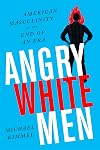
It's weird to read this book now, after four years of a Donald Trump presidency, but it remains as relevant now as it was then. Donald Trump isn't mentioned at all this book, but he is the elephant in the room throughout. Kimmel, a sociologist, uses this book to explore who a "angry white man" is, what feeds into their sense of grievance and the dynamics of power in American politics. The author also points out that these men exist at an "end of an era", pointing to massive shifts in both show more economic forces and personal relationships that make it nearly impossible to truly turn back the clock. show less

Reading this book a few years on, I tended to wonder what it would look like if he wrote it now. Many of the things he says in this work that speak to the future are wrong...very wrong. He failed to anticipate the stunning success of the Angry White Men at electing one of their own to the White House, and the Nazis, misogynists, and white supremacists rampaging through the country as though it belonged to them and no one else. Still, the historical work is great, though there are places show more where he might have pointed out some of the totally untrue things these guys think, rather than just noting that they think untrue things - such as the constant refrain of white men building everything in this country all by themselves. My main complaint with the book is the extreme level of sympathy that the author shows to some of the most hateful people in the universe. Perhaps it's easier when you yourself are white and male (though this group also despises Jews); for a lot of us, the wounds we still wear from their misplaced anger make it very difficult for us to sympathize with their perceived wounds. Overall, though, a quick read, though it would be hard to say it is "easy". The writing is lucid and competent, but easy is not a word one can apply to immersing oneself in this culture for a few hours. show less
Michael Kimmel’s Angry White Men is a work of sociology, focusing on the emergent public hostility in white, male masculinity in the twenty-first century. Kimmel’s analysis focuses on what he calls “aggrieved entitlement,” that the anger of white men has come from “[a] sense that those benefits to which to which [they] were entitled have been snatched away…by unseen forces larger and more powerful [than oneself].” Kimmel posits white rage as a product of this aggrieved show more entitlement, derived from an environment of increasing social equality, and diminishing economic prosperity, though Kimmel insinuates that a great deal of white rage comes from manipulation from [conservative] media and social networking. Kimmel’s revised 2017 edition of Angry White Men, though written prior to President Trump’s election, is easily and often viewed as a product of working white rage, features a number of reaffirmed theses, such as population being an emotion rather than an ideology, white male anger being directed against the institutions that have a chance at helping them, and the idea that there is a kernel of truth to some of their sentiments. Kimmel’s work also covers a variety of topics, devoting chapters to school shootings, men’s rights, divorced fatherhood, antifeminism, and anger-inspired actions of working men.
Kimmel is definitely writing to a very specific audience—one that apparently requires the rejection of academia; Kimmel is writing more for popular knowledge than he is for academic use as or in research. His writings style is conversational and colloquial, and though he uses a number of noted sources, they aren’t explicitly paraphrased or defined: the endnotes (some of which are not properly cited, see note 27 on page 292, which is just a url) are more-or-less used as backings or assurances of him having done research, rather than citations of evidence from credible sources. Furthermore, Kimmel has some problems dealing with his own research as well. While he calls his interviews with white men as “the basis of the research,” he infrequently cites these interviews. When he does bring attention to his own work, Kimmel does it forthright in the narrative, rather than alluding or paraphrasing conversations to support his claims. With so few apparent citations of his own work, one must ask how many interviews did he conduct, and why not bring the reader’s attention to your research? On top of this, Kimmel states in the introduction that he actively chose not to record a conversation with an interviewee. While this is used for dramatic effect, this subsequently calls into question Kimmel’s academic practices.
Perhaps the largest problem with Angry White Men’s choice of writing is its obvious political bias. Kimmel assumes completely that the readership of Angry White Men is an educated liberal living in a blue state, drawing a clear line between working people in flyover states and the readership. Kimmel outright refers to himself and the reader(s) in this regard, “…we northerners are used to feeling horror, revulsion, and more than a little contempt for the white South…” While the author does attempt to approach this bifurcation, “not with contempt or pity, but with empathy and compassion,” the presumption of an excluded/included readership doesn’t lead to the types of narratives that will lead to mending or understanding of this divide. Kimmel does acknowledge his own political opinions, which is a rather customary and responsible measure to take, the decisions he makes in the narrative of Angry White Men creates a feedback loop of “enlightened liberal” thought. Even the publishing decision seems to be motivated by liberalness: the New York-based publisher Nation Books describes themselves as aiming to, “constructively affect and amplify cultural and political discourse and to engender positive social change.” While the statement is fairly universal or nonpartisan, the rhetoric here is notably contemporary liberal, “engendering positive social change” being almost cliché language of social progressives.
This obvious slant is a problem that hurts the integrity of Kimmel and his writings. This is a shame, given that the book is otherwise a great synthesis of political, historical, and cultural narratives of “the forgotten American.” A lot of what Kimmel does is novel, interesting, and important, but given these problems with what could have been a great work of research, the reader is forced to question Kimmel and his thesis. show less
Kimmel is definitely writing to a very specific audience—one that apparently requires the rejection of academia; Kimmel is writing more for popular knowledge than he is for academic use as or in research. His writings style is conversational and colloquial, and though he uses a number of noted sources, they aren’t explicitly paraphrased or defined: the endnotes (some of which are not properly cited, see note 27 on page 292, which is just a url) are more-or-less used as backings or assurances of him having done research, rather than citations of evidence from credible sources. Furthermore, Kimmel has some problems dealing with his own research as well. While he calls his interviews with white men as “the basis of the research,” he infrequently cites these interviews. When he does bring attention to his own work, Kimmel does it forthright in the narrative, rather than alluding or paraphrasing conversations to support his claims. With so few apparent citations of his own work, one must ask how many interviews did he conduct, and why not bring the reader’s attention to your research? On top of this, Kimmel states in the introduction that he actively chose not to record a conversation with an interviewee. While this is used for dramatic effect, this subsequently calls into question Kimmel’s academic practices.
Perhaps the largest problem with Angry White Men’s choice of writing is its obvious political bias. Kimmel assumes completely that the readership of Angry White Men is an educated liberal living in a blue state, drawing a clear line between working people in flyover states and the readership. Kimmel outright refers to himself and the reader(s) in this regard, “…we northerners are used to feeling horror, revulsion, and more than a little contempt for the white South…” While the author does attempt to approach this bifurcation, “not with contempt or pity, but with empathy and compassion,” the presumption of an excluded/included readership doesn’t lead to the types of narratives that will lead to mending or understanding of this divide. Kimmel does acknowledge his own political opinions, which is a rather customary and responsible measure to take, the decisions he makes in the narrative of Angry White Men creates a feedback loop of “enlightened liberal” thought. Even the publishing decision seems to be motivated by liberalness: the New York-based publisher Nation Books describes themselves as aiming to, “constructively affect and amplify cultural and political discourse and to engender positive social change.” While the statement is fairly universal or nonpartisan, the rhetoric here is notably contemporary liberal, “engendering positive social change” being almost cliché language of social progressives.
This obvious slant is a problem that hurts the integrity of Kimmel and his writings. This is a shame, given that the book is otherwise a great synthesis of political, historical, and cultural narratives of “the forgotten American.” A lot of what Kimmel does is novel, interesting, and important, but given these problems with what could have been a great work of research, the reader is forced to question Kimmel and his thesis. show less
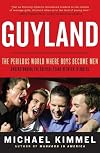
This particular book is a precursor to some which I have recently reviewed, in particular, it laid the groundwork for Kay Hymowitz’s “Manning Up,” and was also referenced in Whitmore’s “Why Boys Fail.” The book is prefaced with a poem harshly criticizing America’s “boys will be boys” attitude towards the irresponsible, reckless, violent, and even criminal ways that many boys express themselves throughout adolescence and carried over into early manhood. The author begins by show more looking at a number of college and post-collegiate young men, some hardworking and studious, some carefree and partiers and notes that most of the young men that he interviewed are educated or being educated, and come from middle to upper class families. He then describes the extended adolescence of these privileged young men, who have the luxury of no commitments, no pressing responsibilities: “Guyland is the world in which these young men live. It is both a stage of life, a liminal undefined time span between adolescence and adulthood that can often stretch for a decade or more, a place, or rather, a bunch of places where guys gather to be guys with each other, unhassled by the demands of parents, girlfriends, jobs, kids, and the other nuisances of adult life. In this topsy-turvy, Peter-Pan mindset, young men shirk the responsibilities of adulthood and remain fixated on the trappings of boyhood, while the boys they still are struggle heroically to prove that they are real men despite all evidence to the contrary” (4).
Kimmel examines the social, cultural, and economic changes which have created the opportunity for the emergence of Guyland, pointing to the commonly accepted life-stage events which lead to adulthood: leaving home, completing education, beginning a career, marriage, and parenthood (24), and how many, possibly most, twenty-somethings and even thirty-somethings have yet to attain a majority of these milestones. This has been noted across the board in terms of gender, race, and class, but Kimmel focuses on how this has contributed to the continued appeal of Guyland, citing the attitude of “What’s the rush?” He also looks at the “guy code,” asking dozens of men, “what does it mean to be a man?” then explores how this is expressed throughout high school, college, and young adulthood. He also looks at the trappings of Guyland — games, pornography, sex — as well as the women who venture in. Finally, Kimmel looks at what happens on the other side of Guyland, when guys finally grow up and become men, and the negative repercussions of it, as well as what can be done to help them deconstruct Guyland into a healthier, empowering experience.
Some of the stories that Kimmel uncovers when interviewing teens and young adults are horrifying, and he observes that normal, regular guys are capable of both committing terrible crimes, and, through the Guy Code, the culture of loyal, complicit silence, becoming conspirators with those who commit the crimes: “the bystanders may think that they withdraw their support — by turning away, leaving the scene, or just standing stoically by — but their silence reinforces the behaviors anyway” (67). He relates stories of sexual and physical abuse, of bullying and tormenting others because of their beliefs or sexual orientations, of men who use and abuse alcohol and drugs. He reiterates the fact that by accepting these behaviors and shrugging it off by saying “boys will be boys,” we as a society are equally to blame for not only the crimes, but the loss of these young men and their potential. As parents, educators, employers, by making excuses for these guys, he argues, we are only encouraging and prolonging their stay in Guyland. This really is an excellent study of early manhood in contemporary society, and is highly recommended for those interested in the subject. show less
Kimmel examines the social, cultural, and economic changes which have created the opportunity for the emergence of Guyland, pointing to the commonly accepted life-stage events which lead to adulthood: leaving home, completing education, beginning a career, marriage, and parenthood (24), and how many, possibly most, twenty-somethings and even thirty-somethings have yet to attain a majority of these milestones. This has been noted across the board in terms of gender, race, and class, but Kimmel focuses on how this has contributed to the continued appeal of Guyland, citing the attitude of “What’s the rush?” He also looks at the “guy code,” asking dozens of men, “what does it mean to be a man?” then explores how this is expressed throughout high school, college, and young adulthood. He also looks at the trappings of Guyland — games, pornography, sex — as well as the women who venture in. Finally, Kimmel looks at what happens on the other side of Guyland, when guys finally grow up and become men, and the negative repercussions of it, as well as what can be done to help them deconstruct Guyland into a healthier, empowering experience.
Some of the stories that Kimmel uncovers when interviewing teens and young adults are horrifying, and he observes that normal, regular guys are capable of both committing terrible crimes, and, through the Guy Code, the culture of loyal, complicit silence, becoming conspirators with those who commit the crimes: “the bystanders may think that they withdraw their support — by turning away, leaving the scene, or just standing stoically by — but their silence reinforces the behaviors anyway” (67). He relates stories of sexual and physical abuse, of bullying and tormenting others because of their beliefs or sexual orientations, of men who use and abuse alcohol and drugs. He reiterates the fact that by accepting these behaviors and shrugging it off by saying “boys will be boys,” we as a society are equally to blame for not only the crimes, but the loss of these young men and their potential. As parents, educators, employers, by making excuses for these guys, he argues, we are only encouraging and prolonging their stay in Guyland. This really is an excellent study of early manhood in contemporary society, and is highly recommended for those interested in the subject. show less
Lists
You May Also Like


Associated Authors
Statistics
- Works
- 44
- Also by
- 7
- Members
- 2,007
- Popularity
- #12,822
- Rating
- 3.5
- Reviews
- 16
- ISBNs
- 128
- Languages
- 2
- Favorited
- 1