
Susan Bordo
Author of Unbearable Weight: Feminism, Western Culture, and the Body
About the Author
Susan Bordo is a media critic, cultural historian, and feminist scholar. Her books include Unbearable Weight and, most recently, The Creation of Anne Boleyn. She is Professor of Gender and Women's Studies at the University of Kentucky.
Image credit: from University of Kentucky faculty page
Works by Susan Bordo
The Creation of Anne Boleyn: A New Look at England’s Most Notorious Queen (2013) 406 copies, 14 reviews
Imagine Bernie Sanders as a Woman: And Other Writings on Politics and Media 2016-2019 (2020) 3 copies, 1 review
Material Feminisms 1 copy
Associated Works
Tagged
Common Knowledge
- Birthdate
- 1947-01-24
- Gender
- female
- Education
- State University of New York at Stony Brook (PhD | 1982)
Carleton University (BA) - Occupations
- Gender & Women's Studies professor, University of Kentucky
- Organizations
- American Philosophical Association
Society for Women in Philosophy
Society for Phenomenology and Existential Philosophy
American Studies Association - Agent
- Sam Stoloff
- Short biography
- Susan Bordo is known for the clarity, accessibility, and contemporary relevance of her writing. Her first book, The Flight to Objectivity, has become a classic of feminist philosophy. In 1993, increasingly aware of our culture's preoccupation with weight and body image, she published Unbearable Weight: Feminism, Western Culture, and the Body, a book that is still widely read and assigned in classes today. During speaking tours for that book, she encountered many young men who asked, "What about us?" The result was The Male Body: A New Look at Men in Public and in Private (1999). Both books were highly praised by reviewers, with Unbearable Weight named a 1993 Notable Book by the New York Times and The Male Body featured in Mademoiselle, Elle, Vanity Fair, NPR, and MSNBC. Both books have been translated into many languages, and individual chapters, many of which are considered paradigms of lucid writing, are frequently re-printed in collections and writing textbooks. Her newest book, The Creation of Anne Boleyn: A New Look at England's Most Notorious Queen, was published by Houghton Mifflin Harcourt in April, 2013. A British edition is forthcoming in Janurary 2014 from Oneworld publishing. She lives in Lexington, Kentucky with her husband, daughter, two dogs, two cats, one cockatiel, and teaches at the University of Kentucky as the Otis A. Singletary Chair in the Humanities. [adapted from Amazon.com (9/11/2013) and The Creation of Anne Boleyn (2013)]
- Nationality
- USA
- Birthplace
- Newark, New Jersey, USA
- Places of residence
- Lexington, Kentucky, USA
Newark, New Jersey, USA - Map Location
- USA
Members
Reviews
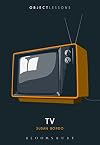
TV by Susan Bordo is another insightful volume in the Object Lessons series. Bordo covers both a brief history of programming and a critique of what that programming has wrought, namely a horrible President* and a divided nation with the delusional half led by the orange menace. And it was through TV that a failed (multiple times) businessman was able to rebuild his image and convince a large number (but never a majority) of the population that a misogynistic, racist, sexual predator was a show more gift from their God.
Bordo traces the shows and even the commercials to some extent (since they blended seamlessly for some time) from early news and broadcast shows to news as entertainment (or propaganda in the case of Faux News) and more nuanced broadcast and cable/streaming shows. Using televisions most disgusting product, Trump, as the endpoint allows her to show the subtle steps along the way that brought us to this abomination.
If you're old enough to remember many of the shows and events she mentions, which I am, this is also an eye-opening trip down memory lane, albeit one that serves as more than mere nostalgia. No doubt some will be put off by Bordo making such a clear case for the catastrophe that has been the Trump administration being largely brought about and sustained by television. And unlike some who are thee imbecilic, television and ratings are indeed how Trump measured his success, Twitter was a tool he used to help toward that end. The asinine tweets are what made the news and created the controversies that got him unlimited television time free of charge. But thee delusional is, well, not very discerning, much like Trump himself. But loves to think he is clever.
Like most of the volumes in this series, I highly recommend this one. Each one is different, some more or less personal, some more or less analytical. That is what makes the series fun, each volume isn't simply a cookie-cutter brief about the given object but one writer's way into and through that object.
Reviewed from a copy made available by the publisher via NetGalley. show less
Bordo traces the shows and even the commercials to some extent (since they blended seamlessly for some time) from early news and broadcast shows to news as entertainment (or propaganda in the case of Faux News) and more nuanced broadcast and cable/streaming shows. Using televisions most disgusting product, Trump, as the endpoint allows her to show the subtle steps along the way that brought us to this abomination.
If you're old enough to remember many of the shows and events she mentions, which I am, this is also an eye-opening trip down memory lane, albeit one that serves as more than mere nostalgia. No doubt some will be put off by Bordo making such a clear case for the catastrophe that has been the Trump administration being largely brought about and sustained by television. And unlike some who are thee imbecilic, television and ratings are indeed how Trump measured his success, Twitter was a tool he used to help toward that end. The asinine tweets are what made the news and created the controversies that got him unlimited television time free of charge. But thee delusional is, well, not very discerning, much like Trump himself. But loves to think he is clever.
Like most of the volumes in this series, I highly recommend this one. Each one is different, some more or less personal, some more or less analytical. That is what makes the series fun, each volume isn't simply a cookie-cutter brief about the given object but one writer's way into and through that object.
Reviewed from a copy made available by the publisher via NetGalley. show less
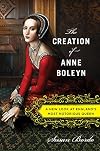
I read just about every Anne Boleyn book I can get my hands on, but I admit it gets pretty repetitive -- all these examinations of one woman's life. But this isn't "just another Anne Boleyn biography." In addition to the "biography" part (which provides some insights and perspectives I hadn't seen before), the author studies the various ways Anne Boleyn has been portrayed in popular culture, from the earliest novels about her to the modern soap opera The Tudors. (I confessed I never got past show more Episode 1, which depicted like five sex acts in the first fifteen minutes. Maybe I'll give it another go.)
Also notable is Bordo's undisguised, unapologetic hostility towards certain people, both historians like David Starkey and fiction writers like Philippa Gregory, who she thinks over-dramatize Anne's life and make all kinds of assumptions and get it all wrong. I confess I really enjoyed The Other Boleyn Girl, but I read it when I knew a great deal about Anne's life, and I knew the book wasn't historically accurate and didn't expect it to be.
This book is an important lesson to students of history: both about how little we really know about characters of the past, and about how much "history" is a reflection of our times rather than it is of whatever happened back then. show less
Also notable is Bordo's undisguised, unapologetic hostility towards certain people, both historians like David Starkey and fiction writers like Philippa Gregory, who she thinks over-dramatize Anne's life and make all kinds of assumptions and get it all wrong. I confess I really enjoyed The Other Boleyn Girl, but I read it when I knew a great deal about Anne's life, and I knew the book wasn't historically accurate and didn't expect it to be.
This book is an important lesson to students of history: both about how little we really know about characters of the past, and about how much "history" is a reflection of our times rather than it is of whatever happened back then. show less
Whether you believe Anne Boleyn was the tragic pawn of powerful and ruthless men or a manipulative whore that stole a crown and spent her days scheming to murder her enemies, or something in between, you have to admit that Anne Boleyn was fascinating. Susan Bordo's "The Creation of Anne Boleyn" discusses how Anne has been portrayed in both fiction and non-fiction, TV, movies, and documentaries and how that has changed over time. I thoroughly enjoyed the way the author explored and compared show more the many versions of Anne's life and character throughout history and how each portrayal of Anne was adapted to fit in with the era in which it was written. It's easy to see how the "true" Anne Boleyn could be lost somewhere in history. It makes me hate Henry all the more for all that he did to remove any mention of her so that now, we're left with mostly conjecture about who she really was. Of course, that may be the very thing that causes me to be so drawn to her above many other dynamic women in history. I admit, I haven't watched many of the movies and documentaries mentioned but there are several that I am eager to see after reading this book.
Bordo is very opinionated about the way she believes many popular authors have unfairly characterized Anne. From the beginning, this approach was very off-putting for me since my introduction to Anne Boleyn was from authors such as Alison Weir, Norah Lofts, and Jean Plaidy and I was almost offended at, what I felt, was Bordo practically accusing them of fabricating history (as far as Weir and Lofts, not much is said about Plaidy). As you see by my 4 star rating, I ended up finding this to be an excellent read, and I may have even rated it a 5 had she not been so harsh on Alison Weir. I am much more inclined to see Anne Boleyn much the way Bordo does, as an intelligent, charismatic, and complex woman as opposed to the sly temptress that she is so widely believed to be. However, I think that, with the lack of information available about Anne Boleyn and since the information that is available cannot necessarily be taken at face value, Alison Weir's interpretation of historical events and Anne's character is just as likely as Bordo's interpretation.
I found "The Creation of Anne Boleyn" to be thought-provoking and it definitely motivated me to revisit some of my favorite Tudor reads and led me to discover some books and movies I wasn't familiar with. I appreciated that there were many points of view discussed and compared even though there was a clear bias. I would absolutely recommend this book to anyone who is curious about Anne Boleyn because it does present so many differing points of view as well as the author's own opinion about Anne's character and why she has been portrayed so many ways. show less
Bordo is very opinionated about the way she believes many popular authors have unfairly characterized Anne. From the beginning, this approach was very off-putting for me since my introduction to Anne Boleyn was from authors such as Alison Weir, Norah Lofts, and Jean Plaidy and I was almost offended at, what I felt, was Bordo practically accusing them of fabricating history (as far as Weir and Lofts, not much is said about Plaidy). As you see by my 4 star rating, I ended up finding this to be an excellent read, and I may have even rated it a 5 had she not been so harsh on Alison Weir. I am much more inclined to see Anne Boleyn much the way Bordo does, as an intelligent, charismatic, and complex woman as opposed to the sly temptress that she is so widely believed to be. However, I think that, with the lack of information available about Anne Boleyn and since the information that is available cannot necessarily be taken at face value, Alison Weir's interpretation of historical events and Anne's character is just as likely as Bordo's interpretation.
I found "The Creation of Anne Boleyn" to be thought-provoking and it definitely motivated me to revisit some of my favorite Tudor reads and led me to discover some books and movies I wasn't familiar with. I appreciated that there were many points of view discussed and compared even though there was a clear bias. I would absolutely recommend this book to anyone who is curious about Anne Boleyn because it does present so many differing points of view as well as the author's own opinion about Anne's character and why she has been portrayed so many ways. show less
Whether you believe Anne Boleyn was the tragic pawn of powerful and ruthless men or a manipulative whore that stole a crown and spent her days scheming to murder her enemies, or something in between, you have to admit that Anne Boleyn was fascinating. Susan Bordo's "The Creation of Anne Boleyn" discusses how Anne has been portrayed in both fiction and non-fiction, TV, movies, and documentaries and how that has changed over time. I thoroughly enjoyed the way the author explored and compared show more the many versions of Anne's life and character throughout history and how each portrayal of Anne was adapted to fit in with the era in which it was written. It's easy to see how the "true" Anne Boleyn could be lost somewhere in history. It makes me hate Henry all the more for all that he did to remove any mention of her so that now, we're left with mostly conjecture about who she really was. Of course, that may be the very thing that causes me to be so drawn to her above many other dynamic women in history. I admit, I haven't watched many of the movies and documentaries mentioned but there are several that I am eager to see after reading this book.
Bordo is very opinionated about the way she believes many popular authors have unfairly characterized Anne. From the beginning, this approach was very off-putting for me since my introduction to Anne Boleyn was from authors such as Alison Weir, Norah Lofts, and Jean Plaidy and I was almost offended at, what I felt, was Bordo practically accusing them of fabricating history (as far as Weir and Lofts, not much is said about Plaidy). As you see by my 4 star rating, I ended up finding this to be an excellent read, and I may have even rated it a 5 had she not been so harsh on Alison Weir. I am much more inclined to see Anne Boleyn much the way Bordo does, as an intelligent, charismatic, and complex woman as opposed to the sly temptress that she is so widely believed to be. However, I think that, with the lack of information available about Anne Boleyn and since the information that is available cannot necessarily be taken at face value, Alison Weir's interpretation of historical events and Anne's character is just as likely as Bordo's interpretation.
I found "The Creation of Anne Boleyn" to be thought-provoking and it definitely motivated me to revisit some of my favorite Tudor reads and led me to discover some books and movies I wasn't familiar with. I appreciated that there were many points of view discussed and compared even though there was a clear bias. I would absolutely recommend this book to anyone who is curious about Anne Boleyn because it does present so many differing points of view as well as the author's own opinion about Anne's character and why she has been portrayed so many ways. show less
Bordo is very opinionated about the way she believes many popular authors have unfairly characterized Anne. From the beginning, this approach was very off-putting for me since my introduction to Anne Boleyn was from authors such as Alison Weir, Norah Lofts, and Jean Plaidy and I was almost offended at, what I felt, was Bordo practically accusing them of fabricating history (as far as Weir and Lofts, not much is said about Plaidy). As you see by my 4 star rating, I ended up finding this to be an excellent read, and I may have even rated it a 5 had she not been so harsh on Alison Weir. I am much more inclined to see Anne Boleyn much the way Bordo does, as an intelligent, charismatic, and complex woman as opposed to the sly temptress that she is so widely believed to be. However, I think that, with the lack of information available about Anne Boleyn and since the information that is available cannot necessarily be taken at face value, Alison Weir's interpretation of historical events and Anne's character is just as likely as Bordo's interpretation.
I found "The Creation of Anne Boleyn" to be thought-provoking and it definitely motivated me to revisit some of my favorite Tudor reads and led me to discover some books and movies I wasn't familiar with. I appreciated that there were many points of view discussed and compared even though there was a clear bias. I would absolutely recommend this book to anyone who is curious about Anne Boleyn because it does present so many differing points of view as well as the author's own opinion about Anne's character and why she has been portrayed so many ways. show less
Awards

You May Also Like


Associated Authors
Statistics
- Works
- 13
- Also by
- 4
- Members
- 1,568
- Popularity
- #16,460
- Rating
- 4.0
- Reviews
- 22
- ISBNs
- 44
- Languages
- 2
- Favorited
- 2
