

Liel Leibovitz
Author of A Broken Hallelujah: Rock and Roll, Redemption, and the Life of Leonard Cohen
Works by Liel Leibovitz
A Broken Hallelujah: Rock and Roll, Redemption, and the Life of Leonard Cohen (2014) 121 copies, 3 reviews
The Newish Jewish Encyclopedia: From Abraham to Zabar’s and Everything in Between (2019) 117 copies, 2 reviews
Fortunate Sons: The 120 Chinese Boys Who Came to America, Went to School, and Revolutionized an Ancient Civilization (2011) 74 copies, 2 reviews
How the Talmud Can Change Your Life: Surprisingly Modern Advice from a Very Old Book (2023) 32 copies, 2 reviews
Zionism: The Tablet Guide 1 copy
Associated Works
Tagged
Common Knowledge
- Gender
- male
Members
Reviews
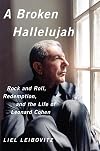
As a high school student in Berkeley, California, in the mid-1970s, I had an English literature class that, in keeping with the experimental educational ideas of that time and place, used relatively contemporary lyrics to discuss the wider aims of literature: a lot of Dylan (especially “Desolation Row” and “Highway 61 Revisited,” which the class spent weeks and weeks on) and others. Including Leonard Cohen and his famous “Suzanne.” My best friend (now my sister-in-law) and I show more began discussing, in class, the second verse, the one about Jesus, and we just started riffing about it. When other classmates wanted to chime in, our teacher - alas, his name lost in the mists of time - stopped them; we were two usually quiet students and he wanted to hear where we would take the story…..In the early 1980s, I remember hearing and being stunned by “First We Take Manhattan,” a manifesto about how the world can maim us, and I found John Cale’s version of “Hallelujah” on 1991’s “I’m Your Fan” to be the best ever, until kd came along….Decades later, I’ve lived in Montreal for 21+ years now; and when word came of Leonard’s death last year, over a span of a few weeks hundreds of locals, French and English both, congregated at the front of his house, sat on the doorstep and, with guitars and voices, sang his songs in remembrance and love. Earlier this year, in 2017, my husband and I attended a concert in tribute to Leonard, a year after his passing, organized by his son Adam, replete with international stars like Sting and Elvis Costello, with locals like Patrick Watson (he of the ethereal voice) and Coeur de Pirate, and of course, the elegiac kd lang, all singing Leonard’s songs. So you get the idea that this man, and his music, has meant a lot to me for a very long time. This biography, published in 2014, some time before his death but after the betrayal by his manager (who stole around $12M of Cohen’s savings), when he had to go back on the road, age 77, to earn some cash, describes Leonard Cohen’s life from two perspectives: the first, and perhaps most interesting to me, is his life-long struggle and engagement with his religion, Judaism. His religious identity shines through most of his songs, in the sense of much of the Jewish tradition being about doubt and thought and trying to reach an understanding of being a “chosen people,” and Leibovitz does a good job of bringing out that aspect of this very complex human being. The second perspective is, of course, that of the artist - moving from poetry to prose to songwriting, and I think it’s true to say moving to Buddhism (although Leonard himself didn’t like being called that, he always said “I’m a Jew,” and disliked the idea that one could not be both, philosophically speaking). Then there’s the great themes of the work: solitude (and who is more lonely than God?) and love (often hard-bitten, hard-won, hard) and how to be an authentic human. Famously, Leonard Cohen took years to write his songs, first writing a huge number of verses and slowly paring them down and perfecting them, so that in the end, the essence was all that was left: “I heard there was a secret chord/That David played and pleased the Lord/But you don’t really care for music/Do you?” “Ring the bells that still can ring/Forget your perfect offering/There is a crack in everything/That’s how the light gets in.” And, though this is obviously not in the bio, from his final album, “You want it darker/We kill the flame./Hineni hineni/I’m ready, my Lord.” A remarkable man, a remarkable life. And I feel richer for having read more about him. Wow. show less
How the Talmud Can Change Your Life: Surprisingly Modern Advice from a Very Old Book by Liel Leibovitz
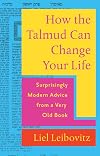
While the title is a bit click-baity, the book does fulfill its purpose of providing an extremely accessible and contemporary approach to the Talmud, and introduces the reader to some of its more colorful characters and stories.
The author does an excellent job of explaining the often bizarre mash-up of highly technical legal discourse, esoteric arguments, and seemingly trivial anecdotes, demonstrating how these disparate elements together forge a whole that's more than the sum of its parts. show more
He also provides tie-ins to modern times that showcase the timelessness and broad appeal of the Talmud, even though a lot of it appears to be completely irrelevant for anyone other than extremely religious men studying at a Yeshiva. show less
The author does an excellent job of explaining the often bizarre mash-up of highly technical legal discourse, esoteric arguments, and seemingly trivial anecdotes, demonstrating how these disparate elements together forge a whole that's more than the sum of its parts. show more
He also provides tie-ins to modern times that showcase the timelessness and broad appeal of the Talmud, even though a lot of it appears to be completely irrelevant for anyone other than extremely religious men studying at a Yeshiva. show less
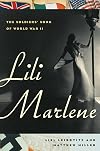
The song known to most people as "Lili Marlene" actually began life as a poem written by Hans Leip, a German soldier, in 1915. Titled "Song of a Young Sentry," the lyric expressed the soldier's wistful longing to return to his sweetheart and to his former life, away from the dreadful chaos of war.
This book traces the interesting story of how the poem became "Lili Marlene", beloved song of soldiers around the world during World War II. Against the background of the growing Nazi threat in show more the 1930s, Leibovitz and Miller explore the lives of Leip; of Norbert Schultze who composed the haunting tune; and of Lale Andersen, the singer who first brought the song to life. They relate how, thanks to the German Army military station, Radio Belgrade, the song came to be popular among the troops and on the home front, despite the fact that Nazi propaganda minister Goebbels detested and tried to suppress it.
Where the book succeeds most is in its explanation of what the song meant to lonely soldiers of all nationalities. Radio Belgrade broadcast "Lili Marlene" every evening at 9:57 p.m., before signing off, and throughout Europe fighting men stopped to listen and to think of home. Although sung in German, which few Allied troops could translate, the tune's expression of hopeful longing was well understood by soldiers everywhere, and it provided a few minutes of comfort at the end of each day.
Lili Marlene: The Soldiers' Song of World War II, is a well researched and clearly written biography of a great song. It once again proves that music is a universal language, bringing people together and offering comfort and hope even in desperate times. show less
This book traces the interesting story of how the poem became "Lili Marlene", beloved song of soldiers around the world during World War II. Against the background of the growing Nazi threat in show more the 1930s, Leibovitz and Miller explore the lives of Leip; of Norbert Schultze who composed the haunting tune; and of Lale Andersen, the singer who first brought the song to life. They relate how, thanks to the German Army military station, Radio Belgrade, the song came to be popular among the troops and on the home front, despite the fact that Nazi propaganda minister Goebbels detested and tried to suppress it.
Where the book succeeds most is in its explanation of what the song meant to lonely soldiers of all nationalities. Radio Belgrade broadcast "Lili Marlene" every evening at 9:57 p.m., before signing off, and throughout Europe fighting men stopped to listen and to think of home. Although sung in German, which few Allied troops could translate, the tune's expression of hopeful longing was well understood by soldiers everywhere, and it provided a few minutes of comfort at the end of each day.
Lili Marlene: The Soldiers' Song of World War II, is a well researched and clearly written biography of a great song. It once again proves that music is a universal language, bringing people together and offering comfort and hope even in desperate times. show less
I've long liked the song but (sort of) wrongly believed it to be a song from WWI, not WWII. While it might seem odd to dedicate an entire book to a short song, the authors really do the song, and its times, justice and present a unique view of world events during a very tumultuous period.
Lists
Judaism & Israel (1)
Awards

You May Also Like


Associated Authors
Statistics
- Works
- 11
- Also by
- 1
- Members
- 519
- Popularity
- #47,859
- Rating
- 3.8
- Reviews
- 18
- ISBNs
- 37
- Languages
- 3