
About the Author
James F. Simon is the Martin Professor of Law and Dean Emeritus at New York Law School.
Image credit: Photograph by Marcia Simon
Works by James F. Simon
What Kind of Nation: Thomas Jefferson, John Marshall, and the Epic Struggle to Create a United States (2002) 383 copies, 3 reviews
Lincoln and Chief Justice Taney: Slavery, Secession, and the President's War Powers (2006) 267 copies, 5 reviews
FDR and Chief Justice Hughes: The President, the Supreme Court, and the Epic Battle Over the New Deal (2012) 59 copies, 1 review
The Antagonists: Hugo Black, Felix Frankfurter and Civil Liberties in Modern America (1989) 57 copies, 2 reviews
Tagged
Common Knowledge
- Birthdate
- 1938-11-26
- Gender
- male
- Education
- Yale University (BA)
Yale Law School - Occupations
- journalist
lecturer
academic administrator - Nationality
- USA
- Places of residence
- West Nyack, New York, USA
- Associated Place (for map)
- New York, USA
Members
Reviews
The Antagonists: Hugo Black, Felix Frankfurter and Civil Liberties in Modern America by James F. Simon

James Simon, author of an excellent biography of William O. Douglas, has just produced a masterpiece of biography and Supreme Court analysis. In The Antagonists Simon uses the conflict between two erstwhile friends as a metaphor for the larger philosophical debate on the role of the Supreme Court: judicial restraint v. judicial activism. Both entered the court with outstanding civil libertarian records. Frankfurter, the academic, having taught at Harvard for many years, and having been show more adviser to statesmen and Presidents, once on the court became a passionate advocate of judicial restraint. Let the legislature reform society. Ironically he firmly believed in the law as a mechanism to change society. His plea to young lawyers: "We make of the clever pleaders, but not lawyers, if they fail to glimpse the glorious vision of the law, not as a harsh Procrustean bed into which all persons and all societies must inexorably be fitted, but as a vital agency for human betterment."
Black, a product of a rather poor environment and former member of the KKK, arrived on the bench and proceeded to challenge most of the accepted judicial doctrines of the 20th century. He firmly believed that the due process clause of the 14th amendment, which had been used by previous conservative courts to impose their personally held economic beliefs on elected representatives, was intended to force the Bill of Rights on the states. Until his tenure on the bench it was widely accepted that the Bill of Rights was intended to apply to the federal government but not the states. Judge Cardozo had previously argued that the Bill of Rights applied only selectively to the states, i. e. only those rights which were fundamental could be enforced on a state level.
Black and Frankfurter, for a time became bitter foes during debates on these issues. Ultimately Black was the one who built majorities around his position while Frankfurter increasingly was forced into the minority position. During the early fifties, especially during the red-baiting days, both came together again in strong minority positions in favor of free speech. Both were virulent anti-communists, but unlike the McCarthyites, they refused to pander to the lowest common denominator, and tenaciously clung to the principles embraced by the Constitution. Both voted alone to stay the execution of the Rosenbergs (see my last issue for the Sharlitt review) and against the unseemly haste of Chief Justice Vinson to get them executed. (When Vinson died in 1953 Frankfurter is reported to have said this was the first evidence he had seen that there was a God.)
Despite the bitter wrangling, and despite the inevitable politicking, what is reassuring, and yet astonishing, is the depth of intellectual debate. Most of the justices have truly had the best interests of the country at heart and were deeply committed to their ideological positions. The Court was ultimately strengthened by the presence of Black and Frankfurter, who at the end became close friends, despite their differences. Their intellectual differences led to profound debates over the issues which ultimately led to stronger court decisions. show less
Black, a product of a rather poor environment and former member of the KKK, arrived on the bench and proceeded to challenge most of the accepted judicial doctrines of the 20th century. He firmly believed that the due process clause of the 14th amendment, which had been used by previous conservative courts to impose their personally held economic beliefs on elected representatives, was intended to force the Bill of Rights on the states. Until his tenure on the bench it was widely accepted that the Bill of Rights was intended to apply to the federal government but not the states. Judge Cardozo had previously argued that the Bill of Rights applied only selectively to the states, i. e. only those rights which were fundamental could be enforced on a state level.
Black and Frankfurter, for a time became bitter foes during debates on these issues. Ultimately Black was the one who built majorities around his position while Frankfurter increasingly was forced into the minority position. During the early fifties, especially during the red-baiting days, both came together again in strong minority positions in favor of free speech. Both were virulent anti-communists, but unlike the McCarthyites, they refused to pander to the lowest common denominator, and tenaciously clung to the principles embraced by the Constitution. Both voted alone to stay the execution of the Rosenbergs (see my last issue for the Sharlitt review) and against the unseemly haste of Chief Justice Vinson to get them executed. (When Vinson died in 1953 Frankfurter is reported to have said this was the first evidence he had seen that there was a God.)
Despite the bitter wrangling, and despite the inevitable politicking, what is reassuring, and yet astonishing, is the depth of intellectual debate. Most of the justices have truly had the best interests of the country at heart and were deeply committed to their ideological positions. The Court was ultimately strengthened by the presence of Black and Frankfurter, who at the end became close friends, despite their differences. Their intellectual differences led to profound debates over the issues which ultimately led to stronger court decisions. show less
Lincoln and Chief Justice Taney: Slavery, Secession, and the President's War Powers by James F. Simon
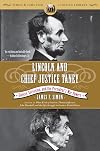
Interesting book, mainly for its take on Taney. I learned, for instance, that his name is pronounced like "Tawn-ey" (rather than "Tane-y"), and that he was actually anti-slavery for a long time, and that he was a very respected jurist... at least until Dred Scott. The author does the best he can with the limited amount of material regarding the intersection of Lincoln and Taney, but there is an interesting chapter regarding Taney and Habeas Corpus and what Taney tried to do to stop some show more abuses. The book made me see Taney in a somewhat different light. In some regards, I really felt sorry for him. show less
Lincoln and Chief Justice Taney: Slavery, Seccession and the President's War Powers by James F. Simon
revised 8/21/11
Lincoln and Taney had a lot in common. Both abhorred slavery. Taney (pronounced tawney) freed his slaves early on. Both were ungainly, tall men, who wore ill-fitting clothes. The similarity ended there, for they had decidedly differing views on the future of slavery, secession, and presidential war powers. Taney opposed Lincoln for his suspension of many constitutional civil liberties (sounds like Bush, except that Bush had a Supreme Court in his pocket.) The first third or so show more of the book provides a welcome and succinct background to the confrontation between Lincoln and Taney: the Missouri Compromise, Dred Scott, the Fugitive Slave Act. (see David Herbert Donald's masterful biography of Charles Sumner for detail on the physical assault on Sumner on the Senate floor.)
It's truly ironic that a man like Taney who had so vigorously defended civil rights, freedom of speech and had attacked slavery as immoral (see his defense of the Methodist minister Gruber who was indicted for supposed insurrectionist speech) has become so vilified and associated with the slavery and the fundamental causes of the Civil War. But his thoughts in Dred Scott were anticipated years earlier in an opinion he filed as Attorney General under Andrew Jackson. He argued that from a constitutional standpoint,blacks were not entitled to any of the rights of free white men, even if they had been freed. He was a strong adherent to the constitutional principle of states' rights as it pertained to slavery, arguing that the framers had clearly delineated slavery rights in the Constitution. His decision in the Charles River Bridge case was considered seminal in attacking monopolies and freeing up competition that laid the groundwork for western and economic expansion.
Issues that presaged the Civil War are clearly delineated and (unfortunately) reminiscent of contemporary language, if directed elsewhere.. The verbal assaults related to the states' rights to maintain and regulate slavery were supported by many northern states including Connecticut and New York, who argued that interference by abolitionist societies was both "improper and dangerous," and condemned "abolitionist agitation." Illinois adopted similar resolutions, even suggesting that slavery could not be eliminated in the District of Columbia. The resolutions passed 72-6. Lincoln was one of the six, but his explanation -- held back from publication until several bills he wanted passed moved through the legislature -- was measured at best not disagreeing with the right of states to slavery and validating the view that while slavery was bad policy and wrong, the abolitionists' action exacerbated the situation. (Reminds me so much of the complaints against Vietnam antiwar demonstrations.) Again, Taney's and Lincoln's positions on slavery were identical: slavery was evil but the right to slavery was guaranteed to the states by the Constitution.
Lincoln was a good advocate and made no distinctions in clients for political reasons. He defended a slave who had lived in (free) Illinois for several years and claimed her freedom (Bailey v Cromwell in which he was successful). Yet he also defended Robert Matson in a famous case (Matson v Rutherford) Matson lived in Kentucky, a slave state, but owned farm land in Illinois. He would annually bring slaves into Illinois to work his land, each year bringing a different group of slaves so as not to run a foul of the Illinois "black laws" which were enacted to prevent fugitive slaves from settling in Illinois. They basically endorsed the right of "transit," i.e. that slaves could be transited through the free states without fear that slaves might be judged as free. One of Matson's slaves escaped and he sued for the return of the slave claiming that his property was protected under the transit laws. Lincoln never applied his own morality to his understanding of the law. Neither did Taney.
By the 1850's there was pressure from abolitionists to resolve the slavery issue in the court. After all, the justices were not elected and would presumably fall back on the Constitution and justice. Well, the former, perhaps. In 1851, in Strader v Graham, those paying attention might have wanted to reconsider that strategy. Graham, a Kentucky slave owner, would send three slaves into Ohio to promote their musical skills. Ohio was a free state and Strader argued that made the slaves free under the Northwest Ordinance. Had the justices ruled the slave provisions of the NW Ordinance unconstitutional, the Civil War might have occurred early. The Taney court unanimously opted to ignore the issues related to the NW Ordinance. Instead, they ruled, that since the slaves had returned voluntarily to Kentucky, their status as slaves was enforced by Kentucky law under the U.S. Constitution. The fact that they might have become free in Ohio was irrelevant.
Taney and Lincoln were at opposite ends of the spectrum during the Civil War with Taney vehemently opposed to Lincoln's suspension of habeas corpus and other civil liberties. "1. . . . the president [...:] cannot suspend the privilege of the writ of habeas corpus, nor authorize a military officer to do it. 2. . . . a military officer has no right to arrest and detain a person not subject to the rules and articles of war [...:] except in aid of the judicial authority, and subject to its control." Lincoln simply ignored the ruling. Deja vue anyone?
This will be a good book for my students to read. Descriptions of important cases are lucid yet brief. I should have remembered more of the details of the Charles River Bridge case when discussing Kelo v New London. Again, another example of the justices having to decide between two competing constitutional values. In Charles, the importance of contracts (supported by the Whigs) and that of the common good (the Jacksonian Democrats.) This is another good example of the illness of a justice affecting the outcome. Had the justice not become ill and been prevented from hearing the case, it would have been decided before Taney became Chief Justice. The other big one I remember is Vinson dying which permitted the appointment of Earl Warren who then set about convincing his colleagues that the country needed a strong unanimous decision in Brown v Board of Ed in 1954. Had Vinson not died, the outcome would have been very different. show less
Lincoln and Taney had a lot in common. Both abhorred slavery. Taney (pronounced tawney) freed his slaves early on. Both were ungainly, tall men, who wore ill-fitting clothes. The similarity ended there, for they had decidedly differing views on the future of slavery, secession, and presidential war powers. Taney opposed Lincoln for his suspension of many constitutional civil liberties (sounds like Bush, except that Bush had a Supreme Court in his pocket.) The first third or so show more of the book provides a welcome and succinct background to the confrontation between Lincoln and Taney: the Missouri Compromise, Dred Scott, the Fugitive Slave Act. (see David Herbert Donald's masterful biography of Charles Sumner for detail on the physical assault on Sumner on the Senate floor.)
It's truly ironic that a man like Taney who had so vigorously defended civil rights, freedom of speech and had attacked slavery as immoral (see his defense of the Methodist minister Gruber who was indicted for supposed insurrectionist speech) has become so vilified and associated with the slavery and the fundamental causes of the Civil War. But his thoughts in Dred Scott were anticipated years earlier in an opinion he filed as Attorney General under Andrew Jackson. He argued that from a constitutional standpoint,blacks were not entitled to any of the rights of free white men, even if they had been freed. He was a strong adherent to the constitutional principle of states' rights as it pertained to slavery, arguing that the framers had clearly delineated slavery rights in the Constitution. His decision in the Charles River Bridge case was considered seminal in attacking monopolies and freeing up competition that laid the groundwork for western and economic expansion.
Issues that presaged the Civil War are clearly delineated and (unfortunately) reminiscent of contemporary language, if directed elsewhere.. The verbal assaults related to the states' rights to maintain and regulate slavery were supported by many northern states including Connecticut and New York, who argued that interference by abolitionist societies was both "improper and dangerous," and condemned "abolitionist agitation." Illinois adopted similar resolutions, even suggesting that slavery could not be eliminated in the District of Columbia. The resolutions passed 72-6. Lincoln was one of the six, but his explanation -- held back from publication until several bills he wanted passed moved through the legislature -- was measured at best not disagreeing with the right of states to slavery and validating the view that while slavery was bad policy and wrong, the abolitionists' action exacerbated the situation. (Reminds me so much of the complaints against Vietnam antiwar demonstrations.) Again, Taney's and Lincoln's positions on slavery were identical: slavery was evil but the right to slavery was guaranteed to the states by the Constitution.
Lincoln was a good advocate and made no distinctions in clients for political reasons. He defended a slave who had lived in (free) Illinois for several years and claimed her freedom (Bailey v Cromwell in which he was successful). Yet he also defended Robert Matson in a famous case (Matson v Rutherford) Matson lived in Kentucky, a slave state, but owned farm land in Illinois. He would annually bring slaves into Illinois to work his land, each year bringing a different group of slaves so as not to run a foul of the Illinois "black laws" which were enacted to prevent fugitive slaves from settling in Illinois. They basically endorsed the right of "transit," i.e. that slaves could be transited through the free states without fear that slaves might be judged as free. One of Matson's slaves escaped and he sued for the return of the slave claiming that his property was protected under the transit laws. Lincoln never applied his own morality to his understanding of the law. Neither did Taney.
By the 1850's there was pressure from abolitionists to resolve the slavery issue in the court. After all, the justices were not elected and would presumably fall back on the Constitution and justice. Well, the former, perhaps. In 1851, in Strader v Graham, those paying attention might have wanted to reconsider that strategy. Graham, a Kentucky slave owner, would send three slaves into Ohio to promote their musical skills. Ohio was a free state and Strader argued that made the slaves free under the Northwest Ordinance. Had the justices ruled the slave provisions of the NW Ordinance unconstitutional, the Civil War might have occurred early. The Taney court unanimously opted to ignore the issues related to the NW Ordinance. Instead, they ruled, that since the slaves had returned voluntarily to Kentucky, their status as slaves was enforced by Kentucky law under the U.S. Constitution. The fact that they might have become free in Ohio was irrelevant.
Taney and Lincoln were at opposite ends of the spectrum during the Civil War with Taney vehemently opposed to Lincoln's suspension of habeas corpus and other civil liberties. "1. . . . the president [...:] cannot suspend the privilege of the writ of habeas corpus, nor authorize a military officer to do it. 2. . . . a military officer has no right to arrest and detain a person not subject to the rules and articles of war [...:] except in aid of the judicial authority, and subject to its control." Lincoln simply ignored the ruling. Deja vue anyone?
This will be a good book for my students to read. Descriptions of important cases are lucid yet brief. I should have remembered more of the details of the Charles River Bridge case when discussing Kelo v New London. Again, another example of the justices having to decide between two competing constitutional values. In Charles, the importance of contracts (supported by the Whigs) and that of the common good (the Jacksonian Democrats.) This is another good example of the illness of a justice affecting the outcome. Had the justice not become ill and been prevented from hearing the case, it would have been decided before Taney became Chief Justice. The other big one I remember is Vinson dying which permitted the appointment of Earl Warren who then set about convincing his colleagues that the country needed a strong unanimous decision in Brown v Board of Ed in 1954. Had Vinson not died, the outcome would have been very different. show less
What kind of nation : Thomas Jefferson, John Marshall, and the epic struggle to create a United States by James F. Simon
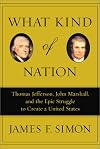
The title does not fully reflect the author's priorities. This book focuses on John Marshall and three of his major decisions. As Thomas Jefferson happened to be president at that time and often took an opposing viewpoint to Marshall, the title is still merited, even if the two men's opinions were in far greater agreement than the author makes believe. The book is divided into eleven chapters, starting with the conflict between Adams and Jefferson before giving an excellent summary of the show more two protagonists' careers. The main part of the book is devoted to three decisions of Marshall: Marbury v. Madison, the impeachment of Justice Chase and the trial of Aaron Burr.
Despite their different political views, Jefferson and Marshall had a lot in common. After all, they were both Virginians, Marshall's mother being Thomas Jefferson's cousin, lawyers and brilliant thinkers, working to help the nascent United States of America and its government machine grow. Both played Calvinball with the Constitution. Marshall was, for over a month, both chief justice and secretary of state - a clear violation of the separation of powers principle and did not recuse himself from Marbury v. Madison despite having his and his brother's fingers all over the case. Jefferson acquired the Louisiana territory in an extra-constitutional manner. Together, they achieved to create some sort of balance between the judicial and executive service, shown in Marshall's elegant handling of America's dirty founding father, Aaron Burr. The checks, Marshall imposed on Jefferson, were just the sort the Adams presidency lacked - which might explain the difference of their long-term impact. show less
Despite their different political views, Jefferson and Marshall had a lot in common. After all, they were both Virginians, Marshall's mother being Thomas Jefferson's cousin, lawyers and brilliant thinkers, working to help the nascent United States of America and its government machine grow. Both played Calvinball with the Constitution. Marshall was, for over a month, both chief justice and secretary of state - a clear violation of the separation of powers principle and did not recuse himself from Marbury v. Madison despite having his and his brother's fingers all over the case. Jefferson acquired the Louisiana territory in an extra-constitutional manner. Together, they achieved to create some sort of balance between the judicial and executive service, shown in Marshall's elegant handling of America's dirty founding father, Aaron Burr. The checks, Marshall imposed on Jefferson, were just the sort the Adams presidency lacked - which might explain the difference of their long-term impact. show less
Awards


You May Also Like


Statistics
- Works
- 12
- Members
- 928
- Popularity
- #27,658
- Rating
- 3.9
- Reviews
- 14
- ISBNs
- 34
- Languages
- 1
- Favorited
- 1