
Dorothy Wordsworth (1771–1855)
Author of The Grasmere and Alfoxden Journals
About the Author
Image credit: Internet Archive.
Series
Works by Dorothy Wordsworth
Home at Grasmere: The Journal of Dorothy Wordsworth and the Poems of William Wordsworth (Penguin Classics) (1978) 163 copies
The Letters of William and Dorothy Wordsworth. Volume 3: The Middle Years, Part 2: 1812-1820 (1969) 7 copies
The Letters of William and Dorothy Wordsworth. Volume 2: The Middle Years, Part 1: 1806-1811 (1969) 5 copies
The Letters of William and Dorothy Wordsworth. Volume 6: The Later Years, Part 3: 1835-1839 (1982) 5 copies
The Letters of William and Dorothy Wordsworth. Volume 4: The Later Years, Part 1: 1821-1828 (1978) 4 copies
The Letters of William and Dorothy Wordsworth. Volume 5: The Later Years, Part 2: 1829-1834 (1979) 4 copies
The Letters of William and Dorothy Wordsworth. Volume 8: A Supplement of New Letters (1993) 2 copies
Wordsworth, Dorothy Archive 1 copy
Associated Works
The Assassin's Cloak: An Anthology of the World's Greatest Diarists (2000) — Contributor, some editions — 623 copies, 9 reviews
The Norton Anthology of English Literature, 4th Edition, Volume 2 (1979) — Contributor — 272 copies, 1 review
Poems Between Women: Four Centuries of Love, Romantic Friendship, and Desire (1997) — Contributor — 97 copies, 1 review
British Women Writers: An Anthology from the Fourteenth Century to the Present (1989) — Contributor — 61 copies, 1 review
Tagged
Common Knowledge
- Birthdate
- 1771-12-25
- Date of death
- 1855-01-25
- Gender
- female
- Occupations
- diarist
poet
travel writer - Relationships
- Wordsworth, William (brother)
- Short biography
- Dorothy Wordsworth, one of five children and the only daughter of John Wordsworth, an attorney, and his wife Anne, was the younger sister of the Romantic poet William Wordsworth. After their parents died young, the siblings were sent to live with various relatives. Dorothy managed to reunite with William and after that they were inseparable companions for the rest of their lives, even after his marriage in 1802. Dorothy never married and was considered an invalid after a serious illness in 1829. However, she had previously travelled with William to Scotland, the Isle of Man, and to Europe, which she greatly enjoyed, and was a faithful diarist. Dorothy's now-famous Grasmere Journal eloquently describes her everyday life in the Lake District, long walks in the countryside with her brother, and detailed portraits of their literary friends, including Samuel Taylor Coleridge, Sir Walter Scott, Charles Lamb, and Robert Southey. Among her other prose works was a travel account called Recollections of a Tour Made in Scotland AD 1803, published posthumously in 1874.
- Nationality
- UK
- Birthplace
- Cockermouth, Cumberland, England, UK
- Places of residence
- Cockermouth, Cumberland, England, UK (birth)
Rydal, Cumberland, England, UK (death)
Alfoxden, Somerset, England, UK
Dove Cottage, Grasmere, Cumberland, England, UK - Place of death
- Rydal, Cumberland, England, UK
- Map Location
- England, UK
Members
Reviews

This is an account by Dorothy Wordsworth of a six week tour she made with her poet brother north of the border from their Lake District home in the late summer of 1803. They were accompanied by fellow poet Coleridge for part of the way, though he seems to have been ill most of the time, and before long went his own way in greater comfort. Dorothy's poetic descriptions of the Scottish countryside will ring familiar to anyone who has read her more famous Grasmere Journal, and the landscape has show more many similarities. Dorothy's descriptions of the many sub-standard inns they stay in along the way are quite amusing and show how much poorer and bleaker the Scottish countryside was at this time than most parts of England. Towards the end of the tour they spend time with Walter Scott, at this time also a fellow poet, and not the prolific novelist he would become better known for later. The first half of this account was written contemporaneously, while the latter half suffers slightly from having been written up at a later date, somewhat lacking the detail and fluency of the earlier sections. A good read, though. show less

This very short journal was kept by Wordsworth's sister Dorothy for a few months in 1798 during their residence at Alfoxden in Somerset, in a year that was pivotal in the poet's literary development, and just before their permanent move to the Lake District. The journal gives great descriptions of the countryside but lacks the depth and feel of the ebb and flow of life that comes across in the later and longer Grasmere Journal. Also, in places, I got the impression Dorothy was finding it a show more chore to maintain this earlier diary. show less

This is a journal kept by William Wordsworth's sister Dorothy covering two and a half years (mid 1800 to January 1803) of their lives in Dove Cottage in Grasmere, in the heart of the Lake District, a house which she shared with William and his wife Mary (and assorted others, including sometimes Samuel Coleridge). The journal was not intended for publication, and indeed was not published until nearly 50 years after William's and Dorothy's deaths. Like any such journal, it contains a lot of show more mundane and repetitive detail, but these contribute towards the ebb and flow of their lives as the seasons and years roll by in this beautiful corner of the country. Most people would say (then and now) they had an idyllic lifestyle, marked mostly by reading, writing, and the walks they do round Grasmere/Easedale and Rydal, gaining inspiration for William's poems, and to Ambleside and Keswick (and one longer journey down the eastern side of the country via Yorkshire to London, and across the Channel to Calais, in the late summer of 1802). Also recorded is, of course, the famous walk of 15 April 1802 in the woods beyond Gowbarrow Park where they saw the host of daffodils that inspired the poet's most famous creation. Their walking capacity is very high by our standards and walking to Ambleside and back, in winter, a distance of some three and a half miles, to check if there is any post to be collected, or to visit friends, is nothing out of the ordinary. On one occasion, Dorothy records walking to Keswick on a frosty day in November, a distance of some 12.5 miles, setting off at 5 minutes past 10 and arriving at half past 2. But life is not all a bed of roses; one thing that strikes the reader is how often both William and Dorothy are ill, the latter regularly having toothaches and headaches that incapacitate her, and William frequently prostrate with exhaustion through the exercise of his creative powers and general constitutional weakness. It seems a minor miracle they both lived into their 80s. And the outside world does get in: one thing that struck me was the regular appearance at the cottage of various beggars and other itinerants travelling through the area looking for work and/or money, reflections of economic (the early stirrings of the industrial revolution) and political (the Napoleonic wars) developments. In sum, this journal gives a good picture of the lifestyle and habits of the poet and his family at this stage in their lives, set against the beautiful backdrop of the Lakes. show less
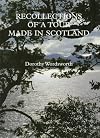
"Recollections of a Tour Made in Scotland, A. D. 1803" (1874) is travel literature by Dorothy Wordsworth about a six-week, 663-mile journey through the Scottish Highlands starting on August 15th 1803 with her brother William Wordsworth and mutual friend Samuel Taylor Coleridge, all important authors in the burgeoning Romanticism movement. The trip itinerary was in part a literary pilgrimage to the places associated with Romantic Scottish figures Robert Burns, Ossian, William Wallace and show more contemporary Sir Walter Scott. She wrote Recollections for family and friends and never saw it published in her lifetime. Some have called it "undoubtedly her masterpiece", and one of the best Scottish travel literature accounts during a period in the late 18th and early 19th centuries which saw 100s of such examples. It is often compared as a Romantic counterpart to the Enlightenment-era "A Journey to the Western Islands of Scotland" (1775) by Samuel Johnson written about 27 years earlier.
The edition I read is by Carol Kyros Walker (1997) of Yale University Press who re-traced Dorothy's path through Scotland taking 100's of beautiful B&W pictures along the way, including a detailed map - reading this edition was very much a multi-media experience with the base text by Dorothy, the map, the pictures and the footnotes - it's hard to imagine a better way to read an old travel book. One of the interesting themes of the book is the "picturesque" which was an aesthetic style in vogue at the time, a way of looking at the landscape first described by William Gilpin. The concept of picturesque is often difficult to understand and describe, I recommend reading the Wikipedia article on the topic before reading this book, to see and understand how and why she describes things the way she does - in the end the reader will have a primary source appreciation of what picturesque means. Indeed it was the picturesque that inspired touristic tendencies in Scotland during that period. show less
The edition I read is by Carol Kyros Walker (1997) of Yale University Press who re-traced Dorothy's path through Scotland taking 100's of beautiful B&W pictures along the way, including a detailed map - reading this edition was very much a multi-media experience with the base text by Dorothy, the map, the pictures and the footnotes - it's hard to imagine a better way to read an old travel book. One of the interesting themes of the book is the "picturesque" which was an aesthetic style in vogue at the time, a way of looking at the landscape first described by William Gilpin. The concept of picturesque is often difficult to understand and describe, I recommend reading the Wikipedia article on the topic before reading this book, to see and understand how and why she describes things the way she does - in the end the reader will have a primary source appreciation of what picturesque means. Indeed it was the picturesque that inspired touristic tendencies in Scotland during that period. show less
Lists
Awards

You May Also Like


Associated Authors
Statistics
- Works
- 31
- Also by
- 10
- Members
- 1,040
- Popularity
- #24,754
- Rating
- 3.9
- Reviews
- 6
- ISBNs
- 56
- Languages
- 4