
Louise Moeri (1924–2021)
Author of Save Queen of Sheba
About the Author
Works by Louise Moeri
Tagged
Common Knowledge
- Other names
- Moeri, Mary Louise
- Birthdate
- 1924-11-30
- Date of death
- 2021-06-12
- Gender
- female
- Education
- Stockton Junior College (A.A)
University of California, Berkeley (B.A.) - Occupations
- writer
library assistant (Manteca Branch Library, Manteca, CA 1961-78)
children's book author
young adult writer
short story writer - Short biography
- Louise Moeri was born in Oregon and grew up during the Great Depression. She graduated from the University of California at Berkeley in 1946, the first in her family to attend college. She met and married Edwin Moeri, with whom she had children, shortly after World War II. She worked as a library assistant at the Manteca Public Library from 1961 to 1978. After retiring, she became a full time writer and published more than a dozen books for children and teenagers, in addition to poems and short stories. Many of her books deal with children overcoming some sort of adversity and were written in a number of different genres, including historical and fantasy, as well as modern settings. Her first book and best seller was Star Mother’s Youngest Child (1975), a Christmas story that became a classic. Some of her books were based on real life tales of the Old West handed down by her family such as Save Queen of Sheba (1981) and The Devil in Ol Rosie (2001). Chemo Club (2010) was a novelized account of her own encounter with cancer. Her book First the Egg (1982) was adapted into a made-for-TV movie. Louise received many awards and recognition for her writing, including the PEN Center Literary Award and Soroptomist Woman of Distinction Award. She often spoke to local schoolchildren about her books and the writing life.
- Nationality
- USA
- Birthplace
- Oregon, USA
- Places of residence
- Manteca, California, USA
- Place of death
- Manteca, California, USA
- Associated Place (for map)
- Manteca, California, USA
Members
Reviews

A lonely old woman, forgotten by the people of the nearby village and all by herself in the world, longs to celebrate Christmas in the festive way, with a tree, presents, candles, music and a feast. Up in the sky, Star Mother's Youngest Child also longs for a Christmas celebration, hoping to witness and experience such a joyous occasion before settling down to his role in the heavens. Dispatched by her mother to earth, in the shape of a homely little boy, the Youngest Child comes upon the show more old woman's cottage, where at his insistence, the two experience a Christmas with all the trimmings...
Originally published in 1975, and then reprinted in this 30th Anniversary Edition, this "Classic Christmas Story" (as it is styled), offers a celebration of the idea that it is the people around us who truly make a holiday. Through the old woman's interaction with the star child, the reader learns that by providing for others, as the old woman is prompted to do by her celestial visitor, we often are also providing for ourselves. The artwork by Trina Schart Hyman, one of my favorite fairy-tales illustrators, captures the almost folkloric feel of Moeri's story, and the emotional range of her two main characters. Recommended to anyone looking for Christmas stories that are a little bit different, as well as to any Trina Schart Hyman fans. show less
Originally published in 1975, and then reprinted in this 30th Anniversary Edition, this "Classic Christmas Story" (as it is styled), offers a celebration of the idea that it is the people around us who truly make a holiday. Through the old woman's interaction with the star child, the reader learns that by providing for others, as the old woman is prompted to do by her celestial visitor, we often are also providing for ourselves. The artwork by Trina Schart Hyman, one of my favorite fairy-tales illustrators, captures the almost folkloric feel of Moeri's story, and the emotional range of her two main characters. Recommended to anyone looking for Christmas stories that are a little bit different, as well as to any Trina Schart Hyman fans. show less
12 Books of Christmas
#1 Enough!
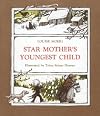
Christmas has become a children's holiday; so one's Christmas reading should begin with a children's book. Star Mother's Youngest Child (Houghton Mifflin, 1975) is our family favorite. Louise Moeri's story is very simple, as a good Christmas story should be, and absolutely unforgettable. Trina Schart Hyman's illustrations bring the Old Woman and the Ugly Child to life and show the reader what they're doing in and around her rough hut "on the edge of the show more forest."
"Ugly brat!" the Old Woman called him. "Well, you're not all that pretty either," he replied. His wrinkled nose looked like a potato -- or maybe a rock. Come to think of it, the Old Woman's nose looked sorta like a potato too -- or maybe an old rock.
That's the way their relationship began. The child kept telling her what they needed. A tree. A feast. Presents. And, exasperated and grumbling, the Old Woman somehow complied. The tree looked pretty good, not bad at all. The feast - well, actually it turned out something like a real feast. And, after all, they did find little presents to wrap for each other: the Old Woman and the Ugly Child.
The night before both had made their wishes: the Old Woman to her old dog, Uproar. "Just once," she had said, "I'd like to have a real Christmas."
Meantime, up in the sky, Star Mother was having trouble with her obstreperous Youngest Child. "Just once," he had wailed, "I want to celebrate Christmas the way they do down there!"
But you have to read the story aloud to experience it, you have to read it to a room full of children and to their parents and grandparents. My wife and I have used it as reader's theater for children and our church. We reversed rolls. I pulled on an old ragged quilt and a dark woolen head scarf, and read the part of the craggy, grumpy Old Woman in her hut. My wife wore the end of a mop on her head and became Star Mother's Youngest, with his "spiky, yellow hair that stood up like dry grass all over his head."
The story ends too soon. The readers and the children and their parents and grandparents want it to go on and on. But it doesn't. I won't reveal any of the few details about what happened. But I have to quote you the very last words: " 'it was . . . enough,' he said."
Read the story to find out what he meant, and why it was enough. I think you'll understand why those words have become our most glowing response . . . to the yuletide nseason, to a year, to our long life together. "It was . . . enough!" show less
#1 Enough!
Christmas has become a children's holiday; so one's Christmas reading should begin with a children's book. Star Mother's Youngest Child (Houghton Mifflin, 1975) is our family favorite. Louise Moeri's story is very simple, as a good Christmas story should be, and absolutely unforgettable. Trina Schart Hyman's illustrations bring the Old Woman and the Ugly Child to life and show the reader what they're doing in and around her rough hut "on the edge of the show more forest."
"Ugly brat!" the Old Woman called him. "Well, you're not all that pretty either," he replied. His wrinkled nose looked like a potato -- or maybe a rock. Come to think of it, the Old Woman's nose looked sorta like a potato too -- or maybe an old rock.
That's the way their relationship began. The child kept telling her what they needed. A tree. A feast. Presents. And, exasperated and grumbling, the Old Woman somehow complied. The tree looked pretty good, not bad at all. The feast - well, actually it turned out something like a real feast. And, after all, they did find little presents to wrap for each other: the Old Woman and the Ugly Child.
The night before both had made their wishes: the Old Woman to her old dog, Uproar. "Just once," she had said, "I'd like to have a real Christmas."
Meantime, up in the sky, Star Mother was having trouble with her obstreperous Youngest Child. "Just once," he had wailed, "I want to celebrate Christmas the way they do down there!"
But you have to read the story aloud to experience it, you have to read it to a room full of children and to their parents and grandparents. My wife and I have used it as reader's theater for children and our church. We reversed rolls. I pulled on an old ragged quilt and a dark woolen head scarf, and read the part of the craggy, grumpy Old Woman in her hut. My wife wore the end of a mop on her head and became Star Mother's Youngest, with his "spiky, yellow hair that stood up like dry grass all over his head."
The story ends too soon. The readers and the children and their parents and grandparents want it to go on and on. But it doesn't. I won't reveal any of the few details about what happened. But I have to quote you the very last words: " 'it was . . . enough,' he said."
Read the story to find out what he meant, and why it was enough. I think you'll understand why those words have become our most glowing response . . . to the yuletide nseason, to a year, to our long life together. "It was . . . enough!" show less
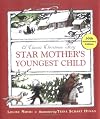
Chose for Hyman's art, of which I cannot see enough. Stayed for the story... well told, appealing to anyone who celebrates the spirit of Christmas joy no matter their faith, or lack thereof. I like that the old woman is not sentimental, in that she names her dog Uproar, but also is, in that the Christmas present she finds is, well, read and find out for yourself.

This is one of my favorite books that I have read! This book would be great for a space lesson. I really like how the book tells the tale of how the moon and stars were created. The author does a great job of making the characters seem real, although they are talking animals. She gives the animals real, genuine feelings. For example, the beaver suggests that when there are forest fires, the whole area is lit up, so they should just create a forest fire to give them light each night. However, show more the raven refuted this idea by saying that a fire will kill to many animals, and they don’t want to see anyone suffering. The characters have compassion, which I really thought was nice. I also like the author’s use of language. She does a good job of incorporating academic language, like, disheartened, radiance, windswept, and generous. She gives valuable context clues to help gather meaning of the advanced words. The main message of this story is, no matter how small or insignificant you may seem, you always have the power to make a substantial impact. show less
Lists
Awards


You May Also Like


Associated Authors
Statistics
- Works
- 13
- Members
- 532
- Popularity
- #46,803
- Rating
- 4.1
- Reviews
- 11
- ISBNs
- 42
- Languages
- 1