
Hans Koningsberger (1921–2007)
Author of The World of Vermeer, 1632-1675
About the Author
Image credit: Hans Koningsberger [credit: Robin Chaphekar]
Works by Hans Koningsberger
Associated Works
The Ten Thousand Things (1958) — Translator, some editions; Introduction, some editions — 612 copies, 17 reviews
Writers on Writing: Collected Essays from the New York Times (2001) — Contributor — 477 copies, 5 reviews
New World Writing: Eighth Mentor Selection - A New Adventure in Modern Reading (1955) — Editor — 8 copies
Tagged
Common Knowledge
- Canonical name
- Koningsberger, Hans
- Legal name
- Königsberger, Hans
Konigsberger, Hans (from 1949) - Other names
- Koning, Hans
Königsberger, Hans
Kong - Birthdate
- 1921-07-12
- Date of death
- 2007-04-13
- Gender
- male
- Education
- Sorbonne, Paris
University of Zurich
University of Amsterdam - Occupations
- writer
journalist
novelist - Nationality
- Netherlands (birth)
USA (Residence) - Birthplace
- Amsterdam, Netherlands
- Places of residence
- Jakarta, Indonesia
- Place of death
- Easton, Connecticut, USA
Members
Reviews

I first read this forty five years ago and thought it excellent. Rereading it again it is still excellent, but understanding much more about how the world works it is a simple story of how quite an ordinary young man becomes alienated and then an assassin. Whether he was a terrorist or a freedom fighter is left for the reader to decide. There are no real heroes in this story
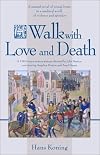
This short novel, A Walk with Love and Death is a love story, both elegant and beautiful, taking place In 1358, ten year after the great plague, what we now call the Black Death, and during the time of the French peasant uprising, which threw the entire northern part of France into chaos.
We are given a taste of the depth of this chaos and social upheaval right from the outset, when the first person narrator, a poor student by the name of Heron, who has recently been expelled from the show more University of Paris for writing a poem with erotic overtones, is nearly robbed and killed by a farmer along the road and then barely escapes torture at the hands of a band of brigands on the outskirts of a town.
He reflects on his violent, upside-down world, “There had been fighting and burning and plundering before, but what was happening in France now was different: there was no mercy, no ending to it, no idea behind it. Men were like birds with iron beaks, hammering and hammering away at the almost hopeless land. More than half the students were in theology colleges, but there was no Christianity left either.”
Indeed, there is no end to the violence. Continuing his travels on foot, Heron meets a young aristocratic woman by the name of Claudia and it is love at first sight. Ah, Cupid! Thus, we have the love story of a poor student and an aristocratic young girl, a girl forced to leave her home recently destroyed by a horde of bloodthirsty peasants.
There is a mythic quality to their love, an echo of pure, courtly love flowering in a land filled to the brim with violence and misery. Such is the novel’s contrast between light and dark.
Heron shares his reflections as his discovers more and more of young Claudia during the time they travel together. For example, here is a passage after Claudia at one point declares she wants his love to be pure love, a love not mingled with the physical: “Lying next to her in the ramshackle bed in the dark, with most of our cloths on, was more difficult: I was haunted by her image now and cursed all philosophers and the girls who live by them. But she had acquired a new power over me and I no longer felt just the older and the wiser one: I was aware of an intense need to please her and gain her respect.”
And here is another passage capturing Heron’s dreamy, romantic spirit: “The green hours when I was riding beside Claudia along the river at the tail end of a many-colored column and felt that nothing mattered in life, neither learning nor death, only this keen joy of being alive in one’s body totally without fear, acknowledging the beauty of attack: running toward a man in battle to kill him, falling on a woman in making love.”
I wouldn’t want to spoil the story by giving away more of the details. Much better to simply recommend this near perfect medieval tale of two lovers embracing each other and the beauty of the moment during one of the darkest periods in European history.
Dutch author Hans Koning, 1921 - 2007 show less
This short novel, ‘A Walk with Love and Death’ is a love story, elegant and beautiful, taking place In 1358, ten year after the great plague, what we now call the Black Death, and during the time of the French peasant uprising, which threw the entire northern part of France into chaos.
We are given a taste of the depth of this chaos and social upheaval right from the start, when the first person narrator, a poor student by the name of Heron, who has recently been expelled from the show more University of Paris for writing a poem with erotic overtones, is nearly robbed and killed by a farmer along the road and then barely escapes being tortured by a band of brigands on the outskirts of a town. He reflects on his violent, upside-down world, “There had been fighting and burning and plundering before, but what was happening in France now was different: there was no mercy, no ending to it, no idea behind it. Men were like birds with iron beaks, hammering and hammering away at the almost hopeless land. More than half the students were in theology colleges, but there was no Christianity left either.”
Indeed, there is no end to the violence. Continuing his travels on foot, Heron meets a young aristocratic woman by the name of Claudia and it is love at first sight. Ah, Cupid! Thus, we have the love story of a poor student and an aristocratic young girl, a girl forced to leave her home recently destroyed by a crowd of peasants. There is a mythic quality to their love, an echo of pure, courtly love flowering in a land filled to the brim with violence and misery. Such is the novel’s contrast between light and dark.
Heron shares his reflections as his discovers more and more of young Claudia during the time they travel together. For example, here is a passage after Claudia at one point declares she wants his love to be pure love, a love not mingled with the physical: “Lying next to her in the ramshackle bed in the dark, with most of our cloths on, was more difficult: I was haunted by her image now and cursed all philosophers and the girls who live by them. But she had acquired a new power over me and I no longer felt just the older and the wiser one: I was aware of an intense need to please her and gain her respect.”
And here is another passage capturing Heron’s dreamy, romantic spirit: “The green hours when I was riding beside Claudia along the river at the tail end of a many-colored column and felt that nothing mattered in life, neither learning nor death, only this keen joy of being alive in one’s body totally without fear, acknowledging the beauty of attack: running toward a man in battle to kill him, falling on a woman in making love.”
I wouldn’t want to spoil the story by giving away more of the details. Much better to simply recommend this near perfect medieval tale of two lovers embracing each other and the beauty of the moment during one of the darkest periods in European history. show less
We are given a taste of the depth of this chaos and social upheaval right from the start, when the first person narrator, a poor student by the name of Heron, who has recently been expelled from the show more University of Paris for writing a poem with erotic overtones, is nearly robbed and killed by a farmer along the road and then barely escapes being tortured by a band of brigands on the outskirts of a town. He reflects on his violent, upside-down world, “There had been fighting and burning and plundering before, but what was happening in France now was different: there was no mercy, no ending to it, no idea behind it. Men were like birds with iron beaks, hammering and hammering away at the almost hopeless land. More than half the students were in theology colleges, but there was no Christianity left either.”
Indeed, there is no end to the violence. Continuing his travels on foot, Heron meets a young aristocratic woman by the name of Claudia and it is love at first sight. Ah, Cupid! Thus, we have the love story of a poor student and an aristocratic young girl, a girl forced to leave her home recently destroyed by a crowd of peasants. There is a mythic quality to their love, an echo of pure, courtly love flowering in a land filled to the brim with violence and misery. Such is the novel’s contrast between light and dark.
Heron shares his reflections as his discovers more and more of young Claudia during the time they travel together. For example, here is a passage after Claudia at one point declares she wants his love to be pure love, a love not mingled with the physical: “Lying next to her in the ramshackle bed in the dark, with most of our cloths on, was more difficult: I was haunted by her image now and cursed all philosophers and the girls who live by them. But she had acquired a new power over me and I no longer felt just the older and the wiser one: I was aware of an intense need to please her and gain her respect.”
And here is another passage capturing Heron’s dreamy, romantic spirit: “The green hours when I was riding beside Claudia along the river at the tail end of a many-colored column and felt that nothing mattered in life, neither learning nor death, only this keen joy of being alive in one’s body totally without fear, acknowledging the beauty of attack: running toward a man in battle to kill him, falling on a woman in making love.”
I wouldn’t want to spoil the story by giving away more of the details. Much better to simply recommend this near perfect medieval tale of two lovers embracing each other and the beauty of the moment during one of the darkest periods in European history. show less
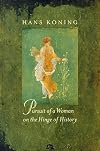
Spoilers. This book was more political than I expected, although I'm not sure why. The hero is a non-conforming intellectual who works in a dead-end bookstore job in NYC, he goes to Europe and sees a woman who he feels represents the old days when the matriarchy was dominant. He tries to follow her, and wanders around Europe having different experiences & getting involved with Basque separatists and with a big-time industrialist, and finds them either working together or not. The big theme show more is the bad of modern industry/capitalism and the ideal of the matriarchal past show less
You May Also Like


Associated Authors
Statistics
- Works
- 36
- Also by
- 4
- Members
- 874
- Popularity
- #29,293
- Rating
- 3.9
- Reviews
- 11
- ISBNs
- 84
- Languages
- 4