
Works by Kirstin Downey
The Woman Behind the New Deal: The Life of Frances Perkins, FDR's Secretary of Labor and His Moral Conscience (2009) 430 copies, 8 reviews
A Promise to All Generations: Stories and Essays about Social Security and Frances Perkins (2011) — Editor — 4 copies
Tagged
Common Knowledge
- Other names
- Downey, Kirstin Edith
- Birthdate
- 1957
- Gender
- female
- Organizations
- Washington Post
- Awards and honors
- Harvard University. Nieman Fellowship (2000)
- Agent
- Gail Ross
- Nationality
- USA
- Places of residence
- Washington, D.C., USA
Honolulu, Hawaii, USA - Associated Place (for map)
- USA
Members
Reviews
The Woman Behind the New Deal: The Life and Legacy of Frances Perkins, Social Security, Unemployment Insurance, by Kirstin Downey
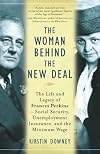
Frances Perkins was a trailblazer, as she was the first woman ever to be named to a cabinet post, that of Secretary of Labor in the FDR administration. She had worked for FDR when he was governor of New York in a similar role, running the state industrial commission. Greatly affected by the Triangle Shirtwaist Fire, she devoted her life to a progressive agenda. When Roosevelt became President and approached her about running the Labor Department, she reeled off a list of things she would show more want to work on: a forty-hour workweek, minimum wage, worker's compensation, unemployment compensation, a federal law banning child labor, Social Security, revitalized public employment service and national health insurance. If Roosevelt wasn't willing to back her on these items, she was not interested in the role. But fortunately for us, he agreed to support her, and she made history, fulfilling most of these agenda items. These accomplishments are made more extraordinary by the fact that her husband was seriously mentally ill, and was in and out of institutions his whole life. Her daughter seemed to inherit her father's mental illness, and so Frances, living on a small government salary, had to provide for them while performing these groundbreaking tasks.She handled immigration during WWII, working to bring as many refugees over from Europe, at a time when most US citizens were isolationist. Even in 'retirement', she worked for the Civil Service Commission during the Red Scare, and so was smack in the middle of the paranoia that swept the country.
I enjoyed the book very much, even though I had to sometimes plow my way through its density. It could be said that Frances had a full life, and I often used my iPad to reference the cast of characters she encountered. I have a couple of impressions from the book. First, the blatant discrimination she had to endure was, frankly, shocking, even given the times. Entering and then exiting the office of Sec'y of Labor, she was met with a cold shoulder from her predecessor and successor. Her predecessor, in particular, seemed surprised that she was actually going to attempt to work at the job, and hadn't planned on leaving the office until Frances, in a sense, took over. Throughout her career, she was shunned by her all-male colleagues (for the most past). The key to her success was that she had Roosevelt's ear.
Another impression: It seems that Roosevelt took credit for most of her ideas. She disappeared from the history books, and it became Roosevelt's New Deal. He sometimes comes across as a typical politician, swaying with the current winds. This is not how we normally think about Roosevelt, and this book helped me understand the nuances of his personality.
This is a book about a woman who, from her earliest years, had an agenda that she was compelled to fulfill. At the end, she received very little credit for her accomplishments, and sadly, was estranged from the daughter she had supported her entire life. She deserves recognition for many of the things was currently take for granted: Social Security, elimination of child labor, unemployment, and fair labor practices. I was very glad I read this book. show less
I enjoyed the book very much, even though I had to sometimes plow my way through its density. It could be said that Frances had a full life, and I often used my iPad to reference the cast of characters she encountered. I have a couple of impressions from the book. First, the blatant discrimination she had to endure was, frankly, shocking, even given the times. Entering and then exiting the office of Sec'y of Labor, she was met with a cold shoulder from her predecessor and successor. Her predecessor, in particular, seemed surprised that she was actually going to attempt to work at the job, and hadn't planned on leaving the office until Frances, in a sense, took over. Throughout her career, she was shunned by her all-male colleagues (for the most past). The key to her success was that she had Roosevelt's ear.
Another impression: It seems that Roosevelt took credit for most of her ideas. She disappeared from the history books, and it became Roosevelt's New Deal. He sometimes comes across as a typical politician, swaying with the current winds. This is not how we normally think about Roosevelt, and this book helped me understand the nuances of his personality.
This is a book about a woman who, from her earliest years, had an agenda that she was compelled to fulfill. At the end, she received very little credit for her accomplishments, and sadly, was estranged from the daughter she had supported her entire life. She deserves recognition for many of the things was currently take for granted: Social Security, elimination of child labor, unemployment, and fair labor practices. I was very glad I read this book. show less
review for audiobook ~ 3 stars story ♫ 2 stars narration. I've always been fascinated with the past, and I love reading about history when it is "humanized." For me, reading about events, dates, clothes is all sort of fascinating, in it's own kind of way. But, I love, love, love reading about people and how they are shaped by what is happening around them. And, this book has that in spades! I've always been drawn to England and Scotland histories so this was new information to me. It was show more great to make the Spanish connection with the French and English courts. I NEVER knew Catherine (King Henry VIII first wife) was the daughter of Queen Isabella. This book told me so much about Isabella, Ferdinand, their children and grandchildren. It's just mind boggling how much was going on during her reign. I learned so much about world events at the time. Some of the people in this book I loved and my heart went out to them. Others made me hate, hate, hate them... Philip the Handsome, I'm talking to you! Other people I felt sorry for (poor Juana) and some (many) I wanted to protect. I felt like I really got to know this family, and It was wonderful.
At the beginning of this book, I struggled with wanting to continue. There were some things that I had a hard time believing were truth. It made me question how much of this book was valid.... It's nonfiction - Stick to the facts please! There were a few things that I took issue with. I ended up taking some deep breaths and pushed on through, and I'm glad I did.
• Leonardo DE Vinci being "vividly and flamboyantly gay".
• A statement that there isn't much information about Isabella's early life, but then going to on talk about how she was feeling and what she was thinking.
• Talking about molestation against King Juan, King Enrique IV and Alfanso when they were small boys. I don't see that as a fact... but based more on opinion.
• An ocelot owned by King Enrique IV... Is this really true? Or even possible?
• Queen Isabella's "feelings" about the Spanish Inquisition. The author paints her as not having much to do with it, and I don't believe that at all
• Jews-Christians-Muslims: To me, The Muslims and the Spanish were both doing some pretty horrible things. The Spanish had slaves, they conquered other countries and forced them to convert to their religion. They also tortured and killed those who didn't convert "completely." And yep, they kicked people out of their country for being Jewish or Muslim... but it felt like this book, to me, painted the Muslims as being worse. Almost as if was understandable for the Spanish to do it, but not the Muslims.
I also struggled with the way ALL the information was put together. And, let me say it's a lot! I kept a notebook so I could take notes and that helped immensely. But, it really felt like it was one step forward and five steps back. It was challenging for me to keep it all straight in my head.
First I learned about Isabella up to a certain age... Then it jumped back in time to Ferdinand, then again to discuss the Jews, then again the Muslims, and back in time again to learn about the Catholic church. And, it would cycle like this for the entire book. I'd be reading about Queen Isabella having kids and then next chapter it was back in history when she was just a toddler. The whole way through it was back and forth with dates. I get that there is a lot here, and putting it all together must have been a job in itself.... but, it gave my brain a work out for sure.
I did appreciate the ending when the author circled back to explain some of her reasoning behind Queen Isabella's lack of a role in the Spanish Inquisition. Honestly, I was hot the whole way through... questioning the book's validity in expressing that it wasn't really her wishes... and that she didn't really want it to be extreme as it was. I can see, with the author's explanation, how she could have come up with the idea that Isabella didn't have a big part in the Inquisition, but it comes off as not very accurate or justified. The author spends the whole book talking about her being the leader and such s strong woman, but then glosses over the whole Inquisition as if she had no part of it.
I'm also happy that the author came back to discuss the syphilis epidemic more. That it was just the opinion at the time that it came from the America's, but testing has proven that it was found in the remains of the Neapolitan royal family (Isabella of Aragon, born in 1470) earlier. But, it does seems true that is became rampant after the explores came back.
Update:
The author went on to explain in the Afterword why she came to certain conclusions. She wrote this book claiming her own opinions and conclusions as fact and I don't agree that she should have done that... Non-fiction is about stating all facts and ideas and letting the reader come up with their own conclusions. For some reason, this author didn't want to paint Isabella in any kind of bad light what-so-ever. Anything great that happened, the author gave her full credit for and vice-versa. The more I think of this book after writing it... the more my opinion is dropping. show less
At the beginning of this book, I struggled with wanting to continue. There were some things that I had a hard time believing were truth. It made me question how much of this book was valid.... It's nonfiction - Stick to the facts please! There were a few things that I took issue with. I ended up taking some deep breaths and pushed on through, and I'm glad I did.
• Leonardo DE Vinci being "vividly and flamboyantly gay".
• A statement that there isn't much information about Isabella's early life, but then going to on talk about how she was feeling and what she was thinking.
• Talking about molestation against King Juan, King Enrique IV and Alfanso when they were small boys. I don't see that as a fact... but based more on opinion.
• An ocelot owned by King Enrique IV... Is this really true? Or even possible?
• Queen Isabella's "feelings" about the Spanish Inquisition. The author paints her as not having much to do with it, and I don't believe that at all
• Jews-Christians-Muslims: To me, The Muslims and the Spanish were both doing some pretty horrible things. The Spanish had slaves, they conquered other countries and forced them to convert to their religion. They also tortured and killed those who didn't convert "completely." And yep, they kicked people out of their country for being Jewish or Muslim... but it felt like this book, to me, painted the Muslims as being worse. Almost as if was understandable for the Spanish to do it, but not the Muslims.
I also struggled with the way ALL the information was put together. And, let me say it's a lot! I kept a notebook so I could take notes and that helped immensely. But, it really felt like it was one step forward and five steps back. It was challenging for me to keep it all straight in my head.
First I learned about Isabella up to a certain age... Then it jumped back in time to Ferdinand, then again to discuss the Jews, then again the Muslims, and back in time again to learn about the Catholic church. And, it would cycle like this for the entire book. I'd be reading about Queen Isabella having kids and then next chapter it was back in history when she was just a toddler. The whole way through it was back and forth with dates. I get that there is a lot here, and putting it all together must have been a job in itself.... but, it gave my brain a work out for sure.
I did appreciate the ending when the author circled back to explain some of her reasoning behind Queen Isabella's lack of a role in the Spanish Inquisition. Honestly, I was hot the whole way through... questioning the book's validity in expressing that it wasn't really her wishes... and that she didn't really want it to be extreme as it was. I can see, with the author's explanation, how she could have come up with the idea that Isabella didn't have a big part in the Inquisition, but it comes off as not very accurate or justified. The author spends the whole book talking about her being the leader and such s strong woman, but then glosses over the whole Inquisition as if she had no part of it.
I'm also happy that the author came back to discuss the syphilis epidemic more. That it was just the opinion at the time that it came from the America's, but testing has proven that it was found in the remains of the Neapolitan royal family (Isabella of Aragon, born in 1470) earlier. But, it does seems true that is became rampant after the explores came back.
Update:
The author went on to explain in the Afterword why she came to certain conclusions. She wrote this book claiming her own opinions and conclusions as fact and I don't agree that she should have done that... Non-fiction is about stating all facts and ideas and letting the reader come up with their own conclusions. For some reason, this author didn't want to paint Isabella in any kind of bad light what-so-ever. Anything great that happened, the author gave her full credit for and vice-versa. The more I think of this book after writing it... the more my opinion is dropping. show less
Since I knew Queen Isabella was the financier of Columbus, a force behind the Spanish Inquisition, and the mother of Katherine of Aragon, first wife of Henry VIII, I thought I would find this book about her interesting, but that was an underestimation because Isabella: The Warrior Queen turned out to be a treasure trove of fascinating information and stories. About Columbus the book has more detail than I expected, also covering early European interactions with various groups of Native show more Americans. About the Inquisition the book gives religious context and history that was unfamiliar to me, and after reading about Catherine of Aragon’s early life I have a greater understanding of and appreciation for her as a woman of strength and principle.
Also woven into the narrative is information about: the lives and historical impacts of Isabella’s other children, the balance of power in Isabella’s relationship with her husband Ferdinand (according to this account she was the one who was “more equal”), and fairly extensive background histories of European royal families and their politics, Islam’s presence on the Iberian Peninsula, the evolving role of the papacy, and the nature and progress of the Ottoman Empire. Isabella was a much stronger monarch than I realized, but she’s humanized here and I ended up liking her which wasn’t something I expected.
Author Kirstin Downey has taken obvious care to be fair and respectful to all parties in Isabella’s story, and without doing a lot of undocumented speculation about her subjects’ inner feelings, her book is written in a vivid, engaging style that had me hooked from its opening chapter. I kept finding myself rushing back to its pages the way you do when reading a gripping novel.
I received an advanced review copy of this book. Review opinions are mine. show less
Also woven into the narrative is information about: the lives and historical impacts of Isabella’s other children, the balance of power in Isabella’s relationship with her husband Ferdinand (according to this account she was the one who was “more equal”), and fairly extensive background histories of European royal families and their politics, Islam’s presence on the Iberian Peninsula, the evolving role of the papacy, and the nature and progress of the Ottoman Empire. Isabella was a much stronger monarch than I realized, but she’s humanized here and I ended up liking her which wasn’t something I expected.
Author Kirstin Downey has taken obvious care to be fair and respectful to all parties in Isabella’s story, and without doing a lot of undocumented speculation about her subjects’ inner feelings, her book is written in a vivid, engaging style that had me hooked from its opening chapter. I kept finding myself rushing back to its pages the way you do when reading a gripping novel.
I received an advanced review copy of this book. Review opinions are mine. show less
I appreciated that this biography of Isabella of Spain took the time to detail not just Isabella's life, but to profile and delve into the figures who surrounded her and who she interacted with on the international stage. The result is a rich portrait of Isabella's era - a time of extremes and complex motivations and shifting political and religious forces. It also helps to place Isabella's motivations and actions in their wider societal and historical context. I really appreciated this show more approach and this will likely remain one of my favorite biographies of Isabella. show less
Lists
Awards


You May Also Like


Associated Authors
Statistics
- Works
- 4
- Members
- 822
- Popularity
- #31,033
- Rating
- 4.0
- Reviews
- 17
- ISBNs
- 17
- Languages
- 3