

Henry Kamen
Author of The Spanish Inquisition: A Historical Revision
About the Author
Henry Kamen obtained his doctorate at Oxford and has been a professor at universities in Britain, Spain and the United States. He is emeritus of the Higher Council for Scientific Research, Spain, and a Fellow of the Royal Historical Society, London. An eminent authority on Spanish history, he has show more written over twenty studies in the field, including Philip of Spain (1997), Spain's Road to Empire (2002), and The Escorial (2010) and The Spanish Inquisition (new edition, 2014). show less
Works by Henry Kamen
Iron Century: Social Change in Europe, 1550-1660 (History of civilisation) (1971) 48 copies, 1 review
La invención de España: Leyendas e ilusiones que han construido la realidad española (2020) 32 copies, 1 review
Fernando el Católico 1451-1561 : vida y mitos de uno de los fundadores de la España moderna (2015) 9 copies
Vocabulario basico de la historia moderna: Espana y America, 1450-1750 (Estudios y ensayos) (Spanish Edition) (1986) 3 copies
La sociedad europea (1500-1700) 2 copies
De Hertog Van Alva 1 copy
La España del siglo XVII 1 copy
'The scientist and the prelates' in TLS 5473, 22 Feb 2008 [review of Beltran's 'Talento y Poder'] 1 copy
W. Churchill 1 copy
Associated Works
Tagged
Common Knowledge
- Canonical name
- Kamen, Henry
- Legal name
- Kamen, Henry Arthur Francis
- Birthdate
- 1936-10-04
- Gender
- male
- Education
- St. Antony's College, Oxford University (BA|1960|D.Phil|1963)
- Occupations
- historian
professor - Organizations
- Consejo Superior de Investigaciones Científicas
University of Wisconsin-Madison
University of Warwick
University of Edinburgh - Awards and honors
- Fellow, Royal Historical Society (1970)
- Agent
- Fiona Petheram (Peters Fraser and Dunlop Literary Agents)
- Nationality
- UK
- Birthplace
- Rangoon, British Burma
- Places of residence
- Barcelona, Catalonia, Spain
Madison, Wisconsin, USA
Members
Reviews
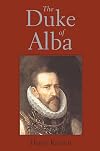
This professional life of the Duke of Alba abounds with ironies. While the preeminent Castillian general, Alba was more likely to be found in the role of military governor; a position which did not suit his temperment. A man of great personal culture and impeccable manners, Alba was likely to stalk off in theatrical temper tantrums if he did not get his way. A man who gave almost unswerving obediance to Charles V & Philip II of Spain, Alba failed to control his son and heir, a contributing show more factor to the disaster of the Dutch Revolt. At the base, the problem of the Duke of Alba is that he could not rise above his rigid authoritarianism when artful flexibility was the order of the day, and did not help his historical image by his propensity for letting off steam in his official documents. The massacres were real enough though, and Alba's career in the Netherlands seems to be the case of a man finding his own special heart of darkness, not that Alba ever gave any sense that he regretted the acts he felt he had to commit; one could really do no wrong in the service of the king. show less
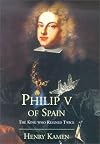
Interesting biography of a very French prince (grandson of Louis XIV) who ruled as the first Bourbon King of Spain in the first half of the 18th century. Philip was earnest and hard-working and took the interests of his new dominion to heart, but in his adulthood he was plagued with a severe mental illness which the author Kamen believes (credibly) to have been bi-polar disorder. As a result of his often debilitating episodes, the King's efforts to steer Spain toward a financially sound show more future were significantly hindered. (The personal was the political, even in the 18th century.)
To help him through his often paralyzing mood swings, Philip V relied to an exceptional degree upon his consort Queens, who exerted political power to an unusual degree: his first wife the remarkable Marie Louise of Savoy, the second the equally indomitable Elizabeth Farnese. Because they were foreign, intelligent, and politically savvy, the Queens were the subject of considerable opposition and scurrilous rumor-mongering. Kamen admirably humanizes the royal subjects of his study, and strengthens the book with a deep knowledge of the primary economic and literary sources for the era. show less
To help him through his often paralyzing mood swings, Philip V relied to an exceptional degree upon his consort Queens, who exerted political power to an unusual degree: his first wife the remarkable Marie Louise of Savoy, the second the equally indomitable Elizabeth Farnese. Because they were foreign, intelligent, and politically savvy, the Queens were the subject of considerable opposition and scurrilous rumor-mongering. Kamen admirably humanizes the royal subjects of his study, and strengthens the book with a deep knowledge of the primary economic and literary sources for the era. show less
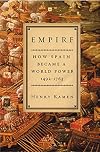
Long before there was a Britain to have an empire upon which the sun never set, Spain established a presence that spanned the globe. From the Caribbean and Central America to the Philippines, the Spanish empire thrived as the first expression of European global dominance — an achievement even more remarkable when set against the unpromising circumstances from which it started. How Spain achieved this is the subject of Henry Kamen's book. A longtime scholar of Spanish history, Kamen show more marshals a career of study to explain the nature of Spain's dominance, one that he reveals is all too often misunderstood.
At the core of this misunderstanding is the nature of Spain itself. Kamen begins by highlighting the often-overlooked fact that in the 15th century "Spain" was an abstraction consisting of a collection of Iberian territories united only by a common monarchy. Because of this, the monarchs were constrained in their ability to deploy Spanish resources to achieving their goals. Fortunately for them, their resources were not confined to Spain alone. One of Kamen's main contentions is that the "Spanish" empire was actually more of a pan-European one, as Spain's leaders in the 15th and 16th centuries frequently drew upon the resources of their extended empire —including Italy, the Netherlands, and the Holy Roman Empire —to finance and staff their presence throughout much of Europe
While this mobilization was key to Spain's presence in Europe, their overseas empire was more of a purely Spanish operation. Because of this, as Kamen makes clear, their control was far less secure than their cartographic assertions made it appear. Spain's "empire" in the New World was concentrated mainly in the Caribbean, Mexico, Peru, and a few other coastal regions, while their control over the Philippines was limited mainly to their outpost in Manila. Much of this depended upon cooperation with (or co-option of) local elites, further underscoring the non-Spanish nature of Spanish control. While effective and profitable, this structure came under increasing strain as European competitors emerged in the 17th and 18th centuries, first to displace Spanish dominance in Europe, then to undercut Spain's presence in the wider world. Though the Spanish fought back against this, Kamen makes it clear that their efforts were ultimately unsustainable with their traditional imperial structure, forcing them to follow the example of their competitors and establish more of a truly "Spanish" empire by the 18th century.
Kamen ends his book short of Spain's loss of their Latin American empire early in the 19th century. While he makes it clear that the writing was on the wall by that point, it is unfortunate he did not carry his analysis forward to that point, for he has provided a superb overview of the rise and decline of Spain's empire in Europe and elsewhere. It does so by blending the political, social, cultural and economic history together, showing the multifacted interactions that defined Spain and the Spanish presence in the world. While this comes at the understandable cost of a lack of coverage of events within Spain itself, supplementing this book with a national survey covering these years (such as J. H. Elliot's classic [b:Imperial Spain, 1469-1716|1599538|Imperial Spain, 1469-1716|J.H. Elliott|https://images.gr-assets.com/books/1450599976s/1599538.jpg|2579383] or Kamen's own [b:Spain, 1469-1714|1464634|Spain, 1469-1714 A Society of Conflict|Henry Kamen|https://images.gr-assets.com/books/1375671948s/1464634.jpg|1455535] fills this gap nicely, giving readers a good understanding of Spain and its "Golden Age" of global preeminence. show less
At the core of this misunderstanding is the nature of Spain itself. Kamen begins by highlighting the often-overlooked fact that in the 15th century "Spain" was an abstraction consisting of a collection of Iberian territories united only by a common monarchy. Because of this, the monarchs were constrained in their ability to deploy Spanish resources to achieving their goals. Fortunately for them, their resources were not confined to Spain alone. One of Kamen's main contentions is that the "Spanish" empire was actually more of a pan-European one, as Spain's leaders in the 15th and 16th centuries frequently drew upon the resources of their extended empire —including Italy, the Netherlands, and the Holy Roman Empire —to finance and staff their presence throughout much of Europe
While this mobilization was key to Spain's presence in Europe, their overseas empire was more of a purely Spanish operation. Because of this, as Kamen makes clear, their control was far less secure than their cartographic assertions made it appear. Spain's "empire" in the New World was concentrated mainly in the Caribbean, Mexico, Peru, and a few other coastal regions, while their control over the Philippines was limited mainly to their outpost in Manila. Much of this depended upon cooperation with (or co-option of) local elites, further underscoring the non-Spanish nature of Spanish control. While effective and profitable, this structure came under increasing strain as European competitors emerged in the 17th and 18th centuries, first to displace Spanish dominance in Europe, then to undercut Spain's presence in the wider world. Though the Spanish fought back against this, Kamen makes it clear that their efforts were ultimately unsustainable with their traditional imperial structure, forcing them to follow the example of their competitors and establish more of a truly "Spanish" empire by the 18th century.
Kamen ends his book short of Spain's loss of their Latin American empire early in the 19th century. While he makes it clear that the writing was on the wall by that point, it is unfortunate he did not carry his analysis forward to that point, for he has provided a superb overview of the rise and decline of Spain's empire in Europe and elsewhere. It does so by blending the political, social, cultural and economic history together, showing the multifacted interactions that defined Spain and the Spanish presence in the world. While this comes at the understandable cost of a lack of coverage of events within Spain itself, supplementing this book with a national survey covering these years (such as J. H. Elliot's classic [b:Imperial Spain, 1469-1716|1599538|Imperial Spain, 1469-1716|J.H. Elliott|https://images.gr-assets.com/books/1450599976s/1599538.jpg|2579383] or Kamen's own [b:Spain, 1469-1714|1464634|Spain, 1469-1714 A Society of Conflict|Henry Kamen|https://images.gr-assets.com/books/1375671948s/1464634.jpg|1455535] fills this gap nicely, giving readers a good understanding of Spain and its "Golden Age" of global preeminence. show less

This is a very well researched study of a notorious historical event by a repected British historian. In it the author traces the Inquisition's various classes of victims. These included the conversos (recent Jewish converts to Catholicism, who composed the majority of the Inquisition's victims), followers of the humanist Erasmus, Lutherans and other Protestants (including foreigners), Moriscos (recent Muslim converts), and Catholics whom the tribunal deemed ``heretical,'' often on flimsy show more evidence. The history demonstrates a particular example of the treatment of "the other" in history. Notably this history provides context for assessing the "Spanish" inquisition by comparison with other examples of intolerance; in the Netherlands there was an equally brutal inquisition. The Protestant mythologizing of the Inquisition is criticized while Kamen occasionally over-relativizes the Inquisition, going so far as to say that it created no new problems for Spain. Yet the strengths of Kamen's work, which undoubtedly will prove controversial, far exceed its shortcomings. This is a well-written history of an infamous event and worth consideration by all who are interested in European or politico-religious history. show less
Lists
You May Also Like


Associated Authors
Statistics
- Works
- 47
- Also by
- 2
- Members
- 2,786
- Popularity
- #9,223
- Rating
- 3.6
- Reviews
- 43
- ISBNs
- 160
- Languages
- 8
- Favorited
- 2