
Lisa Jardine (1944–2015)
Author of Worldly Goods: A New History of the Renaissance
About the Author
Lisa Jardine was born in Oxford, England on April 12, 1944. She studied mathematics and English at university receiving a MA in the literary theory of translation from the University of Essex and a PhD from the University of Cambridge with a thesis on the scientific genius of Francis Bacon. She show more taught English at Warburg Institute, the University of Essex, Cornell University, Cambridge University, and Queen Mary and Westfield College. She wrote several books during her lifetime including Francis Bacon: Discovery and the Art of Discourse, Ingenious Pursuits, Worldly Goods, Global Interests: Renaissance Art Between East and West, and Temptation in the Archives: Essays in Golden Age Dutch Culture. Going Dutch: How England Plundered Holland's Glory won the $75,000 Cundill International Prize in History in 2009. She received a Royal Society medal for popularizing science and was appointed CBE in 2005 for her contribution and commitment to state education. She died of cancer on October 25, 2015 at the age of 71. (Bowker Author Biography) show less
Image credit: Lisa Jardine [credit: The Royal Society]
Series
Works by Lisa Jardine
On a Grander Scale: The Outstanding Life and Tumultuous Times of Sir Christopher Wren (2002) 304 copies, 1 review
The Awful End of Prince William the Silent: The First Assassination of a Head of State with a Handgun (Making History) (2005) 231 copies, 9 reviews
Awful End Of Prince William, The 2 copies
For the Sake of Argument 1 copy
Associated Works
The education of a Christian prince : with the Panegyric for Archduke Philip of Austria (1516) — Editor, some editions — 131 copies, 1 review
The Cambridge History of Later Medieval Philosophy: From the Rediscovery of Aristotle to the Disintegration of Scholasticism, 1100-1600 (1982) — Contributor — 115 copies
Tagged
Common Knowledge
- Canonical name
- Jardine, Lisa
- Legal name
- Jardine, Lisa Anne
- Other names
- Bronowski, Lisa Anne (birth name)
- Birthdate
- 1944-04-12
- Date of death
- 2015-10-25
- Gender
- female
- Education
- Cheltenham Ladies College
Newnham College, University of Cambridge (BA|Ph.D)
University of Essex (MA) - Occupations
- historian
university professor
public intellectual - Organizations
- University College London
Queen Mary University of London
Victoria & Albert Museum
Antiquarian Horological Society
British Science Association (President, 2013-2014) - Awards and honors
- Royal Historical Society (Fellow, 2015)
Order of the British Empire (Commander, 2005)
Norton Medlicott Medal (2006)
Francis Bacon Award (2012)
British Academy President's Medal (2012)
Cundill International Prize in History (2009) (show all 12)
Honourable Society of the Middle Temple (Honorary Bencher, 2011)
British Science Association (Honorary Fellow, 2012)
Academia Europaea (2013)
Wilkins Prize Medal (2002)
Royal Society of Arts (Fellow, 1992)
Royal Society (Fellow 2015) - Relationships
- Bronowski, Jacob (father)
Jardine, Nicholas (former spouse)
Hare, John (husband)
Coblentz, Rita (mother) - Cause of death
- cancer
- Nationality
- UK
- Birthplace
- Oxford, Oxfordshire, England, UK
- Places of residence
- London, England, UK
- Place of death
- London, England, UK
- Burial location
- Highgate Cemetery, London, England, UK
- Associated Place (for map)
- London, England, UK
Members
Reviews

As Lisa Jardine reckons here, science nowadays often hurts itself against serious ethical questions, at times stirring fear within the popular psyche. It's especially true when it comes, for example, to genetics and our advances in term of understanding the human genome, raising concerns involving from cloning to eugenics. Such concerns, of course, aren't new. Mary Shelley had already warned us about 'playing God' in her Frankenstein: The 1818 Text, a work that still resonates up to these show more days... and for a good reason! And yet...
And yet, this distrust, or, at least, suspicion of science and scientists and the technological advances resulting from their research is relatively new (Lisa Jardine blames WWII and its aftermath, when our power to destruct truly took another level). And in fact indeed, such mindset would have been completely alien to those who shaped the first Scientific Revolution, an era that she recounts here.
This book, I must say, is truly fascinating. First, of course, because of its subject and the cast of characters that it involves. But not only. What I personally found particularly engrossing was how practical needs led to unexpected results and discoveries in whole different fields, seemingly unrelated, to radically transform the world as it was. The whole narrative, in fact, starts with King Charles II of England setting up the Royal Observatory; an astronomical endeavour whose purpose was, mainly, to help determine longitude and allow for safer sailings. The impact, though, would be felt not only upon navigation, but, also, upon our understanding of planetary motions... with long-lasting consequences! It carries on with similar domino effects, whereas one discovery would spread out to affect others in very surprising ways. For example, I had no idea that the dome of St Paul's Cathedral had been inspired by how lights get filtered by the lenses of microscopes (another major discovery of the time); that deep-sea diving was initiated by the air-pumps experiments on animals; nor that the collections of wealthy botanists would be so crucial in transforming medical science, for instance when it comes to the increasing use of various plant remedies...
Another surprise (at least for me!) was the emphasis put on compilation of data, the (obsessive) practical work about various measuring instruments and taxonomies. We often associate such first revolution with physics and maths (Newton tend to have overshadowed the whole period!) but there was far more to it than that indeed.
In the end, then, if you like science this is a must read. It's not only about a set of discoveries and the genius polymaths who made them. Going back to the suspicious fear too often caused by scientific and technological progress it is, also, a portray of a whole era when science, on the contrary, was truly galvanising people, especially across an Europe then in the grip of a powerful intellectual movement that would shatter the world. Again: truly fascinating and engrossing! show less
And yet, this distrust, or, at least, suspicion of science and scientists and the technological advances resulting from their research is relatively new (Lisa Jardine blames WWII and its aftermath, when our power to destruct truly took another level). And in fact indeed, such mindset would have been completely alien to those who shaped the first Scientific Revolution, an era that she recounts here.
This book, I must say, is truly fascinating. First, of course, because of its subject and the cast of characters that it involves. But not only. What I personally found particularly engrossing was how practical needs led to unexpected results and discoveries in whole different fields, seemingly unrelated, to radically transform the world as it was. The whole narrative, in fact, starts with King Charles II of England setting up the Royal Observatory; an astronomical endeavour whose purpose was, mainly, to help determine longitude and allow for safer sailings. The impact, though, would be felt not only upon navigation, but, also, upon our understanding of planetary motions... with long-lasting consequences! It carries on with similar domino effects, whereas one discovery would spread out to affect others in very surprising ways. For example, I had no idea that the dome of St Paul's Cathedral had been inspired by how lights get filtered by the lenses of microscopes (another major discovery of the time); that deep-sea diving was initiated by the air-pumps experiments on animals; nor that the collections of wealthy botanists would be so crucial in transforming medical science, for instance when it comes to the increasing use of various plant remedies...
Another surprise (at least for me!) was the emphasis put on compilation of data, the (obsessive) practical work about various measuring instruments and taxonomies. We often associate such first revolution with physics and maths (Newton tend to have overshadowed the whole period!) but there was far more to it than that indeed.
In the end, then, if you like science this is a must read. It's not only about a set of discoveries and the genius polymaths who made them. Going back to the suspicious fear too often caused by scientific and technological progress it is, also, a portray of a whole era when science, on the contrary, was truly galvanising people, especially across an Europe then in the grip of a powerful intellectual movement that would shatter the world. Again: truly fascinating and engrossing! show less
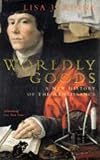
This fascinating book is essentially a look at how important things, and money, were in shaping what we now think of as the world of the Renaissance.
It starts with an analysis of the National Gallery Crivelli annunciation, a "meticulous visual inventory of consumer goods" from across the known world as well as a beautiful work of art - and itself a desirable possession. Renaissance artists were craftsmen for hire, working to order for the rich and powerful - and sitting at table with the show more tailors, musicians and other salaried members of the household. Others who fell into this category were people who would now perhaps style themselves as lifestyle consultants. You could have a man to advise you on what paintings, antiquities or books to buy to display your wealth and taste. You could even have someone to pre-read the books for you - Sir Philip Sidney had a private reader who annotated a copy of Livy for him with marginal notes referring to modern parallels to the events in the text, and a number of cross-references to modern works on political and military theory.
Conspicuous consumption was an essential aspect of prestige and authority, often backed up by borrowing on a massive scale. Christopher Columbus' proposal to seek a shorter route to the Indies - and therefore bypass the mark-ups which the spice traders put on their goods - was attractive to Ferdinand and Isabella because they were deeply in debt after a series of costly military campaigns. (For the weddings of two of their children in 1495, Isabella had to redeem her crown of gold and diamonds which had been pledged to raise money for the war against Granada.) And fortunes were made for entire families of bankers because they had received trading concessions in return for loans to popes or kings - the Medici wealth was based on monopolistic access to alum, vital for dyeing cloth. You could also make a fortune by having access to the right piece of information - for example, if you knew that two great houses were planning a wedding, you could stock up on fine fabrics while they were relatively cheap.
I think that since this book was published in 1996, its thesis has become much more widely accepted. But even so, Jardine finds some eye-catching links between things - consumption and discovery - and broad historical changes. The rebuilding of St Peter's Church in Rome, involving some of the greatest artists of the day including Michelangelo and Raphael, was so expensive that Pope Leo X issued a particularly grandiose indulgence, granting remission not just from sins already committed, but "purchasers and their relatives were forgiven every conceivable sin they had committed, or might commit, and exempted from all suffering in Purgatory, advancing immediately to Heaven". The indulgences were sold particularly hard in Germany, because the papacy had agreed that half the proceeds would go to paying off the debts of the Archbishop of Mainz. It was after the issue of this particular indulgence that Martin Luther nailed his theses to the church door at Wittenberg.
This is definitely a macro-history, ranging across the European continent from Scotland to the Ottoman Empire and in time across a couple of centuries. I am not sure that there was a coherent argument running all the way through it - it's more of a bag of delights, studded with interesting facts that you feel Jardine couldn't bring herself to leave out. I particularly liked the story of a map which deliberately placed the Molucca islands in the wrong place to back up Spain's territorial claim to them - and the related treaty stated that "during the time of this contract, {the Moluccas} shall be regarded as situated in such place" as shown on the map. Even that was only a bargaining chip - as soon as the claim was established the Spanish relinquished them in exchange for cash - "far more valuable to Charles, beset, in established Hapsburg fashion, by enormous debts to his bankers, than monopoly trading rights on the far side of the world". show less
It starts with an analysis of the National Gallery Crivelli annunciation, a "meticulous visual inventory of consumer goods" from across the known world as well as a beautiful work of art - and itself a desirable possession. Renaissance artists were craftsmen for hire, working to order for the rich and powerful - and sitting at table with the show more tailors, musicians and other salaried members of the household. Others who fell into this category were people who would now perhaps style themselves as lifestyle consultants. You could have a man to advise you on what paintings, antiquities or books to buy to display your wealth and taste. You could even have someone to pre-read the books for you - Sir Philip Sidney had a private reader who annotated a copy of Livy for him with marginal notes referring to modern parallels to the events in the text, and a number of cross-references to modern works on political and military theory.
Conspicuous consumption was an essential aspect of prestige and authority, often backed up by borrowing on a massive scale. Christopher Columbus' proposal to seek a shorter route to the Indies - and therefore bypass the mark-ups which the spice traders put on their goods - was attractive to Ferdinand and Isabella because they were deeply in debt after a series of costly military campaigns. (For the weddings of two of their children in 1495, Isabella had to redeem her crown of gold and diamonds which had been pledged to raise money for the war against Granada.) And fortunes were made for entire families of bankers because they had received trading concessions in return for loans to popes or kings - the Medici wealth was based on monopolistic access to alum, vital for dyeing cloth. You could also make a fortune by having access to the right piece of information - for example, if you knew that two great houses were planning a wedding, you could stock up on fine fabrics while they were relatively cheap.
I think that since this book was published in 1996, its thesis has become much more widely accepted. But even so, Jardine finds some eye-catching links between things - consumption and discovery - and broad historical changes. The rebuilding of St Peter's Church in Rome, involving some of the greatest artists of the day including Michelangelo and Raphael, was so expensive that Pope Leo X issued a particularly grandiose indulgence, granting remission not just from sins already committed, but "purchasers and their relatives were forgiven every conceivable sin they had committed, or might commit, and exempted from all suffering in Purgatory, advancing immediately to Heaven". The indulgences were sold particularly hard in Germany, because the papacy had agreed that half the proceeds would go to paying off the debts of the Archbishop of Mainz. It was after the issue of this particular indulgence that Martin Luther nailed his theses to the church door at Wittenberg.
This is definitely a macro-history, ranging across the European continent from Scotland to the Ottoman Empire and in time across a couple of centuries. I am not sure that there was a coherent argument running all the way through it - it's more of a bag of delights, studded with interesting facts that you feel Jardine couldn't bring herself to leave out. I particularly liked the story of a map which deliberately placed the Molucca islands in the wrong place to back up Spain's territorial claim to them - and the related treaty stated that "during the time of this contract, {the Moluccas} shall be regarded as situated in such place" as shown on the map. Even that was only a bargaining chip - as soon as the claim was established the Spanish relinquished them in exchange for cash - "far more valuable to Charles, beset, in established Hapsburg fashion, by enormous debts to his bankers, than monopoly trading rights on the far side of the world". show less
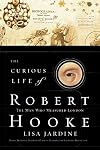
Robert Hooke's name is familiar to most of us only because of "Hooke's Law", f = - kx, which describes the potential for a harmonic oscillator. I became aware of some of the other contributions of this remarkable man by reading one of Lisa Jardine's previous books, "Ingenious Pursuits", which was my pick for May, 2000. When I saw her more extensive biography of Hooke, I was eager to read more. Hooke was involved in most of the scientific, technological, and public issues of the London of his show more time. As Curator of Experiments for the newly-founded Royal Society, he was expected to come up with a new experiment for each monthly meeting of the organization. These were not simple "demonstrations" of known principles, but experiments at the forefront of science, and most of them required the invention and construction of new instruments. By all accounts, Hooke was an absolute genius at this. More incredible is that he was able to meet this obligation at the same time as he worked as an assistant to Robert Boyle, and with Christopher Wren to supervise the reconstruction of London after the Great Fire of 1666. Because the reconstruction included the widening of many streets, there were innumerable conflicts over property rights. Hooke managed to keep all of these things going, and to also design several important public buildings. Hooke also had the ability to offend. Isaac Newton got so angry with him over the theory of gravity, that he had Hooke's name removed from the minutes of the Royal Society and campaigned against his receiving credit for his scientific contributions. show less
Robert Hooke, when he is thought of at all, is generally remembered as the “vain, bad-tempered, quarrelsome adversary of Sir Isaac NewtonâÂ?, forever seeking acknowledgment that it was he, not Newton, who first published the inverse square law of gravitational attraction.
History has, of course, sided with Newton, leaving Hooke the reputation as âÂÂa man who lacked the mathematical genius to turn a good idea into a great reality.âÂ? He has since all but disappeared beneath show more the shadows of his scientific peers, Newton, Christopher Wren, Robert Boyle, and others.
After three centuries, however, Hooke may finally be receiving his due. He first reappeared to the public as a major secondary character in author Neal StephensonâÂÂs recent mammoth and ongoing series of historical novels, The Baroque Cycle.
Now, on the heels of James GleickâÂÂs well-received biography of Newton, comes The Curious Life of Robert Hooke, Lisa JardineâÂÂs attempt to reveal the truth behind the legend.
Subtitled The Man who Measured London, Jardine successfully rescues Hooke from the scrap-heap of obscurity, unveiling a restless maverick passionate for his experiments, a foremost member in the influential Royal Society, and âÂÂa founding figure in the European scientific revolution.âÂ?
Jardine wisely glosses over the perils of mathematical and scientific jargon, instead focusing her biography on reviving the career of a man so largely forgotten, no recognized portraits of him can be found.
Despite the reputation foisted upon him, Hooke was a well-respected inventor and engineer in seventeenth century London. His enthusiasm for experimentation made him a staple of Royal Society meetings, as fellow scientists would meet and debate the merits of what he and others had displayed that day.
HookeâÂÂs true moment of greatness came during LondonâÂÂs Great Fire of 1666. Twelve thousand homes were destroyed, and sixty-five thousand people left homeless and destitute.
Hooke, with his talent for taking on many roles at once, became instrumental in the reconstruction of the city, accepting the post of Chief Surveyor, and personally designing many notable buildings, including Bedlam Hospital and the Royal College of Physicians. It was an astonishing effort that would keep him in the public eye for most of his days.
Sadly, despite his triumphs, Hooke was a scientist âÂÂwithout a defining great work to give his life shape.âÂ? A hypochondriac and insomniac, he took to self-medicating daily, leaving him âÂÂin a permanent state of extreme tension, on the edge, wary and wakeful, constantly under the influence of stimulants.âÂ?
Finally, what damaged Hooke the most was his inability, in todayâÂÂs parlance, to network. As Newton once put it, he was âÂÂa man of strange unsociable temper,âÂ? stoop-shouldered, embittered, and guilty of taking on too many tasks at once, leaving friends and patrons disappointed.
Jardine longs to proclaim Hooke âÂÂa genius who has been unjustly overlooked.âÂ? In the end, she cannot. Hooke was guilty of trying to do too much, and finishing too little. Still, JardineâÂÂs biography stands as a fitting testament to his work, an ode to a man who, by all accounts, should stand as the patron saint of the multi-tasker. show less
History has, of course, sided with Newton, leaving Hooke the reputation as âÂÂa man who lacked the mathematical genius to turn a good idea into a great reality.âÂ? He has since all but disappeared beneath show more the shadows of his scientific peers, Newton, Christopher Wren, Robert Boyle, and others.
After three centuries, however, Hooke may finally be receiving his due. He first reappeared to the public as a major secondary character in author Neal StephensonâÂÂs recent mammoth and ongoing series of historical novels, The Baroque Cycle.
Now, on the heels of James GleickâÂÂs well-received biography of Newton, comes The Curious Life of Robert Hooke, Lisa JardineâÂÂs attempt to reveal the truth behind the legend.
Subtitled The Man who Measured London, Jardine successfully rescues Hooke from the scrap-heap of obscurity, unveiling a restless maverick passionate for his experiments, a foremost member in the influential Royal Society, and âÂÂa founding figure in the European scientific revolution.âÂ?
Jardine wisely glosses over the perils of mathematical and scientific jargon, instead focusing her biography on reviving the career of a man so largely forgotten, no recognized portraits of him can be found.
Despite the reputation foisted upon him, Hooke was a well-respected inventor and engineer in seventeenth century London. His enthusiasm for experimentation made him a staple of Royal Society meetings, as fellow scientists would meet and debate the merits of what he and others had displayed that day.
HookeâÂÂs true moment of greatness came during LondonâÂÂs Great Fire of 1666. Twelve thousand homes were destroyed, and sixty-five thousand people left homeless and destitute.
Hooke, with his talent for taking on many roles at once, became instrumental in the reconstruction of the city, accepting the post of Chief Surveyor, and personally designing many notable buildings, including Bedlam Hospital and the Royal College of Physicians. It was an astonishing effort that would keep him in the public eye for most of his days.
Sadly, despite his triumphs, Hooke was a scientist âÂÂwithout a defining great work to give his life shape.âÂ? A hypochondriac and insomniac, he took to self-medicating daily, leaving him âÂÂin a permanent state of extreme tension, on the edge, wary and wakeful, constantly under the influence of stimulants.âÂ?
Finally, what damaged Hooke the most was his inability, in todayâÂÂs parlance, to network. As Newton once put it, he was âÂÂa man of strange unsociable temper,âÂ? stoop-shouldered, embittered, and guilty of taking on too many tasks at once, leaving friends and patrons disappointed.
Jardine longs to proclaim Hooke âÂÂa genius who has been unjustly overlooked.âÂ? In the end, she cannot. Hooke was guilty of trying to do too much, and finishing too little. Still, JardineâÂÂs biography stands as a fitting testament to his work, an ode to a man who, by all accounts, should stand as the patron saint of the multi-tasker. show less
Lists
Awards


You May Also Like


Associated Authors
Statistics
- Works
- 24
- Also by
- 7
- Members
- 3,345
- Popularity
- #7,634
- Rating
- 3.6
- Reviews
- 39
- ISBNs
- 78
- Languages
- 3
- Favorited
- 5


