
J. R. Hale (1923–1999)
Author of The Civilization of Europe in the Renaissance
About the Author
Works by J. R. Hale
Associated Works
Guicciardini: History of Italy and History of Florence. Translated by Cecil Grayson / Edited and Abridged with an Introduction by J. R. Hale (The Great Histories) (1964) — Edited and Abridged — 42 copies
Tagged
Common Knowledge
- Canonical name
- Hale, J. R.
- Legal name
- Hale, John Rigby
- Other names
- Hale, Sir John Rigby
- Birthdate
- 1923-09-17
- Date of death
- 1999-08-12
- Gender
- male
- Education
- Jesus College, Oxford (BA|1948|MA|1953)
Johns Hopkins University
Harvard University - Occupations
- historian
university professor - Organizations
- University College London
Jesus College, Oxford
Warwick University
Cornell University
University of California
National Gallery, London - Awards and honors
- British Academy (Fellow, 1977)
Honorary Fellow, Jesus College, Oxford (1981)
Commendatore dell'Ordine al Merito della Repubblica Italiana (1981)
Knight Bachelor (1984)
Serena Medal (1986)
Socio straniero, Ateneo Veneto (1987) (show all 7)
Socio, Accademia dei Lincei (1998) - Relationships
- Hale, Sheila (wife)
- Nationality
- UK
- Birthplace
- Ashford, Kent, England, UK
- Place of death
- Twickenham, Middlesex, England, UK
- Map Location
- England, UK
Members
Reviews
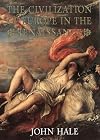
Civilization curiously spelt with a z by this very British historian is an overview of Europe in what John Hale refers to as the long sixteenth century (he qualifies this as 1450-1620). It is not a story of the Renaissance although that period and its influence is very well covered in a large section of the book; Hale was concerned more with just how civilised the period was in comparison with today and other periods of history. Hale explains his title thus:
“I hope it will not be thought show more presumptuous that my title adapts that of a book of really seminal importance, Jacob Burckhardt’s The Civilization of the Renaissance in Italy of 1860. I have carried it for so long in my mental baggage as a talisman at once protective and provocative that this was not a journey I could undertake without it”
Burckhardt’s view of the Renaissance set the tone for Victorian historians and he saw that period in Italy as a rebirth. A discovery of the civilised world of the ancient Greeks and Romans whose culture and art led the renaissance Italians to soar to great heights. Hale puts this into perspective: while not denying that the rediscovery of antiquity and its resulting humanism was a key concept in the long sixteenth century, he concerns himself with an overview of `Europe and the progress towards a more civilised society.
The book has three parts. In part one Hale looks at our concept of Europe and how the men and women of Europe saw themselves. He analyses almost country by country the development from feudalism to a more city based culture. He searches for an overall pattern, but it emerges that there really isn’t one, because one city state after another sought to gain advantage over the others. England as an Island state seems to have much the same connection with Europe then as now, intrinsically part of it and yet holding itself somewhat aloof. Most of Europeans were ruled by monarchs and their warlike/aggressive culture ensured there was no lasting peace. War was the sport of kings say Hale and the evidence is there to fully support this view. A chapter on the Divisions of Europe also covers the split in the Christian religion resulting in the reformation and later in the counter-reformation.
Part two covers the renaissance and walks through the history of the Italian renaissance and how the pagan cultures of antiquity had been adapted and encompassed within a Christian culture. Hale then looks at how the rediscovery of antiquity led to a later renaissance in other European states. These took different forms; for example drama and the theatre in England, Poetry and literature in France, religious music in Germany and realism in art in the low countries. Hale identifies some key pan Europe influences/references that helped shape the culture of the times. The writing and learning of Erasmus and the Book of the Courtier by Baldassarre Castiglione are two examples and perhaps a criticism of of Hale’s book is an over reliance on these. This section does however provides an excellent overview of how we see the renaissance today.
Part three is for me the real meat of the book and it is where Hale gets to analyse the civilisation of the long sixteenth century. He manages to give a picture of just what it was like to be alive in this period, whether it was in the cities or the countryside. He talks of civility - City based values: sound education, polite manners, the discriminating use of money and a social standing which enabled its owners to play a part in public affairs. He discusses how the rising commercial world had its impact on all sections of society and in a chapter headed Civility in Danger he talks about the volatility of human nature as it moved towards greater civility and discusses crime and punishment with examples that may make your hair stand on end. A chapter headed the Control of Man talks about censorship, about the influence of the printing press, how people had access to more information. He discusses attitudes to sex and the attempt to control prostitution and of course there is the rhetoric from the clerics themselves struggling with the reformation. The final chapter The Taming of Nature takes the reader through cultivation, the making of gardens, the state of medicine, the idea of the cosmos, mechanical inventions, hesitant moves towards science and discovery. In all these things the people of the sixteenth century not only had to struggle with the unknown, but they also had to cope with the wisdom of antiquity and where necessary prove that wisdom unfounded.
The final chapter is headed our age and imagines people looking backwards from their point in time. How much progress was in evidence for them; was it the worst of ages or the best of ages: Erasmus seemed to swing between both tenants, had they managed to escape the shackles of the learning of the past and was life better now than ever before. Hale writes well, his ideas are clear and he makes plenty of reference to documents and literature from the sixteenth century. There are notes and a Bibliography and index at the back of the book. Although it is the work of a Scholar, Hale’s book could be enjoyed by the more general reader. If you wanted to read a book about culture and politics in sixteenth century Europe you would be in safe hands with Mr Hale. A 4.5 star read. show less
“I hope it will not be thought show more presumptuous that my title adapts that of a book of really seminal importance, Jacob Burckhardt’s The Civilization of the Renaissance in Italy of 1860. I have carried it for so long in my mental baggage as a talisman at once protective and provocative that this was not a journey I could undertake without it”
Burckhardt’s view of the Renaissance set the tone for Victorian historians and he saw that period in Italy as a rebirth. A discovery of the civilised world of the ancient Greeks and Romans whose culture and art led the renaissance Italians to soar to great heights. Hale puts this into perspective: while not denying that the rediscovery of antiquity and its resulting humanism was a key concept in the long sixteenth century, he concerns himself with an overview of `Europe and the progress towards a more civilised society.
The book has three parts. In part one Hale looks at our concept of Europe and how the men and women of Europe saw themselves. He analyses almost country by country the development from feudalism to a more city based culture. He searches for an overall pattern, but it emerges that there really isn’t one, because one city state after another sought to gain advantage over the others. England as an Island state seems to have much the same connection with Europe then as now, intrinsically part of it and yet holding itself somewhat aloof. Most of Europeans were ruled by monarchs and their warlike/aggressive culture ensured there was no lasting peace. War was the sport of kings say Hale and the evidence is there to fully support this view. A chapter on the Divisions of Europe also covers the split in the Christian religion resulting in the reformation and later in the counter-reformation.
Part two covers the renaissance and walks through the history of the Italian renaissance and how the pagan cultures of antiquity had been adapted and encompassed within a Christian culture. Hale then looks at how the rediscovery of antiquity led to a later renaissance in other European states. These took different forms; for example drama and the theatre in England, Poetry and literature in France, religious music in Germany and realism in art in the low countries. Hale identifies some key pan Europe influences/references that helped shape the culture of the times. The writing and learning of Erasmus and the Book of the Courtier by Baldassarre Castiglione are two examples and perhaps a criticism of of Hale’s book is an over reliance on these. This section does however provides an excellent overview of how we see the renaissance today.
Part three is for me the real meat of the book and it is where Hale gets to analyse the civilisation of the long sixteenth century. He manages to give a picture of just what it was like to be alive in this period, whether it was in the cities or the countryside. He talks of civility - City based values: sound education, polite manners, the discriminating use of money and a social standing which enabled its owners to play a part in public affairs. He discusses how the rising commercial world had its impact on all sections of society and in a chapter headed Civility in Danger he talks about the volatility of human nature as it moved towards greater civility and discusses crime and punishment with examples that may make your hair stand on end. A chapter headed the Control of Man talks about censorship, about the influence of the printing press, how people had access to more information. He discusses attitudes to sex and the attempt to control prostitution and of course there is the rhetoric from the clerics themselves struggling with the reformation. The final chapter The Taming of Nature takes the reader through cultivation, the making of gardens, the state of medicine, the idea of the cosmos, mechanical inventions, hesitant moves towards science and discovery. In all these things the people of the sixteenth century not only had to struggle with the unknown, but they also had to cope with the wisdom of antiquity and where necessary prove that wisdom unfounded.
The final chapter is headed our age and imagines people looking backwards from their point in time. How much progress was in evidence for them; was it the worst of ages or the best of ages: Erasmus seemed to swing between both tenants, had they managed to escape the shackles of the learning of the past and was life better now than ever before. Hale writes well, his ideas are clear and he makes plenty of reference to documents and literature from the sixteenth century. There are notes and a Bibliography and index at the back of the book. Although it is the work of a Scholar, Hale’s book could be enjoyed by the more general reader. If you wanted to read a book about culture and politics in sixteenth century Europe you would be in safe hands with Mr Hale. A 4.5 star read. show less

To listen to some, you would think that Time Team invented TV archaeology ...

1171. The Evolution of British Historiography: From Bacon to Namier, edited by J. R. Hale (read 16 Jul 1972) This gives a selection from 21 British historians, and I found it great reading. My favorite selection was by George Macaulay Trevelyan, but that maybe was because it was on the battle of Malplaquet (1709), of which I knew little and which I found most informative. I enjoyed the whole book, and resolved to read more history.
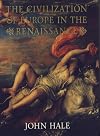
A cultural history of Europe written in partial homage to Jacob Burkhardt whose Civilization of the Renaissance in Italy (1860) in invoked in the title. This was the last major work by Hale, author of ten other major studies of the period; it was completed in June 1992 just before he suffered a major stroke. There are nine chapters, each a reflection on a major theme beginning with four chapters on the idea of Europe, its nations, hostilities and empathies, before moving to "Renaissance" and show more "Civilization." It is cultural history of the type made familiar by Burkhardt, but without the special pleading, and rendered with a more generous, reflective and inclusive eye. show less
Lists
You May Also Like


Associated Authors
Statistics
- Works
- 31
- Also by
- 3
- Members
- 3,461
- Popularity
- #7,351
- Rating
- 3.6
- Reviews
- 26
- ISBNs
- 98
- Languages
- 5