

Cheryl Glenn
Author of Hodges' Harbrace Handbook
About the Author
Cheryl Glenn is Distinguished Professor of English at the Pennsylvania State University, Director of the Program in Writing and Rhetoric, and coeditor of the Studies in Rhetorics and Feminisms series. Her publications include Rhetoric Retold: Regendering the Tradition from Antiquity Through the show more Renaissance; Unspoken: A Rhetoric of Silence; Silence and Listening as Rhetorical Arts; and Rhetoric and Writing Studies in the New Century: Historiography, Pedagogy, and Politics. show less
Works by Cheryl Glenn
Rhetoric Retold: Regendering the Tradition from Antiquity Through the Renaissance (1997) 41 copies, 1 review
Rhetoric and writing studies in the new century : historiography, pedagogy, and politics (2017) 5 copies
Loyola University Chicago Edition of the Writer's Harbrace Handbook (With InfoTrac College Editon 4 Month Subscription) (2005) 2 copies
The New Harbrace Guide: Genres for Composing (w/ MLA9E Updates) (MindTap Course List) (2021) 2 copies
Glenn/Gray's The Hodges Harbrace Handbook, 18th Edition plus 6-months instant access to Aplia. (2012) 1 copy
Heinle's Flex-Files For Instructors: Hodges Harbrace Handbook 15th Edition and The Writer's Harbrace Handbook 2nd Edition (2004) 1 copy
Associated Works
Tagged
Common Knowledge
- Gender
- female
- Occupations
- rhetorician
Rhetoric teacher
Members
Reviews
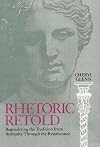
In Rhetoric Retold (1997), Cheryl Glenn argues that women have been made invisible and silent in the rhetorical tradition because of the value placed on the "good man speaking well" in public. She offers to "regender" the history of rhetoric by not only recovering women in the rhetorical tradition, but also calling into question notions of what rhetoric is. She draws on historiography, feminism, and gender studies in order to ask questions about "Whose history? Whose rhetoric? Which show more rhetoric," and questioning the notion that there is a single "truth" found through empiricism and positivism (5). She is committed to "reading it crookedly and telling it slant" (8). show less
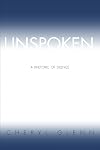
In Unspoken (2004), Cheryl Glenn explains how silence is one of the most misunderstood and under-valued rhetorical acts, and it deserves study (2). Understanding that we are always communicating, Glenn explores how "Silence can deploy power; it can defer to power. It all depends" (18). Silence can be purposeful, used to shame others, discipline others, create authority, become part of a group, avoid shame, and in many other ways.
You May Also Like


Associated Authors
Statistics
- Works
- 42
- Also by
- 2
- Members
- 1,080
- Popularity
- #23,804
- Rating
- 3.9
- Reviews
- 2
- ISBNs
- 104