
Edward P. J. Corbett (1919–1998)
Author of Classical Rhetoric for the Modern Student
About the Author
Works by Edward P. J. Corbett
The Elements of Reasoning, 2nd Edition (The Elements of Composition Series) (1991) 87 copies, 1 review
Associated Works
Tagged
Common Knowledge
- Canonical name
- Corbett, Edward P. J.
- Birthdate
- 1919-10-29
- Date of death
- 1998-06-24
- Gender
- male
- Education
- Venard College (BA|1943)
University of Chicago (MA|1948)
Loyola University, Chicago (PhD|1956) - Occupations
- rhetorician
professor - Organizations
- The Ohio State University
Creighton University
United States Marines Corps (WWII)
Conference on College Composition and Communication
National Council of Teachers of English
Rhetoric Society of America - Awards and honors
- CCCC Exemplar Award (1996)
- Nationality
- USA
- Birthplace
- Jamestown, North Dakota, USA
- Places of residence
- Columbus, Ohio, USA
- Place of death
- Columbus, Ohio, USA
- Associated Place (for map)
- Ohio, USA
Members
Reviews
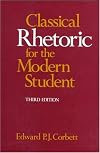
This standard classic text for the study of rhetoric continues to prove its worth for writing teachers. If interested in a variety of texts, any writing students can glean valuable examples of schemes and tropes to include in their arsenal of word craft. Corbett relies upon ancient, medieval, and a few modern excerpts to illustrate the many approaches for literary effect. Earlier additions still have benefit despite the under-representation of female authors and outmoded research tools. show more Personally I enjoyed reading how Erasmus taught his pupils how to restate the same idea thirty times to exhibit the possibilities of communication for a single thought. Analysis of famous 20th century political speeches can be found in addition to ancient Greek and Roman sources. It is a great reference to keep instead of returning it hastily to a book seller after completing the college course. show less
This book is a revision and is obviously changed from Corbett's style. Better to read Corbett's original version of the material contained in Classical Rhetoric for the Modern Student.
In "Embracing Contraries in the Teaching Process," Peter Elbow explores the two obligations that teachers feel: toward students and towards knowledge and society (54). We cannot pretend that these two obligations exist in harmony, but should embrace the tension between them as we take a contradictory stance (56).
In "The Listening Eye: Reflections on the Writing Conference," Donald M. Murray explains that he used to be too involved in writing conferences, telling students how to make their show more papers better, but now he's learned "to stay out of their way and not to interfere with their learning" (67). In this way, students take control of their writing, improve it after discussing it with them (and they do most of the talking), and Murray gets to learn from his students.
In "The Rhetoric of Technology and the Electronic Writing Class," Gail E. Hawisher and Cynthia L. Selfe argue that computers "will support any one of a number of negative pedagogical approaches" unless they are "considered carefully and critically" (130). In one example, they explain how computers facilitated an increased power difference between teachers and students because it expanded the panopticon gaze of the teacher, and because it can create "repressive and lockstep" teaching (135).
In "Between the Drafts," Nancy Sommers explores where revision comes from, "what happens between the drafts" (283), exploring how her voice can get lost in the voices of others that she is trying to take on and imitate. She writes: "I must enter the dialogue on my own authority, knowing that other voices have enabled mine, but no longer can I subordinate mine to theirs" (284).
In "Closing My Eyes as I Speak: An Argument for Ignoring Audience," Peter Elbow argues that there are generally two types of audience when one is drafting: an inviting one, and an inhibiting one (336), and because sometimes the audience is inhibiting (for a variety of reasons), writers might produce better prose by ignoring audience as they draft (and of course, considering audience more as they revise). show less
In "The Listening Eye: Reflections on the Writing Conference," Donald M. Murray explains that he used to be too involved in writing conferences, telling students how to make their show more papers better, but now he's learned "to stay out of their way and not to interfere with their learning" (67). In this way, students take control of their writing, improve it after discussing it with them (and they do most of the talking), and Murray gets to learn from his students.
In "The Rhetoric of Technology and the Electronic Writing Class," Gail E. Hawisher and Cynthia L. Selfe argue that computers "will support any one of a number of negative pedagogical approaches" unless they are "considered carefully and critically" (130). In one example, they explain how computers facilitated an increased power difference between teachers and students because it expanded the panopticon gaze of the teacher, and because it can create "repressive and lockstep" teaching (135).
In "Between the Drafts," Nancy Sommers explores where revision comes from, "what happens between the drafts" (283), exploring how her voice can get lost in the voices of others that she is trying to take on and imitate. She writes: "I must enter the dialogue on my own authority, knowing that other voices have enabled mine, but no longer can I subordinate mine to theirs" (284).
In "Closing My Eyes as I Speak: An Argument for Ignoring Audience," Peter Elbow argues that there are generally two types of audience when one is drafting: an inviting one, and an inhibiting one (336), and because sometimes the audience is inhibiting (for a variety of reasons), writers might produce better prose by ignoring audience as they draft (and of course, considering audience more as they revise). show less
You May Also Like


Statistics
- Works
- 17
- Also by
- 1
- Members
- 1,323
- Popularity
- #19,430
- Rating
- 3.9
- Reviews
- 5
- ISBNs
- 40